How to sustain a family retail brand


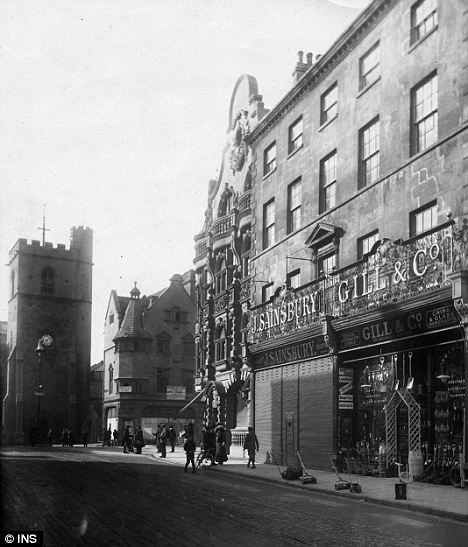
The picture below was taken in 1912 in Oxford, UK a city about 60 miles to the North West of London. It features Gill & Co, an ironmongers and a branch of J. Sainsbury, a food store.

Gill & Co was established in 1530 during Henry VIII’s reign. At the time it was the first ironmonger in the country. It has been in business ever since and has witnessed the English Civil War, two World Wars, a couple of global economic depressions, three recessions, the birth of the railway, the car, powered flight, electricity, the Internet and more.

Originally the firm supplied ironware and related products for Oxford residents however as times changed it tried to reinvent itself and also stocked equipment for chimney sweeps (think Mary Poppins), farming equipment, tools and gardening supplies. Although Gill & Co moved locations, it was always a one store operation in Oxford.

In 2010, after 480 years in business Gill & Co is closing down, beaten into submission by large DIY and home improvement suppliers like B&Q the 3rd largest DIY retailer in the world, largest in Europe and the largest in China and Homebase.

Sainsbury’s, at a mere 141 years old, a relatively new brand was established in 1869 in Drury Lane. Although now at the centre of the theatre district, this was once a very poor area of London.

Sainsbury has also witnessed much, including 2 world wars, 2 depressions, a couple of recessions, the automobile, manned flight, the moon landings and more. Sainsbury soon became an institution, offering high quality products at low prices. By 1882 Sainsbury was selling it’s own label brands.

Although lacking the heritage of Gill & Co, Sainsbury invested heavily in its staff, employing women as managers when it was unheard of in the early 20th century and developing its own training school to train managers.

Sainsbury also invested in new stores and although at times it has had a rough ride, today it employs more than 150,000 people, has 800 stores in the UK and there are on average more than 19 million customer transactions in Sainsbury’s stores every week and the company has a 16% market share.

It has diversified into non-food products and services and non-food is growing 3 times faster than food. It has a bank with operating profits of £19million and its Internet home delivery shopping service is responsible for 100,000 deliveries every week.

Asia has many small family businesses. In fact in Malaysia, Small Medium Sized Enterprises (SME’s) make up 99% of Malaysia’s total registered businesses. Hanoi in Vietnam has over 90,000 SMEs.

These organizations have a critical impact on the business of a country. In Japan, known for its heavy industry, approximately 70% of the Japanese work force is employed by small and medium-size enterprises (SMEs) and half the total value added in Japan is generated by SMEs.

Asian SMEs, many of them well established with years of heritage cannot sit by and hope that they will be safe from bigger, more aggressive retailers. They need to start planning for the future now before it’s too late.

Here are 5 recommendations for Asian SMEs to help them become a Sainsbury

1) Keep an eye on retail trends, especially in your space
2) Talk to your customers, not just about the weather/politics/sport. Ask them what their needs are, what they would like you to stock, when they would like you to open and so on
3) Build a database of customers and their preferences. If you do sell up, this will help you secure a better price for your business
4) Leverage what you have against the big retailers in your space. You can’t compete on price and probably can’t compete on choice but you can compete in other areas – convenience, personalization, customization, free alterations, returns, speed of delivery and more
5) Develop a brand strategy that includes succession planning. If you have sent your kids to university overseas, are they going to come back and work in your hardware store? If you don’t think so, look to create strategic relationships with other players in your space now before it is too late.

Arizona brand strategy


This question was asked recently “Does Arizona need Rebranding or Public Relations Crisis Management?” You can see the full article, context and responses here

“Does Arizona need Rebranding or Public Relations Crisis Management?” is the wrong question to ask because they are confusing the issue by asking a question that doesn’t make sense. PR at whatever level, is an important component of a brand strategy but it is only one element and cannot, on its own, drive or build a brand. So it is not an alternative to a rebranding exercise.

The article outlines four attributes in the Arizona Travel and Tourism branding guide. To access the guide, Google “perception of Arizona” brand.The attributes, are geared towards tourism (predictably) but Branding a state is not simply a tourism exercise. After all, the main issue at the heart of the problem is an immigration issue and although I don’t have much information, I doubt the immigration issue is a tourism issue.

A brand strategy should involve tourism (and in most cases can be driven by tourism) but it should involve other stakeholders as well. I wrote a ‘How to brand a city’ article here. Although it is related to cities, many of the rules can be applied to a state as well.

If Arizona has a brand strategy, those responsible for the strategy should have been consulted when the law to address the challenges of illegal immigration was being drafted and then given a mandate to develop a comprehensive and integrated communications campaign, including PR but also other channels such as Social Media to explain the law. This campaign must focus not on cool creatives or catchy tagline like vibrant variety but on content that resonates with the target segments and must communicate with those segments through channels favoured by those segments.

Unfortunately, because Arizona does not appear to have a brand strategy, the state is now on the back foot as it tries to address issues raised over what is always, but even more so now, a very contentious issue.

How to brand a city like Ipoh


Senior Executive Councillor Datuk Hamidah Osman of The Perak state government in Malaysia announced on a trade and investment mission to China recently that the state government, in an effort to boost its tourism industry, intends to brand Ipoh, the capital of Perak as the “City of White Coffee”.

Datuk Hamidah was quoted by Bernama “ Perak should have its own identity and branding just like Shenzhen that is known as the “Shoe City” and Paris which has long been known as the “City of Fashion”.

In conjunction with the plan, Datuk Hamidah said, “We plan to have a food fair to be held in Ipoh this December. The idea is to promote the local foods and tourism industry. We have the best bean sprout chicken rice and chee cheong fun (rice rolls),” she added.

Faced with increased domestic and international competition for both tourists and FDI, there is no doubt that Ipoh and Perak, need to develop a destination brand. But that brand must be based on a platform of multiple tourist attractions and business potential.

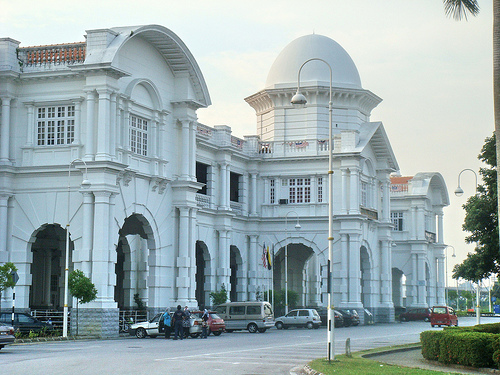
Set amongst picturesque limestone scenery, a diverse selection of tourist attractions include Kellie’s Castle, Perak Museum, Ipoh railway station, Tambun hot springs, Taiping lake gardens and Zoo, and more, Ipoh and the rest of the state have a lot to offer.

Other destinations include Pangkor and Pangkor Laut, Bukit Larut and others. Perak also has a rich heritage that can be promoted, including silver and tin mining. It is historically known as an innovator, having pioneered such advances as the first rubber trees in Malaysia and was also the first state in Malaysia to go wireless.

The tagline ‘City of white coffee’ certainly differentiates Ipoh from other destinations but what else does it tell potential visitors, businesses or investors? How can stories be developed around the tagline, who are the target market? How will it be communicated? If it is a one-size-fits all approach, it’ll need significant resources to communicate the new tagline. Have budgets been agreed and so on?

Today, Destination branding is not based on a tagline. Destination branding must be based on experiences that are successfully delivered to specific segments and not based on attempts to market all places to all people.

Research and data are critical to understand tourist and other stakeholder requirements before developing strategies and not the other way around.

Stakeholder buy-in is critical for brand consistency and fulfillment of the brand promise. As an example, how can a hotel contribute to the proposed approach? How can the same hotel leverage the approach to grow it’s business?

Branding is a long term coordinated and integrated strategic exercise and not a tagline. One-size-fits-all strategies using mass media are no longer effective.

Planning is essential to coordinate initiatives, ensure accountability and avoid wasting resources. Without a plan, activities will be reactive and tactical.

What Ipoh and other cities need is a consistent and organized methodology to brand themselves as domestic and international destinations.

Here is one approach that would definitely help Ipoh:

Stage one: Carry out extensive research
Research develops data on key success factors, generates insights and what current and prospective visitors seek, and provides benchmarks to measure branding ROI. The research should consist of the following activities

1) Destination analysis: Key members of the hotel industry, government bodies, local business associations and representatives of major attractions should be confidentially interviewed. The interview will be based on an agenda designed to explore a number of issues related to the city

2) Visitor audit: Carry out interviews with current and past visitors. Other groups can also be selected, such as conference organisers. The interviews will focus on the experiences and motivations associated with Ipoh, information resources, and suggestions for increasing tourist value.

Special attention will be paid to how they researched Ipoh, what they have heard or told others about Ipoh and the channels or vehicles used to tell them. Additionally, representative travel agents in Ipoh will be interviewed about tourist experiences and requirements. Online surveys will be useful to research baseline perceptions of brand Ipoh.

3) Place audit: A place audit will identify Ipoh’s economic/ demographic characteristics, review major attractions (including strengths and weaknesses of the attractions) and outline all brand assets. The place audit will also look to identify product potential.

4) Communications audit: A comprehensive analysis of the channels, vehicles and materials, both digital and print, current and proposed that are or will be used to communicate with both consumers and businesses.

Stage 2: Ensure community buy-in and set internal branding requirements
Community and other stakeholder buy-in is important both for delivery of the brand promise, development and ongoing funding. Stakeholders must be communicated with and input from stakeholders must be incorporated so that they understand that they play an important role in initial and ongoing brand development.

Such buy-in can be accomplished through a variety of activities, including “townhall” or other community meetings, private presentations and media briefings. Initial research findings and recommendations can be discussed as a basis for soliciting input.

Additionally, community buy-in requires a group of citizens, business people, and local and regional government officials. This planning group will:

• Define and diagnose the community’s condition, major issues and potential solutions

• Develop a long-term brand vision based on a realistic assessment of the community’s values, resources and opportunities

• Work to develop a long-term plan of action involving intermediate stages of investment and transformation

Stage 3: Brand plan development
The results of the research and community buy-in will be incorporated into a comprehensive plan for Brand Ipoh. This customized brand plan serves as a strategic framework for all marketing activities, messages, metrics, timetables and proposed budgets. Special attention should be paid to digital branding and product development to get previous visitors to return again.

Stage 4: Comprehensive and segment-specific execution & measurement
Unfortunately this is where most destination begin their brand strategy. Once the brand plan is in place, execution begins. The execution operates on two overlapping fronts – general and segment-specific:

General: General branding represents the ongoing efforts to ensure visibility and provide value to prospects, agents and visitors, as well as gather data, ensure continuous performance and maintain reporting.

Segment-specific: Segment-specific branding concentrates on two areas where it is important to establish and maintain strong relationships. These include existing customers/visitors, and target-rich segments such as families, agents, previous visitors, etc. The actual segments to be targeted will have been defined in the brand plan.

I appreciate that many cities will view this as a daunting and potentially expensive task. But it will not be as expensive as numerous one size fits all communications based on a tagline that tries to speak to all but really speaks to none.

Creative campaign not the solution to smoking issues in Singapore


As with many issues, Singapore has a zero tolerance approach to smoking and in particular, teen smoking. Get caught selling cigarettes to minors and you face a fine of over US$6,000.

Anyone under the age of 18 caught carrying cigarettes, carrying not smoking, and it is an automatic fine of US$30. Get caught again and the fine is US$60. If you don’t pay the fine, your parents spend a night in jail.

Smoking is banned in all public places such as hotels, supermarkets, restaurants, bars, shopping malls, museums, theatres, airports and other public transport places, libraries, indoor and outdoor sports arenas and government and private offices.

If a person serving in the military is caught smoking whilst in uniform he or she is disciplined and fined. Like other countries, cigarette packets carry gruesome images of what smoking can do to throats, mouths, unborn babies and so on.

Little wonder then that according to a recent Synovate survey, Singapore has the lowest numbers of smokers (13%) across a random selection of countries including Bulgaria, Cyprus, France, Italy, Korea, the Netherlands, Russia, Serbia, Slovakia, Taiwan, Thailand, South Africa, the United Arab Emirates and the United Kingdom.

Unfortunately many of these smokers started smoking in their teens. According to a Pfizer poll in May 2010, 84% of smokers started the habit in their teens and some started smoking as young as 12.

And although at 9%, Singapore has one of the lowest rates of teen smoking in the world, the Health Promotion Board is keen to address the issue of smoking amongst young adults and teens.

So the Health Promotion Board appointed Ogilvy & Mather Singapore to develop a creative campaign to encourage young people to reject cigarettes and live a tobacco free life that will improve their appearance, fitness, spending power and contribute positively to the environment.

The results are ‘Live it up without lighting up’ and they can be seen ogilvy_smoke-1 and ogilvy_smoke2-1. The campaign featured above the line (ATL), out of home (OOH), digital, radio and events such as the Great Audio Experience, held on 29th May 2010 as part of World No Tobacco Day celebrations.

The creatives feature gorgeous, young, happy, confident people with unblemished skin in semi cartoon like environments. Copy tells readers that “Non smokers tend to look younger than smokers of the same age” and “Non smokers tend to be physically fitter than smokers.” Goals are to communicate a better more beautiful and green world populated by gorgeous young things who are fitter, healthier and generally in a better place as a result of not smoking.

According to Jon Loke, Head of Art, Ogilvy & Mather Singapore, the agency was careful to ensure that the campaign would not talk down to them. “We needed to turn the traditional way anti-smoking campaigns are carried out on their heads to create a message that would appeal to youths. Hence, the campaign encourages, empowers and ultimately celebrates a smoke-free life.”

Now I really like the creatives, I think they are really well executed and I really hope the campaign works. But I sincerely doubt this is the way forward. That’s because a creative driven campaign, no matter how much it turns things upside down, is unlikely to have an impact on the number of smokers in Singapore.

Malaysia spent RM100 million (US$30 million) over 5 years on such a campaign that was inneffective in bringing down the number of smokers in Malaysia.

In the UK, after extensive research of more than 8,500 smokers over a ten-year period, the Institute for Social and Economic research found that the warnings on cigarette packets that smoking kills or maims are ineffective in reducing the number of smokers.

Likewise, chilling commercials or emotionally disturbing programs are also ineffective. The study also discovered that even when a close family member becomes ill from the effects of smoking, the smoker takes no notice.

In fact, according to the study, smokers only reduce the number of cigarettes or sometimes quit when their own personal health is at stake. And even failing health may not persuade a smoker to reduce or even stop smoking because smoking is linked to a lack of psychological wellbeing and often failing health results in psychological decline.

Even before this campaign, Singapore has successfully reduced smoking amongst youths. Statistics released in 2009 by the Students’ Health Survey (SHS) 2009 suggest a downward trend in youth smoking, with the proportion of youngsters who had tried smoking, even one or two puffs, declining from 26% in 2000 to 16% in 2009. That’s an impressive statistic and I would focus more on what drove those achievements rather than new creative campaigns.

I have a hunch that this campaign will not have a dramatic effect on the number of smokers in Singapore. Data shows that traditional marketing tools are even less effective today than they were 10 years ago. Consumers simply don’t listen to mass marketing the way they used to, especially when copy uses vague terms such as ‘tend’.

What is required is a data driven approach to the issue. Specific and comprehensive qualitative research with relevant targeted questions related to each segment (and each segment will be specific and targetted) that are designed to deliver actionable data. I’m sure this information is already available.

It is imperative that the audience is identified and then engaged individually, on a one to one basis. It will be an expensive and long term effort. That doesn’t mean repeating the same one size fits all commercials or messages, this means developing a relationship with these partners through engagement.

Also critical to the development of the strategy will be the buy in from stakeholders such as doctors, educators, retailers and others. Discussions must be held with these key elements to determine strategies. One such strategy might be to find alternative sources of income for retailers. Policing of key stakeholders such as retailers must be ramped up.

Once research is completed and analysed, a comprehensive strategy must be developed featuring a fully integrated program to communicate with all stakeholders with specific emphasis on education at residential level and dynamic, preventative and educational programmes for schools. Existing smokers will be targetted individually through interviews with doctors, rather than one-size-fits all creative campaigns.

Only once the strategic blueprint is ready can the implementation begin. There is no easy way to reduce the number of smokers in Singapore. It’s going to take a long term investment in time, effort and money.

Singapore has done many things right in the past to reduce the numbers of smokers. Investing valuable resources on creative driven campaigns that have not worked in the past is not the way forward.

Malaysia getting ready to be major player in world’s largest service sector industry


One of the most interesting elements of the New Economic model (NEM) announced by the Malaysian Prime Minister, Datuk Seri Najib Razak was related to tourism.

I quote directly from his speech, “…the tourism sector has not been exploited to its potential. More can be done to attract new markets from Europe and the Americas to complement the markets from the United Kingdom and Asia.

We have some of the oldest forests in the world, rich with flora and fauna and diving experiences acclaimed to be unforgettable. Malaysia can lead in providing environmentally sustainable eco-tourism adventures that are much sought after by the advanced markets.

We should aim to provide services which will attract high-end tourists who seek exclusiveness and high value services. We must also be creative as we consider new areas of tourism. From medical tourism — a high-potential growth sector — to eco-tourism, luxury market tourism and visitors related to our growth as a regional education hub. Malaysia’s tourism future is bright if we have the vision and creativity to support its diverse growth potential.”

World’s largest service sector industry
As the PM said, Malaysia has long neglected the business of tourism, despite the fact that it is, according to the World Bank, the fastest developing industry in the world. Moreover, according to the World Tourism Organisation, 2006 (the last year before the sub prime crisis) was a record for world tourism with 842 million tourists visiting other countries, up 4.5% over the previous year. Tourism is now the World’s largest service sector industry.

Furthermore, according to the World Tourism And Travel Council (WTTC), 12% of exports, 9.3% of international investments, 8.3% of the world’s places of work and 3.6% of world internal gross product account for a share of tourism and its relevant sub industries.

Using the satellite accounting approach, which attempts to calculate the extent to which other economic sectors contribute to and benefit from tourism and passenger traffic, the WTTC also estimates that the travel and tourism industry in 2008 was valued at approximately US$5.9 trillion or 9.9% of global GDP.

Tourism is also a popular industry with governments because it impacts every level of society from the sundry shop owner who sells a tourist a bottle of water and a map to the car hire company, locally owned hotel and airline.

With hundreds of miles of pristine coastline, breathtaking islands and the oldest rain forest in the world, Malaysia should have a better developed tourism industry and it will be interesting to see what incentives the government offers investors and developers to encourage them to invest in the infrastructure and products needed to move Malaysia up the value chain in this beneficial industry.

49 million visitors by 2020
I managed to get my eyes on a copy of a report preparred by a respected international consultancy and commissioned by the government to provide data for the NEM. Unfortunately one of the key recommendations was to increase the number of arrivals to Malaysia to 49 million by 2020.

It has been a common thread in announcements made in Malaysia that volume is key and we need to be attracting hordes of foreigners to Malaysia to consider our tourism business a success. But this advice is poorly thought out. One example, imagine the impact of 49 million tourists, many of them blue collar Europeans who consider it their God given right to walk around without a shirt on (men) or only in a bikini (women) and quite often with a beer in their hands, on a place like Kuala Terengganu or Kota Bahru.

What we need to do is move away from this volume is best approach and look more at a value is best strategy that aims to attract smaller numbers of higher value visitors. This will also help with the infrastructure and talent issue as we do not have the people available to staff the 500 or 600 room hotels required to support 49 million visitors.

Breathtakingly beautiful island
One of the best natural destinations in Malaysia is Redang Island in the South China Sea. This breathtakingly beautiful island has slowly had it’s natural attractions such as the coral destroyed by boats dragging anchors, careless swimmers and greedy fishermen.

But the concept of volume over value ruled and so little was done until recently when the Terengganu state government announced that it will no longer approve any applications for cheap Chalet style resorts as it wants to make Redang a destination for high net worth visitors. This is a a sensible move that will also help save the marine environment and attempt to prevent further environmental damage.

It is a sensible move that the state government, and hopefully the federal government will offer financial support, wants to upgrade this amazing destination. But the state government should also understand that it is not just about changing the names of the resorts, upgrading facilities, spending large sums on awareness advertising and increasing the rack rate by 300%. There will need to be a significant investment in the upgrading of the resorts and also supporting infrastructure.

Here are 5 other recommendations:

1) Carry out research with stakeholders, prospects, customers and others to determine the way forward.
2) Work with carriers and others to improve domestic and international connectivity.
3) Find the right partners. Malaysia doesn’t have a domestic 5 or 6 star hospitality company that is recognised globally. Work with a globally respected and recognised resort management company.
4) Redang is a small part of the potential of Terengganu. The state must develop and implement state destination brand masterplans. The brand masterplans must incorporate measureable and relevant promotional strategies that are not based on traditional marketing techniques but leverage the power of social media.
5) In line with federal initiatives, reduce costs of doing business and offer exciting incentives for investors, above and above usual free utilities for 5 years etc.

We’ve heard about incentives for the tourism industry before but the government has never really pushed them. I have a hunch that this new administration is different and that this is a small first step in a revolution that is long overdue.

Case study: Use research to form the foundations of a tourism brand strategy


A powerful country brand developed from a meticulously planned strategy that has at its heart the concept of providing specific value to specific identified segments and meticulously executed and measured can yield massive benefits for investment, domestic industries and culture.

And for most South East Asian countries, tourism will have a prominent role to play in their country brand strategies. And so it should be as most governments recognize the contribution of tourism to stimulating economic growth across all sectors of society.

It also helps that tourism is also considered to be the world’s largest industry with revenue of over US$500 billion. The World Tourism Organisation (UNWTO) estimates International tourist arrivals for 2009 to be at 880 million. Although this was a 4% drop over the previous year, Asia and the pacific saw the first signs of recovery with positive growth in the last 2 quarters.

Going forward, the UNWTO expects international arrivals to reach 1.56 billion by 2020. Of these, almost 400 million are expected to head for Asia and the pacific.

But because of the tendency of politicians to seek a quick fix, most Asian tourism brand strategies look no further than creative advertising campaigns that look the same as many other destinations and are soon lost in the muddle of messages currently carpet bombing consumers.

One country in South East Asia has recognized the futility of this approach and commissioned us to develop a brand strategy based on trade and consumer requirements for value. Client confidentiality doesn’t allow me to reveal the country involved however I am able to share the methodology and some of the results and findings.

The project took just almost 2 years from appointment to implementation of the strategy however some urgent recommendations were implemented earlier.

The tourism office is tasked with marketing the country both domestically and internationally. Our focus was internationally. They were facing a number of challenges including:

Challenges
1) The increased effectiveness of competitor marketing strategies. All regional competitors are investing heavily in tourism products and developing segment focused branding campaigns.

2) Growing ineffectiveness of mass marketing, especially generic print & TV advertising. Increasingly fragmented media and an increase in leisure time activities are making it harder to reach consumers via traditional channels.

3) The increase in the influence of the Internet on the destination decision-making process, especially the increased influence of peer-to-peer networks. Figures released by The Association of British Travel Agents (ABTA) in November 2004 showed that 19% of holidaymakers booked their holiday online – six times more than in 2000. By 2008, this figure had grown to 67% (Online shopping survey). Only about 13% of those surveyed said they would use a travel agent. The Internet is also growing in importance as a communications medium through P2P networks with 34% of respondents to a Mintel survey choosing their destination on the basis of a face-to-face recommendation

4) Poor repeat visitor rates. Repeat visitors not only represent an increased return on the initial marketing investment but also tend to stay longer and spend more. Additionally, they represent a low-cost source of referrals and other word-of mouth advantages. Currently, the country has a below average number of repeat visitors compared to two main competitors which represents a threat to future growth.

5) Lack of awareness and knowledge of the country worldwide. What has been the impact of the country advertising? Has it been effective in improving the perception of the country? How much is it contributing to tourism in the country?

Our research showed that there were about 600,000 competing communities in Asia and more than 1,000 regional and national economic development agencies, all competing for visitors. This made it easy for even the most compelling messages to get lost amid all the destination claims.

We recommended to the client that in this cluttered environment, effective branding depends on data and knowledge about current and prospective visitors and not simply trendy creative campaigns featuring mass marketing tactics across all major channels.

Moreover, choosing the most effective branding strategy depended on sound market & customer research to determine current attitudes and perceptions toward the country among travel agents, previous visitors to the country and those that had never visited the country.

Measurement
By understanding the sources of those perceptions and attitudes, the client would be better able to evaluate current branding efforts, develop strategies to target high-impact segments with the most potential more effectively, drive internal education and other program development, leverage the emerging medium of Web 2.0, develop benchmarks to measure branding progress and ensure that resources were used cost-effectively.

The research could also be used to pinpoint, prioritise and drive online community-based branding. A core requirement as consumers spend more time in those communities.

Other key requirements included communicating knowledge of current branding and target market imperatives among personnel, as well as ensuring knowledge and data transfer.

After extensive discussions with the research division and others and to provide a 360-degree approach to understanding the brand, FusionBrand developed and conducted a multi-phase, six-month international research project that incorporated multiple research methodologies.

These methodologies included:

• 39 focus groups (FG) in thirteen locations in twelve countries comprised of 3 segments:
o Travel Agents
o Travelers who have visited the country in previous 3 years
o Travelers who have not visited the country but have traveled long haul in last 3 years
• Online surveys
o 12 countries
o Worldwide via client website
• Mystery shops in specific countries plus home country
• Internet CGM (consumer-generated media) monitoring & analysis
o 22 million blogs
o 60,000 usenet forums
o 6,000 discussion forums
o Plus podcasts, web sites etc.
• Internal brand audit in HQ and at tourism offices worldwide
o One-on-one, in-depth interviews with domestic & international staff
• External brand audit
o In depth interviews in specific countries
o 3 segments
o Tourist operators & agencies
o Media representatives
o Local tourism associations
• Communications audit (print)
o Brand analysis of print materials
o Comparative analysis of 11 regional competitor materials
o Framework for evaluation, scoring & future design developed
• Communications audit digital
o Own sites
o Brand evaluation based on Internet & customer relationship best practices
o Social Media initiatives

The countries were located in the following regions:

• Asia
• North America
• Europe
• Middle East
• Australia

The research project completely designed by FusionBrand was not only comprehensive, but innovative as well. For example, the Internet monitoring had yet to be accomplished by any destination, while the digital communications audit looked at what is necessary to advance into the emerging era of Internet 2.0.

Output was comprehensive and extensive and included:

• Recording and analysis of relevant input in complete reports
• County-by-country reports concerning perceptions and experiences with the country, including key influencers on travel destination selection
• Brand workshops for client personnel incorporating research results to ensure a corporate-wide understanding of the country brand strategy
• Analysis of Internet and marketing collateral relevance and effectiveness in segment-based branding
• Review of social media initiatives
• Quantitative benchmarks concerning experiences, perceptions, influencers and preferences of target segments
• Detailed insights concerning five key target segments identified in conjunction with the client

Each report not only included the findings from the research, but also prioritised recommendations for addressing the issues raised by the research.

Over 300 actionable recommendations
More than 300 actionable recommendations were made. These recommendations were incorporated into a comprehensive, segment-based brand plan that was developed over six months. The brand plan had a strong emphasis on the internet and social marketing and included strategic planning for marketing, advertising, both online and traditional, public relations, direct marketing, web and other programmes and outlined goals, messages, target markets, measurements, activities, timelines, responsibilities and budgets.

The benefits include consistent messaging and images among target markets, synergy among multiple programs, and elimination of uncoordinated activities that were wasting resources. Crucially, the brand plan also provides tools to evaluate program results.

In addition, in conjunction with representatives in country, country specific brand plans were developed. The Country Brand Plans are primarily focused on specific marketing activities within those countries. These activities include, but are not limited to, PR, local trade shows, agent recruitment and communications, cultural events, advertising, segment specific publications, promotional events, etc.

Although the brand strategy was for 2009, urgent recommendations such as consolidation and improvements to web sites and the appointment of regional PR companies were implemented immediately.

A key element of branding is consistency and yet, during the communications audit, the lack of consistency was evident. A strong recommendation was made for a corporate identity brand manual to be developed immediately. The manual was conceptualized and completed by FusionBrand in 4 months, during the writing of the 2009 brand plan.

Throughout the research and planning process, workshops were designed and presented to client personnel to keep them abreast of the process and educate them.

The project has been deemed a success with many targets met ahead of or on schedule. Furthermore significant savings have been made in a number of areas such as a reduction in collateral printing and a move to print on demand. Finally the destination has appeared on more than one ‘must visit’ destination for 2010 for the first time in its history.

More effective brand communications required to build the Volvo brand in Malaysia


Building a brand in any country requires more than a series of tactical initiatives to create awareness and ‘get the name out there’. It takes a meticulously planned and integrated strategy that incorporates the participation of numerous stakeholders and initiatives, both internal and external. Internally to ensure the whole organisation is on brand and externally to ensure communications and content resonates with target markets and are communicated via relevant channels. There’s more but for the purpose of this article that’s enough for now.

And what if the brand is to penetrate other markets? There was a time when all it took to do this was a continuation of the positioning tactics carried out in the home country, perhaps with a few language changes in print media and perhaps some dubbing of TV commercials (TVCs). An over simplification perhaps, but essentially correct.

But as we all know, the world is very different today.

Building western brands in Asia
To build a Western brand in Asia today, as many international brands are finding out the hard way, takes an even more robust and integrated brand strategy that has at its core organisational excellence. Only once has that strategy been developed can the brand strategy be executed. And part of the brand strategy, a small but critical part, is the communications campaign.

This is particularly true of the automotive industry that has seen a number of well known European and other Western brands find it hard to repeat the successes at home in new Asian markets. There are other issues such as high duties etc but many European brands perform below expectations, despite large marketing budgets.

One of those is Volvo. Despite an extensive presence across most media, in 2009, out of a total industry volume (TIV) of just under 537,000 units, Volvo only sold 600 cars in Malaysia, South East Asia’s largest passenger market. This gives Volvo about 0.15% of the market. Although this is a slight increase over 2008 when Volvo sold 524 cars, it is way below the 2007 total of 752 units. Interestingly, in 1999 Volvo sold 839 cars, giving it 0.3% of the market. So Volvo’s market share of the Malaysian passenger car market has halved in 10 years. I think I know why.

Last Thursday, 28th January 2010, a half page full colour ad in the New Straits Times, (NST) Malaysia’s ‘premium’ newspaper caught my eye. The ad features the Volvo V50 and a headline “There’s more to life with Volvo.” The ad goes on to sell space and luxury using images of a kayak, a windsurfer and a mountain bike. The ad lists, in really small print, a number of dealers in key cities. There is no website address.

Last Friday 29th January 2010, Volvo ran another half page ad in the same publication, this time a spot colour ad. This ad features a Volvo XC60 parked on a snow covered road with the occupants, a man and a woman in warm fur collared winter parkas sitting in a pile of snow staring out at a snow covered landscape. This time the headline is “Volvo owners get more out of life!”

If I’m not mistaken, the traditional rule of thumb has it that you have approximately 3 seconds to grab a readers attention with a print ad headline, perhaps less in today’s noisy, cluttered world. I don’t know how effective the Volvo ads have been but I did notice that the offer in the second ad has been extended, rarely a good sign. I also noticed that there is no tracking mechanism in the copy. And, in case you can’t read it, the tagline in the print ad reads “Volvo owners get more out of life!” So the ad is targetting both existing and potential customers.

Coincidentally, there is a Volvo billboard outside my office, at the busy intersection of a very busy highway. The billboard ad features the Volvo XC90 Diesel. This time the headline is “Winner of fuel efficiency award.”

Sitting in my office in the Malaysian capital of Kuala Lumpur where the recent hot spell has seen the temperature top 40 degrees centigrade on more than one occassion and the humidity is often around 90%, I tried to figure out a couple of things.

1) What was the relevance of these communications to potential and existing Volvo owners in Malaysia?
2) Why are they using images featuring snow to sell a service in the tropics?
3) Why is an ad targetted at existing Volvo owners also trying to get the attention of non Volvo owners?
4) Where is the consistency?
5) Is this part of a planned out, integrated strategy or a series of one off tactics?
6) Why would anyone get out of a nice warm car and sit on wet cold snow to admire the view?

OK, ignore the last one.

Hemorrhoids and Frost bite
Well as far as I can tell, more out of life for the couple featured in the second ad is likely to be hemorrhoids and frost bite. I don’t mean to be fecetious, but what is the relevance to the Malaysian market? There are some marketers who insist that to build a brand you need to be first in a category and perhaps Volvo wants to be first in the frost bite category but I think not.

More confusing is the content. The main copy of the ad is encouraging existing Volvo owners to bring their cars in for servicing, repairs or to buy accessories and be entered into a competition to win vouchers that can be redeemed for more accessories and parts. Shooting off on a brief tangent, the takeaways I get from that copy, as a non Volvo owner are, in roughly equal amounts:

1) you are going to be spending a lot on parts and accessories so here’s a little help or
2) these cars are built so well that you will never actually win anything because nothing needs to be repaired but the model sold is so basic you’ll be spending a lot on accessories. Interestingly Volvo also offers a 3 year warranty/100,000km for cars sold in Malaysia so if you’ve got a new car you may have to wait 3 years to receive your prize!

Seriously though, The Volvo communications are confusing. Furthermore, according to the Star newspaper, 86% of Malaysians don’t trust advertising. So that means the print ads mentioned earlier are targetted at only 14% of Malaysians. Moreover, with an entry level Volvo S40 at around RM170,000 (US$48,000) it is off the radar of the average Malaysian so a mass media approach is a waste of valuable funds.

There are a number of other things Volvo can do to halt the slide in its market share and build a profitable brand in Malaysia.

1) Separate the acquisition strategy from that of the retention strategy.
2) An indifference to retention branding is short-sighted. Michigan State University estimated that US$1 spent on acquisition generates US$5 in revenue, while every dollar spent on retention creates US$60 in revenue. Bain and Co has estimated that increasing retention by 5% can increase profits by 25%. Companies have a 5 – 15% of selling something to a new customer, but a 50% chance when selling to an existing customer. But retention branding requires a completely different strategy to acquisition branding.
3) In the mass economy the brand communications goal was to increase awareness. This evolved into persuasion but the ultimate goal today is adoption. Adoption ensures the brand is seen as the best or, better still, the only choice. But adoption of a brand is not an event it is a process built on the back of organisational excellence and reinforced by the ability to deliver relevant solutions on customer terms.
4) Volvo cannot expect adoption if messaging is inconsistent and fragmented. If print campaigns and billboards are to be part of the brand communications, keep them consistent. Announcing fuel efficiency awards is not going to drive traffic to showrooms.
5) Review communication tools and explore social media options. I believe there is no benefit at all for a luxury product like Volvo to advertise in a daily newspaper in Asia.
6) Understand social media is for communities and those communities must be relevant. The only opportunity for interaction on the Volvo website leads the viewer to an international site. Volvo owners in Malaysia will want to be part of a community here, and learn about issues and opportunities in Malaysia, not in Istanbul.

The purpose of this article is not to embarrass Volvo. So if anyone from Volvo reads this article, please view my comments as feedback, not criticism. There are a number of automotive manufacturers making similar mistakes but Volvo caught my eye!

Outstanding performance by Tourism Malaysia


Tourism Malaysia should be commended for its performance last year. A total of 23.65 million visitors in 2009, beating the target set by Putrajaya by an impressive 4 million. In fact the 2010 target of 23 million visitors was beaten by over 500,000 visitors. This generated over RM50 billion for the country despite the difficult global situation.

You may be interested to learn that FusionBrand carried out the research that addressed numerous areas and culminated in over 300 actionable recommendations, including that TM move away from a global one size fits all strategy to a geographic focussed, segment specific stategy.

To realise these recommendations, FusionBrand also wrote the 2009 Tourism Malaysia global brand plan and 12 key market brand plans that were the back bone of the Tourism Malaysia brand strategy for 2009.

FusionBrand would like to think it was responsible, at least in a small way, for part of this impressive performance by an organisation that will be, within 10 years the number one industry in Malaysia, in terms of revenue.

Pitching for a bank name change in Malaysia


Last Friday we were pitching against 4 advertising agencies to a Malaysian bank. Essentially, the brief was for a name change and to create awareness of the name change in Malaysia. We were invited to pitch despite being a data driven brand consultancy. In fact I had personally discussed this fact with one of the corporate communications representatives at the bank.

He told me that if we went into the traditional FusionBrand pitch (We had presented to them 12 months ago) we would not get very far however, if we presented a ‘traditional re-brand’ pitch and suggest the FusionBrand approach for after the name change then we might generate some interest.

So, much to my chagrin, we pitched in the traditional way and suggested that this was only half the battle and what the bank also needed once the population was aware of the new name was a strategy to get prospects and customers into the branches and to buy product(s) and so on.

As my colleagues presented, I was imagining how the other agencies would make promises based on their new “positioning” of the bank.

I found myself thinking that what sort of a position could an agency offer the bank that would make them stand out from all the other banks? What position would make consumers cast aside their ingrained perceptions (not very good) of the bank? How would a new positioning strategy encourage prospects to walk into branches? And once they had walked into those branches, how well preparred would the staff be to sell to them?

I already knew that one of our competitors was a global agency but because they are very busy they were outsourcing the creative element so it was unlikely (though not impossible) that they would have the best talent in the market working on the creative.

And then I thought how could the bank make inroads into existing markets using the same type of ‘positioning strategy’ that all the other banks are using? Sure, the tactics might be different, then again perhaps not, but the positioning strategy, of finding a space in the consumers mind would be the same.

I also thought of how tumultuous the world is at the moment and how any positioning ‘strategy’ that had been implemented before the global economic crisis would be a worthless (and expensive) waste of money now because the world is a different place compared to even a year ago. What if something similar were to happen in the next 6 months, as this bank’s positioning ‘strategy’ was implemented? Would they too waste their valuable resources?

I also thought about my own issues with my bank and how, despite numerous negative experiences over the last 10 years, I was still with them. And yet during that time, I’ve seen so many ‘re-brands’ of banks or financial institutions, RHB, CIMB, Bank Islam, etc, all of them used positioning to influence me and hope that I would become a client (I didn’t and I wonder how many did. I certainly don’t know anyone who has changed their bank in the last 5 years).

It made me realize that the FusionBrand approach, where we use customised research to deliver actionable data, operational excellence as the foundations for the brand strategy, brand planning to eradicate the hope mentality, and segment specific communications that resonate with those segments alone and meet the economic, experiential and emotional needs of customers and prospects in those segments. Metrics and measurement that ensures valuable marketing resources are not wasted are what is required to build a brand in the customer economy of today.

The issue of course, is whether the bank knows this! I will let you know how we get on!