Endless Possibilities has endless potential


The response to the “Endless possibilities” tagline has been, as one would expect when discussing a Nation Branding project, emotionally charged.

Much of the focus has been on whether or not the tagline has been used by Israel or for that matter Mongolia. In fact, it would seem the tagline has been used not only by both Israel and Mongolia but also Sagada in the Philippines.

sagada-2010-marlboro-country-endless-possibilities

And while we’re at it, “Endless possibilities” has also been used by a lot of companies such as BHS in India who used it for an advertising campaign and by Florian pearls. It’s also the name of a thrift shop in the USA, a change management company in the UK and it also appears on a tee shirt underneath an infinity loop.

But most commentators and those members of the public who have cast scathing comments in blogs, forums and on social media sites are missing the point. There may be questions around the chosen tagline, how it was researched and why it was chosen but the reality is, the tagline doesn’t really matter. Yes it is a bit embarrassing that it has been used by other countries but it’s important to understand that this is not the Malaysia Nation brand.

It is a tagline. And like the majority of taglines, it will soon be forgotten. In fact, taking a macro view it will have very little influence on the success of the Malaysia Nation Brand project.

Sadly, it is not unusual for organisations to launch a brand strategy with the creative side of the project. This is wrong but unfortunately it is common. What will make or break the success of the Malaysia Nation Branding project is what the strategy consists of and what comes next.

This will be mapped out in a well researched, comprehensive brand plan that will not only form the foundations of attempts to drive the brand forward but also be the glue that keeps stakeholders together.

The world is loose, more fluid and more collaborative than ever before. As a result, nations have less control over the Nation Brand than they are used to but that doesn’t mean they should forgo a well-researched brand plan and let consumers define the brand, something that may already be happening in Malaysia. The Nation Brand plan is more important than ever as it serves as a blueprint for all stakeholders to adhere to.

Specifically, the Malaysia Nation Brand plan must communicate a positive and dynamic personality with economic, experiential and emotional values that reflect target audience requirements.

The brand plan must be holistic and comprehensive to enhance export promotion, economic development, tourism, foreign direct investment and other key national initiatives.

It must also communicate the intended message to the target constituents and stakeholders in multiple countries and at the same time, it must lay guidelines to strengthen the strategic, communications and visual impact of the Nation Brand.

The blueprint must also systemically connect the Nation Brand to the country’s core industries, corporate brands and Small and Medium Enterprise (SME) sector brands.

This must be established via a systematic, holistic process that accommodates the requirements of both national and international stakeholders. This process must not only be effective to optimize the Malaysia Nation Brand, but also maximize limited national resources.

But at the same time, the team tasked with this project must be flexible and open in the implementation of the plan. Let events influence the plan and be ready to adapt to events and opportunities.

The new Malaysia logo (thanks to thestar.com.my)

But right now, all we have to go on is the tagline, a logo, a website and a commercial featuring the Prime Minister that was aired on CNN a few months ago. There is a Facebook page for Visit Malaysia Year 2014 that features the new logo but the site hasn’t been updated since March 2013.
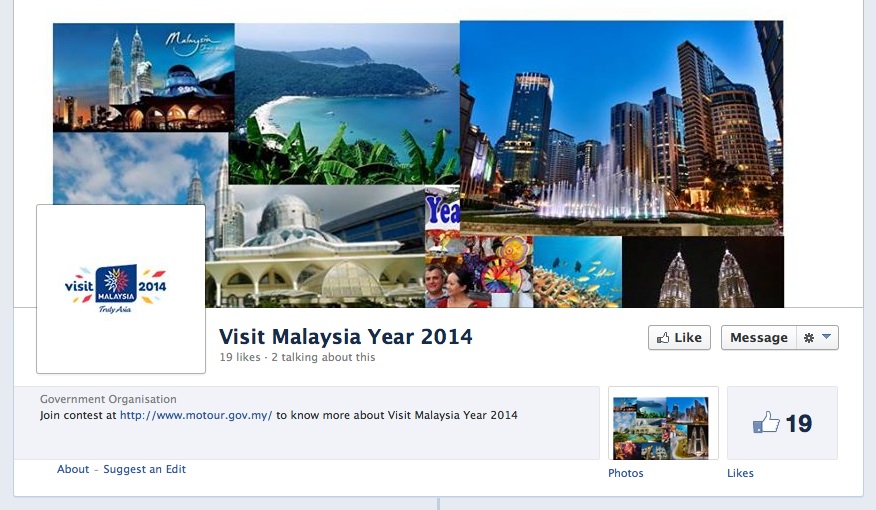
VMY 2014 FB page
VMY 2014 FB page

The Facebook page features a link to a competition but this actually goes to the Ministry of Tourism website. Such competitions will help drive interest in the country and there is no reason why a competition can’t be created for businesses that may want to invest in or relocate to Malaysia.

The message of the TV commercial was to attract Foreign Direct Investment (FDI) while the message of the website is “Whether your passion is food, culture, sports or art; whether you’re a traveler or entrepreneur; Malaysia has something amazing to offer. The journey starts here”.

The malaysia.my home page

One might be forgiven for thinking that sounds like a tourism message however the site features a number of feel good stories about successful Malaysian entrepreneurs, achievements, news, activities and more.

As the website evolves, it may need to focus or at least segment activities more clearly and provide refreshing and new content that is of interest to stakeholders and not repeat content that is already in the public domain. This new content will create interest in the country, be picked up by search engines and robots and drive traffic to the site.

The team tasked with the responsibility of making the Malaysia Nation Brand project a success will also need to engage stakeholders on an ongoing basis and not just use digital platforms to broadcast corporate driven messages.

Right now, a search of “Endless Possibilities” on Youtube doesn’t send visitors to any Malaysia site. The Brand plan will also map out tactics for driving users and search engine robots to original content.
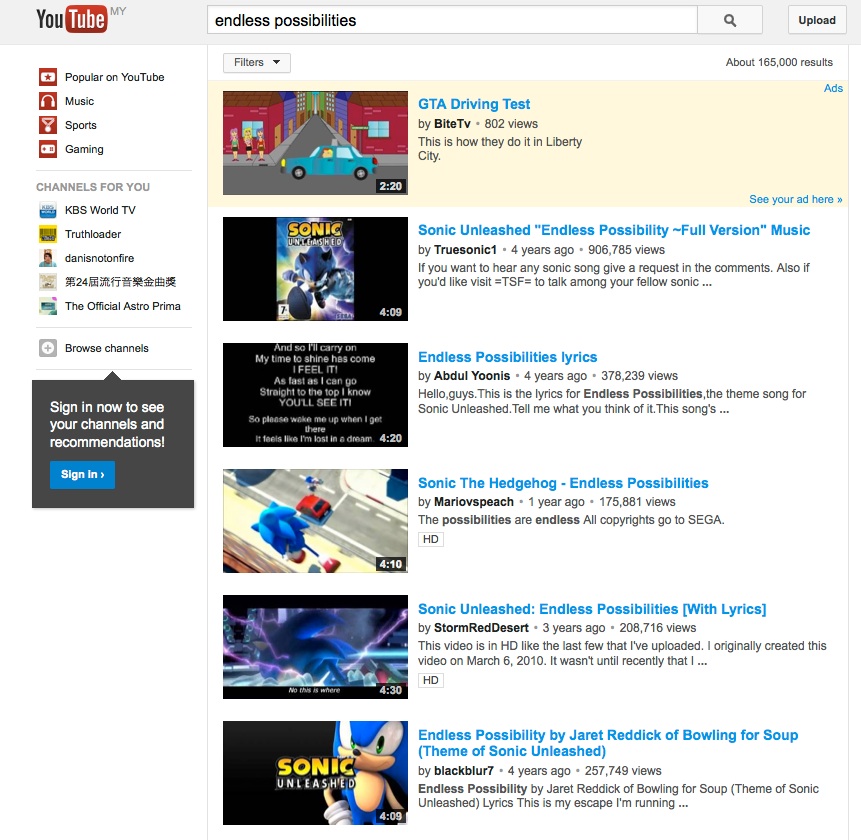
you tube search of 'endless possibilities'
you tube search of ‘endless possibilities’

The launch of the new Brand strategy is set for 17th September and we should know more about the project then. But I believe, done properly and based on a comprehensive Nation Brand plan, “Endless Possibilities” really does have endless potential.

Building the Malaysia Nation Brand requires a strategic approach


The development of a Malaysia nation brand has been discussed for a number of years. As part of the Industrial Master Plan (IMP3), a National Branding Task Force was established and tasked with building the Malaysia Nation Brand. In 2008, through the Malaysian External Trade Development Corporation (MATRADE) and after extensive research and a nationwide tender, the project was awarded to a brand consultancy.

After a letter of award was issued to the consultancy and the project team was mobilized, the then Prime Minister stepped down and six months later the project was cancelled. Soon after the National Branding Task Force was disbanded.

Since then there hasn’t really been any organization established to develop a Malaysia Nation Brand. Some of you will say that 1 Malaysia was a Nation Brand but it wasn’t.

At the end of 2011, some firms were invited to “submit slogans for a new Nation Branding project”. Of course a slogan isn’t a Nation Branding project but it was considered a start.

The slogan chosen was probably “Endless Possibilities” because this was used during the World Economic Forum in Davos to promote Malaysia as a South East Asia location for investment and tourism.

Without any warning, a sixty second TV commercial aired on CNN in March 2013. If you have a weak stomach, I don’t recommend you read any of the reader/viewer comments below the video.

It’s hard to identify who posted the video but there is reference to a brief with the comment, “The brief from the Prime Minister’s Office of Malaysia was to promote Malaysia as a dynamic country with well developed infrastructure and an aggressive economic growth plan for the future.”

More recently, the Prime Minister was spotted wearing a badge with a design that has been described as “a starburst in red, yellow and white against a blue background.” Malaysia, in a custom font is underneath the logo.

The new Malaysia logo (thanks to thestar.com.my)

In late August 2013, a local news portal reported that Prime Minister Najib Razak will launch a new national branding effort and that the national branding effort comes with the slogan or tagline, “Endless Possibilities”.

This is exciting news, so what should we expect from the Malaysia Nation Branding project?

It is important that Malaysia doesn’t fall into the trap many other countries fall into – jumping head first into a well produced communications campaign in a misguided attempt to build a brand.

India is famous for its ‘Incredible India’ advertising campaign launched in 2002. By 2009, India was spending US$200 million advertising the country. In November 2012 India announced that a new advertising campaign headlined, “Find what you seek” would be launched to build on the Incredible India efforts.

The new Indian minister of tourism announced that the new campaign highlighted to consumers that ‘they will find whatever they are looking for from a holiday in India.’

The goal of the new campaign was to increase international arrivals by 12% annually till 2016. Unfortunately, little more than a month later, a woman in Delhi was brutally gang raped and left for dead on a public bus. The story made headlines around the world.

Four months later, a Swiss woman was gang raped whilst on a cycling tour of Madhya Pradesh and soon after, a British woman was attacked in Delhi and only avoided potential death after jumping from a hotel window to escape.

Within a matter of weeks, instead of announcing increased interest, tour operators were reporting a 35% cancellation rate from women and a 25% drop in all arrivals with multiple cancellations from the lucrative markets of Australia, the UK, Canada and the United States.

Meanwhile, FDI dropped 29% in 2012 despite the ongoing advertising campaign. An advertising campaign, however good, isn’t going to change perceptions caused by crime or reverse FDI declines caused by the global economic situation. So years of the Incredible India campaign, if remembered at all will now be replaced with harrowing tales of the treatment of women in India and depressing economic data.

What nation brands have to understand is that today, not only are constituents in target markets more segmented and more knowledgeable, they also live their lives very differently, source their information more socially and in many countries, no longer believe corporate driven messages anyway.

But most important of all, in today’s dynamic, fluid social, Internet fuelled world the corporate driven message, created after months of brain storming by consultants and the like and communicated to all and sundry at enormous expense repeatedly can be undone in a moment and replaced with harrowing tales of criminality and economic woe.

Building a Nation Brand is a strategic initiative not a tactical one. A communications campaign is a tactical activity and it is not possible to build a Nation Brand with a communications campaign, especially one that is created to convince both internal and external stakeholders of something that is hard to prove.

Today, building a Nation Brand requires multiple elements that are critical to the success of any such project. However there are two in particular that will make or break the Malaysia Nation Branding project.

The first is that the community must be involved in the development of the Nation Brand and agreed values must be clearly defined and understood by all stakeholders and integrated into their lives and applied to every touch point.

Sure there must be a CEO with the knowledge, strength and unbiased objective viewpoint to drive the project but without this early stage buy in from stakeholders, the chance of success are very low.

And the second critical element is that promises made must be kept. It is simply not good enough anymore to say you are something or you are going to do something without delivering on that promise at every touchpoint.

I don’t know the full extent of this project and how the community was involved but in the video aired on CNN, the Prime Minister says, “Malaysia is the unique place where the best of Asia comes alive.” That’s a bold statement that will require buy in from all Malaysians and will be tough to deliver to all stakeholders.

So let’s hope the Prime Minister and his team pulls it off because in the current economic climate, a well defined brand that has the buy in of key constituents, resonates with target markets and delivers on promises made will give Malaysia a significant edge over competitors in an increasingly competitive environment.

Good experiences will help build the Malaysia Nation Brand


I read an interesting article on the Malaysia Nation Brand which can be found here.

But I was particularly taken by one of the reader’s comments.

As someone who has worked on a number of elements of the Malaysia brand and who has written numerous articles on it, I believe I can add value to this discussion.

Firstly, it is incredibly hard to write about the Malaysia Nation Brand or any other Nation Brand in an article of a thousand words or so! It’s a thankless task which is why many experts have trouble writing a relevant or coherent book on the subject!

And, because the world is so dynamic, what is a ‘cutting edge’ tool today maybe obsolete tomorrow and a tactical solution recommended yesterday may not be relevant tomorrow.

Anyway, back to the contributor. He appeared to state that maintenance in Malaysia is not a problem and insinuated that it was irrelevant anyway because it had no bearing on the Malaysia Nation Brand.

The author of the article responded saying that maintenance is very important and forms part of the confusing image of Malaysia. The author goes on to say that poor maintenance of buildings contributes to the experience and therefore the success of the brand.

Let me state here that maintenance is a major cause for concern in Malaysia, especially at Government venues but also at privately owned venues.

Last Saturday and Sunday, I was at the Bukit Jalil indoor stadium for a world class sporting event (ATP Tennis) and the place is a sad, shabby, tired mess. Walls are filthy, the place smells, doors are broken, clocks don’t work, ventilation is poor and navigation complicated. I won’t event mention the toilets. Furthermore, the TV sets are old and either not working or showing a picture that looks as if there is a snow storm going – the list of poor experiences is endless.

As I left I looked up at the beautiful main stadium and could see numerous holes in the roof, abandoned scaffolding and other signs of neglect. And we all know this scene is replicated around the country.

If we want to build a nation brand, it will require more than a tagline, a brand essence or a glossy advertising campaign. To build a Malaysia Nation Brand will require a massive change in mindset. Part of this will require an understanding that positive experiences create positive memories which lead to positive word of mouth and an improved Nation Brand.

Because it is the experiences people have when they interact with numerous touchpoints that they will remember and communicate to others.

World class sporting events are a major way of improving a brands image and the organisers should be commended for bringing in this prestigious event. But the authorities should also do their part and make sure the experience is unforgettable, for the right reasons.

If you are interested I wrote an article on the Malaysia Nation Brand and you can find it here.

Malaysian brands not spending enough online


Yahoo’s latest Net Index study reveals something most of us with kids know already – Malaysians are spending record amounts of time on social networks. The report states that the time spent by Malaysians on social networks increased 29% in 2010.

As well as social media, file sharing, online searches, email and chatting all saw an increased activity. The number of purchases online also grew so you would expect Malaysian CEOs to be spending more money online right?

Well yes, and no. Advertising spend in 2010 grew to RM7.7 billion (US$2.6 billion) a YOY growth of 16%, but of that only RM52 million was spent online. Up a respectable 29% over the previous year but still not enough.

The rest was spent on traditional media with newspapers capturing 51% or RM3.9 billion of total ad spend. This is an increase of 14% despite the fact that readership of all newspapers is declining.

With consumer confidence falling it is going to be hard to sustain such gains and traditionally, when the economy falters, advertisers will seek accountability.

My hunch is that we’ll see a huge jump in online advertising with traditional media – newspapers, TV, radio, Out of Home and magazines all taking the biggest hit.

Data from the Nielsen company

Media

2009 spend (RM ‘000)

Percentage Share

2010 spend (RM ‘000)

Percentage Share

Percentage change

Newspapers 3,407,826

51.5

3,890,824

50.8

14.2

TV 2,446,536

37.0

2,892,472

37.7

18.2

Radio 361,818

5.5

408,871

5.3

13.0

Magazines 139,545

2.1

151,735

2.0

8.7

Outdoor 112,250

1.7

119,745

1.6

6.7

In-store 86,300

1.3

123,620

1.6

43.2

Internet 40,446

0.6

52,149

0.7

28.9

Cinema 22,496

0.3

23,811

0.3

5.8

Total 6,617,217

100

7,663,227

100

15.8

What Malaysia must do to build a Nation Brand


Traditionally, Tourism Malaysia has had the responsibility of raising the awareness and promotion of Malaysia. And Tourism Malaysia has worked hard to build awareness of the country as a tourist destination and on the whole, it has been reasonably successful.

But in an increasingly competitive world, Malaysia is not just in a global competition to attract tourists. It is also in a global competition to encourage talented Malaysians to return to the country, international talent to live in the country and international investment. Malaysia also needs to move away from its image as a supplier of commodities to the provider of more valued added products and services and increase its influence in Asia and on the world stage. As if there weren’t enough, it is also in a domestic battle to forge a national identity bought into by multiple races!

A strategic tool to achieve the goals of attracting talent, increased revenue through expanded tourism and more valuable exports is Nation Branding or country branding. Australia, India, Norway, Oman and Qatar are all making a concerted effort to attract the world’s attention, interest and revenue by embarking on Nation Branding initiatives.

In this competitive environment, complicated by bickering politicians and individual agendas, tactical rather than strategic initiatives, fragmented and outdated communications, a lack of integration and communication between organisations and dwindling global funds available for investment, Malaysia has a lot to offer.

It is a progressive, innovative and stimulating country in which to live, work and visit. Malaysians are enthusiastic for development and have a natural ability for entrepreneurship. Individual races have capabilities in specific areas important for the growth of the country. For such a young country, it is remarkably open and many times it has been called a model Islamic country. It has numerous natural resources that should ensure quality of life can be high. Residents and visitors can enjoy the benefits of increasingly advanced infrastructure combined with a vibrant, diverse culture and a reasonably well trained and educated work force.

But, unfortunately, Malaysia does not have a clearly defined image or the visibility internationally that it deserves. Part of the reason is that it lacks a national Brand that resonates with Malaysians and enjoys wide acceptance internally and is effectively and consistently communicated externally.

As a result, international perceptions vary widely. Some believe it is an undeveloped country rich in such natural resources as rubber and timber; others look at the Petronas twin towers and fail to see many differences between Taipei, Shanghai, Bangkok, Hong Kong and other Asian metropolises. This lack of a consistent Nation Brand persists despite the efforts of successive Prime Ministers, international events such as the Formula 1 Grand Prix and the 1998 Commonwealth Games and increased visitors to the country.

The need for successful Nation Branding is recognized at the highest levels.

Most recently, the Prime Minister, via his website and with the assistance of Tony Fernandes, CEO of Air Asia has outlined the need to shape the country moving forward and asked for help from citizens. Although technically not a citizen, I have three children growing up as Malaysians so I have a vested interest in the success of the country.

So what should Malaysia do to start building the Malaysia Nation Brand?

Five key factors are required to achieve the prime minister’s goal as an international “corporate nation.” These include:

• Widespread agreement and acceptance on what Malaysia stands for, and what makes her unique in the community of nations. The agreement and acceptance is based on communication and understanding among all levels of government and all facets of society.

• The identification of industries most likely to complement Nation Branding initiatives and a clear process for investing in and sustaining that investment and developing those industries.

• Clear, consistent and coordinated communications to domestic and international audiences by public and private sectors. A long-term plan with goals and measurements is critical. Ideally, these communications must be tailored to specific segments.

• Successful execution of brand messages. This is not just a communications exercise. The public and private sector must facilitate international and other economic involvement, while tourist-related industries and areas must perform according to expectations.

• Leadership. Current branding efforts are hampered by a variety of uncoordinated tactical efforts, each promulgating a different message. Leadership is required to ensure that Malaysia both speaks “with a single voice” and has the necessary long-term commitment.

The following are the key steps required in the development of the Malaysia Nation Brand and they are as follows:

1) Carry out a brand audit. Who do we think we are? Who do our stakeholders think we are? What do we have? What do we want to become? What do we have? Do we have the skill sets required to sell it? Are our communications communicating this effectively? Does the content of our communications resonate with target markets or are we using a one-size-fits-all strategy to communicate with everyone? Are we using the right platforms? Who are key stakeholder influencers? How do we communicate with them? What do stakeholders want from us? Can we deliver? If so how?

2) Analyse and review the data collected in step one and identification of key industries to help drive the Malaysia Nation Brand.

3) Develop the nation brand framework. This stage includes the development and articulation of the vision, mission and values of the brand as well as the development of a positive & competitive identity that offers economic, experiential and emotional value to each target audience

4) Develop a holistic and comprehensive visual and verbal brand. Sadly this is where most nation brands start. Using a creative driven approach, they look to spray advertising across as many platforms as budgets will allow and pray that it sticks in at least some of the places. This ‘spray and pray’ approach to branding is destined to fail nearly every time.

5) Develop the brand strategy. Only AFTER the above steps can the brand strategy be developed. Normally a plan to drive the brand forward, it outlines how to position Malaysia as a unique, different and attractive country for key stakeholders such as tourists, investors, strategic partners and talent and includes, branding, marketing, sales and other imperatives as well as measurement, budgets, responsibilities and more. Individual country brand strategies should also be included for key markets. The brand strategy also outlines requirements to clearly communicate relevant messages to the target constituents and stakeholders in multiple countries.

6) Make sure all initiatives systemically connect the Nation Brand to Malaysia’s core industries, corporate brands and Small and Medium Enterprise (SME) sector brands

7) Measure, improve, refresh and keep relevant.

Building a nation brand is not easy. It requires commitment and perseverance and the will to stick with something even when it may not be going according to plan. Follow the elements above and we will have a much better chance of building a Malaysia Nation Brand.

Direct Mail, Email and your brand


Direct Mail and Email marketing are critical components of any branding strategy for either a business to business or business to consumer brand. And it is a growing business. But the quality of Direct Mail and Email marketing in Malaysia and the mining and management of the databases used is horrendous.

If you own a company and you want to destroy any equity there may be in your brand, prepare a badly written product sheet on your desktop and when you are finished, don’t bother to spell check the document.

Print 50,000 copies and shove them in all the letterboxes of as many office or apartment complexes in the Klang Valley as you can. While you are sitting at home waiting for the phone to ring (assuming you included it on the flyer – and believe me, some don’t), your ‘DM campaign’ is being thrown in the rubbish bin by the lift, used as a place mat for lunch or simply thrown on the floor by the mail boxes. Hardly an inspiring ‘moment of truth’ first time experience for your brand and potential customer.

Another way to damage your brand is to send the wrong material to the wrong people. I have three kids, two under the age of 13. Yet this year they have both received two offers from credit card companies. These offers state that applicants must be at least 18 years of age.

A lot of firms are moving away from DM to save money on the printing of their flyers or brochures and looking at Email marketing. Although figures are unavailable for Malaysia, the Direct Marketing Association in the UK informs us that 90% of companies are now using email marketing.

There is no doubt that a well thought out and planned email campaign can be effective and profitable. But too many firms don’t do this and instead are simply adding to the seven trillion spam messages expected to be delivered to inboxes around the world in 2011.

I signed up with a local event organiser for information on forthcoming branding and marketing seminars that they organise in the region. Within a week my inbox was inundated with emails related to human resources, accounting, insurance, motivation and other topics I have nothing to do with and no interest in. These emails are trashed with the same irritation as the ones for Viagra, lottery wins and Nigerian banks.

Despite my repeated requests to be unsubscribed from their list, I continue to receive multiple emails. I cannot simply mark the email as ‘junk’ because they are using a Gmail account and this will send all mail from Gmail addresses to my trash. The name of the company is ingrained in my subconscious, but for all the wrong reasons and it is now a matter of principle that we will not sign up for any event organized by this firm.

I have received about 10 emails in the past month from an insurance company that recently spent RM13 million (US$4 million) on a rebranding exercise. The emails are not personalized, the attachment is of a flyer that is dull and states in two places that the offer is exclusively for Mastercard holders yet I don’t have a Mastercard.

I really lose faith in financial institutions and other companies when they make such mistakes. Think of the money wasted on the cost of the name, flyers, administration and so on.

The rewards for good campaigns are significant. The Direct Marketing Association reports that more than RM550 billion was spent on direct marketing advertising (including email marketing) in 2008 and sales generated from that were an astonishing RM6,450 billion! There is no question then that DM can be effective because it allows consumers to read about the products and services before deciding to explore further, or even buy.

But it has to be done properly. It is not enough simply to create a campaign and send it out. It is also important that the content resonates with the target market. And you still need to ‘sell’ the product. Just because you have got into the prospect’s inbox, doesn’t mean the prospect will buy.

The key for all direct marketing or email marketing is get the customer information right in the first place and keep it updated accurately thereafter. If you are collecting a lot of leads but don’t have the resources to input and clean the data, then outsource. There are many firms offering such services and it will be money well spent.

There is an edict within Direct Marketing industry that says, “Right offer, right person, right time.”

So it’s time for Malaysian firms, from SME up to main board, to end all this untargetted, uninspiring, untrackable, unproofed direct mail and start building brands with quality marketing collateral.

Advertising campaigns need to be integrated across the organisation


Recently I wrote a post about my experiences when I called the number on a billboard selling a luxury automotive brand. You can read the full article here

Basically I talked about how I rang this brand after seeing a billboard outside my office. I got through to the receptionist who asked for my number and said she would get someone from sales to call me back. Nobody called me back, even though the car costs about RM500,000 (US$166,000)! I thought this was an excellent example of why so many brands fail. But I didn’t think much more about it.

Then today I was sitting at a traffic light outside Bangsar Shopping Complex and I saw the same company had another billboard, this time it was advertising their jaw dropping top of the range V10 sports car that costs over RM1,250,000 (US$420,000) in Malaysia. Now this really is an exclusive motor and in the middle of last year there were orders for about 240 of them in the UK and a waiting list of 12 months. If they are only selling 250 odd in the UK I would expect them to sell no more than 50 in Malaysia. So you have to question why they market such an exclusive product on a billboard.

But this is not a rant about using old mass market mass economy models to sell luxury brands, this is about the fact that it is imperative that marketing campaigns are integrated and organisational excellence is at the heart of any tactical campaign.

And I know it isn’t at the heart of this campaign because whilst waiting for the lights to change I decided to call the number on the billboard and see what sort of a response I would get.

I called the number. No answer. Now it was 5.17pm and perhaps the receptionist has gone home. But I doubt the sales team had gone home. I bet they were sitting around wondering how to drive traffic to the showroom so they can make target this month and get a nice juicy bonus for Chinese New Year. Perhaps at least one of them might have been wondering why the expensive outdoor campaign they’ve been running for some time hasn’t generated any results!

I’ve tried to go and see these guys but the marketing manager tells me they are doing well. Here are some basic principles to abide by when you run an advertising campaign so that when you are doing well, you can do better.

1) You advertise on billboards to stimulate, inform, persuade etc. If you want to inform perhaps a 100 people in the country about a luxury product, spending large amounts of money on billboards or for that matter print ads in daily newspapers, is a complete waste of marketing dollars.
2) Consumers who can afford to spend over 1 million Ringgit on a car are unlikely to keep to your office hours. Make it easy for them to spend money with you.
3) Your advertising copy should appeal to a specific audience – in this case, those who can afford over RM1,250,000 on a car – everyone else is just getting in the way. So create copy that will resonates with that target market. This ad just mentioned the engine capacity and that was it! Ever wondered why mini does so well?
4) Develop metrics for measuring channel effectiveness. A simple metric for outdoor ads is a specially assigned number for that campaign.
5) Outdoor advertising is 24 hours. That’s probably one reason why you bought it in the first place! If you can’t have someone on standby 24 hours a day, install an answering machine or after office hours have calls diverted to a sales manager or sales director.

These are elementary and should be included in any strategy document created by a brand consultant.

Build a brand with the basics


Right near my office at Phileo Damansara in Petaling Jaya, a luxury German auto manufacturer has two billboards advertising its top of the range luxury autos. One is a saloon and the other is an SUV. I like this particular SUV so much that if I was still putting posters up on my bedroom wall, the SUV would be front and centre.

This company also has a number of billboards at other locations around the city of Kuala Lumpur and in the suburbs featuring a smaller version of the SUV (for which there is a 1 year waiting list) and other versions of the saloon. It also spends a lot of money on print ads and recently advertised their top end coupe in a Malaysian daily and a Malaysian business weekly.

Cars in Malaysia are expensive as import duties can go as high as 300% for luxury vehicles. The full page full colour ad with standard automotive blurb also stated the price of over RM1,000,000 (US$333,000). At that price, there are probably no more than a handful of people in the country who can afford the car. Even if there are a 100 or even a 1,000 people in the country who can afford the car, full page ads in national newspapers are probably not the most cost effective channels to communicate with those people.

Now I’ve actually approached this particular organisation in the past to ask if we can come in a make a capabilities presentation. We didn’t get past the marketing manager who basically said that as sales were very good there was no point meeting us.

Judging by recent reports, the company is certainly doing well after the launch of new models in 2008. In fact, the company claims to have been Malaysia’s fastest growing luxury car brand in that year with sales up an impressive 102%. Moreover, sales continued to climb in the first 6 months of 2010 with sales up 66% over the same period in 2009. Impressive figures and the company now claims to have about 5% of the luxury market in Malaysia.

Anyway, seeing this billboard on a daily basis with the telephone number prominently displayed, was beginning to get on my nerves. So I decided to call the number. After all, if you advertise your products on a billboard and display your telephone number, one can only assume that you want prospects like me to call you.

And if a prospect calls that number you better have the processes and systems in place to ensure that the person receiving the call passes it on to the right department. And you better have the right processes and systems in place to ensure that the next person in the process does what they are supposed to do. In this particular case, call the prospect back. Especially when we’re talking about a luxury product.

So anyway, I called the number and asked for information about the top of the range SUV. The receptionist was very pleasant and explained that she would get someone from the sales department to call me back. I gave her my mobile number and waited for the call. That was last Thursday, today is Sunday and I still haven’t heard anything. Bear in mind this vehicle costs over RM500,000 (US$166,000).

Generally the point of billboards is to create awareness. A telephone number is there in the hope that the keen, desperate consumer who wants the product so much that he will take the time to record the number and follow through with a call. Of course most of us just ignore billboards and the messages on them. Indeed, it’s rare for a prospect to call. But there are always incoming calls that may just result in an easy sale to one person who may become a customer for life so if you don’t have those basic processes and systems in place to take the information and pass it on, what is the point of advertising?

Here are some more tips that will help this company improve its profitability, the most important metric for branding:

1) The era of the global ad buy is over. Different markets require different communications strategies. Whilst it may make sense to create awareness of a luxury product via national papers in relatively wealthy western markets, it is a waste of money in developing markets where the demand for luxury products is limited to only a few.

2) Brand building is about the long term. When you launch new products they will, if you are extremely lucky, fly off the shelves or out of the showroom. But this is the exception, not the rule. And anyway, this doesn’t mean that you can become complacent, sit back, put your feet up and relax. Your competition will soon catch up and your moment in the limelight will soon be over.

3) The whole point of mass market advertising such as billboards and newspaper ads is to create awareness with mass markets. That is why weekend copies of daily newspapers are full of ads for hypermarkets, supermarkets, discount stores, sales and so on. But luxury products require more than a mass market tactic to make a sale. If you must use these old fashioned tools, use them to develop a database of prospects so that you can qualify those prospects and invite them to your showroom if you think they have potential.

4) Many companies will have a system in place to act on incoming enquiries. But who is responsible for ensuring those enquiries are acted on? The system must also ensure incoming enquiries are reported to sales management so that they can follow up with the sales department.

5) Brands are built on offerings of economic, experiential and emotional value. That journey begins with the first contact. It doesn’t matter how much you spend on advertising, if you can’t deliver that value, prospects will go elsewhere.

Now I’m going to call BMW to get more information on the X5.

How to brand a destination to attract investors, the right businesses, talent and tourists


The destination branding rewards are high in terms of investment, jobs, development, tourism, exports, domestic and even international influence. But building destination brands is harder today than ever before. There are over 1,000 national and regional economic development agencies in South East Asia alone and the ongoing global economic crisis, political interference and a fragmented, tactical approach to a strategic initiative all help complicate the process.

It’s also hard because most destinations attempt to build their brands on a platform of familiar marketing and advertising campaigns that include one-size-fits-all positioning strategies driven by advertising in mass media, that do little more than add to the advertising clutter increasingly ignored by consumers. And more often than not, those campaigns are led by tourism.

Tourism maybe about to become the number one industry in the world, but did Indonesia’s 2008 tourism campaign and the tagline “Celebrating 100 years of nation’s (That is not a typo) awakening.” influence South Korea’s Hankook Tire when it was looking for a location for a US$1.2 billion tyre plant? Of course it didn’t.

Hankook Tire sought a good location close to transport hubs, a secure source of quality rubber, abundant and cheap labour and probably the opportunity of an early crack at Southeast Asia’s biggest economy.

Indonesia is on something of a roll at the moment and is expecting as much as US$10 billion of investment from South Korea alone over the next four years. And it’s not just Korean firms that are looking hard at the country.

The steel company Arcelor Mittal is currently considering a US$5 billion investment and China Investment Corp is rumoured to be considering an investment of as much as US$25 billion. A number of other deals are also in the works but although details a sketchy, one thing is for sure, none of them will be swayed by positioning statements or slick advertising campaigns featuring white sandy beaches, azure skies and crystal clear seas.

These companies will make their destination decisions, and this is particularly true of Indonesia but also applies to other Asian destinations, on political stability, a clearly defined long term plan to invest in railways, roads, power plants and distribution networks, ports, transportation and more as well as concerted attempts to tackle bureaucratic red tape, graft, and unfriendly labour laws.

Indonesia understands this and regional competitors would be wrong to ignore this sleeping giant. President Susilo recently instructed the relevant federal and state or regional authorities to speed up spending, particularly on infrastructure. Assurances from the central bank that it would not impose outright capital controls will do a lot more to convince potential investors than any expensive tagline or one-size-fits-all positioning statement.

Don’t get me wrong, tourism has an major role to play in the development of many destinations but an international one-size-fits-all positioning statement that attempts to speak to potential investors, tourists, talent and others from diverse parts of the world with one message is not the way forward.

So what can regions, states or cities do to build destination brands that will attract investors, businesses, talent and tourists?

Once the infrastructure is in place or the blueprint outlining the infrastructural development with timelines, responsibilities and milestones is determined, destinations must carry out research to identify channels, communities and influencers within those channels and communities and develop content that resonates with those influencers and those communities.

Prospects from different industries from different parts of the world have different requirements for value. Sarawak corridor of renewable energy (SCORE) on Borneo is targetting ten core industries. Those industries are as diverse as Aluminum, Aquaculture, Fishing, Glass, Timber and Tourism. Such diverse industries with their different requirements for value, will seek information from and be influenced by completely different environments.

Identifying those requirements is mission critical, without it destinations are guessing and the success of a destination brand should not rely on guesswork. So destinations must talk to prospects and customers from each segment. Find out what value they seek and determine if the destination can deliver that value.

To avoid wasting valuable resources on advertising and marketing that is lost in the clutter, it is important to determine what online communities they inhabit and who or what influences them. Also identify why investors chose the destination. And talk to lost customers and find out why they chose another destination over yours.

At the same time, internal brand research must identify what are the core brand values of the destination and how will they be communicated internally so that the whole organization is on brand and understands the role they play in the successful implementation of the brand. And it is critical that the core brand values are developed with customers in mind and not from the destinations point of view.

The analysis and data from this key research will form the foundations of the destination brand strategy. And only once the brand strategy is developed can the implementation begin. The implementation must not neglect citizens and their communities who will be impacted by the changes to their environments.

There will be positive and negative implications for communities and these must where possible be predicted and dealt with accordingly. If they cannot be predicted, they must be dealt with in a consistent, transparent and confident manner. It is important for destinations to understand from the outset that without citizen and other stakeholder buy in, the destination will not succeed.

Increasingly fragmented media, the Internet and an increase in leisure time activities make it harder to reach consumers via traditional media. Destinations must look past the traditional broadcast approach to generate interest in the destination.

One destination in South East Asia purchased a double page spread in the International Herald Tribune to market the destination. The feature was really well written, with top quality images and provided a comprehensive overview of the destination. But the feature made the common mistake of trying to tell everyone about everything.

This approach hopes that the advertisement or feature will be seen by the right people at the right time and that they will invest the time required to read through the substantial feature in the hope that there will be something relevant to them. The problem is that there are lots of competitors doing the same thing and moreover, how many senior executives are willing to invest time reading such articles?

This particular feature also made the mistake of not including any tracking tool to identify the number of responses. Any marketing efforts must include tools to measure their effectiveness because if you don’t track the effectiveness of your marketing efforts, how do you know which ones are working and which are not?

Communications must also take into account changes in consumer behaviour and look past the traditional media channels with an emphasis on the Internet and Social Media. And this will require a comprehensive change in the thinking of CEOs and others tasked with developing a destination brand as it requires ongoing engagement with consumers rather than a traditional broadcast approach.

To be successful, destination brands must now adapt to these emerging business and customer imperatives. Imperatives that include a special emphasis on the right research and the right data collection and analysis, effective customer, channel and employee communications, operational excellence, accountability, service and the ongoing ability to meet customer requirements.

The potential rewards are huge but the stakes too are high and with competition coming from all angles, destinations will only get one shot at building a successful destination brand.