Where are all the global Asian Brands?


I came across an article posted on the Insead business school blog that asked the question, “Where are all the Global Asian Brands?” The author, Brand strategist Martin Roll argued that ‘emerging market companies have grabbed market share by doing things faster and cheaper.’ He also said that those Asian companies now need to build brands to stay competitive. I can’t argue with that either.

In the article he says that most Asian firms believe that branding is about logos and advertising and that Asian firms must create value for customers if they are going to survive and thrive in the new world order. Again, I can’t argue with this and he goes on to state that there is a lack of strong brands in Asia.

He says this is for four main reasons

1) A transactional approach to business rather than one based on relationships
2) The prevalence of small businesses in SE Asia that prefer short term wins over long term returns
3) Weak legislation and enforcement to protect Intellectual property
4) The traditional, family based, hierarchical structure of businesses in Asia that doesn’t appreciate the importance of intangible assets.

I agree that boards, or certainly CEOs should guide brands and I agree that many Asian brands are poorly managed, especially on the soft skills side.

Isn't Sony a global Asian Brand?
Isn’t Sony a global Asian Brand?

I believe however that this is mainly because demand has outstripped supply and as a result branding has not been a priority. Yes there are structural issues in many Asian firms and they will be found out however, many Asian firms are quite nimble and I am confident they are beginning to change, especially as more Western brands look to Asia as their own markets stagnate.

Now I don’t want to be accused of being pedantic and I don’t know what is Martin’s definition of an Asian brand but there are nevertheless plenty of global Asian brands from the aviation, automotive, transportation, Oil and Gas, entertainment, travel, banking, property, technology and other sectors.

Chang sponsors Everton and Liverpool Football Clubs

Think of all the countries that are brands and their national airlines. The numerous LCCs, Proton, Haier, Sony, Petronas, Star cruises, YTL, Alibaba, Temasak, DBS, Maybank, SingTel, Tiger beer, Brands, Sampoerna, Lenovo, Jardines, Zalora, Chang Beer, Red Bull.

What is more important in my mind is that these companies became global brands in an economy that no longer exists. Where the political, social, cultural and communications ecosystem was very different to what it is today.

The danger Asian firms face is not one of inertia or fear it is one of using the wrong tools and techniques to try and build their brands. To challenge the established Asian brands and compete with cash rich Western firms and their massive marketing budgets, Asia’s challenger brands such as ZTE, TCL, CIMB, Hisense, Xiaomi, Ogawa, Jobstreet, Oppo, U Hotels and many more will need to be more focussed on delivering economic, experiential and emotional value.

Xiaomi. Delivering value at every touchpoint but spending very little on traditional media

If they try and compete, dollar for dollar with those established Asian firms and aggressive Western brands they will fail. Asian firms must be nimble, agile and ready to adopt new technologies and encourage their customers to be part of the brand’s DNA. Only then will we continue to see more global Asian brands.

Brands have a responsibility to tell consumers the truth about their products


Numerous papers have been written on the influence of advertising in developing countries. Most of the papers suggest that historically advertising influences consumers more in the developing world than it does in developed countries.

This probably stems from a ‘traditional suspicion towards the ‘middleman’ as opposed to a belief that manufacturing or production is more ‘honourable’ or ‘respectable’’. Malcolm Harper “Advertising in a developing economy”. The assumption being that the manufacturer’s message has an air of respectability about it whilst the sales pitch of a salesman or middleman should be viewed with suspicion.

Firms, especially Western firms spend a lot of money on advertising in Asia to convince consumers to buy their products. The problem is of course that far too many consumers have been let down by products that fail to live up to the promises made in the advertising. This is one of the reasons quoted for the advertising fatigue across Asia.

In fact many experts suggest this is also why Asian consumers are so obsessed with discount and, perversely Western luxury brands with a clear evidence of a quality heritage. Clearly, if brands want to continue to have an influence on consumers, they must be honest with those consumers.

One firm that always spends big on advertising is Proctor & Gamble (P&G). According to Ad Age P&G spends an incredible US10 billion per year globally on advertising. In the first 9 months of 2014 P&G spent US$48 million on traditional media in Thailand and often its ads are dubbed to be shown across national borders.

The ad above was shown in Malaysia but looks as if it was produced in a different language. The ad shows a family all working together to get the son through his exams. However, the dad appears to have a cold and although the mum stops his sneeze with a pillow, the voiceover tells us that germs can spread through fabrics which the wife complains are hard to wash.

Cue voice over claims that Fabreze Ambi Pur eliminates flu viruses and odours, 99.9% of germs and freshens fabric, leaving a light scent behind”. The ad closes with the son getting an A+ and the line “Odours and flu virus go, freshness stays.”

I think that based on the ad, a lot of possibly gullible consumers are going to think that by using this product they won’t have to wash big items like blankets, carpets and cushion covers.

Air fresheners and in particular Fabreze Ambi Pur are very popular in South East Asia. Get into a car in Malaysia, Singapore, Indonesia or Thailand and the chances are you’ll see a Fabreze Ambi Pur product placed in front of the air conditioning vent.

Many government offices have machines on the wall that squirt out similar products at regular intervals. And the Malaysia Ambi Pur Facebook page has 90,000 Likes and the Thailand Facebook page has nearly 160,000 Likes.

That’s an impressive following. But can Ambi Pur really eliminate flu viruses? Can it really eliminate 99.9% of germs? And what are the effects on humans of the chemicals contained in these products?

According to the sustainable baby steps website, Fabreze is a dangerous product. The site claims it contains a total of 87 chemicals, many of which are supposedly dangerous to humans. It suggests that Fabreze doesn’t clean the air but instead masks the odours with chemicals. The site goes on to provide a number of natural, inexpensive ways to keep a home smelling fresh and healthy.

Another site that claims to ‘set the standards for safe self care’ says that Fabreze contains phthalates which are ‘hormone-disrupting chemicals that have been linked with childhood asthma.’

P&G doesn’t share any of the apparently harmful ingredients in Fabreze. Oddly, the Ambi Pur ad is filed under education on Youtube.

P&G is a global brand and an influential advertiser in South East Asia. It maybe that spraying chemicals on a cushion is not harmful. Whatever it is, P&G has a responsibility to educate consumers properly, truthfully and in a transparent manner. Otherwise, it will lose its respectable tag.

Another example of how consumers are building destination brands


This interactive ‘heat map’ shows which tourist attraction at every destination around the world is photographed the most.

There are as many as 1,000 photographs in some countries with New York’s Guggenheim Museum the most photographed landmark in the world.

The most phtographed landmark in the world

In Singapore the Merlion is the most photographed landmark whilst in Kuala Lumpur it is, rather unsurprisingly the Twin Towers. In Bangkok it’s the Wat Sraket Rajavaravihara and in Kuching it is the Sarawak river.

The Merlion, popular with tourists in Singapore

What does this site mean to the business of destination branding? Well primarily it will drive traffic away from tourism board sites and their carefully choreographed images to consumer sites and there peer to peer content.

Those destinations that continue to focus their funds on corporate driven strategies or groups of tactics instead of encouraging engagement across social sites and consumer generated content will lose business which in turn will lead to reduced revenue for the many businesses that benefit from tourism.

Advertising agencies in Asia call their work crap


Spikes Asia is an annual get together for the creative communications industry to share ideas, network and possibly drink too much. It is considered by many to be a melting pot of creative talent from the east and the west and anyone who is anyone in the industry should be there.

There are lots of seminars, workshops and exhibitions. Work exhibited at the event is judged by leading creative minds and awards are handed out to the winners. A Spikes award is much coveted by anyone in the creative industry. The 2013 event was held in Singapore in September.

You are probably wondering why I am commenting on such an event, especially as I have written before that I think there are too many of these events and as a result creative people focus less on delivering value to clients and more on winning awards. Few people agreed with me. I remember some years back we interviewed a creative guy who had won nearly 200 awards and he was only 22!

I’m commenting again because I came across an interesting article on the mumbrella site about comments made at during Spikes Asia. Sonal Dabral, Chairman and CEO of DDB Mudra Group India said, “There is a restlessness among creatives to achieve fame fast without really understanding the consumer or the client’s product.”

Advertising in Asia is crap

He went on to say, ““Greed and shortcuts” are partly to blame for why there is “so much crap” advertising in Asia.”

Calvin Soh, the former creative head of Publicis Asia Pacific and now founder of Ninety Nine Percent said, “If you have a truly great product, you don’t need to advertise.”

You can read the full article here. Leading minds in the creative industries saying that a lot of what they do is crap, that many in the industry don’t understand their clients and that many companies don’t need to advertise does make me wonder why companies continue to let advertising agencies take responsibility for the success or failure of their brands.

Turbulence helps Singapore Airlines strengthen its brand


Singapore Airlines only recently reported its group operating profit fell 19.8% to S$229 million (RM564 million). SIA Engineering and SilkAir also reported lower profits while losses for SIA Cargo dived more than 40% from S$119 million to S$167 million.

And then a recent Singapore Airlines flight from Singapore to London made it into the global headlines for all the wrong reasons.

Air turbulence caused the flight to lose altitude just as breakfast was being served. Much of the food and drinks were left all over the cabin and passengers and a potential Public Relations nightmare could have resulted with irate passengers complaining across social media.

Milk and sugar?
Milk and sugar?

However, an event that the airline has little control over turned into a PR success thanks not to the Singapore Airlines corporate PR department but due to the professionalism of the crew and the community approach of the passengers.

As soon as it was safe to do so, the cabin crew checked every passenger and then, with the help of passengers did their best to clean up the mess. When the flight arrived in London, paramedics were waiting to treat the few slightly injured passengers & crew.

As passengers disembarked, the crew handed out an apology, chocolates and of course a big Singapore Airlines smile. A potential disaster averted with good training, responsibility and a customer centric mentality.

Read the full story here

Stop advertising and start branding part II


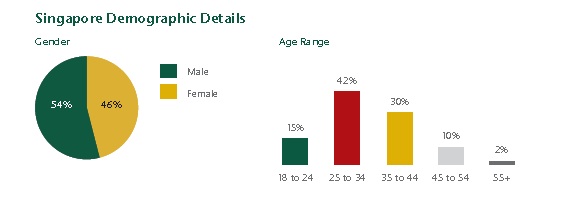
A fascinating insight into the social media and mobile shopping habits of consumers in the United States, United Kingdom, Australia and Singapore has just been released by SDL in the UK.

The survey size is a little small – 4,000 people in four countries – but the results unearth new data on how social media and mobile are influencing how consumers interact and build relations with brands.

Singapore participant breakdown

Findings include:

33% of respondents from all four countries have acted on promotions seen on social media.

58% of respondents have shared positive experiences online and have sought advice from friends and family when talking about brands on social media.

U.K. respondents are more likely than respondents from the other four countries to complain about service on social.

When respondents express feedback, Facebook is the most popular platform to do this.

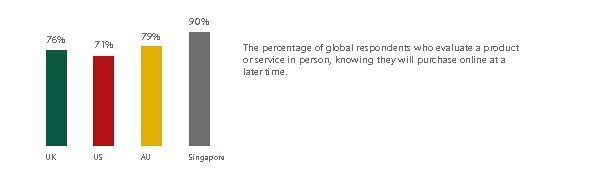
Showrooming (visiting a physical location to evaluate products and services even when you know you will buy online at another time) is increasingly prevalent as 77% of participants showroom.

Experiential branding key to branding success

62% of the participants use a mobile device when in stores to compare product prices.

69% of respondents from all four countries expect a brand’s online store, mobile app, and physical store to offer the same pricing, discounts and sales.

Pricing consistency is expected in all countries

What can brands learn from this thought provoking survey?

They need to understand their relationship with consumers and what resonates with those consumers.

Brands that ensure parity in pricing and products across multiple channels will have to place greater emphasis on the customer experience and experiential branding if they want to win and retain business. Those that compete on price alone will soon be out of business.

Department stores and other retail outlets that represent multiple brands will have to work harder to engage consumers and ensure a positive brand experience otherwise they face the prospect of losing customers, possibly forever.

Mobiles are changing the way consumers research and learn about brands.

Brands that take the time to build relationships with core fans or brand evangelists will see their brands promoted to thousands of fans for minimal financial investment.

Those brands with digital brand strategies that go beyond tactical campaigns online are increasing sales through loyalty and advocacy.

Brands that try to control content and manage corporate driven messages and ignore consumers are unlikely to last very long in the consumer economy of today.

Telling the brand story online should be done across Facebook and other popular platforms with the ongoing development of corporate and consumer content.

IS YOUR INTERNET STRATEGY WORKING FOR OR AGAINST YOUR BRAND?


I’ve heard a lot of good things about the Naumi hotel in Singapore and as I’m travelling down south, I thought it would be a good opportunity to try the place. Sadly when I attempted to book online, the hotel was full.

The next day I was reading an online newspaper and noticed an ad for the Naumi. I thought that maybe they’ve freed up some rooms and I can get to stay there after all.

Unfortunately, the hotel was still fully booked. In fact, after further research, the hotel is fully booked and in just about every room category, with one or two exceptions, for the next 12 months at least. I didn’t look past 12 months so it could even be longer.

Massive digital campaign despite being fully booked for a year

Since I saw the ad almost a week ago, I have continued to see Naumi ads across a wide variety of online sites, both local and international.

So why is the Naumi advertising? Isn’t this a total waste of an advertising budget? Is this an example of why CEOs are losing patience with CMOs? I can only assume it’s not a one off ad but in fact part of a campaign. If I am right, how much is this campaign costing and if the hotel is full for 12 months, what is the point?

Despite being fully booked, the hotel continues to advertise

When creating a digital campaign, reach and frequency are irrelevant. If those words were used in the pitch to you then you need to sack the agency. Because all they tell you is how many people saw your ad and how often they saw it.

You are probably wondering if they are perhaps using it as a lead generation exercise. Well I thought the same thing and that as I left the site they would try to grab some data from me.

It’s a logical thought because banner ads are not that effective. The general consensus of opinion is that the number of visitors who actually click on a banner ad is only 0.2%, which equates to one in 500 visitors that actually click on the ad.

And just because they click on the ad, doesn’t mean they automatically become customers. The seller, in this case the Naumi hotel still has to convert those visitors into prospects.

There are various ways of doing this, depending on your business. For the Naumi hotel, this is obviously to get the visitor to book a room. However if the hotel doesn’t have any rooms and simply tells the visitor this, the whole exercise has been a complete waste of time and money.

Of course the visitor may return, but then again they may not after all, how many visitors that have been disappointed, return to the scene of their disappointment? Or they may go on to build a relationship with another hotel.

Surely it would have made sense for the hotel to offer an apology (I don’t know about you, but when a firm apologises for being successful, I am hooked) and ask me for an email address so they can start to build a relationship with me?

And to use the campaign more effectively, I would create an offer whereby any visitors that register, will be offered a free upgrade when they book at a later date.

But no, they spent that money creating a campaign to get me to their website and then when I get there its like the place has closed down.

I bet the marketing department is reporting an increasing rate of visitors to the website but so what.

Digital advertising is not just about the campaign – the creativity, the reach, the frequency, the impressions, the clicks etc.

It is about the data, the source of the lead, the influencers and ultimately conversions that generate ROI.

If you don’t do it properly, don’t do it at all.

Destination Branding – Take advantage of opportunities when they come your way


A luxury cruise ship, the Azamara Quest caught fire a couple of days ago whilst sailing in the South China Seas. The ship was travelling from Manila on its way to Sulawesi, Bali and Komodo before heading off to its final destination of Singapore.

By all accounts, the Azamara Quest is a beautifully designed and well built ship and the crew extinguished the fire quickly and professionally and with little if any danger to the passengers.

But the ship is now running on limited power from its generator and the passengers are probably suffering, especially if there isn’t any air conditioning.

It is not clear if the ship was scheduled to stop at Sandakan on the eastern side of north Borneo because it is not listed as a destination on the company website. But anyway that doesn’t matter because it will be stopping there now!

Sandakan has a chance to leverage this opportunity to great effect. I don’t want to take anything away from the misfortune of the company and the passengers but up to 1,000 wealthy and influential, mainly European and American visitors are about to make an unscheduled stop at what is one of the best kept secrets in South East Asia.

Furthermore, because cruise ships have had a rotten press lately, the industry is reeling and as a result, this story is getting more coverage than is typical so many journalists from around the world are covering the story and may make their way there to talk to passengers when they dock.

It is a wonderful opportunity for Sandakan and Sabah, the Malaysian state in which Sandakan is the second largest city, to gain valuable exposure.

So what should Sabah tourism do?

Find a way of communicating with the passengers before they arrive and identify what they want when they get to port and make sure you give it to them. Depending on how long it will take to repair the ship, will determine how long the passengers are staying in Sandakan. Offer the cruise ship owner accommodation to all the passengers at hotels and make sure the rate is very attractive.

Being wealthy and influential passengers, many of them will be on tight schedules and this may mean the end of their holiday. If they leave Sandakan feeling unhappy, Sandakan may be guilty by association. Make sure those passengers that need to leave quickly are assisted in anyway possible and work with partners in Kuala Lumpur and other transit points to ensure their departure is a positive experience.

Assign well trained representatives to welcome the passengers and make sure they are easily contactable, given decision making responsibilities and budgets to help passengers in any way.

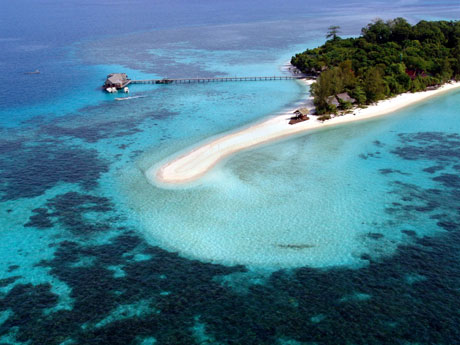
Use this opportunity to show off places like Lankayan island by providing free transfers to the island and subsidised rates for those passengers that would like to go diving.

Offer free trips to visit other attractions such as Gomantong caves, the Turtle island park, the Proboscis monkey sanctuary and of course, for anyone who has their clubs, a round of golf at the golf and country club.

All these efforts should be underwritten by the Sabah Tourism Board. There will be a temptation to see this an an opportunity to make some extra money and even charge more to the cruise ship passengers. This would be a mistake.

Wherever possible, get contact information, email addresses, twitter profiles, tumblr information and track them once they’ve left and stay in touch with those with influence.

Such gestures will also form the foundations for future negotiations with this and other cruise lines who will certainly learn of the generous and proactive approach of Sabah Tourism.

This is a marketing/PR/reputation opportunity and should be seen in such a way. These efforts won’t cost much, will leave an indelible impression on the visitors who will discuss the welcome they received in Sabah for years to come.

Creative campaign not the solution to smoking issues in Singapore


As with many issues, Singapore has a zero tolerance approach to smoking and in particular, teen smoking. Get caught selling cigarettes to minors and you face a fine of over US$6,000.

Anyone under the age of 18 caught carrying cigarettes, carrying not smoking, and it is an automatic fine of US$30. Get caught again and the fine is US$60. If you don’t pay the fine, your parents spend a night in jail.

Smoking is banned in all public places such as hotels, supermarkets, restaurants, bars, shopping malls, museums, theatres, airports and other public transport places, libraries, indoor and outdoor sports arenas and government and private offices.

If a person serving in the military is caught smoking whilst in uniform he or she is disciplined and fined. Like other countries, cigarette packets carry gruesome images of what smoking can do to throats, mouths, unborn babies and so on.

Little wonder then that according to a recent Synovate survey, Singapore has the lowest numbers of smokers (13%) across a random selection of countries including Bulgaria, Cyprus, France, Italy, Korea, the Netherlands, Russia, Serbia, Slovakia, Taiwan, Thailand, South Africa, the United Arab Emirates and the United Kingdom.

Unfortunately many of these smokers started smoking in their teens. According to a Pfizer poll in May 2010, 84% of smokers started the habit in their teens and some started smoking as young as 12.

And although at 9%, Singapore has one of the lowest rates of teen smoking in the world, the Health Promotion Board is keen to address the issue of smoking amongst young adults and teens.

So the Health Promotion Board appointed Ogilvy & Mather Singapore to develop a creative campaign to encourage young people to reject cigarettes and live a tobacco free life that will improve their appearance, fitness, spending power and contribute positively to the environment.

The results are ‘Live it up without lighting up’ and they can be seen ogilvy_smoke-1 and ogilvy_smoke2-1. The campaign featured above the line (ATL), out of home (OOH), digital, radio and events such as the Great Audio Experience, held on 29th May 2010 as part of World No Tobacco Day celebrations.

The creatives feature gorgeous, young, happy, confident people with unblemished skin in semi cartoon like environments. Copy tells readers that “Non smokers tend to look younger than smokers of the same age” and “Non smokers tend to be physically fitter than smokers.” Goals are to communicate a better more beautiful and green world populated by gorgeous young things who are fitter, healthier and generally in a better place as a result of not smoking.

According to Jon Loke, Head of Art, Ogilvy & Mather Singapore, the agency was careful to ensure that the campaign would not talk down to them. “We needed to turn the traditional way anti-smoking campaigns are carried out on their heads to create a message that would appeal to youths. Hence, the campaign encourages, empowers and ultimately celebrates a smoke-free life.”

Now I really like the creatives, I think they are really well executed and I really hope the campaign works. But I sincerely doubt this is the way forward. That’s because a creative driven campaign, no matter how much it turns things upside down, is unlikely to have an impact on the number of smokers in Singapore.

Malaysia spent RM100 million (US$30 million) over 5 years on such a campaign that was inneffective in bringing down the number of smokers in Malaysia.

In the UK, after extensive research of more than 8,500 smokers over a ten-year period, the Institute for Social and Economic research found that the warnings on cigarette packets that smoking kills or maims are ineffective in reducing the number of smokers.

Likewise, chilling commercials or emotionally disturbing programs are also ineffective. The study also discovered that even when a close family member becomes ill from the effects of smoking, the smoker takes no notice.

In fact, according to the study, smokers only reduce the number of cigarettes or sometimes quit when their own personal health is at stake. And even failing health may not persuade a smoker to reduce or even stop smoking because smoking is linked to a lack of psychological wellbeing and often failing health results in psychological decline.

Even before this campaign, Singapore has successfully reduced smoking amongst youths. Statistics released in 2009 by the Students’ Health Survey (SHS) 2009 suggest a downward trend in youth smoking, with the proportion of youngsters who had tried smoking, even one or two puffs, declining from 26% in 2000 to 16% in 2009. That’s an impressive statistic and I would focus more on what drove those achievements rather than new creative campaigns.

I have a hunch that this campaign will not have a dramatic effect on the number of smokers in Singapore. Data shows that traditional marketing tools are even less effective today than they were 10 years ago. Consumers simply don’t listen to mass marketing the way they used to, especially when copy uses vague terms such as ‘tend’.

What is required is a data driven approach to the issue. Specific and comprehensive qualitative research with relevant targeted questions related to each segment (and each segment will be specific and targetted) that are designed to deliver actionable data. I’m sure this information is already available.

It is imperative that the audience is identified and then engaged individually, on a one to one basis. It will be an expensive and long term effort. That doesn’t mean repeating the same one size fits all commercials or messages, this means developing a relationship with these partners through engagement.

Also critical to the development of the strategy will be the buy in from stakeholders such as doctors, educators, retailers and others. Discussions must be held with these key elements to determine strategies. One such strategy might be to find alternative sources of income for retailers. Policing of key stakeholders such as retailers must be ramped up.

Once research is completed and analysed, a comprehensive strategy must be developed featuring a fully integrated program to communicate with all stakeholders with specific emphasis on education at residential level and dynamic, preventative and educational programmes for schools. Existing smokers will be targetted individually through interviews with doctors, rather than one-size-fits all creative campaigns.

Only once the strategic blueprint is ready can the implementation begin. There is no easy way to reduce the number of smokers in Singapore. It’s going to take a long term investment in time, effort and money.

Singapore has done many things right in the past to reduce the numbers of smokers. Investing valuable resources on creative driven campaigns that have not worked in the past is not the way forward.

3 words that can ruin your brand in Malaysia and Singapore


If you are in Malaysia or Singapore and you sell stuff to customers, there is one phrase that can ruin your brand.

“No stock Lah.” Is repeated time again by poorly trained and disinterested staff.

This seemingly innocuous phrase should be banned in your organization. While we’re at it, you should also ban the obligatory disinterested shrug of the shoulders that normally comes with the phrase.

For the uninitiated, the phrase is common in retail outlets the length and breadth of Malaysia and still, despite the alleged sophistication of the city state, in many of the malls up and down Orchard Road in Singapore.

This simple yet powerful phrase, used with annoying regularity in both discount stores and swank boutiques of luxury brands negates every penny your organization has spent on sales training, reputation development, customer service, customer relationship management and other operational excellence initiatives.

It renders worthless the massive investments you have made in licenses, real estate, interior design, stock, utilities and more.

It erases the hard work you have put into press releases, press conferences and other promotional efforts.

It undoes all the good of the advertising campaigns you have run for years in an attempt to get a consumer or two to give your brand a chance.

In a heartbeat, it ruins every single, expensive effort, financial and otherwise you have put into getting the consumer into your store.

In short, this seemingly innocuous phrase can ruin your brand.