Advertising campaigns need to be integrated across the organisation


Recently I wrote a post about my experiences when I called the number on a billboard selling a luxury automotive brand. You can read the full article here

Basically I talked about how I rang this brand after seeing a billboard outside my office. I got through to the receptionist who asked for my number and said she would get someone from sales to call me back. Nobody called me back, even though the car costs about RM500,000 (US$166,000)! I thought this was an excellent example of why so many brands fail. But I didn’t think much more about it.

Then today I was sitting at a traffic light outside Bangsar Shopping Complex and I saw the same company had another billboard, this time it was advertising their jaw dropping top of the range V10 sports car that costs over RM1,250,000 (US$420,000) in Malaysia. Now this really is an exclusive motor and in the middle of last year there were orders for about 240 of them in the UK and a waiting list of 12 months. If they are only selling 250 odd in the UK I would expect them to sell no more than 50 in Malaysia. So you have to question why they market such an exclusive product on a billboard.

But this is not a rant about using old mass market mass economy models to sell luxury brands, this is about the fact that it is imperative that marketing campaigns are integrated and organisational excellence is at the heart of any tactical campaign.

And I know it isn’t at the heart of this campaign because whilst waiting for the lights to change I decided to call the number on the billboard and see what sort of a response I would get.

I called the number. No answer. Now it was 5.17pm and perhaps the receptionist has gone home. But I doubt the sales team had gone home. I bet they were sitting around wondering how to drive traffic to the showroom so they can make target this month and get a nice juicy bonus for Chinese New Year. Perhaps at least one of them might have been wondering why the expensive outdoor campaign they’ve been running for some time hasn’t generated any results!

I’ve tried to go and see these guys but the marketing manager tells me they are doing well. Here are some basic principles to abide by when you run an advertising campaign so that when you are doing well, you can do better.

1) You advertise on billboards to stimulate, inform, persuade etc. If you want to inform perhaps a 100 people in the country about a luxury product, spending large amounts of money on billboards or for that matter print ads in daily newspapers, is a complete waste of marketing dollars.
2) Consumers who can afford to spend over 1 million Ringgit on a car are unlikely to keep to your office hours. Make it easy for them to spend money with you.
3) Your advertising copy should appeal to a specific audience – in this case, those who can afford over RM1,250,000 on a car – everyone else is just getting in the way. So create copy that will resonates with that target market. This ad just mentioned the engine capacity and that was it! Ever wondered why mini does so well?
4) Develop metrics for measuring channel effectiveness. A simple metric for outdoor ads is a specially assigned number for that campaign.
5) Outdoor advertising is 24 hours. That’s probably one reason why you bought it in the first place! If you can’t have someone on standby 24 hours a day, install an answering machine or after office hours have calls diverted to a sales manager or sales director.

These are elementary and should be included in any strategy document created by a brand consultant.

Is a traditional marketing campaign going to sell motor oil?


Petronas is Malaysia’s state-owned energy provider and it is the only Malaysian company to be listed in the FORTUNE Global top 500 companies.

Its lubricants division, Petronas Lubricants International (PLI) in association with M&C Saatchi has recently launched a global brand campaign for its flagship product Syntium. M&C Saatchi is responsible for the creation and development of the overall campaign.

The campaign features a 30-second TV commercial that is currently being aired across Astro and Malaysian terrestrial TV channels, radio, print ads and digital initiatives although a quick search of ‘Petronas Syntium’ on Facebook and twitter uncovered zero activity.

And of course, as with any traditional creative driven campaign, there will be lots of below-the-line collaterals.

Costing only about US$350,000 (RM1,000,00) which includes production costs and execution, the campaign has launched in Malaysia and will be pushed out across PLI’s key markets including China, Thailand, Italy, South Africa, India and more. It’s not known if that amount includes the campaign execution across all countries.

M&C Saatchi states that ‘the new Syntium brand campaign was produced using state-of-the-art CGI animation with the core message of the ads reflecting PLI’s fresh approach towards knowledge and technology – Fluid Technology Solutions’.

Do consumers still pay attention to traditional campaigns like this one that haven’t really changed since the 1960s? I know it includes social media but there doesn’t appear to be much going on online. So it’s a yet more noise and clutter to add to the deafening noise consumers are ignoring.

Although I haven’t seen any of the TVC’s, print ads or heard the radio ads I’m sure they will be very well executed and the cutting edge CGI animation will blow me away but the question has to be, will it sell more oil?

I value your comments and thoughts on this issue.

Why are you still using positioning to build a brand?


Back in the late 1960s, Al Ries and Jack Trout published their first article on positioning. But the term didn’t really become advertising jargon until the articles entitled “The Positioning Era”, were published in Advertising Age in the early 1970’s.

You can read the original articles here

There are numerous definitions of what positioning is today (Google ‘what is positioning’ and you get 24,900,000 responses). Even wikipedia isn’t sure but anyway you can read their definition here

But in today’s marketplace, positioning has multiple problems. Here are 11 reasons why you shouldn’t use positioning to build your brand:

1) Positioning was developed for the US mass market of the 1970’s. Is the Malaysian market similar to the US market? I don’t think so. The Malaysian market isn’t even similar to the Singapore market and they used to be the same country! And Thailand has little in common with Indonesia and so on. So why use the same model here?

2) In a smaller, flatter more competitive world, advertising agencies have used increasingly desperate and outrageous claims in their advertising to position products in the consumer mind. In Malaysia, Proton uses ‘You’ll be amazed’ to describe it’s MPV. I’m sure it is a good car but if it will amaze me, how will a Lamborghini make me feel? Consumers have been carpet-bombed with such claims for so long that now, they rarely take any notice of traditional advertising.

3) Positioning is only suitable for mass markets. Yet branding today is about segmentation and communicating and engaging with those segments via relevant channels and with messages that resonate specifically with those segments or niche markets. It’s also about retention and relationships. Does this mean that a company should develop different positioning for different niches? Or does it use the same approach for every niche? And does it use the same approach for existing customers as well as prospects?

4) Positioning is immeasurable: You can’t say “our positioning has improved our sales by 5 % or as a result of our positioning strategy, our brand is 12% better than competitors. Furthermore, it is impossible to measure the ROI or benchmark positioning.

5) The wikipedia definition is a top-down, company knows best, hierarchical marketing approach. Yet we live in a C2C environment in which consumers define brands.

6) Positioning is one-way. The company knows best and you must listen to us. We tell you how our products are positioned and you will accept what we tell you. But today, if you are not entering into 2 way conversations with consumers you are about to join the brand graveyard. Today, consumers get any information they want on anything from anywhere at anytime and then make their own decisions.

7) Positioning is competition, not customer driven. The basic premise of positioning is that you want to be number 1 or number 2 in a category in a prospect’s mind. If you can’t be number 1 or number 2 in an existing category because of competition, you make your own category. In today’s congested marketplace, the investments required to develop a new category are enormous. Furthermore, besides the difficulty and expense of creating your own category, you are also letting your marketing be driven by the competition rather than consumer demands for value. This means you are always playing ‘catch-up’.

8) Positioning is dated. With limited competition (by today’s standards) in most categories, positioning was a compelling theory. The problem is that the world has changed a little since 1969. Yet agencies continue to recommend positioning as the foundation for any brand strategy.

9) Positioning uses mass market channels such as TV and billboards to reach as many consumers as possible using repetition to create interest. Yet ask yourself, what do you do when the commercials come on TV? Surf the Internet? Put the kettle on? Go to the bathroom? Text a friend? Basically, you do anything but watch the commercial. How many TV commercials can you remember seeing over the weekend? It’s the same with billboards. How many billboards can you remember from your morning commute? And even if you remember those commercials or billboards, how many of the brands have you explored and purchased?

10) Positioning requires massive, and I mean massive budgets that few companies have. If you do have a massive budget and you do execute your campaign across multiple channels for say six months, what happens if it doesn’t work?

11) To use a sporting analogy, in the early 1970s, professional tennis players were still playing with wooden racquets. Soon after the first non-wood racquets appeared. These were initially made of steel, then aluminium and after that, carbon fiber composites. Today’s racquets include titanium alloys and ceramics. As technology has broken new ground, the tools have improved. It is the same in every Industry yet when it comes to building brands, we’re expected to use the same technology and tools as we have been for the last forty years.

If your agency recommends developing a positioning strategy to build your brand politely show them the door and call us!

Real time example of social media branding in action


This is happening right now!

An American teenager who enjoys knitting and the TV show Glee chose, for reasons unknown, the twitter handle @theashes. Unfortunately the ashes are the name given to one of the great sporting contests of all time, no I’m not talking about the world series that only American teams play in, I’m talking about the (sort of) bi-annual cricket series between Australia and England.

These two have been playing Test cricket since 1877 however the first match for the ashes was played in 1882. This is not the place to explain cricket!

The five match series has just begun with an enthralling 5 day match in Brisbane. Unfortunately for @theashes, fans around the world thought she was the official twitter account and bombarded her for updates from Brisbane!

Her early responses were more bemused than anything, “This is not the account of the cricket match. Check profiles before you send mentions, it’s incredibly annoying and rude.” However later tweets suggest a little frustration creeping in as this recent example shows, “I AM NOT A FREAKING CRICKET MATCH!!!”

In another tweet, she asked, “what the hell is a wicket?” and later she was unsure whether she should support Australia or England.

Enter the Brand. Qantas, sensing an opportunity began a twitter campaign – #gettheashestotheashes and offered her a free flight from New York. Other companies have also offered free tickets to matches, transport in Australia and even mobile phones.

She is considering the flight offer, but isn’t keen to travel alone. Qantas has done the right thing, seeing and responding to a great opportunity to develop a brand advocate. It is little events like this that are critical for the successful development of a brand in the social medial space.

Now they need to offer another ticket for her to travel with a friend otherwise their initial advantage could evaporate.

Should you measure Brand Equity or Customer Equity?


Malaysian and Asian firms can save themselves a lot of effort and resources by focussing on customer equity as they attempt to build brands.

It’s almost 20 years since the launch of the landmark book “Managing Brand Equity: Capitalizing on the Value of a Brand Name” by David Aaker. David Aaker name may not be as familiar as others in his industry, but he is credited with developing the concept of “brand equity”.

The release of “Managing Brand Equity: Capitalizing on the Value of a Brand Name” came at a time when companies were desperately seeking new ways to increase the value of their brands by assigning a value to them or, measuring the intangible assets of the company such as reputation or channel relationships, that were previously ignored by traditional accounting systems. This became known as Brand equity.

On the face of it, “Brand equity” appeared to quantify intuitive recognition about the value of brands that in turn helped to rationalize marketing expenditures. It was also shorthand for a brand’s two key strengths – its relationship with purchasers and mental image among both prospects and customers. And it provided a means to rank winners and losers in branding wars – MAS vs Singapore Airlines, Maxis vs Celcom, Coca-Cola vs. Sarsi and so on.

Brand equity is now considered one of a number of factors that increase the financial value of a brand and the term is used freely to say the least. Nevertheless, despite its popularity, the concept of “brand equity” has numerous shortcomings, especially in an age when customers not organizations, are determining the success or failure of brands. Indeed, the pursuit of brand equity can even warp executive decision making and lead to lost profits and opportunities.

One shortcoming is that although the term is widely used, no common definition of brand equity exists.

In fact, in his book Building, Measuring and Managing Brand Equity, published about seven years after David Aaker’s work, K.L. Keller lists NINE definitions of Brand equity, some of which actually contradict one another. This lack of a definition means that no universally agreed upon measure exists.

Delve deeper into any methodology concerning a “brand equity” calculation, and it quickly becomes apparent that the effort has all the intellectual rigour of a fence post – a dash of corporate history, a gaggle of retail outlet numbers, a touch of stature here and some strength there, a little bit of ‘brand esteem’ topped off with an extra helping of distribution sales, a sampling of questionnaires and so on.

This lack of a common methodology means that two experts examining the same brand come up with widely divergent calculations. Furthermore, it is impossible to compare brands across different countries, industries or perspectives.

This imprecision – at a time of global economic uncertainty when shareholders are demanding more accountability and C level executives insist on both sophisticated measurement and accountability – means “brand equity” lacks validity as a benchmark for executive decision-making. After all, how can executives make effective decisions when it’s impossible to understand – and agree upon – consistent numbers?

As if C level executives didn’t have enough to think about, this imprecision causes other problems as well. If “brand equity” increases by 10%, what caused it? Was it the latest advertising campaign? Or was it a new product launch? Perhaps it was more aggressive sales? Or maybe it was the discounts at critical times to reduce inventory? Better service? “Brand equity” does not provide any insights about cause-and-effect.

Second, “brand equity” does not indicate market or financial success. Look at some companies with great “brand equity” – Pelangi Air, Perwaja steel, Port Klang Free Zone (PKFZ), Kodak, K-Mart, MV Augusta, MAS, – that have either disappeared, faced or are facing financial difficulties. Indeed, “brand equity” as a guiding star leads companies to focus on product maximization at a time when leading companies recognize that a focus on customers is critical to success.

Finally, and most important of all, “brand equity” is irrelevant to customers. Customers buy on value, service, price, convenience or other reasons, but never make a purchase decision based on the relative “brand equity” of two offerings.

Ask yourself, did you ever walk into Cold Storage, Armani or Isetan and buy something based on its brand equity? No, of course you didn’t. Hold that thought, why should you pay attention to an issue that customers ignore? Because everyone else is? Because you were told to in marketing classes that were probably developed in an era before Facebook, twitter, ecommerce and more?

So what should you focus on? The answer is “Customer equity”.

Customer equity has one universally recognized definition – the lifetime value of customers. This value results from the current and future customer profitability as well as such intangible benefits as testimonials and word-of-mouth sales.

Customer equity incorporates customer loyalty to buy again and again, the faith to recommend a brand and the willingness to forgive the inevitable mistakes that every firm makes.

While “brand equity” is impossible to calculate consistently, customer equity can be easily calculated on the back of an envelope. All that’s required are numbers that every company already is – or should be – calculating. These include revenue, customer acquisition (or marketing) costs, costs of goods/services and retention rates.

Ideally, depending on the industry, companies should also track leads and referrals, and be able to determine the profitability of specific products or services. By adding up revenue (or profits), subtracting relevant costs and incorporating retention rates, companies can determine the current – and future – profitability of every customer.

And because customer equity is easy to calculate, it will be understood by everyone from the boardroom to the warehouse, making it much easier to unify personnel behind the brand.

“Brand equity” is all about a product or an organization. But in the customer economy, brands that attempt to push products onto customers that don’t want them will fail. Even if you spend millions creating awareness of your products. Today, building a successful brand requires customers that are profitable.

Customer equity supports and measures the activities that encourage customers to buy more, more often. Increasing “brand equity” does little for a firm and decades of good will can be wiped out overnight (think BP), but increased customer equity reflects increased retention and word-of-mouth sales, key elements of a profitable brand.

Customer equity has other advantages as well. Because retention and customer profitability are tracked, it’s easy to make a direct link between marketing, service and other programs to increases (or declines) in customer equity.

Customer equity also enables the segmentation of very profitable, not so profitable and unprofitable customers. Knowing the relative profitability of customers not only helps promote retention of the best customers but also substantially improves the investment required and effectiveness of marketing as well as reducing marketing costs.

In today’s customer economy, “Brand equity” provides few if any tools for those responsible for attracting and keeping satisfied customers. In The Loyalty Effect, the author Frederick Reichheld wrote, “Customer equity effectively explains success and failure in business…. The companies with the highest retention rates also earn the best profits. Relative retention explains profits better than market share, scale, cost position or any other variables associated with competitive advantage.”

Do brands have value? Absolutely, and David Aaker has left an impressive legacy. But attempting to measure this value provides little benefit and distracts a company away from the critical task of retaining profitable customers.

Because ultimately, it’s these customers – not a fallible calculation of a dated concept – who are responsible for brand value and long-term corporate success.

How to build a brand in Asia today


Building brands has evolved from the one dimensional, top down era where the company controlled the relationship and essentially managed that relationship using broadcasts across mass media such as TV, Out of Home, print and radio with messages and content created to tell you what the company wanted you to know into the bottom up, customer economy.

In the bottom up customer economy, brands and their success or failure are defined and determined by customers. Those customers will create content and messages and disseminate that content and those messages across multiple platforms and to communities who are interested in their opinions. Now, how you interact with consumers is on their terms.

This is not revolution, simply evolution in the branding space. Brands are to blame for this loss of control because they have consistently misled consumers or over promised and under delivered. Brands can no longer be built using one-size-fits-all messages broadcast across traditional media channels to anyone who will listen. Basically because no one is listening.

Sure, there is still a place for messages, campaigns, and so on but because there are so many sources of information, so much clutter, these messages don’t have the impact or influence they had 20 or 30 years ago. In the digital age you can spend as much as you want on traditional media and reach everyone in the country but if they are not listening they won’t buy your product or service.

If a brand wants to be successful it must learn to communicate with multiple segments, and messages must be targeted and must be dynamic, using content and channels that resonate with those segments. But brands must move away from the traditional demographic approach to researching those segments. After all, how many 15 – 24 communities are there on Facebook? And content must constantly be revised and updated with new content.

And organizations must ensure that they deliver on promises and that promise must deliver economic, experiential and emotional value to each of those multiple segments. In the consumer business, this is most often done, initially anyway, in the store. Because in the customer economy, no matter how much you spend, if your staff don’t know how to build rapport with your prospects then they may buy once but rarely will they become a loyal customer. And without loyal customers, you won’t have a brand.

So if you are looking to build a brand, forget about reach, awareness, positioning and brand equity and trying to be all things to all people and start thinking about delivering value to specific segments and building customer equity.

Branding requires you to get to know your customers


This is the start of an ad hoc series of personal experiences I have with brands and some recommendations to help improve the experience.

Running a small retail business is tough, particularly in today’s climate. It’s even tougher in the competitive retail wine business in a small muslim country with high taxes on alcohol. Key to building a profitable business will be the relationship between the company and their customers.

Yesterday evening I walked into my local wine shop where I have shopped off and on for 5 years and was greeted with a “Hi, we haven’t seen you for a long time.” I mumbled a reply and the clerk nodded and carried on reading her magazine. This is not the first time I have gone ‘AWOL’ but the reason for my absense is the same. I haven’t been there for a while because about 3 months ago I was made an offer I couldn’t refuse and bought 5 cases of wine from another company.

Although I got a great deal on the wine there is no reason why my regular wine shop couldn’t have given me the same deal. But of course they didn’t know about it because they don’t make an effort to collect data on me. They just hope that I will come by every now and then and buy something. And if I don’t, never mind, there will be other new customers to replace me. To a certain extent this is true but wouldn’t it make more sense to look at ways to encourage those people who are already customers to come back again? And get to know those that come on a regular basis to increase share of wallet and develop brand ambassadors?

Here are 5 useful tips for any small retail business looking to be more profitable

1) You have a 15% chance of selling to a new customer and a 50% chance of selling to an existing customer. Distribute your resources accordingly.
2) Invest in database software that will allow you to store data about your customers
3) Don’t be afraid to ask for contact information from new and existing customers
4) Invest time in keying in customer data that you can use to determine buying patterns, product preferences and so on
5) Train your staff to get to know your customers.

A solid brand is built from the inside out


The chances are that you have discussed branding, what it is and whether it is important. You’ve probably agreed to ‘look into it’ and assigned someone from marketing to research brand consultants.

Marketing will probably google something like ‘brand consultants’ or ‘how to build a brand’ or ask friends or associates if they can recommend anyone. If your marketing department is staffed with ex advertising agency personnel, they may get on the phone to ex colleagues.

Unfortunately, advertising agencies is where many companies start the development of their brand. Senior management and the marketing department together with an advertising agency and often without any input from other departments such as sales, will spend a considerable amount of time developing the “marketing mix.”

A tagline will be created, colours discussed and so on. This is important but not at this stage. A good brand is built from the inside out. Before the creativity starts, carry out a brief internal brand audit. Ask yourself questions such as, “Do our employees know what we do?” “Do our employees believe in the product/service that we offer?” “Do they understand the role they have to play in the brand mission?” “Do they understand the importance of our customers?” “Do our staff ‘live the brand’?”

Here are 10 other initiatives that will help you lay the foundations for a brand.

Step 1: Review your organizational structure
Customers control relationships with businesses like never before. Manufacturing costs have fallen to record lows. Transactions are cheaper and faster than ever. The Internet has revolutionized the way we communicate and do business. Yet despite these cataclysmic changes, companies continue to integrate in the same old traditional ways.

Employees report to superiors and information is channeled up and down hierarchical chains not across departments, hampering coordination and improvement. To succeed in the future, brands must understand that the customer is king, focus on processes not functions and develop a retention based not acquisition based culture.

Step 2: Recruit talent not bodies
Too many companies leave recruitment to the last minute or try to save money by increasing the work load of already overburdened staff. Look to recruit people that will enhance your organization based on your long term vision.

Step 3: Build a credible corporate vision
In collaboration with staff, create a vision that benefits employees, shareholders and customers. And make it realistic! Brand values must be based on providing value to customers. The reasons for and the role of the organization and individual staff in providing this value and the benefits to the organization and staff must be crystal clear to all.

Step 4: Train new and existing staff immediately, consistently and regularly
The only thing that all brands have in common is that customer loyalty is a result of employee loyalty. The foundations for any internal branding initiative must therefore start with personnel understanding the importance of the role they have to play in the evolution of the brand. In addition to improving skills, training also gives staff the confidence and attitude the organizations requires.

Step 5: View staff as an investment not an expense
Too many companies see staff as an expense and as a result do not invest in them because they are frightened the staff will leave. If you create an environment that is rewarding and encourages personal growth and has clearly defined career paths, your staff will not leave.

Step 6: Give personnel room to grow
Everyone makes mistakes but few people make them deliberately. Once you’ve invested in the right people and trained them, show them you believe in them by supporting them and trusting them to get things done, even if they make mistakes along the way. And if they make mistakes, give them the responsibility to correct the mistake.

Step 7: Encourage freedom of expression at meetings
If you only want to hear people support what you say or agree with what you have done what is the point of them attending meetings? To build a great brand, individuals will contribute and good managers will need to be open and aware of those individuals and give them the freedom to benefit the brand by challenging senior management.

Step 8: Understand that in general the sales department is the frontline of your company
No matter how much you spend on advertising, the first touch point most prospects will have with your brand will be via the sales force. It may be in a shop, a showroom, at an exhibition and so on. If that first meeting with your sales force is unsatisfactory, the prospect will not return. Train your sales force to represent your brand and reward them for doing so.

Step 9: Think long term
Whilst it is possible to build a brand more quickly than perhaps twenty years ago, building a profitable brand takes time and commitment. Take a long term approach to your business rather than a short term deal making mentality.

Step 10: Measure all activities
Wherever possible, measure. But before you do, ensure measurement definitions are standardized to ensure consistency and communicate them corporate wide. And when you measure, share the results across the organization and seek feedback and recommendations for improvement from staff. And then help them implement those recommendations and measure them.

Why the iPad will fail, part 2


As far as I am concerned, Apple is one of the finest brands on the planet. It ticks just about every box for me. Design, product innovation, user interface, image, brand culture, service, communications and so on. But when the iPad launched, I wrote a piece about it and gave 8 reasons why I thought it would fail. You can read the full article here. At the end of the article you can read a number of comments from readers. I am responding to Carl Brooks comment.

Carl makes some interesting comments about the iPad, including “Who knew many people could get by with a device that allowed them to do 90% of the tasks they did on a PC.” He adds, “f you don’t have an iPad pad yet, you are missing out on a truly mobile device. Instant on, long lasting battery, huge screen, multitouch interface that even a baby can pickup.” He also says, “I don’t even bother dragging my laptop offsite anymore.”

I have a couple of reactions to Carl’s comments.

A few of days ago I tried to plug in a portable hard drive to an iPad so I could show someone some TVCs. Unfortunately I couldn’t do so because the iPad doesn’t have a USB port. I’m serious. I also tried to show the same person some images but the iPad doesn’t have an SD slot. Now I appreciate this isn’t an industry standard but it meant that I was unable to use the iPad in a way that I have become accustomed to using computer hardware.

As for missing out, well that doesn’t appear to be the case as I have a superb Apple laptop that does everything an iPad does plus I can multitask. I can listen to Pandora and write a document at the same time. Something I can’t do on an iPad. On my laptop I can have my Twitter app open at the same time as my browser.

I heard that an iPad won’t allow you to have AIM open at the same time as your email! Well I can on my laptop. Oh, and on long flights I can watch a DVD on my laptop, something I can’t do on an iPad. Talking of flights, when I am away, I can talk to my kids on skype with my laptop, they can see me and I can see them. Something you can’t do on your iPad.


Carl mentions that the iPad does 90% of the tasks done on a PC. That’s not much use if you want to do one of the tasks included in the 10%. If you do, then the iPad is useless. To me, that’s a bit like saying a Trabant does 90% of the tasks a Rolls Royce does.

Carl finishes with this comment “I will enjoy this device until a better one is created by Apple or by any other competent competitor that can make something better.”

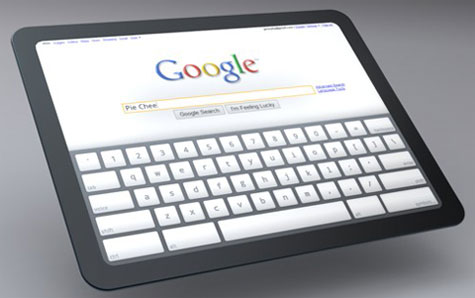
Well Carl, that moment may be here sooner rather than later. The iPad may have the market to itself now, but by early 2011, it’s nemesis, the Android may gatecrash the party in the same way it has gatecrashed the iPhone party. 10.6 million smartphones using the Google developed platform were sold during 2Q2010, equal to about 17% of the market. Apple sold 8.47 million iPhones in the same period, equal to about 14% of the market. A recent report in Digitimes says that Google, Verizon and Motorola are creating an Android tablet with a 10.1-inch screen that could be on sale at the end of 2010.

One solution to some of the issues above would be to buy yet another adapter but even I, a long time Apple devotee am tiring of all the extra money I have to spend on Apple accessories to carry out basic tasks. And anyway, that wouldn’t solve the SD issue.

I still think that Apple is one of the finest brands on the planet. But the cynic in me thinks that perhaps the reason there isn’t a SD card slot on the iPad is to stop consumers buying a 16GB model and increasing the storage themselves, depriving Apple of further income.

Although I’ve been aware of Apple’s strategy of only letting proprietary products complement its devices, it hasn’t really bothered me. However, I do think that if a brand pushes consumers too far or constantly adds new products that require existing customers and those brand ambassadors who build the brand to spend more money then the brand will eventually lose its lustre, especially today when consumers are more fickle and less loyal.

But that is another story. This article began as response to a comment on a story I wrote giving 8 reasons why I thought the iPad would fail. The iPad, in its present form is a flawed product and there are opportunities over the next 12 months for other tablet manufacturers to take market share from the iconic brand.

However, if we take iPad sales (3.27 million units in Q32010 alone) then it could be a success but I still reserve my judgement!