5 reasons why advertising doesn’t work


I recently wrote an article on the state of advertising which you can read here. The post went viral and I have been criticised a lot, especially on Linkedin and you can read the comments here.

I still don’t think advertising is effective. Here are 5 more reasons why advertising doesn’t work

1) I’m not looking to replace advertising. Advertising needs to get its s*** together because it is losing credibility. Moreover, much of it is ignored by consumers who spend their lives multi screening and simply tune out when they see ads.

2) Far too many companies advertise for the wrong reasons, often simply because of their ego. They get a kick out of seeing their brand on a billboard or their friends telling them they saw their brand on a billboard.

Or they advertise because everyone else is advertising but for most of them their advertising never makes an impact. I’m not talking about Unilever, Nestle and the other 8 companies that own 80% of the world’s brands because they have the kind of deep pockets most firms can only dream of. I’m talking about the rest of the companies that make up most economies.

3) My personal belief is that because so many advertising campaigns are too short and don’t run for long enough, the vast majority of advertising is a complete waste of money and that money would be better spent on brand building rather than advertising.

4) Technology has changed the way we live our lives yet we’re still doing things (in terms of advertising) the way we always did. Airlines continue to sell themselves with pretty girls and big smiles and white teeth and with a pretty child holding a teddy bear (OK no child with teddy bear in this example but you get the point).

Exotic destinations use white sandy beaches, purple seas and clear blue skies, banks use ridiculously handsome couples and children and cars use all of the above. It’s boring, unbelievable and doesn’t match the experiences of others who have been there.

And we can read about their experiences online or from our friends. And those experiences, not advertising influence our decisions.

5) Firms would be better off focussing on core branding competencies – a) strategic (inspire & aspire) – trust, credibility & communities, leadership & segmentation. b) Communications – building the narrative collaboratively and social engagement through multiple platforms. c) Execution – on brand organisation able to deliver on promises, data collection and use, monitoring &messaging and d) connection, engagement and collaboration with relevant communities and influencers.

How we do that depends on the organisation, the industry, the customers and budgets and other constraints. Advertising is bandied around as a silver bullet. Want to increase awareness? Advertise. Want to change perceptions? Advertise. Want to increase sales? Advertise. Want to increase share of wallet? Advertise. Got a crisis? Advertise. But there is no silver bullet.

Building a brand takes a strategic approach to multiple actions and requires commitment and buyin from everyone. Advertising is a tactic and for most brands – there are some exceptions, such as a new movie launch, or an exhibition or property launch – it simply doesn’t work and money spent on advertising would be better spent on building a brand.

Where are all the global Asian Brands?


I came across an article posted on the Insead business school blog that asked the question, “Where are all the Global Asian Brands?” The author, Brand strategist Martin Roll argued that ‘emerging market companies have grabbed market share by doing things faster and cheaper.’ He also said that those Asian companies now need to build brands to stay competitive. I can’t argue with that either.

In the article he says that most Asian firms believe that branding is about logos and advertising and that Asian firms must create value for customers if they are going to survive and thrive in the new world order. Again, I can’t argue with this and he goes on to state that there is a lack of strong brands in Asia.

He says this is for four main reasons

1) A transactional approach to business rather than one based on relationships
2) The prevalence of small businesses in SE Asia that prefer short term wins over long term returns
3) Weak legislation and enforcement to protect Intellectual property
4) The traditional, family based, hierarchical structure of businesses in Asia that doesn’t appreciate the importance of intangible assets.

I agree that boards, or certainly CEOs should guide brands and I agree that many Asian brands are poorly managed, especially on the soft skills side.

Isn't Sony a global Asian Brand?
Isn’t Sony a global Asian Brand?

I believe however that this is mainly because demand has outstripped supply and as a result branding has not been a priority. Yes there are structural issues in many Asian firms and they will be found out however, many Asian firms are quite nimble and I am confident they are beginning to change, especially as more Western brands look to Asia as their own markets stagnate.

Now I don’t want to be accused of being pedantic and I don’t know what is Martin’s definition of an Asian brand but there are nevertheless plenty of global Asian brands from the aviation, automotive, transportation, Oil and Gas, entertainment, travel, banking, property, technology and other sectors.

Chang sponsors Everton and Liverpool Football Clubs

Think of all the countries that are brands and their national airlines. The numerous LCCs, Proton, Haier, Sony, Petronas, Star cruises, YTL, Alibaba, Temasak, DBS, Maybank, SingTel, Tiger beer, Brands, Sampoerna, Lenovo, Jardines, Zalora, Chang Beer, Red Bull.

What is more important in my mind is that these companies became global brands in an economy that no longer exists. Where the political, social, cultural and communications ecosystem was very different to what it is today.

The danger Asian firms face is not one of inertia or fear it is one of using the wrong tools and techniques to try and build their brands. To challenge the established Asian brands and compete with cash rich Western firms and their massive marketing budgets, Asia’s challenger brands such as ZTE, TCL, CIMB, Hisense, Xiaomi, Ogawa, Jobstreet, Oppo, U Hotels and many more will need to be more focussed on delivering economic, experiential and emotional value.

Xiaomi. Delivering value at every touchpoint but spending very little on traditional media

If they try and compete, dollar for dollar with those established Asian firms and aggressive Western brands they will fail. Asian firms must be nimble, agile and ready to adopt new technologies and encourage their customers to be part of the brand’s DNA. Only then will we continue to see more global Asian brands.

Real world examples of how to cost effectively use Social Media to build your Brand


To build a brand you need to get a number of things right both internally and externally. And then you need to develop a long term profitable bond between your offering and your customers.

The best way of doing that is by delivering economic, experiential and emotional value to those customers and on their terms. That’s universal and there are no shortcuts. Of course how you go about delivering that value depends on your firm, your industry and your customers.

Historically firms have tended to try and use creativity to communicate a corporate driven message to as many people as possible, whether potential or existing customers in the hope that enough of them will see/hear the message, respond to it and buy into it so that the firm can get through the year.

Does it make sense in the social economy?
Outdated and doesn’t make sense in the social economy.

According to Harvard Business Review and many other respected institutions, this model is obsolete. It’s also incredibly expensive with one expert saying it requires US$10 billion and ten years to build a brand in Europe this way.

Sadly that doesn’t stop millions of brands spending billions of dollars on an outdated and ineffective model that few of them can afford to sustain. This is particularly true of brands in Asia.

Nevertheless, there are some smart brands out there and social media provides an excellent platform to showcase their tactics. Instead of wasting marketing dollars on expensively produced and immediately forgetable advertising campaigns, these smart brands are investing more money on retaining customers than acquiring them.

Of course this makes branding a bit more complicated because it means these brands need to get to know their customers and their needs and not just shove a message down their throats and expect them to accept it. Unsurprisingly making such an effort isn’t that popular with many brands, especially here in Asia. Sure they talk about how they want to understand their customer needs, some even say they love their customers but those claims rarely translate into reality. As a result Asian consumers tend to be less loyal to brands.

OK, rant over! A couple of great tactical campaigns have come to my attention recently and there are a lot of brands around the region that can learn from these activities. They required an investment in researching customers, understanding them personally and then providing simple solutions that resonated with those customers. The investment was minimal but the exposure is exceptional and ongoing.

The first example is from Canada’s TD Bank. For a week in July, Automated Teller Machines (ATMs) in branches across Canada became Automated Thanking Machines and in addition to dispensing money, they spoke to and engaged customers, thanked them for banking with TD and delivered personalized gifts.

The bank gave out flight tickets to one customer so that she could fly to Trinidad to visit her daughter who had cancer. Another lucky recipient won savings accounts for her children each with C$1,000 deposited in the account.

Another customer won a trip to Disneyland and a Baseball fan won the right to throw the first pitch at a Toronto Blue Jays match, lots of merchandise and met one of the players. Phone and online customers were also given deposits directly into their bank account.

The response was phenomenal and four months later it continues to gain valuable coverage in social media and in the mainstream media with the UK’s Daily Mail covering the story in August.

In the first 4 months the video was viewed 17,500,000 times on Youtube, gained 50,000 Likes and 5,000 comments that generated extensive conversation that is still ongoing. On Facebook the TD Bank page has generated almost 550,000 Likes.

More recently, KLM wanted to reach out to customers travelling through the world famous Schiphol airport in a personalized way by giving friends and family the chance to say an extra goodbye. Working with the airport, the carrier identified families saying goodbye to each other at the airport and approached them with the chance to create a nice surprise for the traveller by personalizing the cover on their seat headrest.

In the first week the video on Youtube has already been viewed 208,000 times with 150 Likes and 30 comments. On Facebook the campaign has generated 16,500 Likes, nearly 2,000 shares and 550 comments. As the campaign gains momentum those numbers will, err soar skywards.

Social media allows brands to engage customers and allow them to participate in the development of the brand narrative in a way that those brands using a traditional approach can only dream of.

It’s very hard for a lot of brands to understand they can no longer control the message and instead they must pass on some of the control to consumers and let them develop it.

Once the campaign gains traction other consumers share it across the ecosystem and with the right management and before you know it, a minimal investment has generated far more brand goodwill and sales than any traditional advertising campaign is ever likely to do.

Another example of how consumers are building destination brands


This interactive ‘heat map’ shows which tourist attraction at every destination around the world is photographed the most.

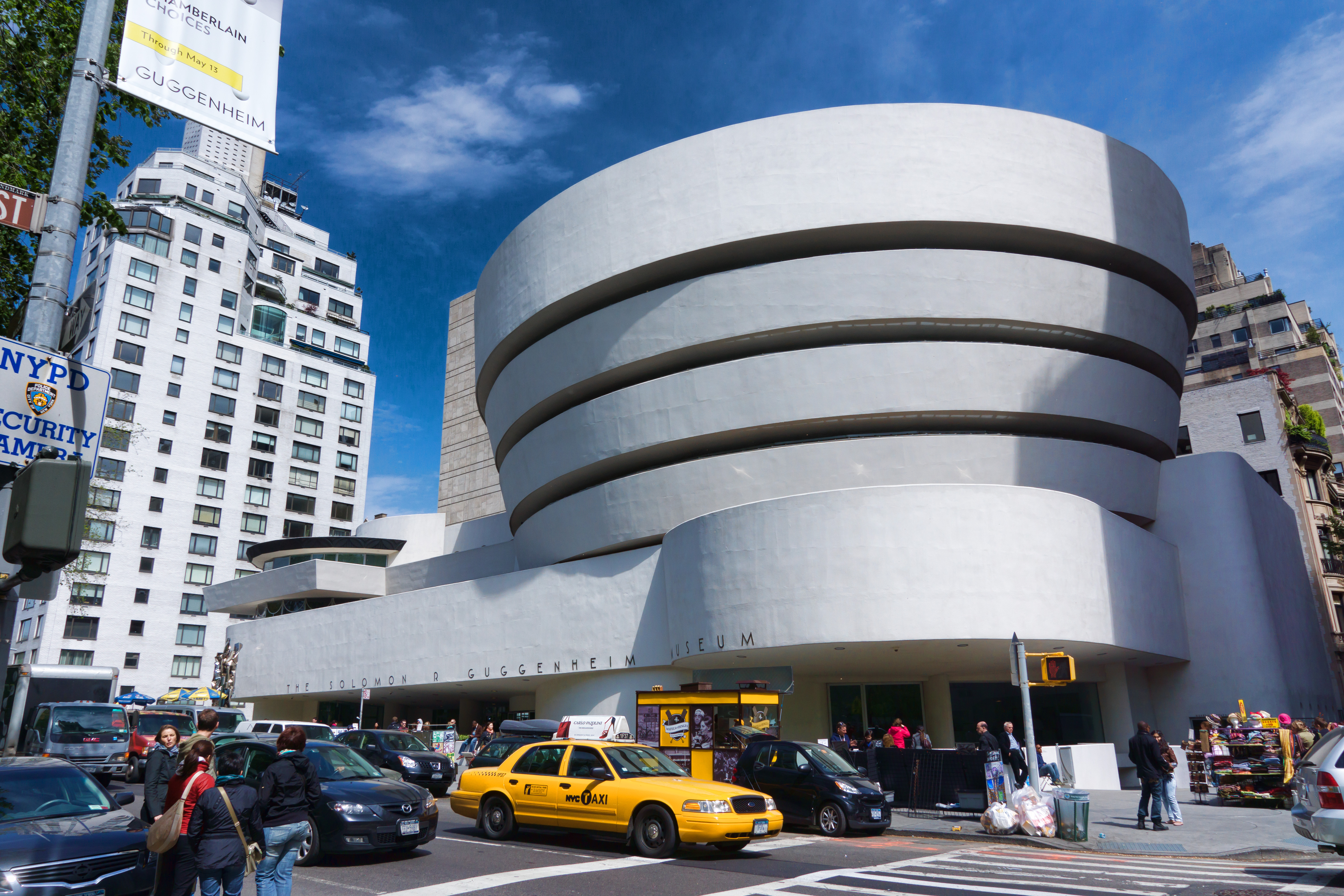
There are as many as 1,000 photographs in some countries with New York’s Guggenheim Museum the most photographed landmark in the world.

The most phtographed landmark in the world

In Singapore the Merlion is the most photographed landmark whilst in Kuala Lumpur it is, rather unsurprisingly the Twin Towers. In Bangkok it’s the Wat Sraket Rajavaravihara and in Kuching it is the Sarawak river.

The Merlion, popular with tourists in Singapore

What does this site mean to the business of destination branding? Well primarily it will drive traffic away from tourism board sites and their carefully choreographed images to consumer sites and there peer to peer content.

Those destinations that continue to focus their funds on corporate driven strategies or groups of tactics instead of encouraging engagement across social sites and consumer generated content will lose business which in turn will lead to reduced revenue for the many businesses that benefit from tourism.

Old fashioned marketing won’t help Wonda achieve 20% market share in Malaysia


Wonda Coffee, owned by Asahi Group of Japan used The New Straits Times (NST) a Malaysian daily to launch its hallmark canned coffee with what the NST called “its first 5D advertisement campaign.”

According to the NST the campaign for the ready to drink coffee was “widely touted as the most amazing print-enabled campaign.”

It ran for four days and readers of the newspaper were promised they would be able to “engage their senses of touch, sight, sound, smell and taste with the launch of Wonda.”

There were multiple teaser ads before the launch, at least four full page ads in one edition of the paper, wraparounds of another, a four page ‘pop-up’ ad and sponsorships of whole supplements of the paper that required the use of 3D glasses. The 3D glasses were supposed to come with the paper but ours didn’t.

There were advertorials on the benefits of coffee, teaser ads and even a little music box that played a Wonda coffee Jingle that probably went out across radio. I couldn’t get it to work although it does now play occasionally, normally when nobody is near it.

Typical Wonda print ad

There were also multiple messages, taglines and headings used in the campaign that I found confusing.

I don’t know the cost of this campaign but it won’t have been cheap. It is not uncommon for a brand to launch with a mass advertising campaign like this. It’s the wrong way but if you give your product launch to an advertising agency, what else can you expect?

One of the key points of a launch is to ensure that if any buzz is created and consumers buy into the idea of the product, their ability to engage physically with the brand must be seamless. In other words it needs to be available or better still be everywhere the consumer goes.

Although I’m a coffee drinker, I’m not a fan of instant coffee but I decided to buy the product. On the third day of the campaign, I went down to my local convenience store to buy Wonda. They sell most drinks here except it would seem, Wonda.

The following day the NST carried another full page ad for Wonda coffee with a coupon offering a can for 10 cents if you buy from 7eleven. So I tore out the coupon and went over to the local 7eleven. I had a look in the fridges and there was no sign of Wonda coffee. Competitor brands from Nescafe and others were represented and selling for RM1.90 (local brand) – RM2.20 (Nescafe).

I showed the coupon to the assistant and asked for my 10c drink. He wasn’t aware of the offer. However after some cajoling and a couple of rereads while the queue grew he went to the storeroom and got me a can. I asked what the retail price is and he said RM1.90. On the tin it says premium coffee yet is priced below Nescafe.

Since the big splash in the NST I’ve seen Wonda coffee posters at toll booths and there is at least one TVC (see below) so they are obviously spending a lot of money on traditional media.

But of course the initial buzz around the product launch will die down within a week or two once the advertising has stopped. In this era of social media, there is a great opportunity to maintain any traction by taking the marketing to the community.

I had a quick look on Youtube to see if there is a consumer driven competition there. All I could find was this TV commercial.

The TVC has been up for a month and has only received 400 views. Interestingly not one like or dislike. Seriously underwhelming but at least we know they haven’t paid for likes!

Determined now to find out how Wonda is engaging consumers on Social Media I figured there would be a big splash on Facebook, right? Nope. I couldn’t find anything. Twitter? Nothing.

I wonder why Wonda isn't using FB to launch itself
I wonder why Wonda isn’t using FB to launch itself

So here we are in 2014, launching a new product in Malaysia and there doesn’t seem to be any use of social media!

Even though Facebook is the most visited site in Malaysia – There are 10.5 million Facebook users in Malaysia (out of a population of about 27 million) and 3.5 million of those are 18 – 24, probably the perfect target market for this product. Social media is responsible for 33% of all web traffic in Malaysia.

Globally 93% of marketers rate social tools as important and 90% of them support this by using social media channels for business. In this social media dominated era, why aren’t the team responsible for launching Wonda using Social media?

Now of course I don’t know what else is involved in the launch of Wonda and it could be that some sort of Social media presence is part 2 of the launch.

Although not the right way to launch a product, I hope this is the case because ultimately, it will be consumers on social media who determine the success or failure of Wonda Coffee and not a traditional campaign pushed out across traditional media, no matter how creative it is and how ‘amazing’ it is.

Asahi is targetting 20% of Malaysia’s coffee beverage market with Wonda. If it continues to use old fashioned methods to launch and market Wonda and doesn’t leverage on Social Media, it won’t achieve this goal.

You may have to perform miracles to make your brand stand out at Christmas


Plenty of marketing people will tell you they are expected to perform miracles to keep ahead of the competition.

WestJet, a Canadian based carrier proved it can be done!

The airline set up ‘Santa chat boxes’ that looked like gifts at Hamilton and Toronto airports in Canada. The boxes featured a chatty Santa who asked kids and parents what they wanted for Christmas. Little did they know that the information was relayed to the WestJet office at their destination where a team of 150 WestJetters went out and bought the actual gift.

They were then sent back to the office where they were wrapped and put on the carousel as the passengers waited for their luggage. Just as the presents arrived Santa walked out and started interacting with the stunned but very happy passengers. Have a look at this wonderful video:

The video has got over 11 million views in 3 days. Hundreds of column inches and been featured in numerous news programs around the world. Total cost? Maybe US$100,000.

10 reasons why you should use video to build your brand


Video is no longer a ‘nice to have’ it is now a ‘must have’. Here’s why:

1) According to Google, YouTube uploads have increased from 40 hours per 60 seconds in 2011 to 100 hours per 60 seconds in 2013.
2) As attention spans decrease, video is twice as effective at getting a viewers attention.
3) Video flot states that 20% of visitors to a site will read content in the form of text but 80% of visitors to the same site will watch the same content in video.
4) Visitors to a site who view a video stay 2 minutes longer on the site and are 64% more likely to make a purchase than other visitors.
5) 78% of people watch a video online at least once a week and 55% watch one everyday. threemotion
6) 80% of Internet users recall watching a video ad on a website they visited in the past month. 46% took some action after viewing the ad. Online Publishers Association
7) 90% of information transmitted to the brain is visual, and visuals are processed 60,000 times faster in the brain than text
8) 500 years of YouTube video are watched every day on Facebook, and over 700 YouTube videos are shared on Twitter each minute. YouTube
9) Video results have appeared in almost 70% of the top 100 search listing on Google in 2012. Marketing week
10) Cisco reports that 90% of all Internet traffic will be video by 2017.

And if you are still not convinced, have a look at this impressive video from visually

by alboardman.
Explore more infographics like this one on the web’s largest information design community – Visually.

Should you pay those who influence others?


This article asks a really pertinent question related to branding today – Should influencers be paid? The answer is an unequivocal yes however you need to be able to deliver on the promises you make otherwise such a tactic will come back and bite you.

Should influencers be paid? (via http://www.adigaskell.org)

As content marketing has risen, so has the value in attracting and securing the attention of brand influencers in your market.  These people can often hold considerable sway in their particular niche, and as a neutral and impartial voice can be particularly…

Continue reading “Should you pay those who influence others?”

Malaysia Airlines needs to up its digital branding game


In 2012, online advertising spend breached the US$100 billion level for the first time. And forecasters are predicting double digit increases for the next couple of years.

But the types of ads are extensive, from pop-ups to banner ads, to text ads to display ads and so on. There is no consensus on what works the best and what doesn’t but studies suggest that interstitial ads (those that appear when you move from one page to another) animated ads and pop-up ads have the highest visibility, but have low click-through rates.

Whereas banner ads suffer from what the industry calls “banner blindness.” Which basically means that users have stopped seeing them.

According to one company in Australia, for every 1,000 people who see an online ad, only 1 will click on it and the average conversion rate for most sites is 2% which means that you require 50,000 people to see your online ad before you are likely to make a sale.

Another company, Digiday states that only 8% of Internet users account for 85% of clicks on banner ads and that 50% of clicks on mobile banner ads are a mistake.

But digital advertising will continue to grow especially as advertisers online can target their messages at the right segments, thanks to increasingly sophisticated technology. But with such low penetration, you need to get the content right so that when the 1 in 50,000 comes along, there is a good chance they will buy whatever it is you are selling.

I’ve had a go at Malaysia Airlines a few times and I’m probably not very popular with them which is a shame because I’m a big fan of the brand and in some areas, they are trying very hard to build a global brand. But I don’t believe the airline is demonstrating high levels of branding professionalism. Most recently I had a go at their latest advertising campaign. You can read that story here.

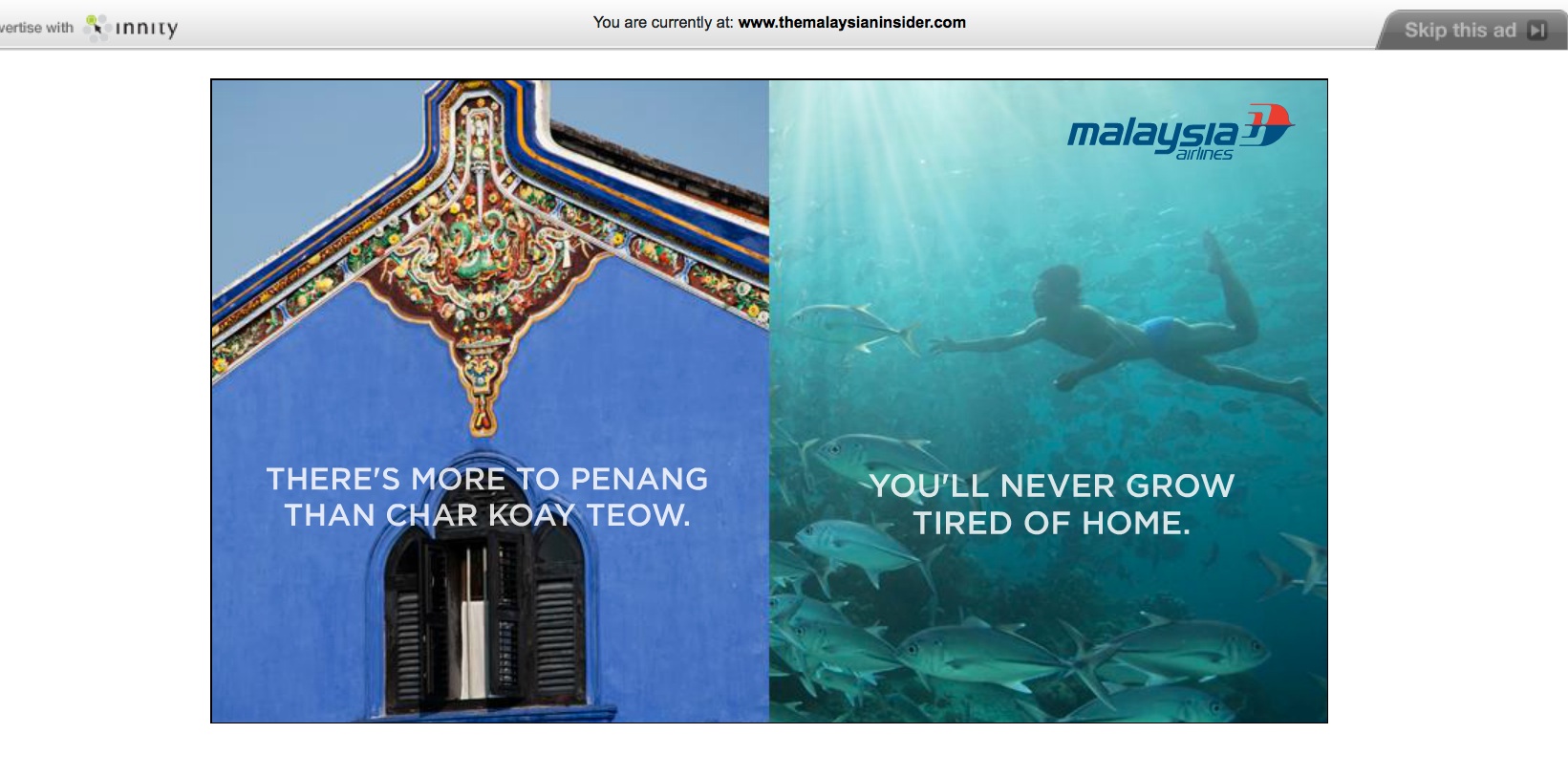
I’m sorry to say that I’m going to have another go at them. Earlier today I clicked on a link at the Malaysian Insider website and was interrupted by an interstitial ad for Malaysia Airlines. The ad (see below) featured an underwater image and an image of Penang. Obviously I was interested to see what they were doing so I clicked on the ad.

mas1

I was directed to the Malaysia Airlines site and was told it is under going system maintenance. Now I understand that sites need to be up dated all the time but not in the middle of a digital advertising campaign.

System update in the middle of a communications campaign? Not good for branding.

This type of schoolboy error can be fixed with a brand blueprint that is shared throughout the organisation and ensures the organisation works collaboratively, not in silos. Until they make such organisational improvements, Malaysia Airlines will continue to struggle. It really needs to up its branding game if it is serious about becoming profitable.

Branding: Taking the mundane and making it interesting


One of the hardest jobs for any brand is to stay relevant and interesting. This is especially true of airlines who seem to spend their marketing dollars on glossy videos featuring pretty stewardesses, cute kids and modern aircraft.

And when it comes to such activities as safety videos, most airlines opt for the tried and tested formula of the pretty stewardess going through the motions of seat belt, exits, life jacket and so on. A quick look around any flight just before take off will show that few travellers are paying attention.

It was refreshing therefore for me to see that Air New Zealand has really thought out of the box with its latest safety video by teaming up with Eton educated ex SAS officer Bear Grylls to create a unique and captivating safety video. The pretty stewardess and cute kids are still there but I’m sure you’ll agree the rest of the cast is unusual!