If Malaysia Airlines (MAS) makes it to 2015 and beyond, 2014 will probably be remembered as an annus horribilis for the beleaguered brand. In fact it may go down as an annus horibilis for the Malaysia Nation brand but we’ll discuss that another day.
MAS weren’t ready for the ferocity of the global media
Certainly the first half of 2014 has been desperate for MAS with missed revenue targets, ineffecitve advertising campaigns universally mocked by the industry, reports of alleged sabotage, police investigations, negative press about the customer experience and of course the tragic circumstances surrounding MH370 and the subsequent weak handling of the global media by the airline.
The once mighty airline, an early poster boy for national carriers is struggling on a number of fronts with two big questions 1) Can MAS survive and 2) should it be allowed to fail? being asked in coffee shops, boardrooms and even in schools.
Mass media advertising does not build brands. THe sooner MAS understands this, the better
The answer to 1) is yes, and to 2) is no.
But to survive, someone is going to have to get very, very tough because MAS is in a mess. Since 2007, MAS has made 3 cash calls to the tune of RM7 billion (US$2.1 billion) and over the last 3 years has accumulated losses of RM4.1 billion (US$1.2 billion). Whatever they are doing isn’t working.
Morale is low, bookings are down especially from normally busy and profitable routes to and from China, the unions are throwing their weight around even though the airline is terribly over staffed – you only need to go to KLIA to see so many staff sitting around doing nothing and I heard one story recently of a new person who arrived to find someone asleep (with a pillow) at his desk.
Just to get an idea of the situation, Singapore airlines (SIA) has a fleet of 104 aircraft (MAS 107), flies to 62 destinations (MAS 61), has revenue of RM36 billion (MAS RM58 billion) and is staffed by 14,000 people (MAS 20,000) and yet in 2012 made RM1.150 billion ( during the same period MAS lost RM400 million).
SIA is flying to the same amount of destinations, operating the same amount of aircraft and using at least 6,000 less employees to do it. It turns over only about 60% of what MAS turns over yet makes an impressive profit.
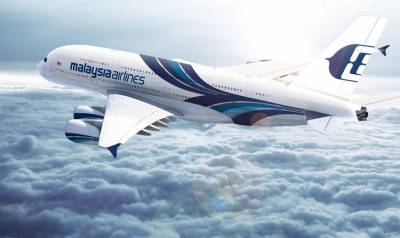
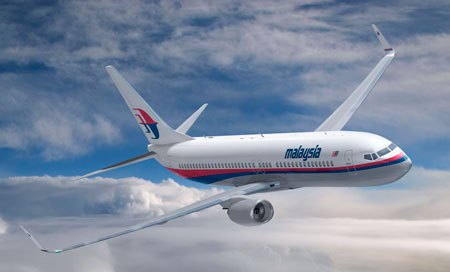
What is the MAS brand identity? Is it this?Os is this the MAS brand identity?
MAS needs a new strategy but cutting costs is not the way forward. In the interests of nation building and to ensure morale and belief in Malaysia doesn’t plummet further and to turn MAS around quickly, the firm needs to carry out a number of key initiatives immediately starting with
1) All suppliers have to accept that their existing agreements must be cancelled and be given the opportunity to submit new proposals that are acceptable to the airline. If they cannot agree terms, new tenders must be issued.
2) Moving forward, all procurement activities must be done transparently.
3) The unions have to understand that 5,000 staff must go. The government must underwrite any redundancy packages for 12 months to encourage staff to leave and reskill these staff to ensure they find work immediately.
4) Training of staff, especially front line staff has to be ramped up because these people are key to the success of the brand and at the moment their customer engagement skills are simply not good enough. But training providers must be recruited transparently.
5) MAS must review it’s sales policies, processes and systems. Right now they are not leveraging effectively on key opportunities such as the Enrich database.
6) MAS marketing and advertising is stuck in a time warp of mass media mediocrity. It needs to stop wasting huge amounts of money (I was told RM400 million in 2013) on irrelevant advertising campaigns and review it’s marketing approach now.
You can’t build a brand using mass media so stop trying to do so
7) MAS must understand that customers build brands not advertising departments. The new strategy must focus on the customer and delivering economic, experiential and emotional value to its customer segments and on their terms.
8) MAS appears to have 3 brand identities at the moment. It’s a mess and needs to be revamped quickly and there has never been a better time to do it as the MAS brand identity is tired and old and associated with MH370.
9) Successful airline brands today are innovative, creative, nimble and move fast. I remember being in discussions about updating the uniform in 2003. 11 years later it is essentially the same.
10) Years ago MAS aggressively marketed it’s Enrich programme and encouraged anyone to sign up. But the programme is antiquated and a mess. Children get offers to sign up for credit cards, there is limited segmentation and personalisation and opportunities to reward and leverage brand loyalists and identify and nurture influencers are missed.
Used properly, the MAS FFP is a potential revenue gold mine
There is an obsession at the moment that cutting costs is the way to make MAS profitable. It is the wrong approach. However by understanding the importance of branding and spending money on the right brand strategy and integrating that brand strategy with the corporate restructuring plan, significant savings can be made and crucially, those savings (obviously) save the company money but will also generate more income by negating the competition, increasing share of wallet and allowing MAS to increase not decrease ticket prices.
Malaysia Airlines (MAS) embarked on a massive restructuring plan towards the end of 2011 with the goal being to reduce costs and return to full year profitability in 2013.
At the same time, the airline reported a staggering RM2.52 Billion (US$850 million) loss for 2011.
MAS didn’t realise its stated goal because in late February 2014, the national carrier posted a 2013 net loss of RM1.17 billion (US$356 million). This was almost three times the airline’s 2012 net loss of RM432.6 million.
So despite the restructuring plan, MAS lost RM4 billion in 3 years. Ouch.
In 2012, one assumes as part of the restructuring plan, MAS announced a business strategy with two key strategic elements – one to focus on the premium sector and the other to focus on the competitive Asian market.
I don’t know what the airline’s definition of the premium sector is but bearing in mind premium passenger numbers appear flat, a large chunk of its business comes from the domestic government and the price sensitive kangaroo routes, this may be a major challenge.
Furthermore, I’ve seen nor heard of any premium customer strategy or tactics. The ‘Flying in luxury’ section of the March 2014 issue of Going Places offers little insight into what might be happening. Even the benefits of being a platinum member of the Enrich programme haven’t changed in a long time.
Premium passenger numbers appear flat
Of course they could be referring to the upgrades to the business and first class check in counters at KLIA. Whilst they are an improvement and certainly add an air of exclusivity to the experience, they are hardly ground breaking. And the attitude of some of the staff manning these counters is often indifferent at best.
But I digress. About 18 months ago, MAS announced that it was doubling its marketing budget. The marketing budget is reported to be as much as 2% of revenue which means that in 2012, MAS spent more than RM550 million or US$190 million to focus on the premium sector and the Asian market in an attempt to rebuild it’s battered brand. That’s a tidy sum. Did it work? Based on the latest figures, no.
In 2012, the company announced it will provide a ‘better and more branded customer experience and embark on a major advertising and promotions campaign′.
I don’t know exactly what is ‘a more branded customer experience’ but as a frequent flyer of the airline I haven’t witnessed a change in or better customer experience although the terrifying vibrations at 38,000 feet on a 737 flight from Kuching to KL in January 2014 were new but I don’t think that’s what they meant.
And judging by the negativity across the Internet it would appear few others have experienced an improvement in customer experience.
In 2012 talking about the appointment of Ogilvy and Mather as the airline’s agency, Al Ishal Ishak the senior vice president for marketing and promotions stated, “2012 will be a breakthrough year for Malaysia Airlines on our path to recovery. We recognised, however, that we could not achieve financial success without clearly defining our brand positioning.”
He went on to say, “Ogilvy understood this and throughout the pitch process were best able to translate our message into a powerful campaign idea. An idea that is big enough to help us transform our business and truly engage our customers like never before.”
Judging by the advertising campaign that soon followed, I can only assume that idea revolved around journeys and suitcases. It was, in my humble opinion one of the worst advertising campaigns I have ever seen. I wrote about it here and you can see the TVC below.
What is really depressing about this whole depressingly familiar scenario is that the O&M advertising campaign aims in part to create awareness and drive visitors to the MAS website. And if improvements were to be made to the experience, one would expect logically that the website experience would be the first experiential improvement.
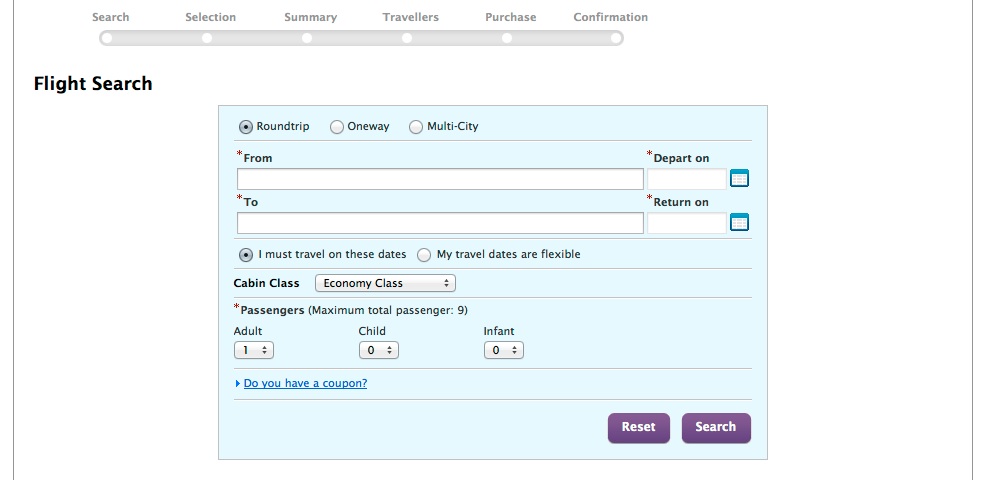
Sadly no, despite a RM550 million marketing budget which I hope wasn’t spent just on the O&M advertising campaign, the first page of the MAS website has a bug in it that frustrates visitors every time and the bug hasn’t been fixed for at least a year!
Another area that one would expect to be addressed during the improvements to the customer experience would be interactions with the customer service department but again, judging by this negative blog posting, the airline has not managed to deliver on its promises.
So now that MAS has posted another net loss, despite doubling it’s marketing budget to clearly define it’s brand positioning and despite not improving the customer experience, what can the airline do now to salvage its reputation and rebuild its brand?
Here are 20 things MAS needs to do now to improve its brand
1) You and the unions need to wake up to reality and appreciate that market conditions are such that unless you get rid of a large number of staff, the airline will be on my list of brands that won’t make it past 2016.
2) The organization is the brand. Many MAS staff are trying really hard but they are let down by those that don’t care. Current middle management systems don’t seem to be working. Fix them.
3) The six principles to turning around an airline and used successfully by Air Canada, ANA and Aeroflot and probably being used by MAS (a logical assumption bearing in mind the influx of management from Air Canada) include a zero compromise on quality of customer service, investments in staff training and better internal and external communications. The company is failing miserably in all these activities and needs to carry out a comprehensive review and overhaul of current practices and service providers in these critical areas.
4) Forget about the big idea. In the social economy, when consumers not companies define brands and those consumers are spoilt for choice and rarely believe what advertisers tell them, the one size fits all ‘clearly defined’ brand positioning campaign is a futile exercise that does nothing more than waste valuable funds. In this case, RM550 million of valuable funds.
5) Focus instead on consistent, ongoing, personalised engagement with each of your very diverse audiences. And start with your Enrich database! Segment that database in a way that allows you to deliver value to relevant segments today and not segments that belong to the 1980s. Travellers are segmenting into smaller niche, groups and individual travellers and they are willing/able to manage the whole process themselves. Talking to them requires more than an advertising campaign. See point 5.
6) FIX THE BLOODY BUG IN YOUR BOOKING ENGINE! It doesn’t matter what it costs just fix it! If your global advertising campaign did make a prospect visit your site and she then had to go through the ridiculous moves required to enter a destination or departure city, they’d soon leave thinking, ‘if they can’t make a simple fix like that, what are they not fixing on their aircraft or elsewhere?’
Why is it so hard to fill in the ‘to’ and ‘from’ fields?
7) Because it’s so important, your database gets a double mention. A chunk of your brand’s profitability will come from your existing customers. Instead of spending RM550 million on an outdated advertising campaign that seems to want to acquire and retain customers, start to use what is probably one of the most comprehensive databases in South East Asia, properly.
8) Focus. These ‘one-size-fits-all’ advertising campaigns are an expensive exercise in naïve futility. Put an end to them now. If I’m repeating myself its because the marketing budget is being wasted on outdated mass market models.
9) Don’t do social, be social. Pushing one size fits all advertising campaigns out across social media is pointless. It’s not a television or a radio so don’t use it like one. Social is dynamic and you need to be dynamic to get the most out of it. Stop using your Facebook as another broadcast platform. And stop ignoring negative comments and blog posts and instead, engage with the authors.
10) Integrate all your solutions to make it easier for consumers to use them. 40% of business travellers and 25% of leisure travellers in Asia now use mobile or tablets for travel but as far as I can work out, the MAS app (when I can get it to work) isn’t integrated with my online profile. Why not?
11) Stop spending, no wasting huge amounts of money on forgettable mass market advertising campaigns and start building a brand.
12) Train your staff, and start with your customer relationship staff. Whoever is doing it now isn’t doing a good job. Find someone who really wants it and make your staff the best in the world.
13) You have a legion of brand angels out there who are desperate for you to succeed. Do you know who they are? If not, you need to identify influencers and quickly leverage on their passion for your brand.
14) Seek new revenue streams. Of course you are already doing this but there are a couple of opportunities that you are not exploiting and you should be.
15) You are not a low cost carrier so stop trying to be one.
16) Get those new aircraft, now.
17) Stop focussing on costs and start focussing on delivering value.
18) Don’t compromise on anything related to customer touch points, whatever the cost.
19) Image is everything. The change in the look of some aircraft was a great development but what about the rest of the fleet? There seem to be three different liveries for the MAS fleet. And what about the uniforms? A partial change was made to some male uniforms but what happened to the rest of them? Is this a strategic project or an ad hoc one? Whatever it is, consistency in a brand image is a must.
20) One last comment on segmentation. Each segment within each country has completely different requirements for value. In Indonesia small businesses employ 80% of employees. In Malaysia, SMEs account for as much as 99% of businesses. In Japan, 20% of leisure travel is by the over 65s. What do you know about these segments and do you have a brand strategy to communicate with them?
Not many legacy carriers have remained profitable following the intense competition in the airline industry. Even without the massive interference of the governments of the past, MAS has found it tough to adapt to increased customer expectations, LCC competition, fluctuating fuel prices and rising costs.
The days of using cost cutting and outdated mass marketing communications campaigns to drive restructuring plans are over. The future will require an even more nimble approach and a focus on delivering value to diverse segments on their terms.
Only then can MAS out maneuver budget airlines and other new entrants into the market and become profitable once again.
Plenty of marketing people will tell you they are expected to perform miracles to keep ahead of the competition.
WestJet, a Canadian based carrier proved it can be done!
The airline set up ‘Santa chat boxes’ that looked like gifts at Hamilton and Toronto airports in Canada. The boxes featured a chatty Santa who asked kids and parents what they wanted for Christmas. Little did they know that the information was relayed to the WestJet office at their destination where a team of 150 WestJetters went out and bought the actual gift.
They were then sent back to the office where they were wrapped and put on the carousel as the passengers waited for their luggage. Just as the presents arrived Santa walked out and started interacting with the stunned but very happy passengers. Have a look at this wonderful video:
The video has got over 11 million views in 3 days. Hundreds of column inches and been featured in numerous news programs around the world. Total cost? Maybe US$100,000.
In my previous post I gave 10 reasons why you should use video to build your brand. You can read that post here
But there needs to be a creative element to those videos. Looking at the airline business, far too many carriers believe the bulk of their marketing dollars should be spent on well produced but hugely irritating glossy videos featuring pretty stewardesses, cute kids and seats that look further apart than they are on any plane I’ve ever flown.
A case in point is Thai Airways. In 2010, to celebrate its 50th anniversary, the carrier released a well produced video that gnaws at the heartstrings but does little new to differentiate it from competitors.
The video has generated a respectable 150,000 views since its launch in 2010 but only 400 likes which would suggest it has made very little impact.
There are some though that are doing their best to move away from this predictable and instantly forgetable approach. Most recently, Virgin America and Air New Zealand have approached the safety video from a new direction.
Instead of the oft ignored stewardess standing self consciously in the aisle and demonstrating how to use a seat belt, where are the exits, how to put on a life jacket and what to do when the oxygen mask drops, these airlines have gone to great expense with a refreshing approach to the tried and tested.
Earlier this week, on the 29th October 2013, Virgin America launched an airline safety video that it claims is the first safety video set entirely to music. They are probably right and the result is impressive.
Obviously I’m not the only one to think so as the video has already been viewed by more than 700,000 people in just two days. What I like about the Virgin video is that they are keeping the story live by inviting dancers to audition for future versions.
Potential participants must send an Instagram video to a specially set up safety dance battle website. Some of those Instagram videos, that can only be up to 15 seconds long will then no doubt take on a life of their own, thereby continuing the Virgin America narrative. So far, the video has over 13,500 Likes on YouTube.
Earlier this year Air New Zealand teamed up with Eton educated ex SAS officer Bear Grylls to create a unique and captivating safety video. The pretty stewardess and cute kids are still there but I’m sure you’ll agree the rest of the cast is unusual!
To date, the Air New Zealand video has garnered more than 277,000 views on Youtube. Not bad for an inflight safety video!
I did a quick search of Youtube to see what Asian airlines are doing on Youtube. Cathay Pacific has created a lot of content some of which has generated a lot of views. Last year they did a ‘Day in the Life’ feature with flight attendants, pilots and ground crew.
This video of a day in the life of Grace, a flight attendant has a respectable 200,000 views but not too many likes.
Malaysia Airlines YouTube page suggests the carrier is creating a lot of video content but judging by the numbers of views it isn’t compelling enough for consumers to engage with, Like and share. However, when they do get creative, or rather innovative interest in the brand goes through the roof, as shown by this flashmob video that has generated over 1,100,000 views in just under 2 years.
Unfortunately this project appears to be tactical rather than part of a strategic initiative because it doesn’t seem to go anywhere or be integrated with any other activities.
According to Cisco, 90% of all Internet traffic will be video by 2017. These Asian carriers need to start producing content that is interesting and relevant. And that content needs to be part of a planned, strategic story that resonates with target markets in order for those markets to engage with and share across the ecosystem. Otherwise it becomes just another piece of expensive content that is out there, rarely viewed and therefore ineffective.
Malaysia Airlines issued a press release yesterday announcing the airline has one million “Likes” on Facebook.
You don’t need me to tell you Facebook is massive. But I will. Facebook is massive. If it were a country it would be the third largest in terms of population, the largest in terms of area covered and probably the richest in terms of income.
So it is understandable that MAS wants to use Social Media and in particular Facebook, to build its business. Indeed, Khairul Syahar Khalid, Malaysia Airlines’ Head of Advertising & Promotions says, “Social Media is a new frontier for marketing, and as many brands have discovered, going on social media certainly pays.”
Encik Khairul adds, “We have positioned social media at the forefront of our marketing mix. We will be pushing the boundaries even further with our next marketing plans, all of which will see the social media platforms at the forefront. We want to continue to engage with our fans globally at a much deeper level whilst growing our footprint further. Growing our engagement with fans globally has contributed significantly to our business turnaround successes.”
Crediting Social Media with providing a significant contribution to the improvements in the airline’s performances recently is interesting and shows how important is Social Media.
Personally I think it is exciting that MAS is pushing the boundaries even further on social media, especially after the dreadful advertising campaign that is still being run. For more on that campaign please refer to this article
To thank fans for helping the airline reach one million ‘Likes’ on Facebook, MAS created a video with their social media ambassador, Malaysian singer Yuna. The video has been viewed 2,000 times since its launch a week ago.
Incidentally, I believe the Malaysian government has missed a trick here because I think Yuna should be the face of the Malaysia Nation Brand. You can read more about that here.
But how important are Facebook ‘Likes’? Are they a relevant metric for a business? What do they tell us and how can we leverage them?
The bad news is that 96% (BrandGlue goes even further, stating that only 0.02% of fans who ‘Like’ a page ever return) of ‘fans’ never return to a page after liking it. Moreover on Facebook, most posts are seen only by about 10% of fans.
Another little known fact about Facebook is that when fans create new posts on your Facebook page, other fans don’t necessarily see them. In other words, just because you go to your fan page doesn’t mean your fans are doing the same.
Consumers are increasingly sceptical about Facebook ‘Likes’ because it it is so easy and cheap to buy them. Twipquick is offering 100,000 Facebook ‘Likes’ for about US$750.
Any social media strategy must have clearly defined target markets and relevant customer data and content must be developed that will resonate with those customers. This content must resonate with those target markets. After all, there aren’t any groups for 18-35 year olds on Facebook.
MAS must avoid taking its advertising campaigns and trying to push them out across social media. Taking a video and dubbing it into the local language is not a social media strategy. This is simply mass economy marketing and there is no place for that model in the social economy where customers not companies define brands.
MAS must engage consumers and encourage them to contribute to the MAS story and then share and encourage the sharing of that content whilst enabling multiple channels for consumers to interact through.
At the same time, MAS must not forget its existing customers. MAS has millions of frequent flyer members but it currently neglects these existing customers, despite spending a lot of money to acquire them.
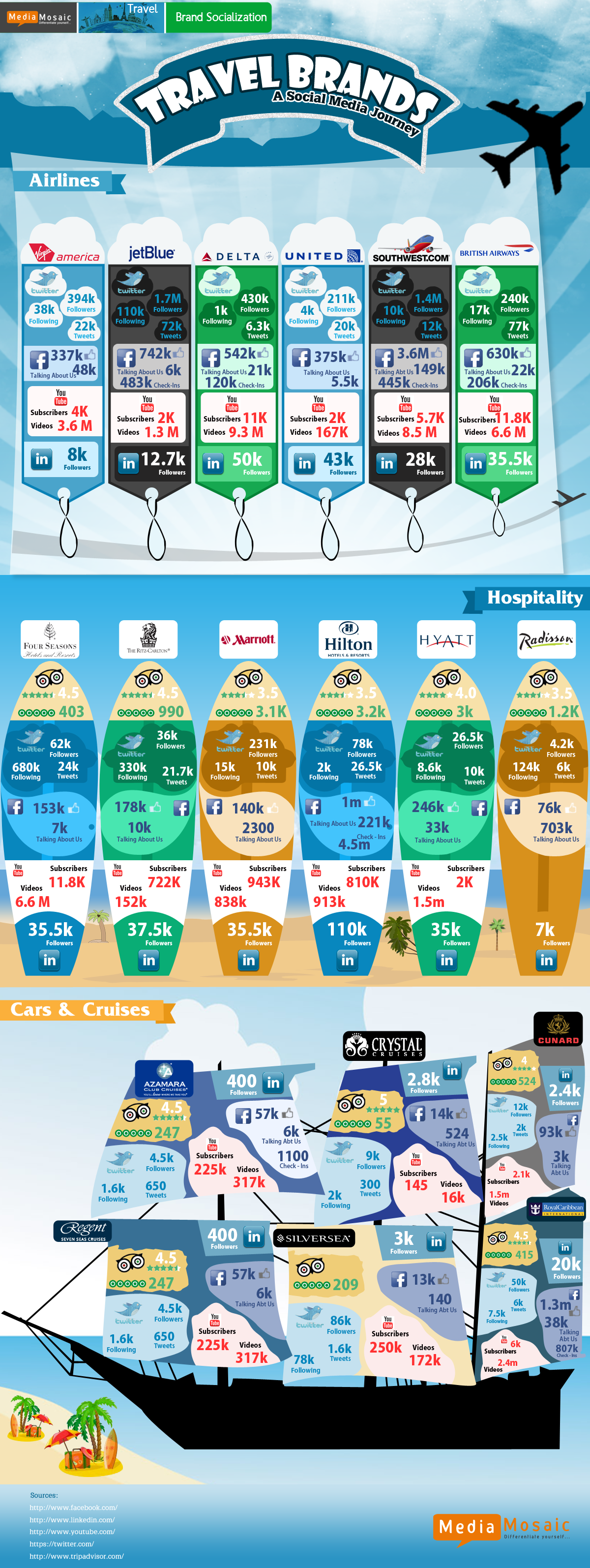
Any brand in the destination branding space should look at this infographic to see how much effort the big travel related US brands are pouring into social media.
It is reported that there are 199 airlines active on Twitter which is an impressive total. This infographic looks at the top six which is dominated by US carriers.
Travel brands are investing in social because that’s where their prospects and customers are spending their time
US hotels have jumped on the social bandwagon as well. Followers on Twitter for the top 6 hotels range from 4,000 (Radisson) to 231,000 for the Marriott. According to hotel marketing Internet users in the US generate 66.3% of global searches for luxury hotel brands which means that anyone in the luxury destination business needs to be online and doing social.
But it’s not just luxury brands that need to be doing social. 65% of leisure travelers begin researching online before they have decided where or how to travel. And a typical traveller visits 22 sites before making a destination decision. Arabs are big users of the online space for travel. Online bookings will nearly double in Arabia between 2011 and 2014, and the online leisure and business travel market is expected to cross the US$16 billion mark.
So if you are looking to attract visitors, especially from Western countries, you need to be doing social.
In 2012, online advertising spend breached the US$100 billion level for the first time. And forecasters are predicting double digit increases for the next couple of years.
But the types of ads are extensive, from pop-ups to banner ads, to text ads to display ads and so on. There is no consensus on what works the best and what doesn’t but studies suggest that interstitial ads (those that appear when you move from one page to another) animated ads and pop-up ads have the highest visibility, but have low click-through rates.
Whereas banner ads suffer from what the industry calls “banner blindness.” Which basically means that users have stopped seeing them.
According to one company in Australia, for every 1,000 people who see an online ad, only 1 will click on it and the average conversion rate for most sites is 2% which means that you require 50,000 people to see your online ad before you are likely to make a sale.
Another company, Digiday states that only 8% of Internet users account for 85% of clicks on banner ads and that 50% of clicks on mobile banner ads are a mistake.
But digital advertising will continue to grow especially as advertisers online can target their messages at the right segments, thanks to increasingly sophisticated technology. But with such low penetration, you need to get the content right so that when the 1 in 50,000 comes along, there is a good chance they will buy whatever it is you are selling.
I’ve had a go at Malaysia Airlines a few times and I’m probably not very popular with them which is a shame because I’m a big fan of the brand and in some areas, they are trying very hard to build a global brand. But I don’t believe the airline is demonstrating high levels of branding professionalism. Most recently I had a go at their latest advertising campaign. You can read that story here.
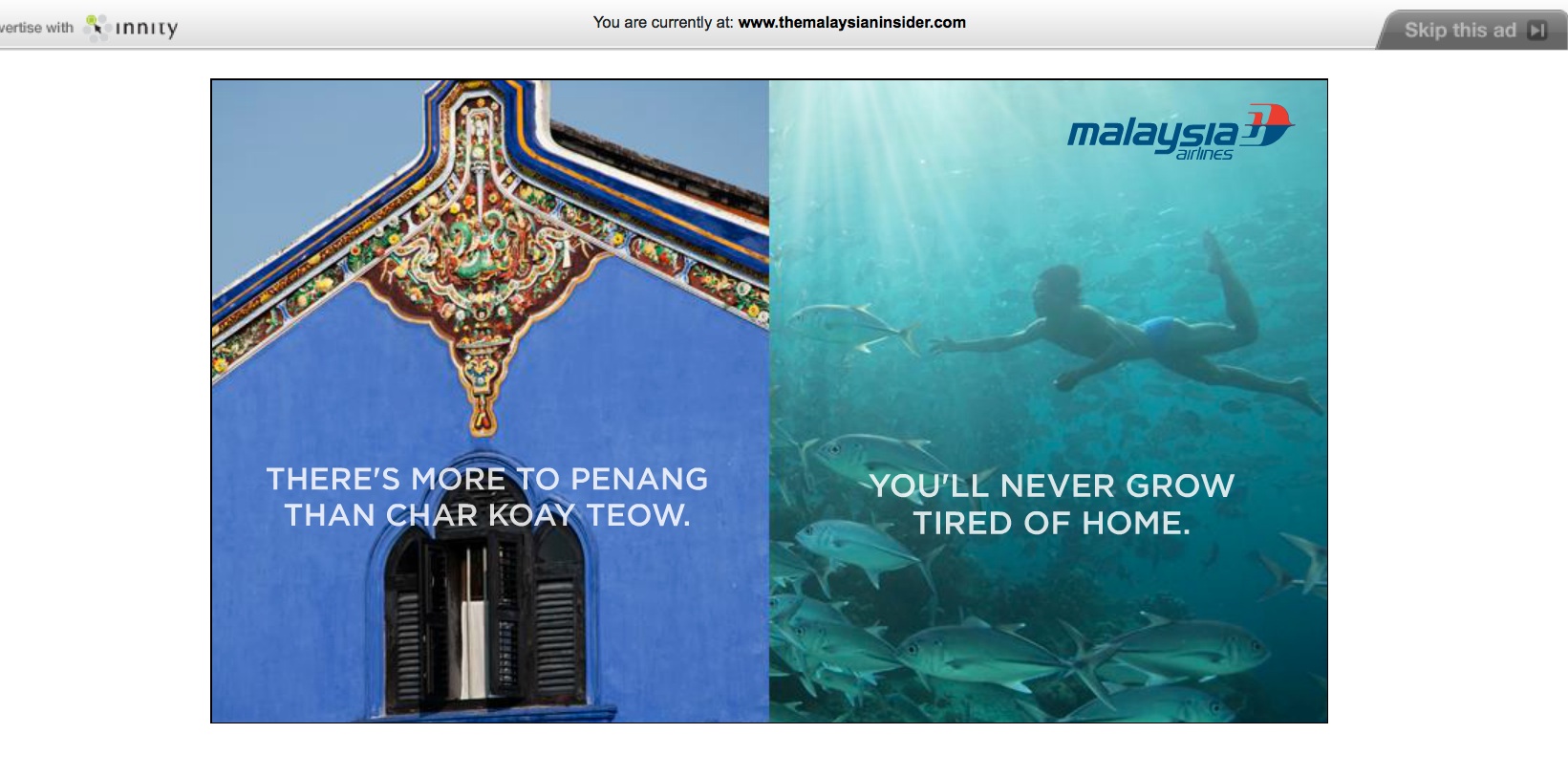
I’m sorry to say that I’m going to have another go at them. Earlier today I clicked on a link at the Malaysian Insider website and was interrupted by an interstitial ad for Malaysia Airlines. The ad (see below) featured an underwater image and an image of Penang. Obviously I was interested to see what they were doing so I clicked on the ad.
I was directed to the Malaysia Airlines site and was told it is under going system maintenance. Now I understand that sites need to be up dated all the time but not in the middle of a digital advertising campaign.
This type of schoolboy error can be fixed with a brand blueprint that is shared throughout the organisation and ensures the organisation works collaboratively, not in silos. Until they make such organisational improvements, Malaysia Airlines will continue to struggle. It really needs to up its branding game if it is serious about becoming profitable.
One of the hardest jobs for any brand is to stay relevant and interesting. This is especially true of airlines who seem to spend their marketing dollars on glossy videos featuring pretty stewardesses, cute kids and modern aircraft.
And when it comes to such activities as safety videos, most airlines opt for the tried and tested formula of the pretty stewardess going through the motions of seat belt, exits, life jacket and so on. A quick look around any flight just before take off will show that few travellers are paying attention.
It was refreshing therefore for me to see that Air New Zealand has really thought out of the box with its latest safety video by teaming up with Eton educated ex SAS officer Bear Grylls to create a unique and captivating safety video. The pretty stewardess and cute kids are still there but I’m sure you’ll agree the rest of the cast is unusual!
I don’t like to kick a man (or an airline) when he’s (or it’s) down, and despite a couple of good quarters, Malaysia Airlines (MAS) is certainly down.
The good quarters (following six straight quarters of losses) are a result of increased revenues thanks to better load factors and higher RASK (Revenue per available seat kilometer).
Just to recap, to avoid bankruptcy, MAS embarked on a massive restructuring plan towards the end of 2011 that included cutting unprofitable routes and reducing costs with the goal being to return to full year profitability in 2013.
Although the airline has done quite well, that’s unlikely to happen even though it is focusing on Asia and has stopped flying to costly destinations such as Buenos Aires, Johannesburg, Cape Town and oddly, Dubai. Giving up Dubai and Dammam suggests the carrier is surrendering to the aggressive carriers from the Middle East.
The most recent business strategy announced two key strategic elements – one to focus on the premium sector and the other to focus on the competitive Asian market. The announcement that the airline would go after the premium sector came at the same time as the partnership deal with AirAsia that has now been scrapped.
I’ve seen nothing to suggest the airline is courting premium customers and although it is good to see the airline understands the importance of segmentation, I doubt their ability to execute such a strategy.
Especially as the airline seems to be going the same old predictable route of using an advertising campaign featuring an irritating tagline (more on that later) to magically increase demand. And I’ve seen nothing else to suggest the airline is doing anything other than the usual advertising, print and PR tactics with a nod to social media.
And what an advertising campaign it is! I think this is the TV commercial.
I’m sorry but this has to be the worst commercial or video I’ve ever seen. It features people of various ages walking, cycling, swimming, jogging, directing traffic (I’m serious), reading newspapers, skateboarding, going to a meeting, graduating, bowling, clubbing and all with one thing in common – they are all carrying at least one suitcase! Yes, even the traffic policeman!! This really is rock bottom.
The print advertisement (which I’ve also seen on a billboard) features two men sitting on a wooden dock. They are both holding suitcases and the younger man has his arm around the older man and is looking into his eyes.
Sitting on the dock of the bay, suitcase in my hand
Does this image make anyone else uncomfortable? Here’s a close up to help you decide.
Does this make you uneasy?
MAS also has a corporate video that starts off with a series of stock scenes featuring babies taking their first steps, dad playing with son, climbers etc and then cuts to old shots of MAS in the early days. Meanwhile the voice over tells us that life is made up of countless journeys. Getit?.
Then we get shots of computer generated imagery of the various planes used by the airline from past to present (didn’t BA do something similar?) before going back to the people shots – nice, smiling, friendly air hostess with kid – cut to boys jumping into lake – then back to nice, smiling people, tender, caring hostess and then, out of the blue we’re told the strangers we meet on our journeys give us courage – cut to skydivers – then back to lovers on beach, cultural harmony, pregnant couple and so on. I stopped at this point, unable to continue. Have a look instead.
One of the videos (I can’t remember which one and I have no intention of watching them again) features the Malaysia Airlines app that I really like but isn’t integrated with the website (or if it is I can’t figure out how to find my bookings made online on the app).
So if MAS is serious about increasing market share, what should the company do? Here are 5 things they need to start doing today.
1) Forget about the big idea. Focus instead on consistent, onging, personalised engagement with each of your very diverse audiences.
2) You probably have one of the most comprehensive databases in South East Asia. Start to use it properly.
3) Focus. These ‘one-size-fits-all’ advertising campaigns are an expensive exercise in naïve futility. Put an end to them now.
4) Don’t do social, be social.
5) Integrate all your solutions to make it easier for consumers to use them. Otherwise they defeat the object of developing them in the first place!
I’ve been flying MAS for over 20 years and I think it is a great product but it needs work. A lot of work. This traditional approach to brand building is not going to help steer the airline to full year profitability. They’d be better off throwing the money down a black hole.
Singapore Airlines only recently reported its group operating profit fell 19.8% to S$229 million (RM564 million). SIA Engineering and SilkAir also reported lower profits while losses for SIA Cargo dived more than 40% from S$119 million to S$167 million.
And then a recent Singapore Airlines flight from Singapore to London made it into the global headlines for all the wrong reasons.
Air turbulence caused the flight to lose altitude just as breakfast was being served. Much of the food and drinks were left all over the cabin and passengers and a potential Public Relations nightmare could have resulted with irate passengers complaining across social media.
Milk and sugar?
However, an event that the airline has little control over turned into a PR success thanks not to the Singapore Airlines corporate PR department but due to the professionalism of the crew and the community approach of the passengers.
As soon as it was safe to do so, the cabin crew checked every passenger and then, with the help of passengers did their best to clean up the mess. When the flight arrived in London, paramedics were waiting to treat the few slightly injured passengers & crew.
As passengers disembarked, the crew handed out an apology, chocolates and of course a big Singapore Airlines smile. A potential disaster averted with good training, responsibility and a customer centric mentality.







 brandconsultantasia.com