In a social media world, should an advertising agency be responsible for your brand?


CEOs need to accept that in a crowded, dynamic, mobile market place, their brand is too important for a traditional approach to marketing. It is time to stop wasting funds on one off campaigns that are not even noticed, let alone remembered.

If you advertise in a daily newspaper or on TV, ask yourself which ads you remember from yesterday’s paper or on TV last night. Be honest. I doubt it is many. Personally I remember the ads from the Sunday paper (today is Tuesday morning) because I was stunned at how many pages were purchased on behalf of supermarkets and hypermarkets having a ‘cheap off’ on baked beans, grapes and cases of beer. And even if you remember the ads, how many of them have you interacted with? And of those how many have you purchased?

Sample ads of Malaysian hypermarkets. Take a look at the Cold Storage and Giant ads and see if you can spot how they put down their competitors. Let me know in the comments section and I’ll buy you a drink in KL if you get it right!

There is nothing wrong with these ads and I am sure they are effective, although I would be interested to know what metrics are used to measure effectiveness. I hope it isn’t CPM.

But in the 21st century, an era of smart phones, social media, increased leisure time activities and abundant choice, firms must understand that a traditional mass economy, mass media approach to communications with its one-size-fits-all campaign driven focus on tactical initiatives such as billboards, print ads, TVCs and so on is not the answer to brand building which is a strategic initiative driven by consumers and based on delivering economic, experiential and emotional value to those consumers and on their terms.

Despite extensive global research by firms such as McKinsey that proves the decision making process is now more about providing economic, experiential and emotional value, advertising agencies and some brand consultants who should know better, continue to talk about positioning products in the consumer’s mind. It’s like nothing has changed since the 1970s when Al Ries first developed the term!

But if you ask an advertising agency to build a brand you’d be a fool to think you will get anything other than a creative campaign. it might be packaged as something else but that is all it will be. Why? Because advertising agencies make money out of creating advertisements. That’s the business they are in.

It is up to CEOs to understand that they have to take an interest, indeed responsibility for the brand and ensure CMOs and brand departments take social media and more engaged communications in a social media world seriously. And this will have to be done in a much more dynamic and fluid manner.

In the past a series of full page ads in daily newspapers or a number of prime time TVCs was generally sufficient to build brand awareness. Many consumers would actually watch a commercial and take a note of the brand and where they could purchase it. Those consumers would then go to the store, look for it and buy it. If it was unavailable they would take time out to come back again and again until they could make a purchase.

Today those same consumers don’t bother taking note of the brand names because they’re carpet bombed with messages throughout the day, every day. Many of those messages are making outrageous claims or are totally irrelevant to them. They’ve been let down so many times by those claims that they now ignore them completely. And because consumers have so much choice and so many information channels, they don’t need to pay attention to messages broadcast via mass media any more.

Now consumers just block out those messages and instead use social media and other tools where they inhabit communities that they relate to and trust, to seek information.
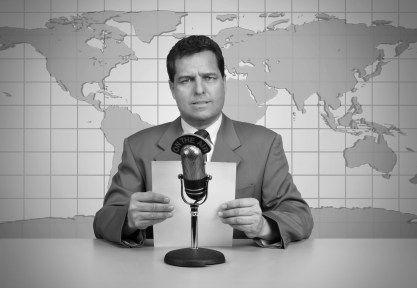
I’ve mentioned this before, the first TVCs consisted of a man standing in front of a microphone reading from a script. Why? Because that was how it was done on radio. Right now firms are at the digital equivalent of standing in front of that microphone.

How to build a brand in Asia today


Building brands has evolved from the one dimensional, top down era where the company controlled the relationship and essentially managed that relationship using broadcasts across mass media such as TV, Out of Home, print and radio with messages and content created to tell you what the company wanted you to know into the bottom up, customer economy.

In the bottom up customer economy, brands and their success or failure are defined and determined by customers. Those customers will create content and messages and disseminate that content and those messages across multiple platforms and to communities who are interested in their opinions. Now, how you interact with consumers is on their terms.

This is not revolution, simply evolution in the branding space. Brands are to blame for this loss of control because they have consistently misled consumers or over promised and under delivered. Brands can no longer be built using one-size-fits-all messages broadcast across traditional media channels to anyone who will listen. Basically because no one is listening.

Sure, there is still a place for messages, campaigns, and so on but because there are so many sources of information, so much clutter, these messages don’t have the impact or influence they had 20 or 30 years ago. In the digital age you can spend as much as you want on traditional media and reach everyone in the country but if they are not listening they won’t buy your product or service.

If a brand wants to be successful it must learn to communicate with multiple segments, and messages must be targeted and must be dynamic, using content and channels that resonate with those segments. But brands must move away from the traditional demographic approach to researching those segments. After all, how many 15 – 24 communities are there on Facebook? And content must constantly be revised and updated with new content.

And organizations must ensure that they deliver on promises and that promise must deliver economic, experiential and emotional value to each of those multiple segments. In the consumer business, this is most often done, initially anyway, in the store. Because in the customer economy, no matter how much you spend, if your staff don’t know how to build rapport with your prospects then they may buy once but rarely will they become a loyal customer. And without loyal customers, you won’t have a brand.

So if you are looking to build a brand, forget about reach, awareness, positioning and brand equity and trying to be all things to all people and start thinking about delivering value to specific segments and building customer equity.

How to brand a city like Ipoh


Senior Executive Councillor Datuk Hamidah Osman of The Perak state government in Malaysia announced on a trade and investment mission to China recently that the state government, in an effort to boost its tourism industry, intends to brand Ipoh, the capital of Perak as the “City of White Coffee”.

Datuk Hamidah was quoted by Bernama “ Perak should have its own identity and branding just like Shenzhen that is known as the “Shoe City” and Paris which has long been known as the “City of Fashion”.

In conjunction with the plan, Datuk Hamidah said, “We plan to have a food fair to be held in Ipoh this December. The idea is to promote the local foods and tourism industry. We have the best bean sprout chicken rice and chee cheong fun (rice rolls),” she added.

Faced with increased domestic and international competition for both tourists and FDI, there is no doubt that Ipoh and Perak, need to develop a destination brand. But that brand must be based on a platform of multiple tourist attractions and business potential.

Set amongst picturesque limestone scenery, a diverse selection of tourist attractions include Kellie’s Castle, Perak Museum, Ipoh railway station, Tambun hot springs, Taiping lake gardens and Zoo, and more, Ipoh and the rest of the state have a lot to offer.

Other destinations include Pangkor and Pangkor Laut, Bukit Larut and others. Perak also has a rich heritage that can be promoted, including silver and tin mining. It is historically known as an innovator, having pioneered such advances as the first rubber trees in Malaysia and was also the first state in Malaysia to go wireless.

The tagline ‘City of white coffee’ certainly differentiates Ipoh from other destinations but what else does it tell potential visitors, businesses or investors? How can stories be developed around the tagline, who are the target market? How will it be communicated? If it is a one-size-fits all approach, it’ll need significant resources to communicate the new tagline. Have budgets been agreed and so on?

Today, Destination branding is not based on a tagline. Destination branding must be based on experiences that are successfully delivered to specific segments and not based on attempts to market all places to all people.

Research and data are critical to understand tourist and other stakeholder requirements before developing strategies and not the other way around.

Stakeholder buy-in is critical for brand consistency and fulfillment of the brand promise. As an example, how can a hotel contribute to the proposed approach? How can the same hotel leverage the approach to grow it’s business?

Branding is a long term coordinated and integrated strategic exercise and not a tagline. One-size-fits-all strategies using mass media are no longer effective.

Planning is essential to coordinate initiatives, ensure accountability and avoid wasting resources. Without a plan, activities will be reactive and tactical.

What Ipoh and other cities need is a consistent and organized methodology to brand themselves as domestic and international destinations.

Here is one approach that would definitely help Ipoh:

Stage one: Carry out extensive research
Research develops data on key success factors, generates insights and what current and prospective visitors seek, and provides benchmarks to measure branding ROI. The research should consist of the following activities

1) Destination analysis: Key members of the hotel industry, government bodies, local business associations and representatives of major attractions should be confidentially interviewed. The interview will be based on an agenda designed to explore a number of issues related to the city

2) Visitor audit: Carry out interviews with current and past visitors. Other groups can also be selected, such as conference organisers. The interviews will focus on the experiences and motivations associated with Ipoh, information resources, and suggestions for increasing tourist value.

Special attention will be paid to how they researched Ipoh, what they have heard or told others about Ipoh and the channels or vehicles used to tell them. Additionally, representative travel agents in Ipoh will be interviewed about tourist experiences and requirements. Online surveys will be useful to research baseline perceptions of brand Ipoh.

3) Place audit: A place audit will identify Ipoh’s economic/ demographic characteristics, review major attractions (including strengths and weaknesses of the attractions) and outline all brand assets. The place audit will also look to identify product potential.

4) Communications audit: A comprehensive analysis of the channels, vehicles and materials, both digital and print, current and proposed that are or will be used to communicate with both consumers and businesses.

Stage 2: Ensure community buy-in and set internal branding requirements
Community and other stakeholder buy-in is important both for delivery of the brand promise, development and ongoing funding. Stakeholders must be communicated with and input from stakeholders must be incorporated so that they understand that they play an important role in initial and ongoing brand development.

Such buy-in can be accomplished through a variety of activities, including “townhall” or other community meetings, private presentations and media briefings. Initial research findings and recommendations can be discussed as a basis for soliciting input.

Additionally, community buy-in requires a group of citizens, business people, and local and regional government officials. This planning group will:

• Define and diagnose the community’s condition, major issues and potential solutions

• Develop a long-term brand vision based on a realistic assessment of the community’s values, resources and opportunities

• Work to develop a long-term plan of action involving intermediate stages of investment and transformation

Stage 3: Brand plan development
The results of the research and community buy-in will be incorporated into a comprehensive plan for Brand Ipoh. This customized brand plan serves as a strategic framework for all marketing activities, messages, metrics, timetables and proposed budgets. Special attention should be paid to digital branding and product development to get previous visitors to return again.

Stage 4: Comprehensive and segment-specific execution & measurement
Unfortunately this is where most destination begin their brand strategy. Once the brand plan is in place, execution begins. The execution operates on two overlapping fronts – general and segment-specific:

General: General branding represents the ongoing efforts to ensure visibility and provide value to prospects, agents and visitors, as well as gather data, ensure continuous performance and maintain reporting.

Segment-specific: Segment-specific branding concentrates on two areas where it is important to establish and maintain strong relationships. These include existing customers/visitors, and target-rich segments such as families, agents, previous visitors, etc. The actual segments to be targeted will have been defined in the brand plan.

I appreciate that many cities will view this as a daunting and potentially expensive task. But it will not be as expensive as numerous one size fits all communications based on a tagline that tries to speak to all but really speaks to none.

There is no place for the 4 Ps in a brand strategy


The four Ps is a mass economy concept based on the ‘sell what we make’ company driven approach. It has no place in the customer economy of today where customers, not companies define brands. The 4 Ps emerged in the 1930s, a time when your doctor would enjoy a cigarette after examining you. A time when there really was lead in the pencil you stuck in your mouth all day at school. A time one, maybe 2 national TV stations. A time before leisure time, mass travel, cable or satellite TV, multiscreen cinemas, the Internet, Facebook and twitter. The 4 Ps were often used in conjunction with another popular formula, AIDA. AIDA was developed even earlier than the 4 Ps, in the 19th century, by door to door salesmen in the USA.

In the customer economy of today, firms have to sense, define, realise and sustain value for consumers based on those consumer requirements for value. They can only do that by identifying the right consumers, talking with and listening to those consumers and matching product attributes to those consumers requirements for value. And once the long and expensive process of gaining a customer is over, firms have to then continue the relationship to ensure they retain those customers. They have to accept that not everyone is a prospect and shareholders must pressurise them to deliver measureable results in marketing.

The good news is, those consumers no longer inhabit the mass economy world of TV, print media, billboards and so on. Today, those consumers inhabit communities of like minded individuals who can and do influence each others decision making process. And because of the effectiveness of new technology and the nature of those communities and where they are, it is possible to identify the right consumers, engage them, build relationships with them and measure marketing effectiveness.

A key element of successful brand building today is a massive move away from the aquisition focussed approach of the 4 Ps and positioning products (you can read my obituary to positioning here) and an increase in retention strategies that look to sell more and more often to existing customers, acquired at such great expense.

You have a 15% chance of selling to a new customer and a 50% chance of selling more to an existing customer. Bain and Co reckons a 5% increase in retention equates to a 25% increase in profitability. But are you still using the 4 Ps to acquire new customers? Are you still sighing with relief every time a new customer walks in and then letting them go without even finding out who they are? And even if you get their card, how much data do you collect and record and how much of your marketing budget is used to market to these existing customers? I doubt very much.

If you want to build a brand, forget about the 4 Ps and start looking at your existing customers.

Australia Unlimited. Genius or Garbage?


Someone sent me this link about the plans for the Australian government to use a new tagline to sell Australia Inc to the world.

I’m sure you guys have lots to say and I welcome your thoughts on the article. To get the ball rolling here are a couple of thought starters.

1) Australia Unlimited isn’t a brand, it is a tagline created by an advertising agency to be used in creative driven communications using one message to communicate with all stakeholders, irrespective of their requirements for value. The concept of selling ‘Australia to the world” is laughable as most of the world doesn’t care.

2) Here’s a clip from the article, “Shortlisted agencies were given a brief to ”come up with a brand that would promote Australia’s capabilities across a range of sectors from investments and exports to education, culture, sports and events”

How does “Australia Unlimited” do that? And how could any communications campaign appeal to such a diverse prospect base?

3) Here’s another quote from the article, “John Moore, director of brand development of the Global Brands Group, the agency that has been co-ordinating the new Sydney brand, likes the line. ”It takes it beyond tourism and poses the question of what is unlimited about Australia, to which there can be many answers. I think it will work really well as a connecting device with all those different areas [of trade and business].”

Excuse me? How does it do that? I want to set up a mining company in Australia, what can you do for me? That’s the only question I want to pose.

This is another iniative, involving 2 stakeholders, Tourism Australia and Austrade, who should be working together but in fact appear almost to be competing with each other!

Most Asian firms should not consider Positioning to be the right tool for Branding initiatives


Two of the most famous names in marketing – Jack Trout and Al Ries developed the concept of positioning back in the 1970s. Their business/marketing book, Positioning: The battle for your mind was written in the early 1970s and almost forty years later, is a well thumbed addition to the book shelves of respected marketing professionals around the world.

Jack Trout and Al Ries developed the concept of positioning because they believed that branding was becoming increasingly difficult as audiences were inundated with numerous and confusing communications. Positioning was promoted as a tool to “break through the clutter.”

Today, the following product description for the latest edition of the book on Amazon is: “Positioning” describes a revolutionary approach to creating a “position” in a prospective customer’s mind – one that reflects a company’s own strengths and weaknesses as well as those of its competitors. It goes on to say, “Advertising gurus Ries and Trout explain how to: make and position an industry leader so that its name and message wheedles its way into the collective subconscious of your market – and stays there.”

I disagree with this statement. Positioning may have been revolutionary in the 1970s but it can hardly be described as such today. Furthermore, where I come from, ‘to wheedle’ is not really a flattering term. In fact the free online dictionary has this definition, “To obtain through the use of flattery or guile: a swindler who wheedled my life savings out of me.”

The concept of Positioning also suggests the ‘position’ should be based on being first in a particular category. If another company is already first in the category, then the company should work to redefine itself in a new category to ensure it is first in that category. This was really important to Ries and Trout. In fact so important, that they felt it was more important to be first in the mind than first in the marketplace.

In the mass markets of the 1970s and 1980s, positioning was defined by perceptions. To influence perceptions and maintain a position within the relevant minds, it was imperative that companies dictate the information consumers received.

And, because of the power of mass media, this wasn’t an impossible task. Moreover, because most audiences were relatively passive, and they had little choice of products, well-researched messages were likely to register with targeted audiences.

Furthermore, advertising agencies and in house marketing departments also embraced the concept of positioning because it gave them total control yet there was little opportunity for accountability. After all, it was relatively easy to show progress in awareness or top of mind, but first in the category was tough to measure.

As a result, positioning was adopted by many companies and became a successful tool. In the face of this increased competition, many companies took the wheedling part at face value and started to manipulate information to control a hard fought for position that was threatened on many fronts. Soon fantastic claims were being made in advertising and other channels.

One example is the tobacco industry that tried to convince consumers that tobacco wasn’t addictive. Ford made a similar attempt to persuade prospects that the Pinto did not have design issues. More recently there were some outrageous claims around the Enron scandal and certain financial institutions last year were wheedling furiously!

Unsurprisingly, this has caused consumers to become more disillusioned and cynical and less likely to pay attention to claims made by advertisers. Here in Malaysia, 84% of those polled in a recent study by a daily newspaper said they didn’t believe what they read in advertisements. This despite the fact that many of the companies featured in those ads were attempting to position themselves in the minds of those very consumers.

Because positioning relies on mass media, it has to appeal to as many people as possible. This may be alright in a single or homogeneous market but what happens when a market is segmented?

Furthermore, firms consider a positioning campaign to be the communication of a particular message to a mass audience. But what happens if that audience doesn’t listen or accept the message? The advertising agency will tell the company to do it again, perhaps after tweaking the creatives a bit. This is also known as repositioning.

Jack Trout, this time with Steve Rivkin, released a book last year entitled REPOSITIONING: Marketing in an Era of Competition, Change and Crisis. The back cover calls this “A brilliant new book” and states, “So you’ve mastered the art of marketing. You’ve positioned your company, branded your product, and targeted your consumer. Unfortunately, in today’s economy, that’s not enough. You need REPOSITIONING.”

I haven’t read the book so I can’t comment but I have my doubts as to the effectiveness of repositioning.

Don’t get me wrong, I do think that positioning is a tool that was, in its time and for many products, a very good tool. But I don’t think it has a role to play in today’s customer driven economy. There may be some exceptions such as in the destination branding sector and some soft drinks may benefit but these are the exceptions not the rule.

I know it is hard to let go and there will be a lot of resistance to what I have written. After all, so much effort by so many people has gone into learning about positioning. But the world has changed. More importantly, consumers have changed. And marketers should acknowledge this and change with it.

Communications and the way consumers live have changed a lot over the last 40 years. Isn’t it time Branding and the way brands are built and the tools used to build those brands changed too?

Are we seeing the commoditisation of the iPhone in Asia?


Here in Malaysia it took time for the mobile service providers to agree terms with Apple to offer the iPhone to subscribers. But finally, Maxis signed up and has invested heavily over past year or so in traditional aquisition focussed marketing.

Recently, another provider, the aggressive and innovative provider, Digi signed an agreement with Apple and has started to promote the iPhone.

Last night, I was watching TV and was astonished to see first a Maxis ad for the iPhone, featuring the numerous applications (there’s one for just about everything) and then, I think separated by another commercial but possibly even back to back, the same commercial for the iPhone, featuring all the applications, this time with a Digi logo!

I have a number of reactions to this. Firstly, don’t advertising agencies know how to do a deal with a TV station anymore? If you can’t get an exclusive deal at least ensure no competitor products advertise on the same program.

Secondly, what are these telcos doing slugging it out in public on TV? Do’t they have any understanding of the iPhone and what it stands for and means?

Thirdly, these telcos are commoditising a valuable brand that deserves better. A more sophisticated approach for a sophisticated product that offers value for many people in many ways targetted at existing subscribers and personalised would be far more effective than a mass economy spray and pray approach!

Creating awareness via TVCs is a complete waste of money for a product such as the iPhone. If anyone out there is unaware of the iPhone, the applications and how they can add value to a person’s life, then that person is not the type of customer Apple, or the telcos want!

Take control of your ad placement


I’ve decided to make these real time observations of branding blunders/negative brand association individual posts instead of putting them all together. This latest one is a real gem.

Essentially it is an argument between the British meat industry and the World Cancer Research Fund about the the dangers (or not) of red meat. The article is littered with negative words such as confusing, cancer, nightmare, death, bitter, row and more. To the right (and above) the article is an ad selling Dell computers. You can read the full article here but of course the advertisers may change

The execution of the ad is good. Readers can quickly and easily identify the brand and there is a seamless call to action.

But I’d like to know why Dell is advertising next to such a negative article. How does Dell buy these ads? Have they considered where the ads may be placed? Do they book a specific number of spots and choose the location or does the website decide where the ad goes?

If you are a brand and considering advertising online, make sure you determine what sort of articles the ads can be placed alongside otherwise you may be associated with death, cancer, arguements and so on. Probably not what you intended.

Any thoughts?

If a consumer cannot afford your brand, he won’t buy it


Brands are defined by the economic, emotional and experiential value they provide to a consumer. If you can’t match the attributes of your brand to those requirements for value, consumers won’t buy it. Cost is a critical element.

No matter how much you spend on expensive TV commercials that the agency says will reach the most consumers and create awareness of your product the quickest, if a consumer cannot afford your product, he won’t buy it.

It doesn’t matter how much you spend positioning your product in the mind of consumers. If those consumers can’t afford your product, they won’t buy it.

Even if you manage to completely differentiate your product from other products, if a consumer can’t afford your product, he won’t buy it.