2010 in review


Just in case you are interested, here is an analysis of the number of visitors to my blog in 2010 and where they came from.

The stats helper monkeys at WordPress.com mulled over how this blog did in 2010, and here’s a high level summary of its overall blog health:

Healthy blog!

The Blog-Health-o-Meter™ reads Wow.

Crunchy numbers

Featured image

A Boeing 747-400 passenger jet can hold 416 passengers. This blog was viewed about 12,000 times in 2010. That’s about 29 full 747s.

In 2010, there were 72 new posts, growing the total archive of this blog to 109 posts. There were 73 pictures uploaded, taking up a total of 19mb. That’s about 1 pictures per week.

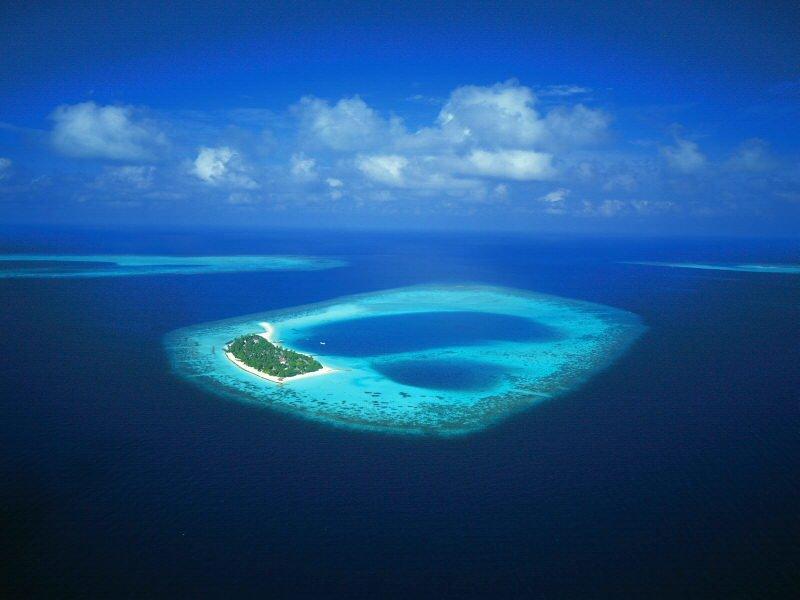
The busiest day of the year was December 9th with 122 views. The most popular post that day was The Maldives is ‘rebranding’. Why?.

Where did they come from?

The top referring sites in 2010 were twitter.com, linkedin.com, ow.ly, facebook.com, and skyscrapercity.com.

Some visitors came searching, mostly for redang island, maldives, tiffany ads, pangkor laut, and the maldives.

Attractions in 2010

These are the posts and pages that got the most views in 2010.

1

The Maldives is ‘rebranding’. Why? November 2010

2

Malaysia getting ready to be major player in world’s largest service sector industry April 2010
2 comments

3

Creative campaign not the solution to smoking issues in Singapore June 2010
2 comments

4

How to brand a city like Ipoh June 2010
7 comments

5

Singapore Airlines Suites, branding blunder or recession victim? January 2010

How to brand a destination to attract investors, the right businesses, talent and tourists


The destination branding rewards are high in terms of investment, jobs, development, tourism, exports, domestic and even international influence. But building destination brands is harder today than ever before. There are over 1,000 national and regional economic development agencies in South East Asia alone and the ongoing global economic crisis, political interference and a fragmented, tactical approach to a strategic initiative all help complicate the process.

It’s also hard because most destinations attempt to build their brands on a platform of familiar marketing and advertising campaigns that include one-size-fits-all positioning strategies driven by advertising in mass media, that do little more than add to the advertising clutter increasingly ignored by consumers. And more often than not, those campaigns are led by tourism.

Tourism maybe about to become the number one industry in the world, but did Indonesia’s 2008 tourism campaign and the tagline “Celebrating 100 years of nation’s (That is not a typo) awakening.” influence South Korea’s Hankook Tire when it was looking for a location for a US$1.2 billion tyre plant? Of course it didn’t.

Hankook Tire sought a good location close to transport hubs, a secure source of quality rubber, abundant and cheap labour and probably the opportunity of an early crack at Southeast Asia’s biggest economy.

Indonesia is on something of a roll at the moment and is expecting as much as US$10 billion of investment from South Korea alone over the next four years. And it’s not just Korean firms that are looking hard at the country.

The steel company Arcelor Mittal is currently considering a US$5 billion investment and China Investment Corp is rumoured to be considering an investment of as much as US$25 billion. A number of other deals are also in the works but although details a sketchy, one thing is for sure, none of them will be swayed by positioning statements or slick advertising campaigns featuring white sandy beaches, azure skies and crystal clear seas.

These companies will make their destination decisions, and this is particularly true of Indonesia but also applies to other Asian destinations, on political stability, a clearly defined long term plan to invest in railways, roads, power plants and distribution networks, ports, transportation and more as well as concerted attempts to tackle bureaucratic red tape, graft, and unfriendly labour laws.

Indonesia understands this and regional competitors would be wrong to ignore this sleeping giant. President Susilo recently instructed the relevant federal and state or regional authorities to speed up spending, particularly on infrastructure. Assurances from the central bank that it would not impose outright capital controls will do a lot more to convince potential investors than any expensive tagline or one-size-fits-all positioning statement.

Don’t get me wrong, tourism has an major role to play in the development of many destinations but an international one-size-fits-all positioning statement that attempts to speak to potential investors, tourists, talent and others from diverse parts of the world with one message is not the way forward.

So what can regions, states or cities do to build destination brands that will attract investors, businesses, talent and tourists?

Once the infrastructure is in place or the blueprint outlining the infrastructural development with timelines, responsibilities and milestones is determined, destinations must carry out research to identify channels, communities and influencers within those channels and communities and develop content that resonates with those influencers and those communities.

Prospects from different industries from different parts of the world have different requirements for value. Sarawak corridor of renewable energy (SCORE) on Borneo is targetting ten core industries. Those industries are as diverse as Aluminum, Aquaculture, Fishing, Glass, Timber and Tourism. Such diverse industries with their different requirements for value, will seek information from and be influenced by completely different environments.

Identifying those requirements is mission critical, without it destinations are guessing and the success of a destination brand should not rely on guesswork. So destinations must talk to prospects and customers from each segment. Find out what value they seek and determine if the destination can deliver that value.

To avoid wasting valuable resources on advertising and marketing that is lost in the clutter, it is important to determine what online communities they inhabit and who or what influences them. Also identify why investors chose the destination. And talk to lost customers and find out why they chose another destination over yours.

At the same time, internal brand research must identify what are the core brand values of the destination and how will they be communicated internally so that the whole organization is on brand and understands the role they play in the successful implementation of the brand. And it is critical that the core brand values are developed with customers in mind and not from the destinations point of view.

The analysis and data from this key research will form the foundations of the destination brand strategy. And only once the brand strategy is developed can the implementation begin. The implementation must not neglect citizens and their communities who will be impacted by the changes to their environments.

There will be positive and negative implications for communities and these must where possible be predicted and dealt with accordingly. If they cannot be predicted, they must be dealt with in a consistent, transparent and confident manner. It is important for destinations to understand from the outset that without citizen and other stakeholder buy in, the destination will not succeed.

Increasingly fragmented media, the Internet and an increase in leisure time activities make it harder to reach consumers via traditional media. Destinations must look past the traditional broadcast approach to generate interest in the destination.

One destination in South East Asia purchased a double page spread in the International Herald Tribune to market the destination. The feature was really well written, with top quality images and provided a comprehensive overview of the destination. But the feature made the common mistake of trying to tell everyone about everything.

This approach hopes that the advertisement or feature will be seen by the right people at the right time and that they will invest the time required to read through the substantial feature in the hope that there will be something relevant to them. The problem is that there are lots of competitors doing the same thing and moreover, how many senior executives are willing to invest time reading such articles?

This particular feature also made the mistake of not including any tracking tool to identify the number of responses. Any marketing efforts must include tools to measure their effectiveness because if you don’t track the effectiveness of your marketing efforts, how do you know which ones are working and which are not?

Communications must also take into account changes in consumer behaviour and look past the traditional media channels with an emphasis on the Internet and Social Media. And this will require a comprehensive change in the thinking of CEOs and others tasked with developing a destination brand as it requires ongoing engagement with consumers rather than a traditional broadcast approach.

To be successful, destination brands must now adapt to these emerging business and customer imperatives. Imperatives that include a special emphasis on the right research and the right data collection and analysis, effective customer, channel and employee communications, operational excellence, accountability, service and the ongoing ability to meet customer requirements.

The potential rewards are huge but the stakes too are high and with competition coming from all angles, destinations will only get one shot at building a successful destination brand.

Real time example of social media branding in action


This is happening right now!

An American teenager who enjoys knitting and the TV show Glee chose, for reasons unknown, the twitter handle @theashes. Unfortunately the ashes are the name given to one of the great sporting contests of all time, no I’m not talking about the world series that only American teams play in, I’m talking about the (sort of) bi-annual cricket series between Australia and England.

These two have been playing Test cricket since 1877 however the first match for the ashes was played in 1882. This is not the place to explain cricket!

The five match series has just begun with an enthralling 5 day match in Brisbane. Unfortunately for @theashes, fans around the world thought she was the official twitter account and bombarded her for updates from Brisbane!

Her early responses were more bemused than anything, “This is not the account of the cricket match. Check profiles before you send mentions, it’s incredibly annoying and rude.” However later tweets suggest a little frustration creeping in as this recent example shows, “I AM NOT A FREAKING CRICKET MATCH!!!”

In another tweet, she asked, “what the hell is a wicket?” and later she was unsure whether she should support Australia or England.

Enter the Brand. Qantas, sensing an opportunity began a twitter campaign – #gettheashestotheashes and offered her a free flight from New York. Other companies have also offered free tickets to matches, transport in Australia and even mobile phones.

She is considering the flight offer, but isn’t keen to travel alone. Qantas has done the right thing, seeing and responding to a great opportunity to develop a brand advocate. It is little events like this that are critical for the successful development of a brand in the social medial space.

Now they need to offer another ticket for her to travel with a friend otherwise their initial advantage could evaporate.

The Maldives is ‘rebranding’. Why?


I read here that the Maldives is starting a major rebranding initiative. The republic of the Maldives is an island nation in the Indian Ocean and consists of about 26 atolls with about 1,200 islands spread over approximately 90,000 square kilometers. Of those islands, about 200 are inhabited.

Its area and population of 300,000 make it one of the smallest Asian countries. It is also the lowest country in the world and at 2.3 metres above sea level, it is also the country with the lowest highest point.

Fortunately for the Maldives, it has some of the most stunning beaches on the planet and an ideal climate, all year round sunshine and beautiful calm seas have helped make the republic a popular destination.

You may recall the horrific images of death and destruction caused by the Tsunami in 2004. Despite the harrowing scenes and negative publicity after the Tsunami in 2004, the country has seen a steady increase in arrivals and 2009 saw arrivals surpass the pre Tsunami total of 500,000 visitors in 2003. Indeed, arrivals for 2009 were an all time high of almost 700,000. The main countries of origin for tourists to the Maldives are the UK, Italy, China, France, Germany, and Japan.

And there has been little negative reaction to the recent public relations disaster when an European couple were humiliated by hotel staff who were asked to bless their marriage. Probably because an apology to the couple was almost immediate and other fallout was handled confidently and quickly by authorities.

With limited natural resources, tourism and fishing have become the two key industries although the country does have a thriving cottage industry consisting of activities such as handicrafts and lacquer work.

Currently tourists spend most of their time in private bungalows in self-contained tourist resort islands designed specifically for tourism. Only one resort can be constructed on an island and the maximum built-up area of any resort island is limited to 20% of the land area and the building heights is not allowed to be higher than vegetation levels. Only 68% of a beach length can be utilised for guestrooms, 20% of each resort island beach is reserved for public use and 12% is classed as open space areas.

With such a fragile ecosystem, efficient waste management is vitally important and new resorts must install their own wastewater treatment plants, bottle crushers, incinerators and compactors. Sewerage disposal through soak-pits into the aquifer is no longer allowed. New resorts are also required to install desalination plants and this has substantially reduced the stress on ground water supplies.

The Maldives are seen by many to be the role model for sustainable tourism and it is such planning, strict environmental controls and policies that have ensured the Maldives retain their mystique.

When not in the resorts, most tourists spend time relaxing on private beaches, swimming, snorkeling, diving, fishing and boating. Sightseeing and visits to markets and local artisans in Male the capital are also popular.

So it would appear the Maldives, so to speak, is in a good place. It is managed efficiently, it is a role model for many countries, it has a thriving tourism business that works because of the policies and systems and processes put into place to protect the industry, it handles crises effectively and is probably in the top ten of most people’s ‘must go to destinations’ so you could be forgiven for thinking, “If it ain’t broke, why fix it?”

Thoyyib Mohamed, Minister of State for Tourism in the Maldives aims to “position the Maldives as the must-see destination of our time for all travelers.”

A recent press release goes on to state, “The (rebranding) initiative will focus on enhancing the positioning of the nation’s tourism product, strengthening its image in established key source markets while broadening its appeal to wider audiences and emerging niche markets.”

I’m not privy to just how many visitors the Maldives can take without breaking that fragile infrastructure and I don’t know what the targets are but I am fairly confident that broadening its appeal to wider audiences and niche markets may result in an increase in the number of arrivals. Even another 100,000 visitors, an increase of around 15% will put a tremendous strain on these beautiful islands and in addition to the added pressure on the environment and infrastructure these new arrivals will obviously bring, they may also cause social and cultural problems.

I would hazard a guess that the Maldives are known to most people who travel abroad for leisure. I also think it will be practically impossible to ‘enhance the image’ of what is for many an already perfectly enhanced image. And trying to position the country and creating awareness of the destination amongst those that don’t know the country will be a costly exercise that may do little more than waste valuable resources. Something no country can afford to do.

I recommend the Maldives focus on these 5 key areas

1) Retention. What does it need to do to get people to visit again?
2) Share of wallet. What does it need to do to get more out of visitors?
3) Instead of using outdated mass economy approaches like positioning, leverage the power of social media. There are numerous sites on Facebook about the Maldives but none seem to be managed.
4) If new markets are pursued, chose them carefully, only after extensive brand research. And go after them with a strategic plan that engages relevant communities in those countries and again, not via traditional media.
5) I just realised how good this point is so I have to keep it for a destination we’re working with, sorry!

Should you measure Brand Equity or Customer Equity?


Malaysian and Asian firms can save themselves a lot of effort and resources by focussing on customer equity as they attempt to build brands.

It’s almost 20 years since the launch of the landmark book “Managing Brand Equity: Capitalizing on the Value of a Brand Name” by David Aaker. David Aaker name may not be as familiar as others in his industry, but he is credited with developing the concept of “brand equity”.

The release of “Managing Brand Equity: Capitalizing on the Value of a Brand Name” came at a time when companies were desperately seeking new ways to increase the value of their brands by assigning a value to them or, measuring the intangible assets of the company such as reputation or channel relationships, that were previously ignored by traditional accounting systems. This became known as Brand equity.

On the face of it, “Brand equity” appeared to quantify intuitive recognition about the value of brands that in turn helped to rationalize marketing expenditures. It was also shorthand for a brand’s two key strengths – its relationship with purchasers and mental image among both prospects and customers. And it provided a means to rank winners and losers in branding wars – MAS vs Singapore Airlines, Maxis vs Celcom, Coca-Cola vs. Sarsi and so on.

Brand equity is now considered one of a number of factors that increase the financial value of a brand and the term is used freely to say the least. Nevertheless, despite its popularity, the concept of “brand equity” has numerous shortcomings, especially in an age when customers not organizations, are determining the success or failure of brands. Indeed, the pursuit of brand equity can even warp executive decision making and lead to lost profits and opportunities.

One shortcoming is that although the term is widely used, no common definition of brand equity exists.

In fact, in his book Building, Measuring and Managing Brand Equity, published about seven years after David Aaker’s work, K.L. Keller lists NINE definitions of Brand equity, some of which actually contradict one another. This lack of a definition means that no universally agreed upon measure exists.

Delve deeper into any methodology concerning a “brand equity” calculation, and it quickly becomes apparent that the effort has all the intellectual rigour of a fence post – a dash of corporate history, a gaggle of retail outlet numbers, a touch of stature here and some strength there, a little bit of ‘brand esteem’ topped off with an extra helping of distribution sales, a sampling of questionnaires and so on.

This lack of a common methodology means that two experts examining the same brand come up with widely divergent calculations. Furthermore, it is impossible to compare brands across different countries, industries or perspectives.

This imprecision – at a time of global economic uncertainty when shareholders are demanding more accountability and C level executives insist on both sophisticated measurement and accountability – means “brand equity” lacks validity as a benchmark for executive decision-making. After all, how can executives make effective decisions when it’s impossible to understand – and agree upon – consistent numbers?

As if C level executives didn’t have enough to think about, this imprecision causes other problems as well. If “brand equity” increases by 10%, what caused it? Was it the latest advertising campaign? Or was it a new product launch? Perhaps it was more aggressive sales? Or maybe it was the discounts at critical times to reduce inventory? Better service? “Brand equity” does not provide any insights about cause-and-effect.

Second, “brand equity” does not indicate market or financial success. Look at some companies with great “brand equity” – Pelangi Air, Perwaja steel, Port Klang Free Zone (PKFZ), Kodak, K-Mart, MV Augusta, MAS, – that have either disappeared, faced or are facing financial difficulties. Indeed, “brand equity” as a guiding star leads companies to focus on product maximization at a time when leading companies recognize that a focus on customers is critical to success.

Finally, and most important of all, “brand equity” is irrelevant to customers. Customers buy on value, service, price, convenience or other reasons, but never make a purchase decision based on the relative “brand equity” of two offerings.

Ask yourself, did you ever walk into Cold Storage, Armani or Isetan and buy something based on its brand equity? No, of course you didn’t. Hold that thought, why should you pay attention to an issue that customers ignore? Because everyone else is? Because you were told to in marketing classes that were probably developed in an era before Facebook, twitter, ecommerce and more?

So what should you focus on? The answer is “Customer equity”.

Customer equity has one universally recognized definition – the lifetime value of customers. This value results from the current and future customer profitability as well as such intangible benefits as testimonials and word-of-mouth sales.

Customer equity incorporates customer loyalty to buy again and again, the faith to recommend a brand and the willingness to forgive the inevitable mistakes that every firm makes.

While “brand equity” is impossible to calculate consistently, customer equity can be easily calculated on the back of an envelope. All that’s required are numbers that every company already is – or should be – calculating. These include revenue, customer acquisition (or marketing) costs, costs of goods/services and retention rates.

Ideally, depending on the industry, companies should also track leads and referrals, and be able to determine the profitability of specific products or services. By adding up revenue (or profits), subtracting relevant costs and incorporating retention rates, companies can determine the current – and future – profitability of every customer.

And because customer equity is easy to calculate, it will be understood by everyone from the boardroom to the warehouse, making it much easier to unify personnel behind the brand.

“Brand equity” is all about a product or an organization. But in the customer economy, brands that attempt to push products onto customers that don’t want them will fail. Even if you spend millions creating awareness of your products. Today, building a successful brand requires customers that are profitable.

Customer equity supports and measures the activities that encourage customers to buy more, more often. Increasing “brand equity” does little for a firm and decades of good will can be wiped out overnight (think BP), but increased customer equity reflects increased retention and word-of-mouth sales, key elements of a profitable brand.

Customer equity has other advantages as well. Because retention and customer profitability are tracked, it’s easy to make a direct link between marketing, service and other programs to increases (or declines) in customer equity.

Customer equity also enables the segmentation of very profitable, not so profitable and unprofitable customers. Knowing the relative profitability of customers not only helps promote retention of the best customers but also substantially improves the investment required and effectiveness of marketing as well as reducing marketing costs.

In today’s customer economy, “Brand equity” provides few if any tools for those responsible for attracting and keeping satisfied customers. In The Loyalty Effect, the author Frederick Reichheld wrote, “Customer equity effectively explains success and failure in business…. The companies with the highest retention rates also earn the best profits. Relative retention explains profits better than market share, scale, cost position or any other variables associated with competitive advantage.”

Do brands have value? Absolutely, and David Aaker has left an impressive legacy. But attempting to measure this value provides little benefit and distracts a company away from the critical task of retaining profitable customers.

Because ultimately, it’s these customers – not a fallible calculation of a dated concept – who are responsible for brand value and long-term corporate success.

How to build a brand in Asia today


Building brands has evolved from the one dimensional, top down era where the company controlled the relationship and essentially managed that relationship using broadcasts across mass media such as TV, Out of Home, print and radio with messages and content created to tell you what the company wanted you to know into the bottom up, customer economy.

In the bottom up customer economy, brands and their success or failure are defined and determined by customers. Those customers will create content and messages and disseminate that content and those messages across multiple platforms and to communities who are interested in their opinions. Now, how you interact with consumers is on their terms.

This is not revolution, simply evolution in the branding space. Brands are to blame for this loss of control because they have consistently misled consumers or over promised and under delivered. Brands can no longer be built using one-size-fits-all messages broadcast across traditional media channels to anyone who will listen. Basically because no one is listening.

Sure, there is still a place for messages, campaigns, and so on but because there are so many sources of information, so much clutter, these messages don’t have the impact or influence they had 20 or 30 years ago. In the digital age you can spend as much as you want on traditional media and reach everyone in the country but if they are not listening they won’t buy your product or service.

If a brand wants to be successful it must learn to communicate with multiple segments, and messages must be targeted and must be dynamic, using content and channels that resonate with those segments. But brands must move away from the traditional demographic approach to researching those segments. After all, how many 15 – 24 communities are there on Facebook? And content must constantly be revised and updated with new content.

And organizations must ensure that they deliver on promises and that promise must deliver economic, experiential and emotional value to each of those multiple segments. In the consumer business, this is most often done, initially anyway, in the store. Because in the customer economy, no matter how much you spend, if your staff don’t know how to build rapport with your prospects then they may buy once but rarely will they become a loyal customer. And without loyal customers, you won’t have a brand.

So if you are looking to build a brand, forget about reach, awareness, positioning and brand equity and trying to be all things to all people and start thinking about delivering value to specific segments and building customer equity.

Branding requires you to get to know your customers


This is the start of an ad hoc series of personal experiences I have with brands and some recommendations to help improve the experience.

Running a small retail business is tough, particularly in today’s climate. It’s even tougher in the competitive retail wine business in a small muslim country with high taxes on alcohol. Key to building a profitable business will be the relationship between the company and their customers.

Yesterday evening I walked into my local wine shop where I have shopped off and on for 5 years and was greeted with a “Hi, we haven’t seen you for a long time.” I mumbled a reply and the clerk nodded and carried on reading her magazine. This is not the first time I have gone ‘AWOL’ but the reason for my absense is the same. I haven’t been there for a while because about 3 months ago I was made an offer I couldn’t refuse and bought 5 cases of wine from another company.

Although I got a great deal on the wine there is no reason why my regular wine shop couldn’t have given me the same deal. But of course they didn’t know about it because they don’t make an effort to collect data on me. They just hope that I will come by every now and then and buy something. And if I don’t, never mind, there will be other new customers to replace me. To a certain extent this is true but wouldn’t it make more sense to look at ways to encourage those people who are already customers to come back again? And get to know those that come on a regular basis to increase share of wallet and develop brand ambassadors?

Here are 5 useful tips for any small retail business looking to be more profitable

1) You have a 15% chance of selling to a new customer and a 50% chance of selling to an existing customer. Distribute your resources accordingly.
2) Invest in database software that will allow you to store data about your customers
3) Don’t be afraid to ask for contact information from new and existing customers
4) Invest time in keying in customer data that you can use to determine buying patterns, product preferences and so on
5) Train your staff to get to know your customers.

Why the iPad will fail – Part 3


The announcement yesterday by RIM that it will release a tablet device in early 2011 may be the death knell for the iPad. The new device comes with a 7-inch multi touch touchscreen and a new operating system developed by newly acquired developer QNX.

Called the PlayBook (I’m not sure why they came up with such a lame name), BlackBerry is calling it “the first professional tablet”, and is marketing it as “an incredible gaming platform for publishers and the players”.

Whilst the choice of name for a business tool that is for gamers and publishers is a little confusing, the hardware does a lot of things the iPad doesn’t.

For a start, the new tablet will run Adobe’s Flash, which Apple’s iPad doesn’t. It offers micro – USB ports and micro – HDMI, again not offered with the iPad. It has dual (front and rear) HD cameras for video calling, also unavailable on the iPad. It weighs about 400g. 16GB and 32GB models will be available. One drawback is that it will initially connect to the web via wifi or via a BlackBerry smartphone, however 3G and 4G models are in the works.

BlackBerry is very excited about the new operating system that will offer open standards, which the smartphone maker promises to be “a breakthrough development platform for IT departments and developers”. The developers’ kit will be out in the next few weeks.

This new tool is undoubtedly a smart move by RIM as it dominates the business tool segment. According to research firm ComScore RIM has a 39.3% share of the smartphone market in the US. The iPhone’s share of the same market is only 23.8% whilst Google’s relatively new Android already has 17%.

Some are forecasting the tablet space to be worth up to US$40 billion by 2012 and is becoming increasingly competitive with the recent announcement by Samsung of its Galaxy tablet and the 5 inch Streak introduced by Dell recently and with HTC, Lenovo, Acer and Asus as well as Google and Microsoft all threatening to launch tablets, the battle of the tablets has begun in earnest.

It is too early to say whether or not RIM can deliver on promises made, especially as the new tablet will be introducing another operating system. But if it can keep the price attractive for everyday users and retain all the high quality features, it will pose a serious challenge to the iPad, and may even see off what is essentially after all, a superfluous gadget that no one really needs.