Real time example of social media branding in action


This is happening right now!

An American teenager who enjoys knitting and the TV show Glee chose, for reasons unknown, the twitter handle @theashes. Unfortunately the ashes are the name given to one of the great sporting contests of all time, no I’m not talking about the world series that only American teams play in, I’m talking about the (sort of) bi-annual cricket series between Australia and England.

These two have been playing Test cricket since 1877 however the first match for the ashes was played in 1882. This is not the place to explain cricket!

The five match series has just begun with an enthralling 5 day match in Brisbane. Unfortunately for @theashes, fans around the world thought she was the official twitter account and bombarded her for updates from Brisbane!

Her early responses were more bemused than anything, “This is not the account of the cricket match. Check profiles before you send mentions, it’s incredibly annoying and rude.” However later tweets suggest a little frustration creeping in as this recent example shows, “I AM NOT A FREAKING CRICKET MATCH!!!”

In another tweet, she asked, “what the hell is a wicket?” and later she was unsure whether she should support Australia or England.

Enter the Brand. Qantas, sensing an opportunity began a twitter campaign – #gettheashestotheashes and offered her a free flight from New York. Other companies have also offered free tickets to matches, transport in Australia and even mobile phones.

She is considering the flight offer, but isn’t keen to travel alone. Qantas has done the right thing, seeing and responding to a great opportunity to develop a brand advocate. It is little events like this that are critical for the successful development of a brand in the social medial space.

Now they need to offer another ticket for her to travel with a friend otherwise their initial advantage could evaporate.

The Maldives is ‘rebranding’. Why?


I read here that the Maldives is starting a major rebranding initiative. The republic of the Maldives is an island nation in the Indian Ocean and consists of about 26 atolls with about 1,200 islands spread over approximately 90,000 square kilometers. Of those islands, about 200 are inhabited.

Its area and population of 300,000 make it one of the smallest Asian countries. It is also the lowest country in the world and at 2.3 metres above sea level, it is also the country with the lowest highest point.

Fortunately for the Maldives, it has some of the most stunning beaches on the planet and an ideal climate, all year round sunshine and beautiful calm seas have helped make the republic a popular destination.

You may recall the horrific images of death and destruction caused by the Tsunami in 2004. Despite the harrowing scenes and negative publicity after the Tsunami in 2004, the country has seen a steady increase in arrivals and 2009 saw arrivals surpass the pre Tsunami total of 500,000 visitors in 2003. Indeed, arrivals for 2009 were an all time high of almost 700,000. The main countries of origin for tourists to the Maldives are the UK, Italy, China, France, Germany, and Japan.

And there has been little negative reaction to the recent public relations disaster when an European couple were humiliated by hotel staff who were asked to bless their marriage. Probably because an apology to the couple was almost immediate and other fallout was handled confidently and quickly by authorities.

With limited natural resources, tourism and fishing have become the two key industries although the country does have a thriving cottage industry consisting of activities such as handicrafts and lacquer work.

Currently tourists spend most of their time in private bungalows in self-contained tourist resort islands designed specifically for tourism. Only one resort can be constructed on an island and the maximum built-up area of any resort island is limited to 20% of the land area and the building heights is not allowed to be higher than vegetation levels. Only 68% of a beach length can be utilised for guestrooms, 20% of each resort island beach is reserved for public use and 12% is classed as open space areas.

With such a fragile ecosystem, efficient waste management is vitally important and new resorts must install their own wastewater treatment plants, bottle crushers, incinerators and compactors. Sewerage disposal through soak-pits into the aquifer is no longer allowed. New resorts are also required to install desalination plants and this has substantially reduced the stress on ground water supplies.

The Maldives are seen by many to be the role model for sustainable tourism and it is such planning, strict environmental controls and policies that have ensured the Maldives retain their mystique.

When not in the resorts, most tourists spend time relaxing on private beaches, swimming, snorkeling, diving, fishing and boating. Sightseeing and visits to markets and local artisans in Male the capital are also popular.

So it would appear the Maldives, so to speak, is in a good place. It is managed efficiently, it is a role model for many countries, it has a thriving tourism business that works because of the policies and systems and processes put into place to protect the industry, it handles crises effectively and is probably in the top ten of most people’s ‘must go to destinations’ so you could be forgiven for thinking, “If it ain’t broke, why fix it?”

Thoyyib Mohamed, Minister of State for Tourism in the Maldives aims to “position the Maldives as the must-see destination of our time for all travelers.”

A recent press release goes on to state, “The (rebranding) initiative will focus on enhancing the positioning of the nation’s tourism product, strengthening its image in established key source markets while broadening its appeal to wider audiences and emerging niche markets.”

I’m not privy to just how many visitors the Maldives can take without breaking that fragile infrastructure and I don’t know what the targets are but I am fairly confident that broadening its appeal to wider audiences and niche markets may result in an increase in the number of arrivals. Even another 100,000 visitors, an increase of around 15% will put a tremendous strain on these beautiful islands and in addition to the added pressure on the environment and infrastructure these new arrivals will obviously bring, they may also cause social and cultural problems.

I would hazard a guess that the Maldives are known to most people who travel abroad for leisure. I also think it will be practically impossible to ‘enhance the image’ of what is for many an already perfectly enhanced image. And trying to position the country and creating awareness of the destination amongst those that don’t know the country will be a costly exercise that may do little more than waste valuable resources. Something no country can afford to do.

I recommend the Maldives focus on these 5 key areas

1) Retention. What does it need to do to get people to visit again?
2) Share of wallet. What does it need to do to get more out of visitors?
3) Instead of using outdated mass economy approaches like positioning, leverage the power of social media. There are numerous sites on Facebook about the Maldives but none seem to be managed.
4) If new markets are pursued, chose them carefully, only after extensive brand research. And go after them with a strategic plan that engages relevant communities in those countries and again, not via traditional media.
5) I just realised how good this point is so I have to keep it for a destination we’re working with, sorry!

Twitter users increasingly influential


Twitter estimates that there are 26 million monthly Twitter users online in 2010. This is not that significant compared with the 500 million using Facebook.

But it’s not the numbers that matter, it’s the quality of the users that count. Twitter users are far more influential than other online users. In fact, a recent study by ExactTarget considers Twitter users to be the most influential online.

Quote “While the number of active Twitter users is less than Facebook or email, the concentration of highly engaged and influential content creators is unrivaled — it’s become the gathering place for content creators whose influence spills over into every other corner of the internet.”

The study, conducted in April 2010 found that the main reason consumers follow brands they like on Twitter is to gather news and information about the company and its products and to learn about future sales and likely discounts. Interestingly the study found that brands are still not participating in conversations with followers, reducing the opportunity for the brands to build relationships with consumers that cannot be duplicated, like the sales and discounts.

Reasons for this might be because brands are seeking social media advice from advertising agencies who prefer to recommend traditional broadcasting of messages from the brand rather than engagement with consumers that gives more responsibility for the brands development to the consumer.

How to brand a city like Ipoh


Senior Executive Councillor Datuk Hamidah Osman of The Perak state government in Malaysia announced on a trade and investment mission to China recently that the state government, in an effort to boost its tourism industry, intends to brand Ipoh, the capital of Perak as the “City of White Coffee”.

Datuk Hamidah was quoted by Bernama “ Perak should have its own identity and branding just like Shenzhen that is known as the “Shoe City” and Paris which has long been known as the “City of Fashion”.

In conjunction with the plan, Datuk Hamidah said, “We plan to have a food fair to be held in Ipoh this December. The idea is to promote the local foods and tourism industry. We have the best bean sprout chicken rice and chee cheong fun (rice rolls),” she added.

Faced with increased domestic and international competition for both tourists and FDI, there is no doubt that Ipoh and Perak, need to develop a destination brand. But that brand must be based on a platform of multiple tourist attractions and business potential.
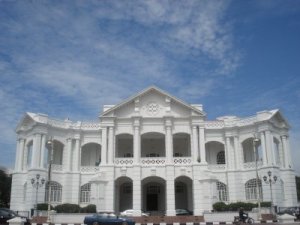
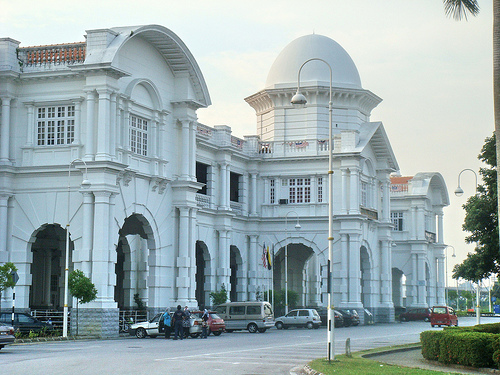
Set amongst picturesque limestone scenery, a diverse selection of tourist attractions include Kellie’s Castle, Perak Museum, Ipoh railway station, Tambun hot springs, Taiping lake gardens and Zoo, and more, Ipoh and the rest of the state have a lot to offer.

Other destinations include Pangkor and Pangkor Laut, Bukit Larut and others. Perak also has a rich heritage that can be promoted, including silver and tin mining. It is historically known as an innovator, having pioneered such advances as the first rubber trees in Malaysia and was also the first state in Malaysia to go wireless.

The tagline ‘City of white coffee’ certainly differentiates Ipoh from other destinations but what else does it tell potential visitors, businesses or investors? How can stories be developed around the tagline, who are the target market? How will it be communicated? If it is a one-size-fits all approach, it’ll need significant resources to communicate the new tagline. Have budgets been agreed and so on?

Today, Destination branding is not based on a tagline. Destination branding must be based on experiences that are successfully delivered to specific segments and not based on attempts to market all places to all people.

Research and data are critical to understand tourist and other stakeholder requirements before developing strategies and not the other way around.

Stakeholder buy-in is critical for brand consistency and fulfillment of the brand promise. As an example, how can a hotel contribute to the proposed approach? How can the same hotel leverage the approach to grow it’s business?

Branding is a long term coordinated and integrated strategic exercise and not a tagline. One-size-fits-all strategies using mass media are no longer effective.

Planning is essential to coordinate initiatives, ensure accountability and avoid wasting resources. Without a plan, activities will be reactive and tactical.

What Ipoh and other cities need is a consistent and organized methodology to brand themselves as domestic and international destinations.

Here is one approach that would definitely help Ipoh:

Stage one: Carry out extensive research
Research develops data on key success factors, generates insights and what current and prospective visitors seek, and provides benchmarks to measure branding ROI. The research should consist of the following activities

1) Destination analysis: Key members of the hotel industry, government bodies, local business associations and representatives of major attractions should be confidentially interviewed. The interview will be based on an agenda designed to explore a number of issues related to the city

2) Visitor audit: Carry out interviews with current and past visitors. Other groups can also be selected, such as conference organisers. The interviews will focus on the experiences and motivations associated with Ipoh, information resources, and suggestions for increasing tourist value.

Special attention will be paid to how they researched Ipoh, what they have heard or told others about Ipoh and the channels or vehicles used to tell them. Additionally, representative travel agents in Ipoh will be interviewed about tourist experiences and requirements. Online surveys will be useful to research baseline perceptions of brand Ipoh.

3) Place audit: A place audit will identify Ipoh’s economic/ demographic characteristics, review major attractions (including strengths and weaknesses of the attractions) and outline all brand assets. The place audit will also look to identify product potential.

4) Communications audit: A comprehensive analysis of the channels, vehicles and materials, both digital and print, current and proposed that are or will be used to communicate with both consumers and businesses.

Stage 2: Ensure community buy-in and set internal branding requirements
Community and other stakeholder buy-in is important both for delivery of the brand promise, development and ongoing funding. Stakeholders must be communicated with and input from stakeholders must be incorporated so that they understand that they play an important role in initial and ongoing brand development.

Such buy-in can be accomplished through a variety of activities, including “townhall” or other community meetings, private presentations and media briefings. Initial research findings and recommendations can be discussed as a basis for soliciting input.

Additionally, community buy-in requires a group of citizens, business people, and local and regional government officials. This planning group will:

• Define and diagnose the community’s condition, major issues and potential solutions

• Develop a long-term brand vision based on a realistic assessment of the community’s values, resources and opportunities

• Work to develop a long-term plan of action involving intermediate stages of investment and transformation

Stage 3: Brand plan development
The results of the research and community buy-in will be incorporated into a comprehensive plan for Brand Ipoh. This customized brand plan serves as a strategic framework for all marketing activities, messages, metrics, timetables and proposed budgets. Special attention should be paid to digital branding and product development to get previous visitors to return again.

Stage 4: Comprehensive and segment-specific execution & measurement
Unfortunately this is where most destination begin their brand strategy. Once the brand plan is in place, execution begins. The execution operates on two overlapping fronts – general and segment-specific:

General: General branding represents the ongoing efforts to ensure visibility and provide value to prospects, agents and visitors, as well as gather data, ensure continuous performance and maintain reporting.

Segment-specific: Segment-specific branding concentrates on two areas where it is important to establish and maintain strong relationships. These include existing customers/visitors, and target-rich segments such as families, agents, previous visitors, etc. The actual segments to be targeted will have been defined in the brand plan.

I appreciate that many cities will view this as a daunting and potentially expensive task. But it will not be as expensive as numerous one size fits all communications based on a tagline that tries to speak to all but really speaks to none.

Social Media is not a branding silver bullet


A brand is built not on acquisition but on retention.

And retention requires a relationship. And a relationship is based primarily on ‘Trust and an ongoing, sustained engagement, on customer terms that provides economic, experiential and emotional value to the customer’.

That’s what branding is all about. It’s not a communications exercise. It won’t happen as a result of an advertising campaign. And it won’t be carried out on the pages of Facebook. That’s right, social media is not a silver bullet.

Social networks give us the tools to engage with consumers and build relationships with them. But like any tool we need to use it properly to get the most out of it. We still need marketing with links to articles, while papers, blogs and so on that appeal to target markets.

Unfortunately the majority of brands are continuing to use new tools such as social media, that allow them to lay the foundations for a relationship with consumers, in the same way as they use mass market tools that trumpet a one-size-fits-all approach to marketing.

I recently tweeted about a cool bit of kit from sonos, makers of wireless digital audio systems. I asked if there was a Sonos dealer in Malaysia. Sonos tweeted me and told me to contact someone in Singapore and obviously allerted them as I got a tweet from the Singapore guy with an email of the distributor in Malaysia. I emailed the distributor and didn’t get a reply. Sonos hasn’t contacted me to see if I purchased and nor has the Singapore distributor followed up.

There is no silver bullet with social media. It won’t solve all our branding problems but, used correctly, it will help us build relationships with customers. From there you might, just might build a brand

Nation Branding and Social Media


A key element of a successful nation branding initiative depends on how well your audience absorbs, understands, adopts and redistributes the message based on their requirements for value. Back in the day this was done at a coffee shop, sundry store, mosque, church, football club or where ever else consumers congregated. Today those same people are increasingly likely to hang out in communities online. Facebook is the most popular home for many communities and it and other forms of Social Media need to be part of any strategic nation branding initiative.

But the Social Media rules are very different to the traditional media rules. And although many nations, organisations and government institutions or destinations believe they understand the new rules, the output of many of them would suggest otherwise. And this is detrimental to the long term success of the nation brand. Social Media channels or tools may not survive as long as many traditional media channels, but Social Media is here to stay.

One country that seems to be doing Social Media right, is the US. The importance of Social Media, and in particular Facebook during Obama’s presidential election campaign is now the stuff of legend. Key to the successes of the campaigns was that campaign personnel asked people what was important to them and then fed that information back to the main office where local service projects were implemented as quickly as possible. Many of of those vote winning projects continue today.

At one stage, in November 2008, Obama had 2,155,244 friends on Facebook, McCain had 578,651 and George W. Bush had none! Little wonder then who won.

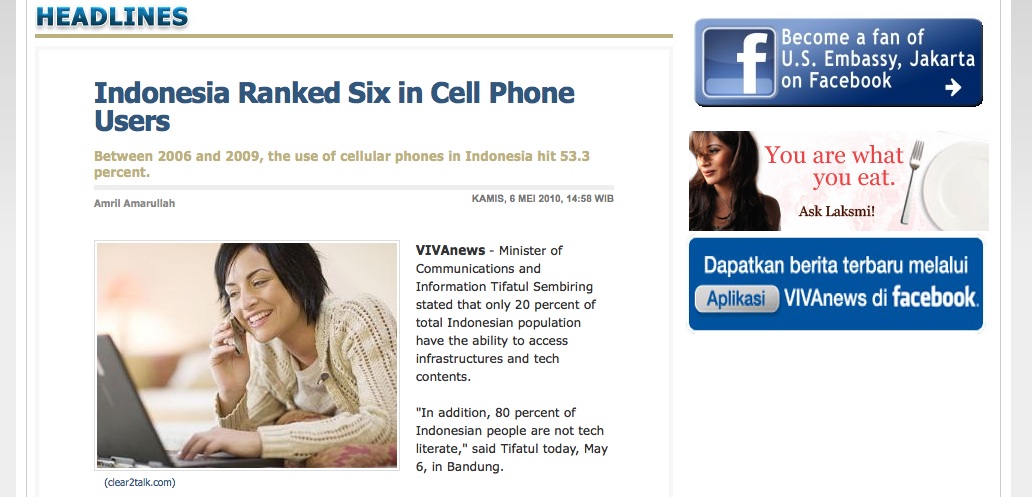
The US has since expanded its use of Social Media to the international arena and the increasing importance of Social Media channels is reflected in the Facebook efforts of the US embassy in Jakarta, Indonesia. The Embassy has invested significant resources into Social Media just as the use of Social Media in the country takes off – the number of active Facebook users in the world’s most populous Muslim country has grown from 2,325,840 in March 2009 to 20,775,320 in March 2010, an increase of 793%!

As the US Embassy in Jakarta has ramped up its presence on Facebook, its fan base has ballooned from 35,000 followers to 131,000 in little more than a month! This in a country not known for its love of the US. But the US embassy understands that this is not a soap box to try and hard sell or influence Indonesians with US policies and attitudes.

As a result, the tone of the Facebook site is light and cheerful. One recent post on the homepage related to Indonesia Batik, has received over 795 comments and more than 2,300 thumbs up. Most of the posts receive 100+ comments and significant numbers of thumbs up. Batik is err a common thread throughout the site and most of the postings are related to American life and culture, and in particular sport, music and popular green initiatives. Other initiatives include Blogger workshops.

Tourism, primarily destinations in the United States are also featured, including a rather ambitious and possibly poorly targetted attempt by Nebraska to attract Indonesians to the Great Plains state. Despite the remoteness of the destination, the video has received over 50 mainly positive comments. Other states using the site to market themselves include Tennessee and Ohio.

The US Embassy markets the site via advertising on local sites such as this one

Social Media and, in this particular case, Facebook is undoubtedly an excellent channel for nations to build their brands by engaging with consumers and offering value to those consumers based on the needs of those consumers, whilst understanding the environment. The USA, certainly in Indonesia seems to know this better than most.

Thanks to unspun for the inspiration for this story

Take control of your ad placement


I’ve decided to make these real time observations of branding blunders/negative brand association individual posts instead of putting them all together. This latest one is a real gem.

Essentially it is an argument between the British meat industry and the World Cancer Research Fund about the the dangers (or not) of red meat. The article is littered with negative words such as confusing, cancer, nightmare, death, bitter, row and more. To the right (and above) the article is an ad selling Dell computers. You can read the full article here but of course the advertisers may change

The execution of the ad is good. Readers can quickly and easily identify the brand and there is a seamless call to action.

But I’d like to know why Dell is advertising next to such a negative article. How does Dell buy these ads? Have they considered where the ads may be placed? Do they book a specific number of spots and choose the location or does the website decide where the ad goes?

If you are a brand and considering advertising online, make sure you determine what sort of articles the ads can be placed alongside otherwise you may be associated with death, cancer, arguements and so on. Probably not what you intended.

Any thoughts?

How Asian firms and politicians can adopt social media into their strategy


When TV first started, commercials consisted of a presenter standing in front of a microphone reading from a script. Why? Because that was how it had always been done on radio. It took companies a few years to leverage the power of TV but eventually they did and now TV ad spend is estimated to be in the region of US$500 billion annually.

And in the same way as first the radio and then the television changed the way companies pass on information to consumers in the 20th century, social media is changing the way consumers source information about businesses in the 21st century. But social media will have an even bigger impact than radio and television because social media is not only changing the way we make decisions related to brands, social medial is changing the way we do business.

Consumers receive up to 5,000 messages a day
Back in the day, companies used radio and then TV to build brands by developing a one-size-fits-all message and broadcasting that message to as many consumers as possible as often as required. All communications were one way and the messages contained only the information the company wanted to share and the consumer was expected to accept this information and not dispute it. In a more trusting world, with limited competition and smaller markets, consumers were accommodating. Unfortunately, more and more companies adopted the same strategy. Soon consumers were inundated with up to 5,000 messages a day, many of them making increasingly outrageous claims.

Companies were unable to follow through on the promises made in advertising and trust, the key element of any relationship, was eroded. Repeatedly let down, consumers began to look elsewhere for independent information and the truth. They found it with other consumers. Consumers now source their information on brands from other consumers. Today, consumers have the power to make a brand succeed or fail. As consumers learn the truth about a brand, the reputation of companies and their brands is being determined, shaped, altered and increasingly discarded by consumers.

Dynamic process
And it is an ongoing, dynamic process. At any given time, consumers are searching for information on a product or service that has caught their eye. But they are not sourcing that information from TV commercials, the radio or the company website, they are looking to other consumers for the information they require.

And they are doing it, on the whole via social media. And social media is yet another tool that organizations must embrace because it is replacing marketers and the marketing department and other barriers between the organization and the consumer.

Social media cost of entry is low
Social media is not a fad. Those companies that don’t buy into social media will be left behind. But a lot of companies in Malaysia are going to be intimidated at the prospect of opening their virtual doors and giving the general public the opportunity to interface directly with them. But they are going to be talked about anyway so they might as well be part of the conversation. That way at least, they will have the chance to contribute a corporate take on all issues. And the good news is that the cost of entry is low and there are very few barriers to participation.

So what should Malaysian firms do to leverage social media?

1. The first thing they have to understand is that social media is not about you. It is not PR and it is not advertising. Social media is not for the hard sell, it is for engaging prospects and customers and for entering into two way conversations with them. Do this, and you will get opinions on issues that are important to an audience who is interested in your product. If you listen and use this information wisely, you will be able to match your product attributes to your customer requirements for value.

2. Identify which social media platforms you intend to use and develop a strategy to use them. Transparency, consistency, honesty and longevity are key so don’t just jump in and fire away for a fortnight of frantic activity and then get bored and stop communicating.

3. Do some research and find out how your customers are using social media, what platforms and so on. 350,000,000 million people read blogs. Identify which ones your prospects and customers are reading and how can you get involved by responding to articles.

4. Offer forums on your website that allow customers to express freely their experiences of using your products. You’ll be astonished at how valuable the feedback will be as you listen to what really matters to consumers and incorporate the feedback into your strategy.

5. Over time, develop a formal process to monitor and review what consumers are saying about you and where they are saying it. This monitoring will allow you to enter into dialogues that are very personal and transparent. It will also allow you to address negative issues as they arise and before they develop into crises. Casual monitoring will give you a real time view of what is being said but it is resource consuming and may not be as effective as a more formal program via a third party such as BuzzMetrics.

6. Set up blogs for key customer facing departments. Blogs are a great sounding board and instantly engage prospects and customers. Be honest, develop a personality but don’t try to sell your products. Don’t worry if your opinions differ to those of the audience. Open and transparent responses are what your audience is looking for.

7. Social media requires a fresh approach to content. Too many Malaysian firms are simply paying ‘lip service’ to social media. One government agency simply copied and pasted its website onto its Facebook page and then left it for nine months!

8. Social media is a platform for communication and collaboration, not a soapbox. Some companies simply tell followers about special offers. A number of politicians use Twitter to tell everyone what they are doing yet ignore specific issues raised by voters.

So as you embark on your social media strategy, remember that the digital environment is immense and fluid. Understand that you must change the corporate approach of one that aims to push messages onto consumers, to one that aims to listen to what they have and then responds to those issues. Take these first steps and you’ll soon learn to leverage the powers of social media and throw away the script.