The only brand worth having is a profitable brand (even if it means losing customers)


Looking through the ‘archives’ of some of our early branding blog posts, I came across a reference to an article in Fortune Small Business.

The article talked about three companies that had for years pursued a traditional sales and market growth approach that saw them investing more in acquisition than retention whilst paying little attention to profitability.

One case study was of Skelton Tomkinson (now known as Skelton Sherborne), a heavy-machinery shipper based in Brisbane, Australia. At the time the company had one office in Brisbane and one office in the U.S. where Caterpillar was a major customer.

In 2000, because he was seeing little growth using a traditional sales and market growth approach, the owner deliberately raised fees on his least profitable customers, hoping they would leave. Some of them did and revenues dropped dramatically, from US$20 million per year to $8.2 million.

But profitability increased 98% and total revenues slowly returned to $20 million. Tomkinson’s motto: “I run my company with this saying: Volume is vanity, and profit is sanity.”

And it must be working because today, the company has 11 offices, up from 2 in 2000. The new offices are in South East and North Asia, with one in the Arabian Gulf.

Far too many companies believe that they must pursue sales or market growth and this generally means ‘spraying and praying’ – basically the act of spending as much money as possible trying to reach as many people as possible.

What they should in fact focus on is profitable growth, which most often results from identifying and retaining profitable customers and not trying to sell to evey Tom, Dick and Harry.

Another mistake companies make is wasting valuable resources finding out what their customers are doing and then wasting even more valuable resources fighting or trying to block or undercut those competitors.

This is an exercise in futility because in today’s dynamic, always on, constantly evolving world, the only focus should be on identifying the right prospects, creating the right customers (and getting rid, yes getting rid of unprofitable customers) and delivering value to profitable customers through engagement and personalisation.

The great branding graveyard in the sky is full of brands that played the volume game – think Rangers FC, Viyella, Blockbuster, Silverjet, Swissair, Habitat, Mobikom, MegaTV, Pelangi Air, PanAm – they all took a traditional approach to building their businesses yet they all ended in failure.

Seeing your name on billboards or in print ads everywhere and reaching lots of people may make you feel good but focussing on profitability will keep you sane.

New BMW 6 series


The Malaysian Automotive Association has forecast total vehicle sales in Malaysia will be 615,000 units in 2012, up 2.5% over 2011. If this figure is reached it will be a record for Asia’s largest passenger car market.

This bullish forecast for 2012 is despite the fact that vehicle sales in Q1/2012 dipped 12.6% to 138,544 units from 158,432 units in Q1/2011.

Various reasons have been put forward to explain the drop in Q1 including the Lunar New Year and new credit policies. I was under the impression the Lunar New Year was an annual event and always in the first quarter so I don’t know how that would be a problem this year.

Personally, I think the main reason for the Q1 drop is that the global economic situation is having an impact on the number of loans approved by local banks wary of a repeat of the Asian financial crisis of 1998.

Whatever the reasons, it is good to see that BMW is doing what it can to sell its new six series with an extensive digital campaign.

I clicked on the link and was pleased to learn that the Bavarian giant will be offering wheels with the new 4 door coupe.

The BMW 6 series coupe, now sold with wheels

This should help increase sales for 2012.

The new Malaysia Airlines Brand identity is stunning


Malaysia Airlines has had a torrid couple of years. Bitter court cases and weak management have led to record losses and low morale which in turn have caused the reputation of the brand to diminish in the eyes of the vast majority of Malaysians and other stakeholders.

All this despite huge sums spent on global positioning strategies using one size fits all advertising and other marketing broadcast across traditional channels.

However, in a couple of weeks time the beleaguered national carrier, once considered one of the finest airlines in the world will start scheduled flights of its new Airbus A380 on the potentially lucrative Kuala Lumpur – London – Kuala Lumpur sector.

The new look Malaysia Airlines identity

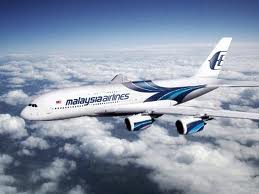
Looking at the press images, it is hard not to miss the beautiful new identity of the aircraft. Personally I think the new look is stunning – bold colours, sweeping lines, very contemporary yet true to Malaysia’s heritage.

Although there were discussions late last year about new uniforms, I haven’t seen any official announcements to confirm it but one can only assume this new identity will also be reflected in the uniforms of the A380 cabin crew and throughout the rest of the airline as well as in all the collaterals, training of the staff and across all the other brand touchpoints.

The Malaysia Airlines cabin crew uniform has hardly changed since it was introduced in 1982

After all, it wouldn’t make sense to create a new identity for a new plane without integrating it across the whole organisation, right?

Branding, corporate or political, is an organisational issue


One of the problems faced by brands and branding are the attempts to simplify it. Fortuitously this approach has yet to gain traction with the aviation industry!

The business of building brands takes time. And as the business of brands and branding has evolved and the waters have become increasingly muddied, the only constant has been the influence consumers now have over the success or failure of brands.

As a result, the role of the brand manager is increasingly irrelevant because her attempts to control everything related to the brand are obsolete and pointless because consumers are crafting the messages that are heard not the marketing department or the advertising agency.

These are lessons that need to be learned in the political space as well. In Malaysia, the Prime Minister DS Najib Razak has a powerful personal brand but he cannot be expected to single handedly win an election. The key is to get all the other elements on brand. And anyway, as Tun Abdullah Badawi knows too well, a high approval rating is no guarantee of a big election win.

Historically, creating clearly defined messages and broadcasting them across traditional media was enough to build a brand or political party but today, this model alone, can no longer be relied on to educate, inform and convince.

Today, the first thing a consumer will do, assuming they hear the message through all the clutter, will be to determine if the message fits in with their own experiences. If it doesn’t, they will discard the message immediately. Secondly, consumers will discuss the message with others who they know and respect and explore their experiences and perceptions. Thirdly, consumers will seek the opinions of those they may not know. This is normally done across social media.

Only once consumers have absorbed all the information will they make a decision. If the promises defined by the organisation, whether it be a political or corporate one do not match the consumers own experiences or those of her friends or acquaintences, the message will be discarded. No matter how much money is spent.

If the response is favourable, the consumer may seek to experience a physical interaction with the brand, perhaps through a retail outlet, website or political rally. If any of these experiences are negative, the consumer will walk away from the brand, and it will take a superhuman effort to get them back.

A brand, whether political or business, requires every division, department, individual – from the tea lady to the CEO, or from the branch leader to the state leader to the divisional leader etc – to know and understand what they have to do to achieve clear strategic goals.

Only then will the brand survive and thrive.

Advertising sells


I’m often accused of being anti advertising which I’m not. I’m just anti the use of advertising to solve all branding problems. And I’m anti the use of advertising as the only tool to build a brand. Oh, and I’m anti the use of advertising to communicate one corporate defined position to as many people as possible across as many channels as possible, simply because this was a solution fifty years ago and is therefore the solution today.

And to prove I’m not anti advertising, here is a link to what is possibly one of the most stunning ads I’ve seen.

I don’t know if it was allowed to be shown on TV (it’s from the UK) and I’m still trying to work out whether it is shockingly effective or effectively shocking, but it certainly grabs and keeps your attention. What do you think?

General Motors cancels Facebook advertising campaigns


A fellow branding professional who I respect a lot sent me this link to an article on Forbes.

It’s a fascinating story on a number of levels. General Motors (GM) has been very supportive of Facebook, spending in the region of US$40 million per year on marketing with the site, US$10 million of which was on paid advertising. However, the article says that GM will no longer spend the US$10 million on marketing but it remains heavily committed to using the site to engage consumers.

Advertisers such as GM have been key to driving up FB user revenue which is about US$9.51 per user in the U.S, compared to US$4.86 in Europe US$1.79 in Asia. Total revenue from advertising in 1Q2012 was about US$870 million so the US$10 million annual spend from GM will hardly register.

For the record, GM is one of the top three U.S. advertisers and according to adage, the firm spent US$2.8billion domestically and US$3.9billion globally on advertising in 2010.

The first time I read the story, I thought it reflected badly on FB but then I read it again and believe reflects well on Facebook but reflects badly on advertising.

The channel (FB) is alright and the content is working but the medium (advertising) is ignored by Facebook users and this is something we’ve actually known for a long time – consumers are rejecting traditional forms of advertising. What we didn’t know was that they are also doing this online.

But as Facebook goes to IPO, it does make one wonder how it can monotise those 900 million users. Having said that, I also read that Ford is ramping up it’s Facebook advertising.

On another note, I noticed this digital ad for a GM brand on a Malaysian news site! Note that it is for making purchases in the USA. Not much good to us in Malaysia! Perhaps the issue isn’t FB, it’s the targetting!

5 branding tips for Malaysia Airlines to save its troubled brand


Earlier this month, troubled Malaysian carrier, Malaysia Airlines (MAS) reported a staggering RM2.52 Billion (US$850 million) loss for 2011. Despite the tough economic climate, a number of competitor airlines – British Airways, Singapore Airlines and Cathay Pacific all reported a profitable year.

Soon after, Group CEO of MAS Ahmad Jauhari announced that he will implement ‘strong and immediate measures to stem the flow of losses with staff redeployment, improved productivity and efficiency, further cost controls and more route reviews’ whilst at the same time, he also promised ‘an aggressive sales and marketing strategy’.

Marketing budget doubled
Then MAS announced that it has doubled its marketing budget for 2012. The marketing budget is reported to be as much as 2% of revenue which on 2011 revenue of RM13.90 billion (US$4.63 billion) equates to about RM278 million or nearly US$100 million.

So if the marketing budget is doubled, it means that MAS has more than RM550 million or US$190 million to rebuild it’s battered brand. That’s a tidy sum.

Details of what marketing initiatives the company has in mind are sketchy. Although the company has announced it will provide ‘better and more branded customer experience and embark on a major advertising and promotions campaign in 2H/2012’.

This morning I read that the airline has appointed Ogilvy and Mather Advertising as its master creative agency. I also read this comment on the appointment from Al Ishal Ishak the senior vice president for marketing and promotions, “2012 will be a breakthrough year for Malaysia Airlines on our path to recovery. We recognised, however, that we could not achieve financial success without clearly defining our brand positioning.”

He went on to say, “Ogilvy understood this and throughout the pitch process were best able to translate our message into a powerful campaign idea. An idea that is big enough to help us transform our business and truly engage our customers like never before.”

Before I go on, I have a confession to make, I am a loyal Malaysia Airlines passenger and fan of more than 20 years. During that time I have been on the receiving end of more positive than negative experiences with the airline. So I want the airline to succeed.

But if this is the last chance for this iconic brand, Al Ishak and his team have to get it right. Any advertising campaigns will need to reflect the culture of travel and consumers today and not try to use the traditional high gloss beautifully presented images and TVCs so favoured by the airline industry to ‘clearly define our brand positioning’.

How will MAS spend the marketing budget?
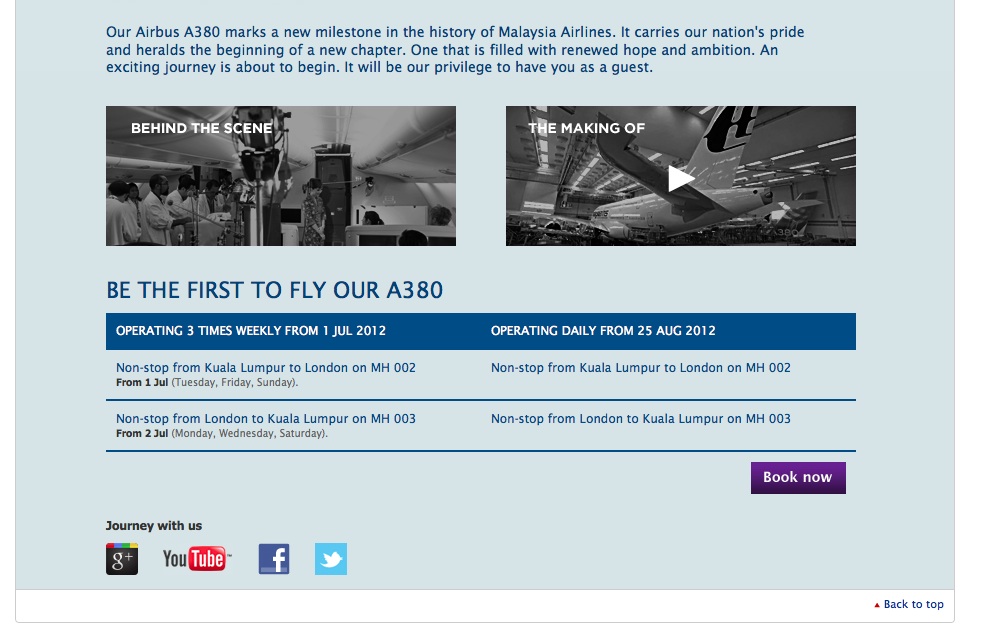
I appreciate it is early days but I have noticed a digital campaign selling the new A380. The style would suggest MAS is going the traditional route using glossy images and slick advertising with high production values to attempt to position the company in the minds of its consumers.

The ad features an image of the A380 in the very attractive new MAS livery and a tagline about the journey which I assume is related to the A380 and one about the aircraft being the pride of the nation. Let’s hope Ogilvy improves on that. Anyway, clicking on the ad, you go to the existing MAS site where you are greeted with the same, larger image of the A380 and the same taglines.

Below the fold there are two black and white images with click through options. The one on the left entitled, Behind the scene (sic) links to still images of the making of the new commercials which look very traditional and my first reaction was what a pity they haven’t changed the cabin crew uniforms. The image on the right links to a video entitled ‘The pride of our nation”, a predictable and uninspiring video of an MAS A380 being painted!

Throughout, the copy is uninspiring.

Below the images are social media options. I had a quick look at the twitter feed and it looks very collaborative with plenty of discussions although efforts to build the brand in the social context can be improved.

But I have a sneaking suspicion that the bulk of that US$190 million is going to be spent on advertising. And as Singapore Airlines learnt with it’s A380s, you can no longer rely on developing a position and using advertising to communicate that position in the hope that it will work and consumers will buy.

Positioning
The problem is that positioning is a throwback to the mass economy that no longer exists. What advertising agencies tried to do was create a position that reflected the strengths and weaknesses of the offering. Ideally, this position was based on being first in a particular category.

If someone was already first in a category, then companies attempted to redefine themselves in a new category to be first. In the airline business, this tended to be related to passenger comfort or service. The effectiveness of positioning depended on the ability of advertising to drive branding perceptions in the mind of consumers.

To do this, airlines often made promises they were unable to keep (admittedly, often due to third party issues out of their control), failed to meet traveller expectations, often because dynamic competitors moved quickly and so raised the bar, which in turn led to brand disillusionment.

Positioning was ideal for the mass economy. It was also ideal for advertising agencies and marketing departments because it gave them enormous power without the responsibility of accountability. Al Ries and Jack Trout invented the concept of positioning. The preface to one of their books states, “Positioning has nothing to do with the product,…. (it) is what you do in the mind of the prospect.” So, essentially this means that the consumer can be made to believe, through extensive advertising and PR and via the right conduits to consumers, and other vehicles, what an offering means to them.

Well I’m sorry, this might have been true in our parents day, when consumers were more predictable, more trusting and had less choice but in today’s mean spirited world, a world in which only 4% of Americans and 14% of Malaysians believe what they read in adverts it is going to be very, very difficult. And of course the problem with using positioning to build a brand is, if it doesn’t work, the money is wasted, time is lost and you have to repeat the process again, with a new position!

So how can MAS save its troubled brand?
1) Research. Your existing customers are your best source of information. But they are not all the same. I would be interested to know which, if any customers MAS talked to when they were configuring the aircraft. MAS is talking about flat beds and big TV screens in first and business. Well that is so last year and who doesn’t offer them so why should I change? What about Internet access? I hope the A380 offers it throughout the aircraft.

2) Mass market branding and the old model of developing a position and communicating that position across for mass media repetatively for as long as possible is no longer effective. Brands today are built on relationships, access, personalisation and relevance. Before MAS marketed to segments of 18 – 34 year olds, businessmen and so on. Today, MAS must deliver economic, experiential and emotional value to to everybody and on their terms.

3) MAS must focus on developing more profitable relationships, not a more profitable product. Brands evolve when companies start buying for customers instead of selling to them.

4) Branding is an organisational not a departmental responsibility. And the organisation is the responsibility of the CEO. MAS is charging about a 100% premium for an economy class ticket on its A380 in July over the price of an economy class ticket on a 747 for the same route. Throw in all the other airport fees etc and it’s going to have to be a pretty good product to charge such a premium.

5) Retention is key to brand building. Companies no longer sell a product, customers buy a product. And those customers have plenty of choice, especially in the airline business. Sadly too many companies spend lots of money on acquiring a customer but very little on retaining them. MAS is one such company. Once a consumer buys the product, companies should do everything possible to hang onto those customers, build relationships with them, learn about them and leverage them.

Bonus tip. This is the social era. As I said MAS is working hard on social media but there is room for improvement and integration. It would be interesting to know how they leverage their social media efforts to get more business.

Successful brand building is determined more by customer experiences than by slick advertising campaigns


Far too many companies, whether Multi National Corporation (MNC) or Small, Medium sized Enterprise (SME) think or are led to believe that the fast track way to branding acceptance is to spend large amounts of money on high quality TV commercials, billboards or print advertising campaigns that showcase their products or services and communicate corporate driven messages to consumers.

But just because telecommunications companies, banks, oil companies, soft drinks firms and others spend considerable amounts of money on advertising doesn’t mean that the advertising is the reason for their success or that it is right for you.

In fact quite often, there seems to be no rhyme or reason to the advertising campaigns initiated by these companies. A case in point is the current Celcom campaign “Ini Wilayah Celcom” prominent on billboards across Kuala Lumpur. With current mobile penetration in Malaysia around 125% of the population, it doesn’t make sense for Celcom to be creating awareness with expensive outdoor campaigns.

Unsurprisingly, at end of many such campaigns, there is often very little change in the fortunes of the brand. Which is why many of these advertising campaigns, do little to build brands and should not be emulated by other companies.

Because a key element of whether or not your brand building is successful will depend not on what you tell consumers through paid media but on the experiences consumers have with your personnel, your business and your products.

Put simply, if you manufacture furniture and spend a lot of money advertising a new furniture range but the furniture breaks all the time, you may make some sales but your brand will suffer as consumers avoid making a return visit and worse, discuss their issues with other consumers on and off line.

Likewise if your staff are slow, rude, inattentive, badly groomed, lack product knowledge, unhelpful and poorly trained, you may make a sale but the customer is unlikely to return and you can be sure they will share their negative experiences with others.

Furthermore, these negative experiences will be spread across the Internet using social media tools and in coffee shops, bars and so on will have a negative impact on your brand. Even sales of previously successful products may be affected negatively.
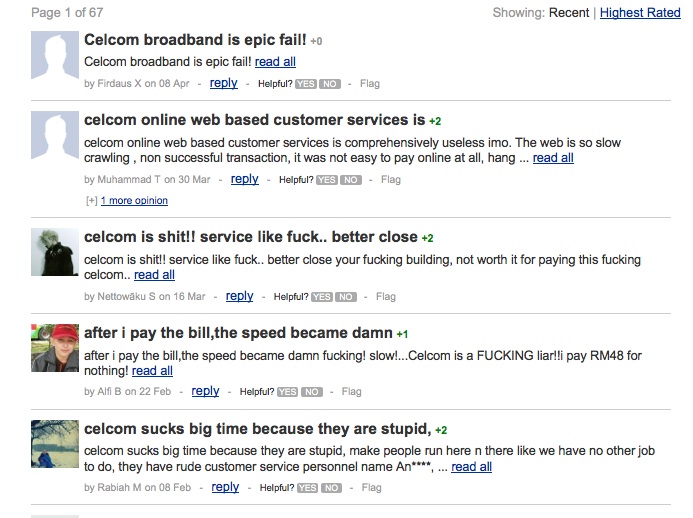
However, treat customers well and they will remain loyal. In a recent survey by Spherion, 97% of those questioned said a great experience makes them more likely to buy more of a product or repeat a service. However, once they have a bad experience or their trust is lost, it’s very hard to win back. To have a chance of winning back their business, 22% want a simple apology, 10% want a complete refund, and 8% would want incentives or coupons and even then there is no guarantee.

But 46% said that it would take an apology, a complete refund AND coupons or further incentives to have a chance of winning back their business. The implications therefore on your brand, of delivering a bad experience is costly and time consuming.

For the record, 15% said absolutely nothing would atone for their bad experience.

So you can try to shape the perceptions of your products or services with advertising, PR, advertorials, nice brochures and with content across social media and elsewhere but the reality is that the success or failure of your brand will be determined by experiences and how customers discuss your brand after the experiences.

Apple for example charges a premium for its products. It sells the sort of stuff – computers, smart phones, MP3 players – that lots of other people sell yet sells them at a premium. Margins for Apple iPhones are in the region of 50% compared to a meagre 6.2% for Nokia smartphones.

Furthermore, Apple ‘only’ spends US$250 million (2009) on advertising compared with Microsoft US$1.4 billion and Dell US811 million. In terms of a percentage of sales, this equates to 2.4% for Microsoft, 1.3% for Dell and 0.5% for Apple. RIM, manufacturer of the Blackberry spends 3.6% of revenue on advertising.

New technology companies that have sophisticated digital strategies and use email to market themselves spend even less on traditional advertising. Google spends only US$11 million on advertising or 0.05% of revenue. Amazon is a little higher at US$43 million or 0.17% of revenue.

As a general rule of thumb, spending less than 2% of revenue on advertising is considered low. For the automotive industry average advertising spend is nearer 3.5% of revenue. For alcohol it is more like 7% and for packaged goods and most other industries, as high as 10%.

Firms such as Apple, Google, Amazon and others are not successful because they spend huge amounts on short term advertising campaigns to create awareness but on innovative design, quality products and excellent service that is uniformly outstanding across all customer touch points such as in stores, whether bricks and mortar or online.

Consumers will pay more for Apple products because they are guaranteed a quality product (as well as inclusion into a not so unique club of Apple users) that will not fail them. And if it does, customers know they can go back to the store and seek a replacement or have repairs carried out under warranty.

Unfortunately most MNCs and SMEs don’t appreciate just how important the customer experience is. And the increasing popularity of social media means that consumers are voicing their dissent, not just to a few friends over teh tarik at a local Kopi Tiam but now to thousands and thousands of friends and followers and to their friends and followers across communities on Twitter, Facebook and more.
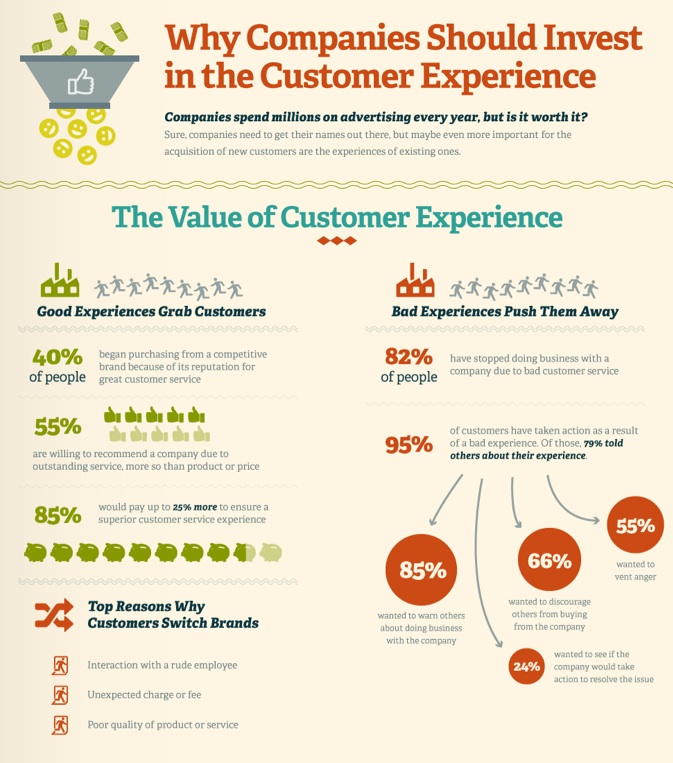
So as you try to build a successful brand, a core component of your strategy must be to build relationships with prospects and customers. You must learn how to manage relationships with customers, not just offline and during office hours but also online and at weekends.

Because unless you have a unique product or service (and few companies have unique products or offer unique services today), customers may buy from you if they have a bad experience but they are unlikely to come back again. And because of increased competition, it is impossible to build a brand on a business model that relies on new customers all the time.

Make sure that at every touch point where consumers interact with your brand, the experience for those customers is a positive one. This becomes a greater challenge as a company grows and if you get it wrong, what was once a nice little niche business with a manageable group of customers who all spoke positively about the company can become, almost overnight a loss making enterprise with fewer customers and a bad reputation for over promising and under delivering.

Ensure that every sales contact, service delivery and customer service interaction that the customer comes into contact with is positive as this will have a positive impact on your brand. Even suppliers need to be treated with respect.

But even if you invest heavily in customer relationships, and even if you keep 99% of your customers happy, there will always be some who are not happy and are dissatisfied with your service. What do you do with them?

The first thing is not to ignore these important customers. Try to get them to explain to you what is the problem. Be prepared to listen and hear stuff that may sound unreasonable. Some customers will be rude, personal and even physical. But you have to make sure your people are trained to listen and empathise. Think KFC!

And where possible solve their problem in a way that is satisfactory for them, not you. I know this might be a problem for you and will certainly cost you money on that particular transaction but in the long run it will offer far greater returns.

If you try to take care of every single customer, both those that are not a problem and those that are you’ll create a positive reputation. Even if customers are frustrated with their experiences with your brand, if you show empathy and provide a solution that makes them happy, there is a good chance they will tell others that they were impressed with you and how hard you worked to solve the problem for them. And with a little incentive, you can probably convince them to come back.

Despite what you may have been told, mass advertising across mass media is not the holy grail to building a brand. Which is fortunate because it means SMEs won’t waste hard earned money on campaigns to compete with large conglomerates. But if you look after the customer and try to make every experience a positive one, you will speed up the process of building a brand.

Thanks to zendesk for the graphic above.