Branding requires you to get to know your customers


This is the start of an ad hoc series of personal experiences I have with brands and some recommendations to help improve the experience.

Running a small retail business is tough, particularly in today’s climate. It’s even tougher in the competitive retail wine business in a small muslim country with high taxes on alcohol. Key to building a profitable business will be the relationship between the company and their customers.

Yesterday evening I walked into my local wine shop where I have shopped off and on for 5 years and was greeted with a “Hi, we haven’t seen you for a long time.” I mumbled a reply and the clerk nodded and carried on reading her magazine. This is not the first time I have gone ‘AWOL’ but the reason for my absense is the same. I haven’t been there for a while because about 3 months ago I was made an offer I couldn’t refuse and bought 5 cases of wine from another company.

Although I got a great deal on the wine there is no reason why my regular wine shop couldn’t have given me the same deal. But of course they didn’t know about it because they don’t make an effort to collect data on me. They just hope that I will come by every now and then and buy something. And if I don’t, never mind, there will be other new customers to replace me. To a certain extent this is true but wouldn’t it make more sense to look at ways to encourage those people who are already customers to come back again? And get to know those that come on a regular basis to increase share of wallet and develop brand ambassadors?

Here are 5 useful tips for any small retail business looking to be more profitable

1) You have a 15% chance of selling to a new customer and a 50% chance of selling to an existing customer. Distribute your resources accordingly.
2) Invest in database software that will allow you to store data about your customers
3) Don’t be afraid to ask for contact information from new and existing customers
4) Invest time in keying in customer data that you can use to determine buying patterns, product preferences and so on
5) Train your staff to get to know your customers.

Why the iPad will fail – Part 3


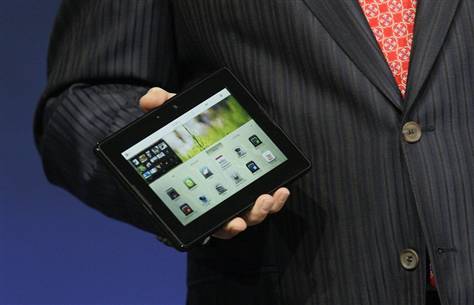
The announcement yesterday by RIM that it will release a tablet device in early 2011 may be the death knell for the iPad. The new device comes with a 7-inch multi touch touchscreen and a new operating system developed by newly acquired developer QNX.

Called the PlayBook (I’m not sure why they came up with such a lame name), BlackBerry is calling it “the first professional tablet”, and is marketing it as “an incredible gaming platform for publishers and the players”.

Whilst the choice of name for a business tool that is for gamers and publishers is a little confusing, the hardware does a lot of things the iPad doesn’t.

For a start, the new tablet will run Adobe’s Flash, which Apple’s iPad doesn’t. It offers micro – USB ports and micro – HDMI, again not offered with the iPad. It has dual (front and rear) HD cameras for video calling, also unavailable on the iPad. It weighs about 400g. 16GB and 32GB models will be available. One drawback is that it will initially connect to the web via wifi or via a BlackBerry smartphone, however 3G and 4G models are in the works.

BlackBerry is very excited about the new operating system that will offer open standards, which the smartphone maker promises to be “a breakthrough development platform for IT departments and developers”. The developers’ kit will be out in the next few weeks.

This new tool is undoubtedly a smart move by RIM as it dominates the business tool segment. According to research firm ComScore RIM has a 39.3% share of the smartphone market in the US. The iPhone’s share of the same market is only 23.8% whilst Google’s relatively new Android already has 17%.

Some are forecasting the tablet space to be worth up to US$40 billion by 2012 and is becoming increasingly competitive with the recent announcement by Samsung of its Galaxy tablet and the 5 inch Streak introduced by Dell recently and with HTC, Lenovo, Acer and Asus as well as Google and Microsoft all threatening to launch tablets, the battle of the tablets has begun in earnest.

It is too early to say whether or not RIM can deliver on promises made, especially as the new tablet will be introducing another operating system. But if it can keep the price attractive for everyday users and retain all the high quality features, it will pose a serious challenge to the iPad, and may even see off what is essentially after all, a superfluous gadget that no one really needs.

A solid brand is built from the inside out


The chances are that you have discussed branding, what it is and whether it is important. You’ve probably agreed to ‘look into it’ and assigned someone from marketing to research brand consultants.

Marketing will probably google something like ‘brand consultants’ or ‘how to build a brand’ or ask friends or associates if they can recommend anyone. If your marketing department is staffed with ex advertising agency personnel, they may get on the phone to ex colleagues.

Unfortunately, advertising agencies is where many companies start the development of their brand. Senior management and the marketing department together with an advertising agency and often without any input from other departments such as sales, will spend a considerable amount of time developing the “marketing mix.”

A tagline will be created, colours discussed and so on. This is important but not at this stage. A good brand is built from the inside out. Before the creativity starts, carry out a brief internal brand audit. Ask yourself questions such as, “Do our employees know what we do?” “Do our employees believe in the product/service that we offer?” “Do they understand the role they have to play in the brand mission?” “Do they understand the importance of our customers?” “Do our staff ‘live the brand’?”

Here are 10 other initiatives that will help you lay the foundations for a brand.

Step 1: Review your organizational structure
Customers control relationships with businesses like never before. Manufacturing costs have fallen to record lows. Transactions are cheaper and faster than ever. The Internet has revolutionized the way we communicate and do business. Yet despite these cataclysmic changes, companies continue to integrate in the same old traditional ways.

Employees report to superiors and information is channeled up and down hierarchical chains not across departments, hampering coordination and improvement. To succeed in the future, brands must understand that the customer is king, focus on processes not functions and develop a retention based not acquisition based culture.

Step 2: Recruit talent not bodies
Too many companies leave recruitment to the last minute or try to save money by increasing the work load of already overburdened staff. Look to recruit people that will enhance your organization based on your long term vision.

Step 3: Build a credible corporate vision
In collaboration with staff, create a vision that benefits employees, shareholders and customers. And make it realistic! Brand values must be based on providing value to customers. The reasons for and the role of the organization and individual staff in providing this value and the benefits to the organization and staff must be crystal clear to all.

Step 4: Train new and existing staff immediately, consistently and regularly
The only thing that all brands have in common is that customer loyalty is a result of employee loyalty. The foundations for any internal branding initiative must therefore start with personnel understanding the importance of the role they have to play in the evolution of the brand. In addition to improving skills, training also gives staff the confidence and attitude the organizations requires.

Step 5: View staff as an investment not an expense
Too many companies see staff as an expense and as a result do not invest in them because they are frightened the staff will leave. If you create an environment that is rewarding and encourages personal growth and has clearly defined career paths, your staff will not leave.

Step 6: Give personnel room to grow
Everyone makes mistakes but few people make them deliberately. Once you’ve invested in the right people and trained them, show them you believe in them by supporting them and trusting them to get things done, even if they make mistakes along the way. And if they make mistakes, give them the responsibility to correct the mistake.

Step 7: Encourage freedom of expression at meetings
If you only want to hear people support what you say or agree with what you have done what is the point of them attending meetings? To build a great brand, individuals will contribute and good managers will need to be open and aware of those individuals and give them the freedom to benefit the brand by challenging senior management.

Step 8: Understand that in general the sales department is the frontline of your company
No matter how much you spend on advertising, the first touch point most prospects will have with your brand will be via the sales force. It may be in a shop, a showroom, at an exhibition and so on. If that first meeting with your sales force is unsatisfactory, the prospect will not return. Train your sales force to represent your brand and reward them for doing so.

Step 9: Think long term
Whilst it is possible to build a brand more quickly than perhaps twenty years ago, building a profitable brand takes time and commitment. Take a long term approach to your business rather than a short term deal making mentality.

Step 10: Measure all activities
Wherever possible, measure. But before you do, ensure measurement definitions are standardized to ensure consistency and communicate them corporate wide. And when you measure, share the results across the organization and seek feedback and recommendations for improvement from staff. And then help them implement those recommendations and measure them.

Why the iPad will fail, part 2


As far as I am concerned, Apple is one of the finest brands on the planet. It ticks just about every box for me. Design, product innovation, user interface, image, brand culture, service, communications and so on. But when the iPad launched, I wrote a piece about it and gave 8 reasons why I thought it would fail. You can read the full article here. At the end of the article you can read a number of comments from readers. I am responding to Carl Brooks comment.

Carl makes some interesting comments about the iPad, including “Who knew many people could get by with a device that allowed them to do 90% of the tasks they did on a PC.” He adds, “f you don’t have an iPad pad yet, you are missing out on a truly mobile device. Instant on, long lasting battery, huge screen, multitouch interface that even a baby can pickup.” He also says, “I don’t even bother dragging my laptop offsite anymore.”

I have a couple of reactions to Carl’s comments.

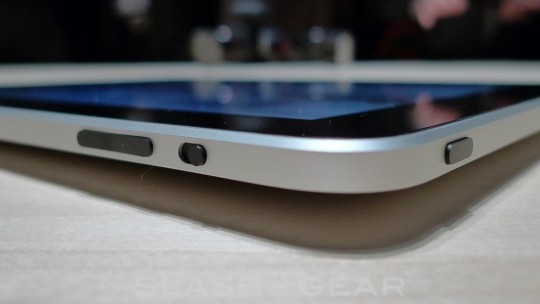
A few of days ago I tried to plug in a portable hard drive to an iPad so I could show someone some TVCs. Unfortunately I couldn’t do so because the iPad doesn’t have a USB port. I’m serious. I also tried to show the same person some images but the iPad doesn’t have an SD slot. Now I appreciate this isn’t an industry standard but it meant that I was unable to use the iPad in a way that I have become accustomed to using computer hardware.

As for missing out, well that doesn’t appear to be the case as I have a superb Apple laptop that does everything an iPad does plus I can multitask. I can listen to Pandora and write a document at the same time. Something I can’t do on an iPad. On my laptop I can have my Twitter app open at the same time as my browser.

I heard that an iPad won’t allow you to have AIM open at the same time as your email! Well I can on my laptop. Oh, and on long flights I can watch a DVD on my laptop, something I can’t do on an iPad. Talking of flights, when I am away, I can talk to my kids on skype with my laptop, they can see me and I can see them. Something you can’t do on your iPad.


Carl mentions that the iPad does 90% of the tasks done on a PC. That’s not much use if you want to do one of the tasks included in the 10%. If you do, then the iPad is useless. To me, that’s a bit like saying a Trabant does 90% of the tasks a Rolls Royce does.

Carl finishes with this comment “I will enjoy this device until a better one is created by Apple or by any other competent competitor that can make something better.”

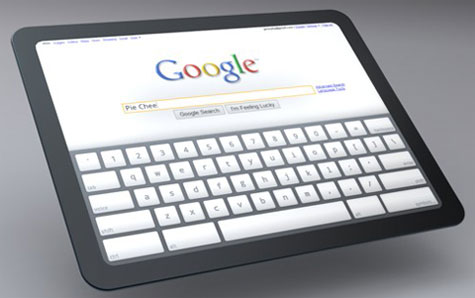
Well Carl, that moment may be here sooner rather than later. The iPad may have the market to itself now, but by early 2011, it’s nemesis, the Android may gatecrash the party in the same way it has gatecrashed the iPhone party. 10.6 million smartphones using the Google developed platform were sold during 2Q2010, equal to about 17% of the market. Apple sold 8.47 million iPhones in the same period, equal to about 14% of the market. A recent report in Digitimes says that Google, Verizon and Motorola are creating an Android tablet with a 10.1-inch screen that could be on sale at the end of 2010.

One solution to some of the issues above would be to buy yet another adapter but even I, a long time Apple devotee am tiring of all the extra money I have to spend on Apple accessories to carry out basic tasks. And anyway, that wouldn’t solve the SD issue.

I still think that Apple is one of the finest brands on the planet. But the cynic in me thinks that perhaps the reason there isn’t a SD card slot on the iPad is to stop consumers buying a 16GB model and increasing the storage themselves, depriving Apple of further income.

Although I’ve been aware of Apple’s strategy of only letting proprietary products complement its devices, it hasn’t really bothered me. However, I do think that if a brand pushes consumers too far or constantly adds new products that require existing customers and those brand ambassadors who build the brand to spend more money then the brand will eventually lose its lustre, especially today when consumers are more fickle and less loyal.

But that is another story. This article began as response to a comment on a story I wrote giving 8 reasons why I thought the iPad would fail. The iPad, in its present form is a flawed product and there are opportunities over the next 12 months for other tablet manufacturers to take market share from the iconic brand.

However, if we take iPad sales (3.27 million units in Q32010 alone) then it could be a success but I still reserve my judgement!

Building brands requires CEOs to understand branding


95% of products fail to become brands, despite over US$1.5 trillion spent on marketing of which about US$500 billion is spent on advertising. And most of that is spent on awareness, reach and other mass market mass economy mass media tactics.

Advertising is important and always will be important to brand building but ‘getting your name out there’ or ‘creating awareness’ are too mass economy and we’re now in the customer economy.

In the customer economy, it is about engaging members of communities that have interests related to your product and entering into a communication initially and a collaboration eventually with certain members of those communities. Throw out the old mass economy mass market attitude that includes carpet bombing consumers with messages via full page ads, TVCs, billboards and one-size-fits-all communications.

But who is to blame? Is it the advertising agencies? Or is it the CEOs? I believe that until CEOs get over their own egos and realise that just because they can see their company name on a 40 foot by 10 foot billboard, or on page 3 of the national newspaper etc etc, doesn’t mean that the rest of us can see through the clutter and even if we do, most of us don’t take any notice because we don’t care.

Until CEOs instead seek accountability and ROI from their advertising, they will, in all likelihood be at the front of the long queue to be one of those products that fail to become brands.

And if advertising agencies continue to make hay, who can blame them?

Twitter users increasingly influential


Twitter estimates that there are 26 million monthly Twitter users online in 2010. This is not that significant compared with the 500 million using Facebook.

But it’s not the numbers that matter, it’s the quality of the users that count. Twitter users are far more influential than other online users. In fact, a recent study by ExactTarget considers Twitter users to be the most influential online.

Quote “While the number of active Twitter users is less than Facebook or email, the concentration of highly engaged and influential content creators is unrivaled — it’s become the gathering place for content creators whose influence spills over into every other corner of the internet.”

The study, conducted in April 2010 found that the main reason consumers follow brands they like on Twitter is to gather news and information about the company and its products and to learn about future sales and likely discounts. Interestingly the study found that brands are still not participating in conversations with followers, reducing the opportunity for the brands to build relationships with consumers that cannot be duplicated, like the sales and discounts.

Reasons for this might be because brands are seeking social media advice from advertising agencies who prefer to recommend traditional broadcasting of messages from the brand rather than engagement with consumers that gives more responsibility for the brands development to the consumer.

Asia is the darling of luxury brands


As the effects of government stimuli wear off and with the global economy heading towards a double dip recession that will impact the traditionally wealthy economies of Europe, the US and Japan more than most, luxury brands have been looking to Asia for salvation. And they’ve probably found it.

Despite the recession, the consultants, Bain & Co predicts luxury industry sales of €158bn in 2010, up 4% after a drop of 8% in 2009. And these sales will, on the whole be driven by Asian operations.

25% of worldwide sales
Shiseido, Japan’s largest cosmetics company anticipates sales of high-end cosmetics to grow 20% a year in China over the next 3 years. In fact, China is driving the luxury business and is now the second largest market for luxury goods, accounting for 25% of worldwide luxury sales. More than the US, Europe and Japan who each account for about 20%.

According to Capgemini there are more than 345,000 Chinese millionaires and many of them are keen to snap up luxury products that offer a little bit of exclusivity and heritage.

India crucial for long term success
But the Chinese market is not the only market helping luxury brand ride out the recession(s). In India, Porsche Design recently opened its first store in New Delhi, joining Prada, Louis Vuitton, Ferragamo and Mont Blanc who are all setting up operations in the capital of the republic. Louis Vuitton now has 5 stores in India.

Luxury jewelry retailer Tiffany & Co reported recently that sales at Asian stores open more than 12 months, with the exception of those in Japan, rose 21% during its most recent quarter. The Asia-Pacific region is driving expansion, with stores scheduled to open in Singapore, South Korea and Hong Kong.

China has the highest sales per square foot
Mainland China is at the heart of Tiffany’s Asian expansion, with the number of stores there due to rise from the current 12 to as many as 30 by 2015. Chinese stores have the highest sales per square foot of US$3,800 compared to US$3,000 in other stores.

French luxury giant Hermes reported strong growth in sales in the first quarter of 2010, boosted mainly by sales in Asia but not including Japan.

LVMH, the company behind luxury brands such as Dior, Louis Vuitton and Moët Chandon recently reported a 11% increase in 1Q 2010 sales. Watches and jewellery sales rose by 33%, wines and spirits by 18% and fashion and leather goods by 8%. Sales of Dom Perignon and other LVMH owned champagnes shot up by 33% in the same period.

Watches and timepieces, there is a difference you know, have also had a bumper start to 2010 and the mood at Baselworld, the world’s largest watch and jewellery fair, was bullish after positive announcements from Bréguet, Blancpain, Omega and Longines whose sales were up 46%, 48%, 50% and 49% respectively in January and February 2010.

Mobile phones
Due partly at least to the fact that it doesn’t have many high end high margin devices, Sony Ericsson has been plagued by declining sales for years and hasn’t made a net profit since 2Q 2008.

However the firm moved quickly to develop high end phones and launched the Xperia X10 and Vivaz last year. The result, the company reported a net profit for 1Q 2010 of €21 million, compared with a €293 million net loss a year earlier. Analysts were expecting a €128 million loss.

US leather goods maker Coach has relied for years on the domestic market and Japan. However, after a slow start, it is ramping up operations in Asia and expects sales in China to rise to US$250 million by 2012, up from almost US$100 million this year.

Luxury brands will have to make significant changes to the way they operate in Asia. And they must learn to understand Asian consumers, learn how to build relationships with them, what are their influencers and how best to engage them. If they, they will find salvation not in the short term, for some time to come.

Lead generation key to brand building


Many brands in Malaysia believe acquisition is key to brand building and are always trying to speed up the sales process. They focus on trying to close a deal as soon as possible. Qualification doesn’t exist, there is no attempt to build rapport and lay the foundations for a relationship. All that matters is closing a deal.

Even at road shows or other public events essentially meant to be marketing efforts to gather leads to approach later, the focus is on trying to sell something. Often, a photocopied flyer, even for luxury products will be thrust into a passing consumer’s hand with numerous features described in a robotic manner.

From suspect to customer
But a road show or trade exhibition, advertising campaign or similar is often meant not to sell something, but to lay the foundations of a relationship with a consumer who may, just may become a suspect, then prospect and finally customer. In other words, they are lead generation campaigns.

CSO insights release an annual report on Lead Generation Optimisation. Simplified, Lead Generation is marketing efforts designed to encourage targetted consumers to request more information about a product or service.

Unsurprisingly 67% of the 635 firms surveyed, reported weak sales so far this year as a result of reduced marketing budgets last year. But one positive to come out of the economic situation was that firms were spending more resources on measurement.

Measurement
Companies establish measurement systems to track strategic decisions – new enquiries, new customers won, sales and so on. But it is important not to measure the wrong stuff or measure for the sake of measuring. Metrics such as satisfaction (too broad) and awareness (too vague) are the wrong metrics and will tell you little.

In the CSO report over 50% of the firms that took part now have processes in place to track campaign ROI. And the criteria are simple, with the top 3 criteria being:

1. Total number of leads generated per campaign
2. Number of leads that convert to sales opportunities
3. Amount of revenue ultimately closed from those opportunities.

Now this isn’t nuclear science. Any company, of any size should be measuring these three elements every time they carry out a marketing campaign such as a trade exhibition. In the long run they may not speed up the sales process but they will definitely make it more profitable. And profitability not sales should be the goal of any brand.

How to sustain a family retail brand


The picture below was taken in 1912 in Oxford, UK a city about 60 miles to the North West of London. It features Gill & Co, an ironmongers and a branch of J. Sainsbury, a food store.

Gill & Co was established in 1530 during Henry VIII’s reign. At the time it was the first ironmonger in the country. It has been in business ever since and has witnessed the English Civil War, two World Wars, a couple of global economic depressions, three recessions, the birth of the railway, the car, powered flight, electricity, the Internet and more.

Originally the firm supplied ironware and related products for Oxford residents however as times changed it tried to reinvent itself and also stocked equipment for chimney sweeps (think Mary Poppins), farming equipment, tools and gardening supplies. Although Gill & Co moved locations, it was always a one store operation in Oxford.

In 2010, after 480 years in business Gill & Co is closing down, beaten into submission by large DIY and home improvement suppliers like B&Q the 3rd largest DIY retailer in the world, largest in Europe and the largest in China and Homebase.

Sainsbury’s, at a mere 141 years old, a relatively new brand was established in 1869 in Drury Lane. Although now at the centre of the theatre district, this was once a very poor area of London.

Sainsbury has also witnessed much, including 2 world wars, 2 depressions, a couple of recessions, the automobile, manned flight, the moon landings and more. Sainsbury soon became an institution, offering high quality products at low prices. By 1882 Sainsbury was selling it’s own label brands.

Although lacking the heritage of Gill & Co, Sainsbury invested heavily in its staff, employing women as managers when it was unheard of in the early 20th century and developing its own training school to train managers.

Sainsbury also invested in new stores and although at times it has had a rough ride, today it employs more than 150,000 people, has 800 stores in the UK and there are on average more than 19 million customer transactions in Sainsbury’s stores every week and the company has a 16% market share.

It has diversified into non-food products and services and non-food is growing 3 times faster than food. It has a bank with operating profits of £19million and its Internet home delivery shopping service is responsible for 100,000 deliveries every week.

Asia has many small family businesses. In fact in Malaysia, Small Medium Sized Enterprises (SME’s) make up 99% of Malaysia’s total registered businesses. Hanoi in Vietnam has over 90,000 SMEs.

These organizations have a critical impact on the business of a country. In Japan, known for its heavy industry, approximately 70% of the Japanese work force is employed by small and medium-size enterprises (SMEs) and half the total value added in Japan is generated by SMEs.

Asian SMEs, many of them well established with years of heritage cannot sit by and hope that they will be safe from bigger, more aggressive retailers. They need to start planning for the future now before it’s too late.

Here are 5 recommendations for Asian SMEs to help them become a Sainsbury

1) Keep an eye on retail trends, especially in your space
2) Talk to your customers, not just about the weather/politics/sport. Ask them what their needs are, what they would like you to stock, when they would like you to open and so on
3) Build a database of customers and their preferences. If you do sell up, this will help you secure a better price for your business
4) Leverage what you have against the big retailers in your space. You can’t compete on price and probably can’t compete on choice but you can compete in other areas – convenience, personalization, customization, free alterations, returns, speed of delivery and more
5) Develop a brand strategy that includes succession planning. If you have sent your kids to university overseas, are they going to come back and work in your hardware store? If you don’t think so, look to create strategic relationships with other players in your space now before it is too late.