Should you measure Brand Equity or Customer Equity?


Malaysian and Asian firms can save themselves a lot of effort and resources by focussing on customer equity as they attempt to build brands.

It’s almost 20 years since the launch of the landmark book “Managing Brand Equity: Capitalizing on the Value of a Brand Name” by David Aaker. David Aaker name may not be as familiar as others in his industry, but he is credited with developing the concept of “brand equity”.

The release of “Managing Brand Equity: Capitalizing on the Value of a Brand Name” came at a time when companies were desperately seeking new ways to increase the value of their brands by assigning a value to them or, measuring the intangible assets of the company such as reputation or channel relationships, that were previously ignored by traditional accounting systems. This became known as Brand equity.

On the face of it, “Brand equity” appeared to quantify intuitive recognition about the value of brands that in turn helped to rationalize marketing expenditures. It was also shorthand for a brand’s two key strengths – its relationship with purchasers and mental image among both prospects and customers. And it provided a means to rank winners and losers in branding wars – MAS vs Singapore Airlines, Maxis vs Celcom, Coca-Cola vs. Sarsi and so on.

Brand equity is now considered one of a number of factors that increase the financial value of a brand and the term is used freely to say the least. Nevertheless, despite its popularity, the concept of “brand equity” has numerous shortcomings, especially in an age when customers not organizations, are determining the success or failure of brands. Indeed, the pursuit of brand equity can even warp executive decision making and lead to lost profits and opportunities.

One shortcoming is that although the term is widely used, no common definition of brand equity exists.

In fact, in his book Building, Measuring and Managing Brand Equity, published about seven years after David Aaker’s work, K.L. Keller lists NINE definitions of Brand equity, some of which actually contradict one another. This lack of a definition means that no universally agreed upon measure exists.

Delve deeper into any methodology concerning a “brand equity” calculation, and it quickly becomes apparent that the effort has all the intellectual rigour of a fence post – a dash of corporate history, a gaggle of retail outlet numbers, a touch of stature here and some strength there, a little bit of ‘brand esteem’ topped off with an extra helping of distribution sales, a sampling of questionnaires and so on.

This lack of a common methodology means that two experts examining the same brand come up with widely divergent calculations. Furthermore, it is impossible to compare brands across different countries, industries or perspectives.

This imprecision – at a time of global economic uncertainty when shareholders are demanding more accountability and C level executives insist on both sophisticated measurement and accountability – means “brand equity” lacks validity as a benchmark for executive decision-making. After all, how can executives make effective decisions when it’s impossible to understand – and agree upon – consistent numbers?

As if C level executives didn’t have enough to think about, this imprecision causes other problems as well. If “brand equity” increases by 10%, what caused it? Was it the latest advertising campaign? Or was it a new product launch? Perhaps it was more aggressive sales? Or maybe it was the discounts at critical times to reduce inventory? Better service? “Brand equity” does not provide any insights about cause-and-effect.

Second, “brand equity” does not indicate market or financial success. Look at some companies with great “brand equity” – Pelangi Air, Perwaja steel, Port Klang Free Zone (PKFZ), Kodak, K-Mart, MV Augusta, MAS, – that have either disappeared, faced or are facing financial difficulties. Indeed, “brand equity” as a guiding star leads companies to focus on product maximization at a time when leading companies recognize that a focus on customers is critical to success.

Finally, and most important of all, “brand equity” is irrelevant to customers. Customers buy on value, service, price, convenience or other reasons, but never make a purchase decision based on the relative “brand equity” of two offerings.

Ask yourself, did you ever walk into Cold Storage, Armani or Isetan and buy something based on its brand equity? No, of course you didn’t. Hold that thought, why should you pay attention to an issue that customers ignore? Because everyone else is? Because you were told to in marketing classes that were probably developed in an era before Facebook, twitter, ecommerce and more?

So what should you focus on? The answer is “Customer equity”.

Customer equity has one universally recognized definition – the lifetime value of customers. This value results from the current and future customer profitability as well as such intangible benefits as testimonials and word-of-mouth sales.

Customer equity incorporates customer loyalty to buy again and again, the faith to recommend a brand and the willingness to forgive the inevitable mistakes that every firm makes.

While “brand equity” is impossible to calculate consistently, customer equity can be easily calculated on the back of an envelope. All that’s required are numbers that every company already is – or should be – calculating. These include revenue, customer acquisition (or marketing) costs, costs of goods/services and retention rates.

Ideally, depending on the industry, companies should also track leads and referrals, and be able to determine the profitability of specific products or services. By adding up revenue (or profits), subtracting relevant costs and incorporating retention rates, companies can determine the current – and future – profitability of every customer.

And because customer equity is easy to calculate, it will be understood by everyone from the boardroom to the warehouse, making it much easier to unify personnel behind the brand.

“Brand equity” is all about a product or an organization. But in the customer economy, brands that attempt to push products onto customers that don’t want them will fail. Even if you spend millions creating awareness of your products. Today, building a successful brand requires customers that are profitable.

Customer equity supports and measures the activities that encourage customers to buy more, more often. Increasing “brand equity” does little for a firm and decades of good will can be wiped out overnight (think BP), but increased customer equity reflects increased retention and word-of-mouth sales, key elements of a profitable brand.

Customer equity has other advantages as well. Because retention and customer profitability are tracked, it’s easy to make a direct link between marketing, service and other programs to increases (or declines) in customer equity.

Customer equity also enables the segmentation of very profitable, not so profitable and unprofitable customers. Knowing the relative profitability of customers not only helps promote retention of the best customers but also substantially improves the investment required and effectiveness of marketing as well as reducing marketing costs.

In today’s customer economy, “Brand equity” provides few if any tools for those responsible for attracting and keeping satisfied customers. In The Loyalty Effect, the author Frederick Reichheld wrote, “Customer equity effectively explains success and failure in business…. The companies with the highest retention rates also earn the best profits. Relative retention explains profits better than market share, scale, cost position or any other variables associated with competitive advantage.”

Do brands have value? Absolutely, and David Aaker has left an impressive legacy. But attempting to measure this value provides little benefit and distracts a company away from the critical task of retaining profitable customers.

Because ultimately, it’s these customers – not a fallible calculation of a dated concept – who are responsible for brand value and long-term corporate success.

How to build a brand in Asia today


Building brands has evolved from the one dimensional, top down era where the company controlled the relationship and essentially managed that relationship using broadcasts across mass media such as TV, Out of Home, print and radio with messages and content created to tell you what the company wanted you to know into the bottom up, customer economy.

In the bottom up customer economy, brands and their success or failure are defined and determined by customers. Those customers will create content and messages and disseminate that content and those messages across multiple platforms and to communities who are interested in their opinions. Now, how you interact with consumers is on their terms.

This is not revolution, simply evolution in the branding space. Brands are to blame for this loss of control because they have consistently misled consumers or over promised and under delivered. Brands can no longer be built using one-size-fits-all messages broadcast across traditional media channels to anyone who will listen. Basically because no one is listening.

Sure, there is still a place for messages, campaigns, and so on but because there are so many sources of information, so much clutter, these messages don’t have the impact or influence they had 20 or 30 years ago. In the digital age you can spend as much as you want on traditional media and reach everyone in the country but if they are not listening they won’t buy your product or service.

If a brand wants to be successful it must learn to communicate with multiple segments, and messages must be targeted and must be dynamic, using content and channels that resonate with those segments. But brands must move away from the traditional demographic approach to researching those segments. After all, how many 15 – 24 communities are there on Facebook? And content must constantly be revised and updated with new content.

And organizations must ensure that they deliver on promises and that promise must deliver economic, experiential and emotional value to each of those multiple segments. In the consumer business, this is most often done, initially anyway, in the store. Because in the customer economy, no matter how much you spend, if your staff don’t know how to build rapport with your prospects then they may buy once but rarely will they become a loyal customer. And without loyal customers, you won’t have a brand.

So if you are looking to build a brand, forget about reach, awareness, positioning and brand equity and trying to be all things to all people and start thinking about delivering value to specific segments and building customer equity.

Branding requires you to get to know your customers


This is the start of an ad hoc series of personal experiences I have with brands and some recommendations to help improve the experience.

Running a small retail business is tough, particularly in today’s climate. It’s even tougher in the competitive retail wine business in a small muslim country with high taxes on alcohol. Key to building a profitable business will be the relationship between the company and their customers.

Yesterday evening I walked into my local wine shop where I have shopped off and on for 5 years and was greeted with a “Hi, we haven’t seen you for a long time.” I mumbled a reply and the clerk nodded and carried on reading her magazine. This is not the first time I have gone ‘AWOL’ but the reason for my absense is the same. I haven’t been there for a while because about 3 months ago I was made an offer I couldn’t refuse and bought 5 cases of wine from another company.

Although I got a great deal on the wine there is no reason why my regular wine shop couldn’t have given me the same deal. But of course they didn’t know about it because they don’t make an effort to collect data on me. They just hope that I will come by every now and then and buy something. And if I don’t, never mind, there will be other new customers to replace me. To a certain extent this is true but wouldn’t it make more sense to look at ways to encourage those people who are already customers to come back again? And get to know those that come on a regular basis to increase share of wallet and develop brand ambassadors?

Here are 5 useful tips for any small retail business looking to be more profitable

1) You have a 15% chance of selling to a new customer and a 50% chance of selling to an existing customer. Distribute your resources accordingly.
2) Invest in database software that will allow you to store data about your customers
3) Don’t be afraid to ask for contact information from new and existing customers
4) Invest time in keying in customer data that you can use to determine buying patterns, product preferences and so on
5) Train your staff to get to know your customers.

Why the iPad will fail – Part 3


The announcement yesterday by RIM that it will release a tablet device in early 2011 may be the death knell for the iPad. The new device comes with a 7-inch multi touch touchscreen and a new operating system developed by newly acquired developer QNX.

Called the PlayBook (I’m not sure why they came up with such a lame name), BlackBerry is calling it “the first professional tablet”, and is marketing it as “an incredible gaming platform for publishers and the players”.

Whilst the choice of name for a business tool that is for gamers and publishers is a little confusing, the hardware does a lot of things the iPad doesn’t.

For a start, the new tablet will run Adobe’s Flash, which Apple’s iPad doesn’t. It offers micro – USB ports and micro – HDMI, again not offered with the iPad. It has dual (front and rear) HD cameras for video calling, also unavailable on the iPad. It weighs about 400g. 16GB and 32GB models will be available. One drawback is that it will initially connect to the web via wifi or via a BlackBerry smartphone, however 3G and 4G models are in the works.

BlackBerry is very excited about the new operating system that will offer open standards, which the smartphone maker promises to be “a breakthrough development platform for IT departments and developers”. The developers’ kit will be out in the next few weeks.

This new tool is undoubtedly a smart move by RIM as it dominates the business tool segment. According to research firm ComScore RIM has a 39.3% share of the smartphone market in the US. The iPhone’s share of the same market is only 23.8% whilst Google’s relatively new Android already has 17%.

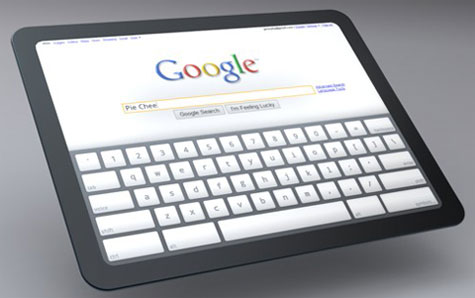
Some are forecasting the tablet space to be worth up to US$40 billion by 2012 and is becoming increasingly competitive with the recent announcement by Samsung of its Galaxy tablet and the 5 inch Streak introduced by Dell recently and with HTC, Lenovo, Acer and Asus as well as Google and Microsoft all threatening to launch tablets, the battle of the tablets has begun in earnest.

It is too early to say whether or not RIM can deliver on promises made, especially as the new tablet will be introducing another operating system. But if it can keep the price attractive for everyday users and retain all the high quality features, it will pose a serious challenge to the iPad, and may even see off what is essentially after all, a superfluous gadget that no one really needs.

A solid brand is built from the inside out


The chances are that you have discussed branding, what it is and whether it is important. You’ve probably agreed to ‘look into it’ and assigned someone from marketing to research brand consultants.

Marketing will probably google something like ‘brand consultants’ or ‘how to build a brand’ or ask friends or associates if they can recommend anyone. If your marketing department is staffed with ex advertising agency personnel, they may get on the phone to ex colleagues.

Unfortunately, advertising agencies is where many companies start the development of their brand. Senior management and the marketing department together with an advertising agency and often without any input from other departments such as sales, will spend a considerable amount of time developing the “marketing mix.”

A tagline will be created, colours discussed and so on. This is important but not at this stage. A good brand is built from the inside out. Before the creativity starts, carry out a brief internal brand audit. Ask yourself questions such as, “Do our employees know what we do?” “Do our employees believe in the product/service that we offer?” “Do they understand the role they have to play in the brand mission?” “Do they understand the importance of our customers?” “Do our staff ‘live the brand’?”

Here are 10 other initiatives that will help you lay the foundations for a brand.

Step 1: Review your organizational structure
Customers control relationships with businesses like never before. Manufacturing costs have fallen to record lows. Transactions are cheaper and faster than ever. The Internet has revolutionized the way we communicate and do business. Yet despite these cataclysmic changes, companies continue to integrate in the same old traditional ways.

Employees report to superiors and information is channeled up and down hierarchical chains not across departments, hampering coordination and improvement. To succeed in the future, brands must understand that the customer is king, focus on processes not functions and develop a retention based not acquisition based culture.

Step 2: Recruit talent not bodies
Too many companies leave recruitment to the last minute or try to save money by increasing the work load of already overburdened staff. Look to recruit people that will enhance your organization based on your long term vision.

Step 3: Build a credible corporate vision
In collaboration with staff, create a vision that benefits employees, shareholders and customers. And make it realistic! Brand values must be based on providing value to customers. The reasons for and the role of the organization and individual staff in providing this value and the benefits to the organization and staff must be crystal clear to all.

Step 4: Train new and existing staff immediately, consistently and regularly
The only thing that all brands have in common is that customer loyalty is a result of employee loyalty. The foundations for any internal branding initiative must therefore start with personnel understanding the importance of the role they have to play in the evolution of the brand. In addition to improving skills, training also gives staff the confidence and attitude the organizations requires.

Step 5: View staff as an investment not an expense
Too many companies see staff as an expense and as a result do not invest in them because they are frightened the staff will leave. If you create an environment that is rewarding and encourages personal growth and has clearly defined career paths, your staff will not leave.

Step 6: Give personnel room to grow
Everyone makes mistakes but few people make them deliberately. Once you’ve invested in the right people and trained them, show them you believe in them by supporting them and trusting them to get things done, even if they make mistakes along the way. And if they make mistakes, give them the responsibility to correct the mistake.

Step 7: Encourage freedom of expression at meetings
If you only want to hear people support what you say or agree with what you have done what is the point of them attending meetings? To build a great brand, individuals will contribute and good managers will need to be open and aware of those individuals and give them the freedom to benefit the brand by challenging senior management.

Step 8: Understand that in general the sales department is the frontline of your company
No matter how much you spend on advertising, the first touch point most prospects will have with your brand will be via the sales force. It may be in a shop, a showroom, at an exhibition and so on. If that first meeting with your sales force is unsatisfactory, the prospect will not return. Train your sales force to represent your brand and reward them for doing so.

Step 9: Think long term
Whilst it is possible to build a brand more quickly than perhaps twenty years ago, building a profitable brand takes time and commitment. Take a long term approach to your business rather than a short term deal making mentality.

Step 10: Measure all activities
Wherever possible, measure. But before you do, ensure measurement definitions are standardized to ensure consistency and communicate them corporate wide. And when you measure, share the results across the organization and seek feedback and recommendations for improvement from staff. And then help them implement those recommendations and measure them.

Why the iPad will fail, part 2


As far as I am concerned, Apple is one of the finest brands on the planet. It ticks just about every box for me. Design, product innovation, user interface, image, brand culture, service, communications and so on. But when the iPad launched, I wrote a piece about it and gave 8 reasons why I thought it would fail. You can read the full article here. At the end of the article you can read a number of comments from readers. I am responding to Carl Brooks comment.

Carl makes some interesting comments about the iPad, including “Who knew many people could get by with a device that allowed them to do 90% of the tasks they did on a PC.” He adds, “f you don’t have an iPad pad yet, you are missing out on a truly mobile device. Instant on, long lasting battery, huge screen, multitouch interface that even a baby can pickup.” He also says, “I don’t even bother dragging my laptop offsite anymore.”

I have a couple of reactions to Carl’s comments.

A few of days ago I tried to plug in a portable hard drive to an iPad so I could show someone some TVCs. Unfortunately I couldn’t do so because the iPad doesn’t have a USB port. I’m serious. I also tried to show the same person some images but the iPad doesn’t have an SD slot. Now I appreciate this isn’t an industry standard but it meant that I was unable to use the iPad in a way that I have become accustomed to using computer hardware.

As for missing out, well that doesn’t appear to be the case as I have a superb Apple laptop that does everything an iPad does plus I can multitask. I can listen to Pandora and write a document at the same time. Something I can’t do on an iPad. On my laptop I can have my Twitter app open at the same time as my browser.

I heard that an iPad won’t allow you to have AIM open at the same time as your email! Well I can on my laptop. Oh, and on long flights I can watch a DVD on my laptop, something I can’t do on an iPad. Talking of flights, when I am away, I can talk to my kids on skype with my laptop, they can see me and I can see them. Something you can’t do on your iPad.


Carl mentions that the iPad does 90% of the tasks done on a PC. That’s not much use if you want to do one of the tasks included in the 10%. If you do, then the iPad is useless. To me, that’s a bit like saying a Trabant does 90% of the tasks a Rolls Royce does.

Carl finishes with this comment “I will enjoy this device until a better one is created by Apple or by any other competent competitor that can make something better.”

Well Carl, that moment may be here sooner rather than later. The iPad may have the market to itself now, but by early 2011, it’s nemesis, the Android may gatecrash the party in the same way it has gatecrashed the iPhone party. 10.6 million smartphones using the Google developed platform were sold during 2Q2010, equal to about 17% of the market. Apple sold 8.47 million iPhones in the same period, equal to about 14% of the market. A recent report in Digitimes says that Google, Verizon and Motorola are creating an Android tablet with a 10.1-inch screen that could be on sale at the end of 2010.

One solution to some of the issues above would be to buy yet another adapter but even I, a long time Apple devotee am tiring of all the extra money I have to spend on Apple accessories to carry out basic tasks. And anyway, that wouldn’t solve the SD issue.

I still think that Apple is one of the finest brands on the planet. But the cynic in me thinks that perhaps the reason there isn’t a SD card slot on the iPad is to stop consumers buying a 16GB model and increasing the storage themselves, depriving Apple of further income.

Although I’ve been aware of Apple’s strategy of only letting proprietary products complement its devices, it hasn’t really bothered me. However, I do think that if a brand pushes consumers too far or constantly adds new products that require existing customers and those brand ambassadors who build the brand to spend more money then the brand will eventually lose its lustre, especially today when consumers are more fickle and less loyal.

But that is another story. This article began as response to a comment on a story I wrote giving 8 reasons why I thought the iPad would fail. The iPad, in its present form is a flawed product and there are opportunities over the next 12 months for other tablet manufacturers to take market share from the iconic brand.

However, if we take iPad sales (3.27 million units in Q32010 alone) then it could be a success but I still reserve my judgement!

Building brands requires CEOs to understand branding


95% of products fail to become brands, despite over US$1.5 trillion spent on marketing of which about US$500 billion is spent on advertising. And most of that is spent on awareness, reach and other mass market mass economy mass media tactics.

Advertising is important and always will be important to brand building but ‘getting your name out there’ or ‘creating awareness’ are too mass economy and we’re now in the customer economy.

In the customer economy, it is about engaging members of communities that have interests related to your product and entering into a communication initially and a collaboration eventually with certain members of those communities. Throw out the old mass economy mass market attitude that includes carpet bombing consumers with messages via full page ads, TVCs, billboards and one-size-fits-all communications.

But who is to blame? Is it the advertising agencies? Or is it the CEOs? I believe that until CEOs get over their own egos and realise that just because they can see their company name on a 40 foot by 10 foot billboard, or on page 3 of the national newspaper etc etc, doesn’t mean that the rest of us can see through the clutter and even if we do, most of us don’t take any notice because we don’t care.

Until CEOs instead seek accountability and ROI from their advertising, they will, in all likelihood be at the front of the long queue to be one of those products that fail to become brands.

And if advertising agencies continue to make hay, who can blame them?

Twitter users increasingly influential


Twitter estimates that there are 26 million monthly Twitter users online in 2010. This is not that significant compared with the 500 million using Facebook.

But it’s not the numbers that matter, it’s the quality of the users that count. Twitter users are far more influential than other online users. In fact, a recent study by ExactTarget considers Twitter users to be the most influential online.

Quote “While the number of active Twitter users is less than Facebook or email, the concentration of highly engaged and influential content creators is unrivaled — it’s become the gathering place for content creators whose influence spills over into every other corner of the internet.”

The study, conducted in April 2010 found that the main reason consumers follow brands they like on Twitter is to gather news and information about the company and its products and to learn about future sales and likely discounts. Interestingly the study found that brands are still not participating in conversations with followers, reducing the opportunity for the brands to build relationships with consumers that cannot be duplicated, like the sales and discounts.

Reasons for this might be because brands are seeking social media advice from advertising agencies who prefer to recommend traditional broadcasting of messages from the brand rather than engagement with consumers that gives more responsibility for the brands development to the consumer.

Destination branding requires innovation and integration


About 300 kilometers south of Bangkok on the gulf of Thailand, lies Hua Hin once a quaint fishing village that was transformed in the reign of King Rama VI when it became a stop on the Southern Railroad route.

In the reign of King Rama VII a Summer Palace was constructed for the royal family. Despite the many political and social changes that Siam experienced during this period, the Palace gave the Royal Family and their friends an escape from court life and 100 years later, Hua Hin is still a popular destination for high-society and the Royal Family still resides at the Palace for part of the year.

Hua Hin is also a popular location with five star resort hotels, luxury boutique residences and private beach front homes offering unprecedented levels of luxury. In Hua Hin alone, there are roughly 200 hotels, including 30 five star hotels in an area no more than a few square miles. Hua Hin has struggled for years to attract tourists and fill rooms. Throw in a global economic meltdown, the on-going domestic political crisis and civil unrest and the business of building a hospitality brand gets rather complicated, even in a country with such a reputation for fun.

And with Asia’s hospitality business looking good in these troubled times – over US$1.3 billion was invested in hotels in Asia Pacific in the first six months of 2010 – destinations such as Hua Hin have to be innovative to compete. And to do this, the town and tourism related businesses must work together, not compete, to ride out the storm.

Intercontinental Hua Hin Resort has come up with one creative idea to differentiate itself by offering a private air service to shuttle guests from Bangkok’s Suvarnabhumi International Airport or Don Muang Airport to the beachside city. For anyone who has had the misfortune to experience the drive from Bangkok to Hua Hin, this is certainly an attractive offer! But it won’t be enough to raise Hua Hin’s profile, increase interest and ultimately drive traffic to the resorts that will allow room rates to rise and profits increase.

Intercontinental needs to work with other products within Hua Hin to offer a complete experience to guests taking advantage of this service. A personal discussion with those using the service will allow the hotel to get to know their interests and allow the sales person to offer suggestions, not from a worn brochure at the service desk in the lobby, but in the comfort of a pre flight lounge or even in flight.

Other hotels are offering free days or more traditional tactics such as large discounts. Whilst these may increase sales in the short term, they will do little to build profitable brands. These hotels need to innovate in the same way as the Intercon, to work with other destination stakeholders to ensure Hua doesn’t become a quaint fishing village for the next 100 years.