Malaysia getting ready to be major player in world’s largest service sector industry


One of the most interesting elements of the New Economic model (NEM) announced by the Malaysian Prime Minister, Datuk Seri Najib Razak was related to tourism.

I quote directly from his speech, “…the tourism sector has not been exploited to its potential. More can be done to attract new markets from Europe and the Americas to complement the markets from the United Kingdom and Asia.

We have some of the oldest forests in the world, rich with flora and fauna and diving experiences acclaimed to be unforgettable. Malaysia can lead in providing environmentally sustainable eco-tourism adventures that are much sought after by the advanced markets.

We should aim to provide services which will attract high-end tourists who seek exclusiveness and high value services. We must also be creative as we consider new areas of tourism. From medical tourism — a high-potential growth sector — to eco-tourism, luxury market tourism and visitors related to our growth as a regional education hub. Malaysia’s tourism future is bright if we have the vision and creativity to support its diverse growth potential.”

World’s largest service sector industry
As the PM said, Malaysia has long neglected the business of tourism, despite the fact that it is, according to the World Bank, the fastest developing industry in the world. Moreover, according to the World Tourism Organisation, 2006 (the last year before the sub prime crisis) was a record for world tourism with 842 million tourists visiting other countries, up 4.5% over the previous year. Tourism is now the World’s largest service sector industry.

Furthermore, according to the World Tourism And Travel Council (WTTC), 12% of exports, 9.3% of international investments, 8.3% of the world’s places of work and 3.6% of world internal gross product account for a share of tourism and its relevant sub industries.

Using the satellite accounting approach, which attempts to calculate the extent to which other economic sectors contribute to and benefit from tourism and passenger traffic, the WTTC also estimates that the travel and tourism industry in 2008 was valued at approximately US$5.9 trillion or 9.9% of global GDP.

Tourism is also a popular industry with governments because it impacts every level of society from the sundry shop owner who sells a tourist a bottle of water and a map to the car hire company, locally owned hotel and airline.

With hundreds of miles of pristine coastline, breathtaking islands and the oldest rain forest in the world, Malaysia should have a better developed tourism industry and it will be interesting to see what incentives the government offers investors and developers to encourage them to invest in the infrastructure and products needed to move Malaysia up the value chain in this beneficial industry.

49 million visitors by 2020
I managed to get my eyes on a copy of a report preparred by a respected international consultancy and commissioned by the government to provide data for the NEM. Unfortunately one of the key recommendations was to increase the number of arrivals to Malaysia to 49 million by 2020.

It has been a common thread in announcements made in Malaysia that volume is key and we need to be attracting hordes of foreigners to Malaysia to consider our tourism business a success. But this advice is poorly thought out. One example, imagine the impact of 49 million tourists, many of them blue collar Europeans who consider it their God given right to walk around without a shirt on (men) or only in a bikini (women) and quite often with a beer in their hands, on a place like Kuala Terengganu or Kota Bahru.

What we need to do is move away from this volume is best approach and look more at a value is best strategy that aims to attract smaller numbers of higher value visitors. This will also help with the infrastructure and talent issue as we do not have the people available to staff the 500 or 600 room hotels required to support 49 million visitors.

Breathtakingly beautiful island
One of the best natural destinations in Malaysia is Redang Island in the South China Sea. This breathtakingly beautiful island has slowly had it’s natural attractions such as the coral destroyed by boats dragging anchors, careless swimmers and greedy fishermen.
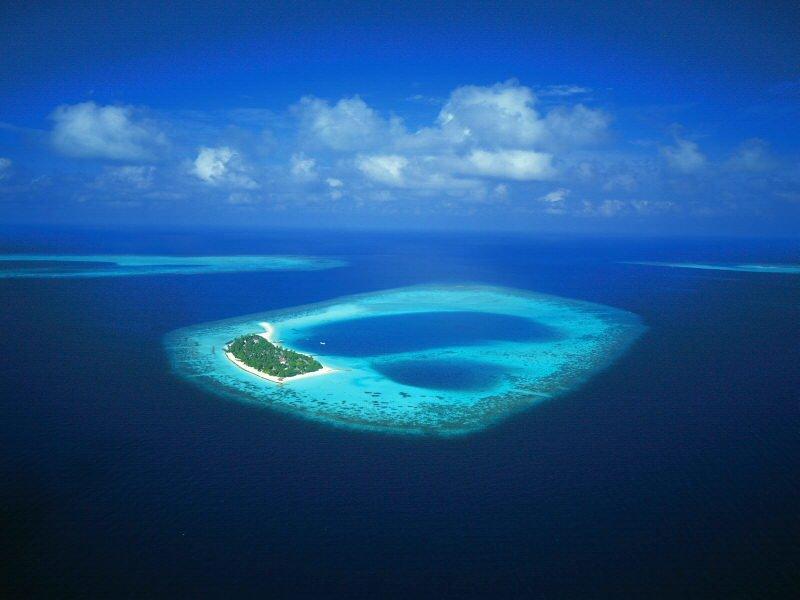
But the concept of volume over value ruled and so little was done until recently when the Terengganu state government announced that it will no longer approve any applications for cheap Chalet style resorts as it wants to make Redang a destination for high net worth visitors. This is a a sensible move that will also help save the marine environment and attempt to prevent further environmental damage.

It is a sensible move that the state government, and hopefully the federal government will offer financial support, wants to upgrade this amazing destination. But the state government should also understand that it is not just about changing the names of the resorts, upgrading facilities, spending large sums on awareness advertising and increasing the rack rate by 300%. There will need to be a significant investment in the upgrading of the resorts and also supporting infrastructure.

Here are 5 other recommendations:

1) Carry out research with stakeholders, prospects, customers and others to determine the way forward.
2) Work with carriers and others to improve domestic and international connectivity.
3) Find the right partners. Malaysia doesn’t have a domestic 5 or 6 star hospitality company that is recognised globally. Work with a globally respected and recognised resort management company.
4) Redang is a small part of the potential of Terengganu. The state must develop and implement state destination brand masterplans. The brand masterplans must incorporate measureable and relevant promotional strategies that are not based on traditional marketing techniques but leverage the power of social media.
5) In line with federal initiatives, reduce costs of doing business and offer exciting incentives for investors, above and above usual free utilities for 5 years etc.

We’ve heard about incentives for the tourism industry before but the government has never really pushed them. I have a hunch that this new administration is different and that this is a small first step in a revolution that is long overdue.

Are we seeing the commoditisation of the iPhone in Asia?


Here in Malaysia it took time for the mobile service providers to agree terms with Apple to offer the iPhone to subscribers. But finally, Maxis signed up and has invested heavily over past year or so in traditional aquisition focussed marketing.

Recently, another provider, the aggressive and innovative provider, Digi signed an agreement with Apple and has started to promote the iPhone.

Last night, I was watching TV and was astonished to see first a Maxis ad for the iPhone, featuring the numerous applications (there’s one for just about everything) and then, I think separated by another commercial but possibly even back to back, the same commercial for the iPhone, featuring all the applications, this time with a Digi logo!

I have a number of reactions to this. Firstly, don’t advertising agencies know how to do a deal with a TV station anymore? If you can’t get an exclusive deal at least ensure no competitor products advertise on the same program.

Secondly, what are these telcos doing slugging it out in public on TV? Do’t they have any understanding of the iPhone and what it stands for and means?

Thirdly, these telcos are commoditising a valuable brand that deserves better. A more sophisticated approach for a sophisticated product that offers value for many people in many ways targetted at existing subscribers and personalised would be far more effective than a mass economy spray and pray approach!

Creating awareness via TVCs is a complete waste of money for a product such as the iPhone. If anyone out there is unaware of the iPhone, the applications and how they can add value to a person’s life, then that person is not the type of customer Apple, or the telcos want!

Don’t expect prospects to build your brand


Yesterday I saw a video on the new sonos zone player. You can find the video on the site here but to brief you it is a cool looking internet radio and itunes player controlled by your iPhone that allows you to play music in all your rooms. Pretty cool so watch the video if you can.

The video was really well executed and I was sold by the end of it. I went to the ‘Find a store’ feature on the site and was impressed to find a dealer not far from my office in Kuala Lumpur. There was even a contact name and email address.

I sent the contact an email but also decided to post a request for information on Twitter. Probably because I have sent emails to electronics dealers in Malaysia before and never heard from them (it’s a fairly unsophisticated business here, dominated by old school Chinese traders). But I sent the email because it is slowly changing, as I found out when I had a technical issue with my Zepellin.

Anyway, I haven’t got a reply to the email but I did get 2 responses to my tweet, one directly from the manufacturer @Sonos and one from the distributor in Singapore @SeowHow.

Incredibly, the manufacturer told me to contact their distributor and the distributor told me to contact his sales office!

Here’s some free advice to ensure your brand doesn’t end up in the bulging cemetary of great brands.

1) Don’t expect an interested prospect to become a customer
2) Treat all your leads/prospects as if they are the most important person in your world
3) Don’t expect a prospect, even an excited prospect with buyer written all over his face, to do all the heavy lifting
4) Your brand may be the be all and end all of your life but it isn’t of anyone elses
5) There is a lot of competition out there

Asian companies need to stop following the herd


I’ve said it before, but I feel the need to say it again, according to Ernst & Young, up to 90% of products fail to become brands, despite US$1.5 trillion spent on marketing every year. Despite massive marketing budgets, global brands with extensive reach and high brand recall, numerous brands have died a painful and often avoidable death. Despite those massive marketing budgets, brand loyalty is decreasing and customer dissatisfaction is increasing.

So why do companies insist on investing massive amounts of money in marketing even though it is proven to be inneffective? There are a number of reasons – ego, inertia, fear of the unknown and fear of change, herd mentality and more.

But for the smart companies, think Dell, Amazon, Google, McDonalds, Walmart, Public Bank, Toyota, yes Toyota and many more, the halcyon days of inneffectiveness are over for marketing people and smart CEOs and CFOs expect, no demand greater accountability and more sustainable results from their marketing investments.

When branding was little more than a creative driven concept where a logo was used to make a name stand out and the world was much larger and competition was limited, the four Ps and old world communication goals such as reach, positioning and awareness were often enough to build a brand, then branding was little more than a subset of marketing.

But that US centric mass economy era no longer exists. The world is a much smaller, competitive and very different place today and branding has taken on a much more important role within the organisation. Moreover, consumers are more enlightened and cynical and no longer pay much attention to traditional marketing efforts.

The definition of a brand today is here

Key areas are retention (95% of marketing efforts are aquisition focussed yet very little is spent on retention so as 1 customer is expensively aquired, an earlier one also expensively acquired, walks out the door to the competition. Many companies lose money on the first sale. In the case of technology, it could be the first million sales. Brands are built on the 2nd, 3rd 4th and so on sale).

Organisational excellence (if you don’t do everything effectively and efficiently and on personalised customer terms, you won’t survive). Economic, experiential and economic value for customers (on their terms) and measurement.

It’s not only marketing that is now part of branding, it is also the supply chain, customer service, accounting, sales, purchasing and so on.

The world has changed and if you own a company, you need to change with it. You owe it to your shareholders, your customers, your staff and yourself. It is time to stop wasting money on proven inneffective marketing and start investing in your brand.

Personalisation


Companies have to stop trying to sell stuff to prospects and customers and start coordinating all the resources it has to supplying or satisfying specific customers specific requirements for value.

Consumers don’t want products (or services) they want the products/services they like immediately and personalised. But personalisation in its present form is primitive because of cost, technology, time and lack of appreciation by CEOs. Right now personalisation is nothing more than a colour, sun roof or memory size. Consumers will want to actively shape the offerings and information they receive. It’s already happening in the aircraft/shipping/hospitality etc industries. Hey, even Barbie has 6,000 customisation options!

I’m sure I’m not the only one who has bought something that wasn’t quite what I wanted but was bought more in frustration at not finding what I wanted exactly. After a week it was gathering dust in a store room. In the future, with advanced build to order capabilities, even complex products will be produced specifically for one customer and buying products that don’t quite fit the bill be a thing of the past.

This will also have an impact on communications. Existing customers will no longer visit websites, they will have direct access to their own landing page.

Integrating and engaging all activities


Back in the day, if a TV commercial was good a consumer might, just might ask a friend for his opinion on the product advertised. If the opinion was a favourable one, then the consumer may have sought the product out the next time he was at the mall. Assuming of course that he remembered it on the way to the mall or his memory was jogged by some effective point of sale promotions.

But today, the consumer has millions of friends with him as he watches the TV commercial. And all of those friends are just waiting to pass on their opinion to our consumer. To ask them, all our consumer has to do is key in a word or two into the search cell on his browser on the laptop that is probably on his lap as he watches the TV.

With this in mind, wouldn’t it make sense for advertisers to create TVCs with easy to remember links or search terms that can be keyed in at the same time as the commercial plays? Of course product sites will have to feature the same image of the same product with relevant content and information on local store opening hours and product availability. Messaging and images as well as content in traditional and digital media must be consistent too but this shouldn’t be a problem.

Surely we should move away from the mass market mass economy one message for all approach to this more instant, integrated and engaged approach. What do you think?

Building a 400 year old brand is a strategic initiative


Shepherd Neame, the oldest brewer of beer in the UK was established in 1608 or 402 years ago! An amazing heritage and the brewer likes to play on this heritage with its advertising campaigns for brands such as Spitfire, Canterbury Jack and Bishops Finger.

The brewer allocated its entire 2006 advertising budget, which was about £300,000 (US$450,000) to one of those, Spitfire a real ale, and all of the budget was spent on the London Evening Standard, an afternoon/evening newspaper in London. This was considered a radical change of strategy. As well as print ads, content and sponsored supplements, the brand also sponsored the Evening Standard’s football World Cup special feature in May of that year. The strategic agency was John Ayling & Associates and the creative agency was RPM3. Promotional support such as free pint promotions were also included.

The really well executed and edgy “Bottle of Britain” campaign ran over six months and is one of my favourite campaigns. Here are some samples of the award winning creative work that was considered controversial and was investigated by the advertising watchdog Advertising Standards Authority (ASA) in the UK after complaints about the use of SS insignia. The complaints were later rejected by the ASA. You’ll need to have some knowledge of history, colloquial English as well as WWII jargon to really appreciate the ads.

Spitfire

You can find more examples of their campaigns on the Facebook page here

But Shepherd Neame understands that advertising campaigns are not enough to build and grow a strong brand. As a result, the company continues to invest in state of the art SAP technology and bottling technology, new acquisitions of high turnover pubs and refurbishments of existing properties to create airy, spacious and clean environments.

The company also invests extensively in merchandise including a bottle of Britain book, social media and charity work (Spitfire originated as a charity brew) and will link the brand to the extensive 70th anniversary celebrations of the Battle of Britain due to be held in the UK later this year. Also look out for its campaigns related to the 2010 football world cup.

All these elements ensure the brands offer experiential, emotional and economic value to both new and existing customers.

It comes as no surprise therefore that despite the recession and clouds of uncertainty, red tape and increased taxes and shocking weather in the UK, turnover was up 8.2% to £60 million in the last six months of 2009 proving that investing in brands is not just about edgy and controversial advertising campaigns, but a long term strategic imperative to continue to build on a 400 year heritage!

Malaysian and Asian SMEs should look at communications when building brands


I have a lot of respect for small businesses and their owners, especially here in Malaysia and all over South East Asia. The odds are stacked against them as they try to build a business in an environment that should favour them but because of conservative attitudes and the legacies left behind by unscrupulous operators in the past, they are up against it and many of them don’t make it. Even those that do make it do little more than survive.

Furthermore, competition is growing, not just from local competitors but from international ones as well. Rents are rising and real estate is expensive; banks are reluctant to take any risk, no matter how low, talent is hard to find and quite often entrepreneurs are unable to communicate in English due to ever changing education policies or a vernacular education. Plus, here in Malaysia, government subsidies on fuel and other commodities are probably going to be lifted or even abolished. Finally, AFTA means the market may be swamped by cheap products from other regional, less expensive countries.

But despite these and many other issues, depending who you listen to, small and medium sized industries, enterprises and businesses represent up to 99.2% of the Malaysian economic establishment and these organisations are therefore the engine room of the economy. And although the SME contribution to gross domestic product has been almost flat for the last 8 years, rising from 29% in 2000 to 31.4% in 2008, the sector still has a major role to play in the economy.

This is particularly true of the service sector which is the most progressive in terms of SME development. So it is good to hear that the National SME Development Council has approved the establishment of a special unit responsible for SMEs at a number of agencies and ministries. Under the Integrated Action Plan 2009/2010, 354 programmes will be implemented this year with financial commitments totalling RM6.02 billion (S$2.48billion).

Roughly RM3.3 billion has been allocated for the development of SMEs in the services sector in line with the government’s aim of developing Malaysia into a high-income economy.

So should these SMEs be bothered about brand building? Well, in many ways the concept of branding is even more important to small companies than it is to big companies. But obviously they don’t have the resources of a Multi National Corporation (MNC) so they need to be selective on what they address. One area that SMEs can improve significantly with very little investment is their communications. There is a lot of truth in the saying, you never get a second chance to make a first impression. So your communications must leave a positive first impression.

Another mistake SMEs make is that they believe volume is best. They believe that they must have a database with as many names as possible. And once they have that DB they must blast out the same message to everyone on it on an almost daily basis! Negative. The first step in your prospecting process is to qualify all leads to determine any interest level. There is no easy way to do this. It takes old fashioned hard work. Fortunately in Asia privacy laws are limited or even non existent so cold calling is acceptable but of course you need to have a strategy to get past gatekeepers.

Spend some time writing an introductory email. It doesn’t need to be long but if it is targetted and well written, even if the service or product offered is not required, the email may be stored in a resources folder for later reference.

Once you’ve identified your prospects and segmented your DB, use email not to try and sell a product but to make an appointment. Few people are going to buy from a mass email but you may get a reply to the email or some recognition when you follow up the email with a call.

The worst mistake any company can make, SME or MNC is to start their brand development with an advertising campaign. Branding is a journey, advertising is a pit stop on that journey, nothing more. Now I know you want to see your name on a billboard on the highway or a full page advertisement in the national newspaper so that you can announce to all your friends, business associates and clients that you have arrived but think about it, how effective is this going to be? Do you really want to waste that money? (There are exceptions to this rule, but very few).

If you do intend to advertise, make the copy relevant to the consumers you intend to communicate with and only use channels that users of your product are familiar with and engaged by.

If you follow these simple suggestions, you may have a chance of being one of the few SMEs that survive and possibly even thrive.

Managing your media placement is critical


Here’s another example of poor control of ad placement online. If you are responsible for your own ad placement, make sure this will not happen. If the channel won’t let you dictate where your ads cannot appear, find another channel. If your agency is responsible for your ad placement tell them if this happens again, they’ll be one client short in a heart beat.