Branding, corporate or political, is an organisational issue


One of the problems faced by brands and branding are the attempts to simplify it. Fortuitously this approach has yet to gain traction with the aviation industry!

The business of building brands takes time. And as the business of brands and branding has evolved and the waters have become increasingly muddied, the only constant has been the influence consumers now have over the success or failure of brands.

As a result, the role of the brand manager is increasingly irrelevant because her attempts to control everything related to the brand are obsolete and pointless because consumers are crafting the messages that are heard not the marketing department or the advertising agency.

These are lessons that need to be learned in the political space as well. In Malaysia, the Prime Minister DS Najib Razak has a powerful personal brand but he cannot be expected to single handedly win an election. The key is to get all the other elements on brand. And anyway, as Tun Abdullah Badawi knows too well, a high approval rating is no guarantee of a big election win.

Historically, creating clearly defined messages and broadcasting them across traditional media was enough to build a brand or political party but today, this model alone, can no longer be relied on to educate, inform and convince.

Today, the first thing a consumer will do, assuming they hear the message through all the clutter, will be to determine if the message fits in with their own experiences. If it doesn’t, they will discard the message immediately. Secondly, consumers will discuss the message with others who they know and respect and explore their experiences and perceptions. Thirdly, consumers will seek the opinions of those they may not know. This is normally done across social media.

Only once consumers have absorbed all the information will they make a decision. If the promises defined by the organisation, whether it be a political or corporate one do not match the consumers own experiences or those of her friends or acquaintences, the message will be discarded. No matter how much money is spent.

If the response is favourable, the consumer may seek to experience a physical interaction with the brand, perhaps through a retail outlet, website or political rally. If any of these experiences are negative, the consumer will walk away from the brand, and it will take a superhuman effort to get them back.

A brand, whether political or business, requires every division, department, individual – from the tea lady to the CEO, or from the branch leader to the state leader to the divisional leader etc – to know and understand what they have to do to achieve clear strategic goals.

Only then will the brand survive and thrive.

Could Yuna be the face of the Malaysia Nation Brand?


It takes multiple initiatives across multiple platforms to build a Nation Brand.

And some, no many of those initiatives will require more attention than others.

And some initiatives will take root and grow immediately whilst others may take time to thrive. Many more will require a significant investment in time, money and energy and still fail.

And many of these initiatives will be individual efforts that form no part of the Nation Brand strategy yet will play an important role in the development of the Nation Brand and therefore must be integrated into the Nation Brand plan to be leveraged effectively so that the Brand grows.

The Malaysian prime minister has set up a department tasked with building the Malaysia Nation Brand. I mapped out ten Nation Branding principles here.

As the department embarks on this daunting task they will uncover little surprises that will help them build the Malaysia Nation Brand. One such surprise is a singer called Yuna who comes from Alor Setar in the northern Malaysian state of Kedah.

Could Yuna be the contemporary cultural icon Malaysia needs?
Could this be the face of the Malaysia Nation Brand?

The diminutive Malay singer/songwriter has a wonderfully natural sound that reminds me of an early Sade. Her music is simple, her lyrics are a touch naive and she doesn’t quite feel what she sings and is still a bit self conscious but she has obvious talent. With the right songwriting collaborations, it won’t be long before her songs feature on late night Hed Kandi CDs and are forming the backdrop to romantic encounters.

Yesterday Yuna appeared on Conan in the US. Conan is the most watched chat show in the US with over 4 million viewers. Crucially most of them are in the 18 – 33 range which will no doubt be most likely to buy this music and travel to Malaysia. But it will still be hard for her to break into the US and other international markets. To do so, she’ll need a lot of marketing dollars to help her succeed.

Yuna appears on Conan

I know that the Malaysia Nation Brand team are not yet in the implementation stage but to be successful they will need to be loose, flexible and adaptive. In addition to appearing in front of 4 million viewers on Conan, Yuna has 360,000 followers on Twitter and over 1,1000,000 likes on Facebook. She is a star in the making and working with Yuna will be a great opportunity to give Malaysia a foothold on the contemporary cultural stage.

Yuna’s new album is out on 24th April.

You can listen to more of her music here.

Yuna has undoubted talent and can become an ambassador for the Malaysia Nation Brand. She won’t build it on her own but she can make a considerable contribution to its success.

10 Principles to build the Malaysia Nation Brand


Minister in the Prime Minister’s department, Datuk Seri Idris Jala announced yesterday that the Prime Minister, Datuk Sri Najib Razak has a team in place and they are working full time to create a national brand for Malaysia.

Datuk Seri Idris said that the brand would involve Malaysian perspectives on national policy as well as the pattern of behaviour of Malaysians. He was quoted as saying, “If we can align these, then we can have a national brand”.

It is good to note that Datuk Seri Idris isn’t suggesting PR and advertising will drive the process. However, I don’t quite know what he means by “the brand would involve Malaysian perspectives on national policy…”, but I am sure he knows what he is doing.

One concern I have is that his statement might give some people the impression that building a Nation Brand is a relatively simple process and that it can be managed and controlled by internal forces.

Whilst the behaviour of Malaysians will have a distinct bearing on the success of a Malaysian Nation Brand, the process will also require significant investment in many other areas, many of which cannot be controlled by internal forces.

And as mentioned above and repeated later, Nation Branding is not a communications process. We cannot convince potential investors or tourists that Malaysia is the place to invest in, move to or visit.

We can influence the reputation of the country by building relationships and delivering on promises – multiple promises to multiple sectors – but we will never convince anyone of anything.

To help the PM and his team develop the Nation Brand, I’ve come up with ten key principles for a strategic Nation branding initiative. Although there isn’t a standard formula for building a Nation Brand because of course they all start from a different place, these principles will help form the foundations of any Nation brand strategy.

The same model should also be applied to government ministries, departments and agencies. And of course, these stakeholders should also form part of the internal element of any Nation Brand initiative.

• Nation Branding is a collaborative process
The best news to come out of Malaysia is that the Prime Minister is driving this initiative because without the CEOs buy in, any branding initiative is doomed. His involvement makes a statement to all those who will be involved that this is very important.

But the PM will need assistance from government representatives in each of the states and from other stakeholders. Most successful destination branding initiatives come from situations where key constituents move beyond turf protection/building, put aside their political affiliations and step out of their comfort zone and show some originality and courage.

Nation branding is difficult, requiring planning, support and coordination from a wide array of public and private entities. But even the best plan in the world will not succeed without buy-in from Nation brand stakeholders.

The most important step to ensuring buy-in is involvement in the research and planning process. As much as possible, brand stakeholders that are involved in implementation must have the opportunity to add their input to the plan.

Such buy-in has two advantages. First, it allows valuable perspectives and experiences to be incorporated into the plan, making the brand plan stronger and more effective.

Next, it facilitates better, more effective execution. If all the parties involved have a complete understanding of the entire plan and their role in it and what its success means to them, then redundant efforts can be avoided and resources maximized.

(I didn’t say this was going to be easy!)

• Research and data are fundamental
Sadly too many Nations (and companies) see Branding as a creative driven process of repetitively pushing government defined tourism and other messages out across traditional media, ad infinitum. The hope is that the message will resonate with someone or enough ‘someones’ to make it worthwhile.

Historically, this process has been the responsibility of the tourism board with support from other departments/agencies such as the agency responsible for inward investment and the Foreign Affairs Ministry.

Often the tourist board drives the Nation Brand

The tourism board delivers its message with a combination of slick, well-produced communications across mainly traditional media, PR and familiarization trips, trade shows and other trade related initiatives.

But just because the concept of carpet-bombing consumers with slickly produced commercials and PR messages worked (although this is contentious) for athletic shoes, automobiles, breakfast cereals and toothpaste in the mass economy (which incidentally no longer exists) of the post war years, doesn’t mean it is the way forward for the Malaysia Nation Brand.

Now, more than ever, step two in the Nation Branding process must include extensive qualitative and quantitative research with multiple stakeholders, both internal and external and from previously identified sectors.

Without research and data, branding decisions are no more than guesswork and the Malaysia Nation Brand is too important to base strategic decisions (or, any decisions) on guesswork.

The right research is vital for uncovering perceptions, attitudes and requirements for emotional, experiential and economic value, the three key elements of a successful Nation brand. Research also provides benchmarks for measurement and accountability.

Most perceptions about countries have been formed long ago but they can be changed, despite what Simon Anholt says! But the way they are changed in America will require a very different approach to the way they are changed in France, UK or Germany.

And of course the requirements for value of an automotive manufacturer from Detroit looking for an Asian country to set up a manufacturing base, will be very different to the value requirements of a financial institution from the city of London.

You’ll also need to know what target industries/segments think of you and also what they want from you, who/where they get their information from and what are their hot buttons.

It will be tempting to develop a common approach for these and other targetted yet diverse industries, but the reality is that each one will require information that is different and therefore more emphasis will have to be placed on relationship building than any communications.

The research will also allow you to identify what firms or institutions you should be going after and which ones you should not. And this is where the balance between the Nation Brand and the immediate success factors critical to political survival become entwined.

Because some industries are more attractive than others but if a firm from a controversial industry waves a couple of billion dollars in your face, the short term political benefits maybe significant but the long term branding benefits may be few, if any.

Of course it will require a very brave CEO to eschew those short-term political benefits for the long term benefit of the Nation. But such decisions will have to be made and to make them more palatable, they must be leveraged effectively for the benefit of the official and the government of the day.

• It is impossible for a Nation Brand to reach its greatest potential using creativity alone
Too much is at stake – both in terms of a country’s brand and resources invested – to depend on a creative-driven branding campaign (and that’s all it is because it is impossible to sustain) to form the foundations of your brand.

Furthermore, a creative campaign is best suited for mass markets and mass media – we’re back to running shoes, shampoo and so on.

Consumers are being inundated with so many messages they've stopped listening

Think of a TV commercial for a country or enterprise zone (you probably won’t be able to remember any, even if you are looking for one). They all say pretty much the same thing – how good the accessibility is, how great the country is, how special/unique their incentives are, how well educated their talent pool is, how extensive is their public transport system and so on.

But the reality is that if you are looking for somewhere to relocate to, the first thing you will do is get on the Internet and use a search engine to explore options.

Increasingly, the information you review will come from consumer generated media across social media platforms. It doesn’t matter how much a country spends on a cool logo or pushing a creative driven message out across traditional media, prospects will still go to the Internet and look for real world experiences.

Another issue I have with the creative driven approach is that it is essentially an acquisition driven model and doesn’t take into account existing prospects and investors.

But most damning of all, this approach leaves the strategy for the Nation in the hands of the advertising agency not in the hands of the CEO and executive management.

• Plan your work and work your plan
Once you have carried out your research and aligned your stakeholders, you can start to map out a Nation Brand plan that will not only form the foundations of attempts to drive the brand forward but also be the glue that keeps stakeholders together.

The world is loose, more fluid and more collaborative than ever before. And you have less control over the Nation Brand than ever before but that doesn’t mean you should forgo a well-researched brand plan and let consumers define your brand. In fact the plan is more important than ever as it serves as a blueprint for all stakeholders to adhere to.

Specifically, the Malaysia Nation Brand plan must communicate a positive and dynamic personality with economic, experiential and emotional values that reflect target audience requirements.

The brand plan must be holistic and comprehensive to enhance export promotion, economic development, tourism, foreign direct investment and other key national initiatives.

It must also communicate the intended message to the target constituents and stakeholders in multiple countries and at the same time, it must lay guidelines to strengthen the strategic, communications and visual impact of the Nation Brand.

The blueprint must also systemically connect the Nation Brand to the country’s core industries, corporate brands and Small and Medium Enterprise (SME) sector brands (more on SMEs later).

This must be established via a systematic, holistic process that accommodates the requirements of both national and international stakeholders. This process must not only be effective to optimize the Malaysia Nation Brand, but also maximize limited national resources.

But be flexible and open to the implementation of the plan. Let events influence the plan and be ready to adapt to events and opportunities.

• The essence of the Malaysia Nation Brand is more important than the brand guidelines so beloved of advertising agencies
It is common practice for companies to spend a great deal of money and time producing, communicating and training personnel about brand guidelines and how to police those brand guidelines.

What they really should be doing is spending those resources on building and nurturing a national appreciation and understanding of the brand and what it stands for, and developing a culture that will deliver a consistent brand across all touch points.

A great example is the South West of England that spent more offering free customer engagement and relationship training to key visitor facing companies than it did on advertising.

• Segmentation enables differentiation
Despite, or because of the power and sweep of globalization, which has Malaysians wearing the same fashions as Italians and Aston Martins in hot demand from Brazil to India and China, each country has its own requirements and world-views.

Once research has revealed the differing characteristics of various audiences, branding must be devoted to tailoring messages, media, channels and activities to the specific values and requirements of target markets.

Such segmentation not only ensures more receptive targets but also easily ensures differentiation from competitive countries trying to be all things to all people.

Social media and the voice of the consumer will drive online discussion and it is imperative that a social media strategy is initiated and integrated with the brand plan.

But communications are not enough. Relationships will be the key to successful development of a Malaysia Nation Brand. The successful implementation of these relationships will require unique and diverse talents that will be able to go out and sell the country. And it is important to match the right level of personnel with the prospects.

• Nation branding is a marathon, not a sprint
There is no quick win or quick fixes in any branding and this applies especially to Nation branding. Even in these technology driven times, establishing a Nation brand may take as long as a generation to develop.

For example, the current view of Japan as a nation famed for its precision and electronics is not based on its weak economic performance over the last decade. Rather, the seeds of Japan’s current nation brand were planted more than thirty years ago, when it began exporting transistor radios and two-cycle engines overseas.

But because it invested heavily in the development of the Japan Nation Brand, it has withstood the effects of the ‘lost decade’ and in fact, many argue that the Japan brand has improved, despite the economic impact of that lost decade and the terrible Tsunami of 2011.

Just as Malaysia launched its Vision 2020 program in 1991 to become a developed nation by 2020, the country must adopt a similar long-term view for Nation branding. Malaysia must look at establishing a Nation brand not for us – but for our children.

The good news is that signs of improvement and the benefits of investing in the Nation Brand development process can be enjoyed more quickly as witnessed by countries such as Croatia, Slovenia and to a lesser extent, Bosnia. These countries have invested heavily in research, product development, training and communications and as a result are building promising Nation Brands.

• The private sector, and in particular SMEs must carry its weight
The Government of Malaysia has tried to develop policies and funding and other resource allocation for SMEs to build brands. The Brand Promotion Grant was one such initiative.

However what would work better for the SMEs would be Brand development grants because Malaysian SMEs, supposedly responsible for as much as 97% of the economy, need to build brands before they can promote them.

The Malaysian government has tried to do a lot for the Nation brand – but it cannot do it alone. The private sector and SMEs need to start pulling their weight.

One way of doing this that would also generate a lot of positive publicity for the government would be to commission a reality TV programme that looks to find 25, 50 or 100 companies with the potential to make it globally.

Every season viewers vote for the SME they think has the most potential and the winner is given the opportunity and significant resources to become a global brand.

This would give SMEs a clear roadmap to success and fast track ‘country of origin’ development for Malaysian products.

Global sporting events will also help to build the Malaysia Nation Brand. It is probably not the right time to suggest Malaysia host the Olympics (although personally, I think Malaysia should be exploring the possibility of co-hosting the event with Indonesia. This would also do wonders for relationships with its neighbour).

Other private sector initiatives can range from promoting country of origin on foods and industrial goods, as Australia has done, to helping to fund trade missions to even good business ethics.

Tourism shouldn’t be neglected but if there is a strategy, it needs to be reviewed because current communications are very tactical and fall into the ‘me too’ category with little differentiation from competitors.

1Malaysia is a good concept but it needs more structure and strategy, not least to protect it otherwise it’s strength and potential will be diluted. It also needs to be better sold to Malaysians.

• Measurement and evaluation
Why should money or resources ever be spent without knowing the return? Wherever possible, perceptions, activities and processes must be measured, ideally with quantitative benchmarks.

Such measurement and evaluation must be used to establish accountability and to ensure continuous improvement.

But don’t rely on polls such as the Nation Brand Index. Such a tool, whilst perhaps relevant to Western countries offers little value to developing countries. People are too worried about their own situations to worry about Malaysia.

The western world is looking to Asia to drag it out of the economic quagmire. We may never get such an opportunity again. The timing of this initiative by the Prime Minister is perfect but we need to move fast.

The Chinese are coming


Here’s an interesting thought for all destinations currently writing or reviewing their long term brand plans.

Despite the global economic meltdown, the SARS issue, Terrorist bombings in Bali, Spain, NYC and other places, the UN World Tourism Organisation writes that, “in spite of occasional shocks, international tourist arrivals have shown virtually uninterrupted growth: from 25 million in 1950, to 277 million in 1980, to 435 million in 1990, to 675 million in 2000, and the current 940 million.”

These figures have been helped, on the whole by tourists from emerging markets. Thanks to a booming economy in the 1980s, the Japanese were the first non European/North American country to have an impact of the travel industry. This outbound tourism programme was actually driven by the Japanese government which launched what it called the “Ten Million Programme” to double outbound tourism departures between 1986 and 1991.

Many Koreans also travelled overseas in the 1990s when their economy boomed and we shouldn’t forget the Arabs who have always travelled, especially to Europe and the USA.

But it is the Chinese that are really going to impact the travel and tourism industry like never before. In 2002 ‘only’ 10 million Chinese travelled overseas and those tourists spent US$15 billion.

Between now and 2021, The World Travel and Tourism Council (WTTC) predicts that up to 125 million Chinese will travel overseas and they will contribute US$100bn in overseas spending.

Chinese tourists are already making an impression in Singapore where they spend on average S$1,200 (RM2,880) each, 20% more than the average international traveller. In 1H2011, the Chinese spent S$969mil (RM2.3bil), making them the second-largest spenders behind Indonesians, who spent S$1.33bil (RM3.19bil) in the same period.

At the height of the ‘Ten million programme’, about 17 million Japanese travelled overseas. But it felt like they were everywhere and many newspapers wrote rather negatively about the arrival of the polite, shy and wealthy Japanese.

Imagine what it will feel like with over 100 million mainland Chinese interacting with the local populations in London, New York, Rome, Madrid and other cities not used to the less demure ways of middle kingdom residents!

So as you work on the research for that brand plan, should you be looking to the traditional source markets of the West and investing in 5 star resorts on white sandy beaches or gleaming shopping malls with designer labels and perhaps a casino and theme park?

Simon Anholt comments on the Public Relations efforts of Malaysia


Simon Anholt, the originator of the term nation brand and for many years an authority on managing national identity was interviewed by BFM radio in Kuala Lumpur recently. You can hear the interview here.

The interview was also covered by the online media and you can read about it here.

My thoughts on this issue are as follows

No disrespect Datuk Seri, but Malaysia and her future is much bigger and more important than Datuk Seri Najib Razak, UMNO and BN. Indeed, I am sure Datuk Seri Najib would be the first to agree with me.

Politically, the facts are that citizens of Malaysia voted for the government and gave that government a mandate to rule and represent the people. If about 35% of the population didn’t vote for a party within the government coalition and voted instead for another party (assuming they did vote – if they didn’t they should keep quiet) they have to accept that their party lost, and get on with working to build a global nation for their children and grand children.

Recently, the Malaysian government, elected by the people to manage the country on behalf of the people, decided to use traditional media, as part of what I hope is an integrated, multi pronged country brand communications strategy to help improve the image of the country.

It is unlikely this is an isolated tactic but part of multiple, integrated initiatives that are planned and coordinated by a plan that measures and leverages results.

If the government decides to work with a company that appears to have impecable credentials (and FCB media have them in spades) but appears to mislead the government then that government must dispense with such companies and its services, which is exactly what the Malaysian government has done with FCB media.

It is an unfortunate event but I sincerely believe that the government is not to blame for the debacle.

What perhaps should be questioned is not that the goverment tried to improve the image of the country – how can that be a bad thing and show me a country that doesn’t want to improve its image – but what were the justifications for using FCB media, what were the channels used and are they as effective today as they were say 25 years ago, what was the scope of work, what did FCB promise, was it necessary to pay such large sums of money to FCB, what did FCB use that money for and what metrics were used to calculate ROI?

On the face of it the amount spent appears to be excessive but without a breakdown of the expenditure we can’t be sure. And although it is not justification for spending so much money, show me a country that doesn’t waste taxpayer’s money? Only today, the UK has announced it wasted £11.5 BILLION on a National Health Service project that has been abandoned despite the huge sums spent.

Personally, I’m surprised that Simon Anholt has chosen to make such damning comments about one tactic that is, I assume part of a larger more integrated and holistic Malaysia country brand strategy.

I’m also surprised at his suggestion that countries can only make themselves more relevant by ‘making themselves more useful’. And the way to do this is by tackling a list of predictable issues – climate change, women’s rights, terrorism and financial insecurity – currently being addressed by many countries already.

I also think it is a little naive to think that Malaysia isn’t playing its part in some or all of those issues already. In fact, one could argue Malaysia has successfully combatted terrorism for longer than many countries except perhaps Northern Ireland.

I’m also surprised that he cites becoming a ‘widely recognised and widely appreciated country’ as goals. These are rather wishy washy goals and probably irrelevant as it wouldn’t be difficult to identify millions of people worldwide who recognise Malaysia and the country is probably ‘widely appreciated’ by hundreds of millions of people already.

You can read my earlier post on how Malaysia should build a nation brand here

What Malaysia must do to build a Nation Brand


Traditionally, Tourism Malaysia has had the responsibility of raising the awareness and promotion of Malaysia. And Tourism Malaysia has worked hard to build awareness of the country as a tourist destination and on the whole, it has been reasonably successful.

But in an increasingly competitive world, Malaysia is not just in a global competition to attract tourists. It is also in a global competition to encourage talented Malaysians to return to the country, international talent to live in the country and international investment. Malaysia also needs to move away from its image as a supplier of commodities to the provider of more valued added products and services and increase its influence in Asia and on the world stage. As if there weren’t enough, it is also in a domestic battle to forge a national identity bought into by multiple races!

A strategic tool to achieve the goals of attracting talent, increased revenue through expanded tourism and more valuable exports is Nation Branding or country branding. Australia, India, Norway, Oman and Qatar are all making a concerted effort to attract the world’s attention, interest and revenue by embarking on Nation Branding initiatives.

In this competitive environment, complicated by bickering politicians and individual agendas, tactical rather than strategic initiatives, fragmented and outdated communications, a lack of integration and communication between organisations and dwindling global funds available for investment, Malaysia has a lot to offer.

It is a progressive, innovative and stimulating country in which to live, work and visit. Malaysians are enthusiastic for development and have a natural ability for entrepreneurship. Individual races have capabilities in specific areas important for the growth of the country. For such a young country, it is remarkably open and many times it has been called a model Islamic country. It has numerous natural resources that should ensure quality of life can be high. Residents and visitors can enjoy the benefits of increasingly advanced infrastructure combined with a vibrant, diverse culture and a reasonably well trained and educated work force.

But, unfortunately, Malaysia does not have a clearly defined image or the visibility internationally that it deserves. Part of the reason is that it lacks a national Brand that resonates with Malaysians and enjoys wide acceptance internally and is effectively and consistently communicated externally.

As a result, international perceptions vary widely. Some believe it is an undeveloped country rich in such natural resources as rubber and timber; others look at the Petronas twin towers and fail to see many differences between Taipei, Shanghai, Bangkok, Hong Kong and other Asian metropolises. This lack of a consistent Nation Brand persists despite the efforts of successive Prime Ministers, international events such as the Formula 1 Grand Prix and the 1998 Commonwealth Games and increased visitors to the country.

The need for successful Nation Branding is recognized at the highest levels.

Most recently, the Prime Minister, via his website and with the assistance of Tony Fernandes, CEO of Air Asia has outlined the need to shape the country moving forward and asked for help from citizens. Although technically not a citizen, I have three children growing up as Malaysians so I have a vested interest in the success of the country.

So what should Malaysia do to start building the Malaysia Nation Brand?

Five key factors are required to achieve the prime minister’s goal as an international “corporate nation.” These include:

• Widespread agreement and acceptance on what Malaysia stands for, and what makes her unique in the community of nations. The agreement and acceptance is based on communication and understanding among all levels of government and all facets of society.

• The identification of industries most likely to complement Nation Branding initiatives and a clear process for investing in and sustaining that investment and developing those industries.

• Clear, consistent and coordinated communications to domestic and international audiences by public and private sectors. A long-term plan with goals and measurements is critical. Ideally, these communications must be tailored to specific segments.

• Successful execution of brand messages. This is not just a communications exercise. The public and private sector must facilitate international and other economic involvement, while tourist-related industries and areas must perform according to expectations.

• Leadership. Current branding efforts are hampered by a variety of uncoordinated tactical efforts, each promulgating a different message. Leadership is required to ensure that Malaysia both speaks “with a single voice” and has the necessary long-term commitment.

The following are the key steps required in the development of the Malaysia Nation Brand and they are as follows:

1) Carry out a brand audit. Who do we think we are? Who do our stakeholders think we are? What do we have? What do we want to become? What do we have? Do we have the skill sets required to sell it? Are our communications communicating this effectively? Does the content of our communications resonate with target markets or are we using a one-size-fits-all strategy to communicate with everyone? Are we using the right platforms? Who are key stakeholder influencers? How do we communicate with them? What do stakeholders want from us? Can we deliver? If so how?

2) Analyse and review the data collected in step one and identification of key industries to help drive the Malaysia Nation Brand.

3) Develop the nation brand framework. This stage includes the development and articulation of the vision, mission and values of the brand as well as the development of a positive & competitive identity that offers economic, experiential and emotional value to each target audience

4) Develop a holistic and comprehensive visual and verbal brand. Sadly this is where most nation brands start. Using a creative driven approach, they look to spray advertising across as many platforms as budgets will allow and pray that it sticks in at least some of the places. This ‘spray and pray’ approach to branding is destined to fail nearly every time.

5) Develop the brand strategy. Only AFTER the above steps can the brand strategy be developed. Normally a plan to drive the brand forward, it outlines how to position Malaysia as a unique, different and attractive country for key stakeholders such as tourists, investors, strategic partners and talent and includes, branding, marketing, sales and other imperatives as well as measurement, budgets, responsibilities and more. Individual country brand strategies should also be included for key markets. The brand strategy also outlines requirements to clearly communicate relevant messages to the target constituents and stakeholders in multiple countries.

6) Make sure all initiatives systemically connect the Nation Brand to Malaysia’s core industries, corporate brands and Small and Medium Enterprise (SME) sector brands

7) Measure, improve, refresh and keep relevant.

Building a nation brand is not easy. It requires commitment and perseverance and the will to stick with something even when it may not be going according to plan. Follow the elements above and we will have a much better chance of building a Malaysia Nation Brand.

Australia Unlimited. Genius or Garbage?


Someone sent me this link about the plans for the Australian government to use a new tagline to sell Australia Inc to the world.

I’m sure you guys have lots to say and I welcome your thoughts on the article. To get the ball rolling here are a couple of thought starters.

1) Australia Unlimited isn’t a brand, it is a tagline created by an advertising agency to be used in creative driven communications using one message to communicate with all stakeholders, irrespective of their requirements for value. The concept of selling ‘Australia to the world” is laughable as most of the world doesn’t care.

2) Here’s a clip from the article, “Shortlisted agencies were given a brief to ”come up with a brand that would promote Australia’s capabilities across a range of sectors from investments and exports to education, culture, sports and events”

How does “Australia Unlimited” do that? And how could any communications campaign appeal to such a diverse prospect base?

3) Here’s another quote from the article, “John Moore, director of brand development of the Global Brands Group, the agency that has been co-ordinating the new Sydney brand, likes the line. ”It takes it beyond tourism and poses the question of what is unlimited about Australia, to which there can be many answers. I think it will work really well as a connecting device with all those different areas [of trade and business].”

Excuse me? How does it do that? I want to set up a mining company in Australia, what can you do for me? That’s the only question I want to pose.

This is another iniative, involving 2 stakeholders, Tourism Australia and Austrade, who should be working together but in fact appear almost to be competing with each other!

Nation Branding and Social Media


A key element of a successful nation branding initiative depends on how well your audience absorbs, understands, adopts and redistributes the message based on their requirements for value. Back in the day this was done at a coffee shop, sundry store, mosque, church, football club or where ever else consumers congregated. Today those same people are increasingly likely to hang out in communities online. Facebook is the most popular home for many communities and it and other forms of Social Media need to be part of any strategic nation branding initiative.

But the Social Media rules are very different to the traditional media rules. And although many nations, organisations and government institutions or destinations believe they understand the new rules, the output of many of them would suggest otherwise. And this is detrimental to the long term success of the nation brand. Social Media channels or tools may not survive as long as many traditional media channels, but Social Media is here to stay.

One country that seems to be doing Social Media right, is the US. The importance of Social Media, and in particular Facebook during Obama’s presidential election campaign is now the stuff of legend. Key to the successes of the campaigns was that campaign personnel asked people what was important to them and then fed that information back to the main office where local service projects were implemented as quickly as possible. Many of of those vote winning projects continue today.

At one stage, in November 2008, Obama had 2,155,244 friends on Facebook, McCain had 578,651 and George W. Bush had none! Little wonder then who won.

The US has since expanded its use of Social Media to the international arena and the increasing importance of Social Media channels is reflected in the Facebook efforts of the US embassy in Jakarta, Indonesia. The Embassy has invested significant resources into Social Media just as the use of Social Media in the country takes off – the number of active Facebook users in the world’s most populous Muslim country has grown from 2,325,840 in March 2009 to 20,775,320 in March 2010, an increase of 793%!

As the US Embassy in Jakarta has ramped up its presence on Facebook, its fan base has ballooned from 35,000 followers to 131,000 in little more than a month! This in a country not known for its love of the US. But the US embassy understands that this is not a soap box to try and hard sell or influence Indonesians with US policies and attitudes.

As a result, the tone of the Facebook site is light and cheerful. One recent post on the homepage related to Indonesia Batik, has received over 795 comments and more than 2,300 thumbs up. Most of the posts receive 100+ comments and significant numbers of thumbs up. Batik is err a common thread throughout the site and most of the postings are related to American life and culture, and in particular sport, music and popular green initiatives. Other initiatives include Blogger workshops.

Tourism, primarily destinations in the United States are also featured, including a rather ambitious and possibly poorly targetted attempt by Nebraska to attract Indonesians to the Great Plains state. Despite the remoteness of the destination, the video has received over 50 mainly positive comments. Other states using the site to market themselves include Tennessee and Ohio.

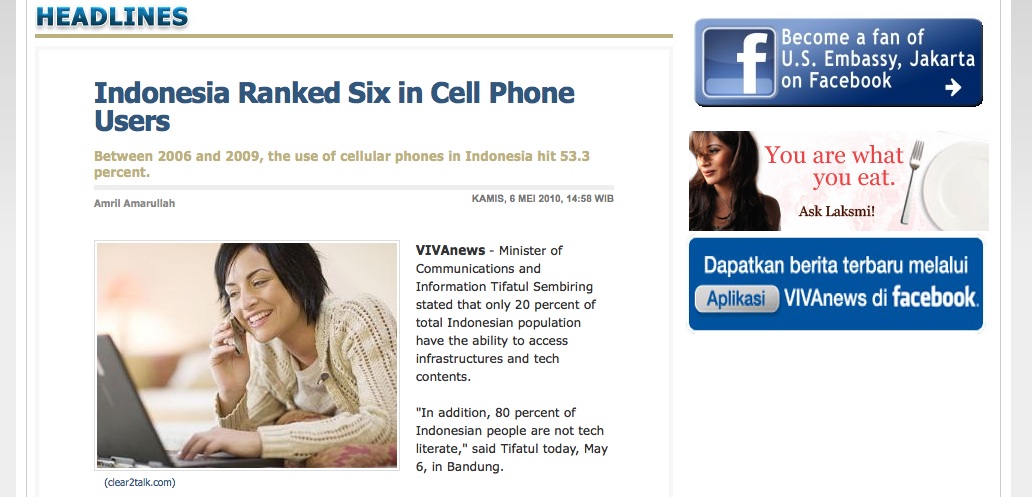
The US Embassy markets the site via advertising on local sites such as this one

Social Media and, in this particular case, Facebook is undoubtedly an excellent channel for nations to build their brands by engaging with consumers and offering value to those consumers based on the needs of those consumers, whilst understanding the environment. The USA, certainly in Indonesia seems to know this better than most.

Thanks to unspun for the inspiration for this story

Negative brand association, real world examples


In October of last year, I wrote a piece on my blog about negative brand association. You can read the short post here

David Ansett of Storm in Australia approached the subject from a different angle and you can read his piece here

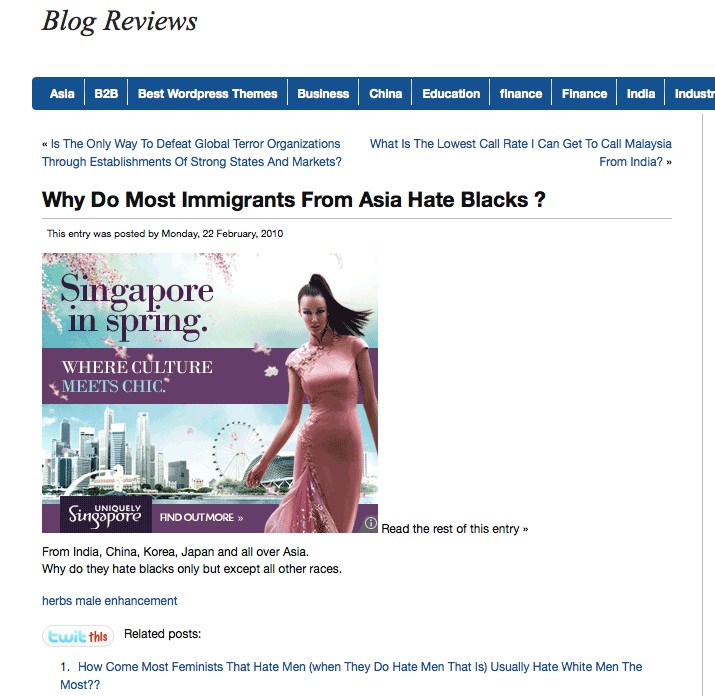
Essentially, my attitude is that if the concept of positioning a product in a consumers mind is a serious concept then it is only logical to assume that the same process can have a negative impact on the brand. Over the next few months, I will post examples that I encounter and I hope you guys will enter into a conversation with me on the impact, either positive or negative, of this brand association.

So we’ll kick of this project with a grab of a page I encountered today. I saw the question after answering another question and thought to myself that it would be interesting to see what, if any, the responses to the question might be.

As you can imagine I was shocked to see the ad right under the controversial, not to mention provocative question!

Today’s negative brand association story comes from the BBC site. This time it is a video about a drunk driver in China who is caught on film smashing into road dividers and barricades. You can see the full video here

You’ll note that the story is preceeded by a commercial for Lexus!

Here is a still image from the end of the commercial.

Actually this could also be included in brand disasters. Is it appropriate for a luxury brand such as Lexus to be associated with a drunk driver? Or does it not make a difference?

Any comments?

Case study: Use research to form the foundations of a tourism brand strategy


A powerful country brand developed from a meticulously planned strategy that has at its heart the concept of providing specific value to specific identified segments and meticulously executed and measured can yield massive benefits for investment, domestic industries and culture.

And for most South East Asian countries, tourism will have a prominent role to play in their country brand strategies. And so it should be as most governments recognize the contribution of tourism to stimulating economic growth across all sectors of society.

It also helps that tourism is also considered to be the world’s largest industry with revenue of over US$500 billion. The World Tourism Organisation (UNWTO) estimates International tourist arrivals for 2009 to be at 880 million. Although this was a 4% drop over the previous year, Asia and the pacific saw the first signs of recovery with positive growth in the last 2 quarters.

Going forward, the UNWTO expects international arrivals to reach 1.56 billion by 2020. Of these, almost 400 million are expected to head for Asia and the pacific.

But because of the tendency of politicians to seek a quick fix, most Asian tourism brand strategies look no further than creative advertising campaigns that look the same as many other destinations and are soon lost in the muddle of messages currently carpet bombing consumers.

One country in South East Asia has recognized the futility of this approach and commissioned us to develop a brand strategy based on trade and consumer requirements for value. Client confidentiality doesn’t allow me to reveal the country involved however I am able to share the methodology and some of the results and findings.

The project took just almost 2 years from appointment to implementation of the strategy however some urgent recommendations were implemented earlier.

The tourism office is tasked with marketing the country both domestically and internationally. Our focus was internationally. They were facing a number of challenges including:

Challenges
1) The increased effectiveness of competitor marketing strategies. All regional competitors are investing heavily in tourism products and developing segment focused branding campaigns.

2) Growing ineffectiveness of mass marketing, especially generic print & TV advertising. Increasingly fragmented media and an increase in leisure time activities are making it harder to reach consumers via traditional channels.

3) The increase in the influence of the Internet on the destination decision-making process, especially the increased influence of peer-to-peer networks. Figures released by The Association of British Travel Agents (ABTA) in November 2004 showed that 19% of holidaymakers booked their holiday online – six times more than in 2000. By 2008, this figure had grown to 67% (Online shopping survey). Only about 13% of those surveyed said they would use a travel agent. The Internet is also growing in importance as a communications medium through P2P networks with 34% of respondents to a Mintel survey choosing their destination on the basis of a face-to-face recommendation

4) Poor repeat visitor rates. Repeat visitors not only represent an increased return on the initial marketing investment but also tend to stay longer and spend more. Additionally, they represent a low-cost source of referrals and other word-of mouth advantages. Currently, the country has a below average number of repeat visitors compared to two main competitors which represents a threat to future growth.

5) Lack of awareness and knowledge of the country worldwide. What has been the impact of the country advertising? Has it been effective in improving the perception of the country? How much is it contributing to tourism in the country?

Our research showed that there were about 600,000 competing communities in Asia and more than 1,000 regional and national economic development agencies, all competing for visitors. This made it easy for even the most compelling messages to get lost amid all the destination claims.

We recommended to the client that in this cluttered environment, effective branding depends on data and knowledge about current and prospective visitors and not simply trendy creative campaigns featuring mass marketing tactics across all major channels.

Moreover, choosing the most effective branding strategy depended on sound market & customer research to determine current attitudes and perceptions toward the country among travel agents, previous visitors to the country and those that had never visited the country.

Measurement
By understanding the sources of those perceptions and attitudes, the client would be better able to evaluate current branding efforts, develop strategies to target high-impact segments with the most potential more effectively, drive internal education and other program development, leverage the emerging medium of Web 2.0, develop benchmarks to measure branding progress and ensure that resources were used cost-effectively.

The research could also be used to pinpoint, prioritise and drive online community-based branding. A core requirement as consumers spend more time in those communities.

Other key requirements included communicating knowledge of current branding and target market imperatives among personnel, as well as ensuring knowledge and data transfer.

After extensive discussions with the research division and others and to provide a 360-degree approach to understanding the brand, FusionBrand developed and conducted a multi-phase, six-month international research project that incorporated multiple research methodologies.

These methodologies included:

• 39 focus groups (FG) in thirteen locations in twelve countries comprised of 3 segments:
o Travel Agents
o Travelers who have visited the country in previous 3 years
o Travelers who have not visited the country but have traveled long haul in last 3 years
• Online surveys
o 12 countries
o Worldwide via client website
• Mystery shops in specific countries plus home country
• Internet CGM (consumer-generated media) monitoring & analysis
o 22 million blogs
o 60,000 usenet forums
o 6,000 discussion forums
o Plus podcasts, web sites etc.
• Internal brand audit in HQ and at tourism offices worldwide
o One-on-one, in-depth interviews with domestic & international staff
• External brand audit
o In depth interviews in specific countries
o 3 segments
o Tourist operators & agencies
o Media representatives
o Local tourism associations
• Communications audit (print)
o Brand analysis of print materials
o Comparative analysis of 11 regional competitor materials
o Framework for evaluation, scoring & future design developed
• Communications audit digital
o Own sites
o Brand evaluation based on Internet & customer relationship best practices
o Social Media initiatives

The countries were located in the following regions:

• Asia
• North America
• Europe
• Middle East
• Australia

The research project completely designed by FusionBrand was not only comprehensive, but innovative as well. For example, the Internet monitoring had yet to be accomplished by any destination, while the digital communications audit looked at what is necessary to advance into the emerging era of Internet 2.0.

Output was comprehensive and extensive and included:

• Recording and analysis of relevant input in complete reports
• County-by-country reports concerning perceptions and experiences with the country, including key influencers on travel destination selection
• Brand workshops for client personnel incorporating research results to ensure a corporate-wide understanding of the country brand strategy
• Analysis of Internet and marketing collateral relevance and effectiveness in segment-based branding
• Review of social media initiatives
• Quantitative benchmarks concerning experiences, perceptions, influencers and preferences of target segments
• Detailed insights concerning five key target segments identified in conjunction with the client

Each report not only included the findings from the research, but also prioritised recommendations for addressing the issues raised by the research.

Over 300 actionable recommendations
More than 300 actionable recommendations were made. These recommendations were incorporated into a comprehensive, segment-based brand plan that was developed over six months. The brand plan had a strong emphasis on the internet and social marketing and included strategic planning for marketing, advertising, both online and traditional, public relations, direct marketing, web and other programmes and outlined goals, messages, target markets, measurements, activities, timelines, responsibilities and budgets.

The benefits include consistent messaging and images among target markets, synergy among multiple programs, and elimination of uncoordinated activities that were wasting resources. Crucially, the brand plan also provides tools to evaluate program results.

In addition, in conjunction with representatives in country, country specific brand plans were developed. The Country Brand Plans are primarily focused on specific marketing activities within those countries. These activities include, but are not limited to, PR, local trade shows, agent recruitment and communications, cultural events, advertising, segment specific publications, promotional events, etc.

Although the brand strategy was for 2009, urgent recommendations such as consolidation and improvements to web sites and the appointment of regional PR companies were implemented immediately.

A key element of branding is consistency and yet, during the communications audit, the lack of consistency was evident. A strong recommendation was made for a corporate identity brand manual to be developed immediately. The manual was conceptualized and completed by FusionBrand in 4 months, during the writing of the 2009 brand plan.

Throughout the research and planning process, workshops were designed and presented to client personnel to keep them abreast of the process and educate them.

The project has been deemed a success with many targets met ahead of or on schedule. Furthermore significant savings have been made in a number of areas such as a reduction in collateral printing and a move to print on demand. Finally the destination has appeared on more than one ‘must visit’ destination for 2010 for the first time in its history.