Montblanc is a famous pen brand that prides itself on its heritage, workmanship and quality.
The Montblanc web site says, “Montblanc has been a consistently present beacon in the luxury brand market for nearly a century. Having been celebrated for generations as the paramount creator of writing instruments, we have since branched out in order to offer you exquisite watches, leather pieces, jewelry, fragrance and eyewear.”
It’s a compelling proposition and one that my daughter thought I would buy into.
So she saved up enough money to buy me a Montblanc pen for my birthday. Like any father will tell you, this was a very important gesture for her and me. Although every present from her meant the world to me, it was a step up from the Mickey Mouse socks or The Who coffee mug I was used to getting.
And I cherish my Montblanc pen more than just about anything else. For a while I didn’t take it out of my home office. And then I took it on a business trip to London but was so worried I would lose it, I put it in my briefcase and didn’t use it until I got back to Malaysia.
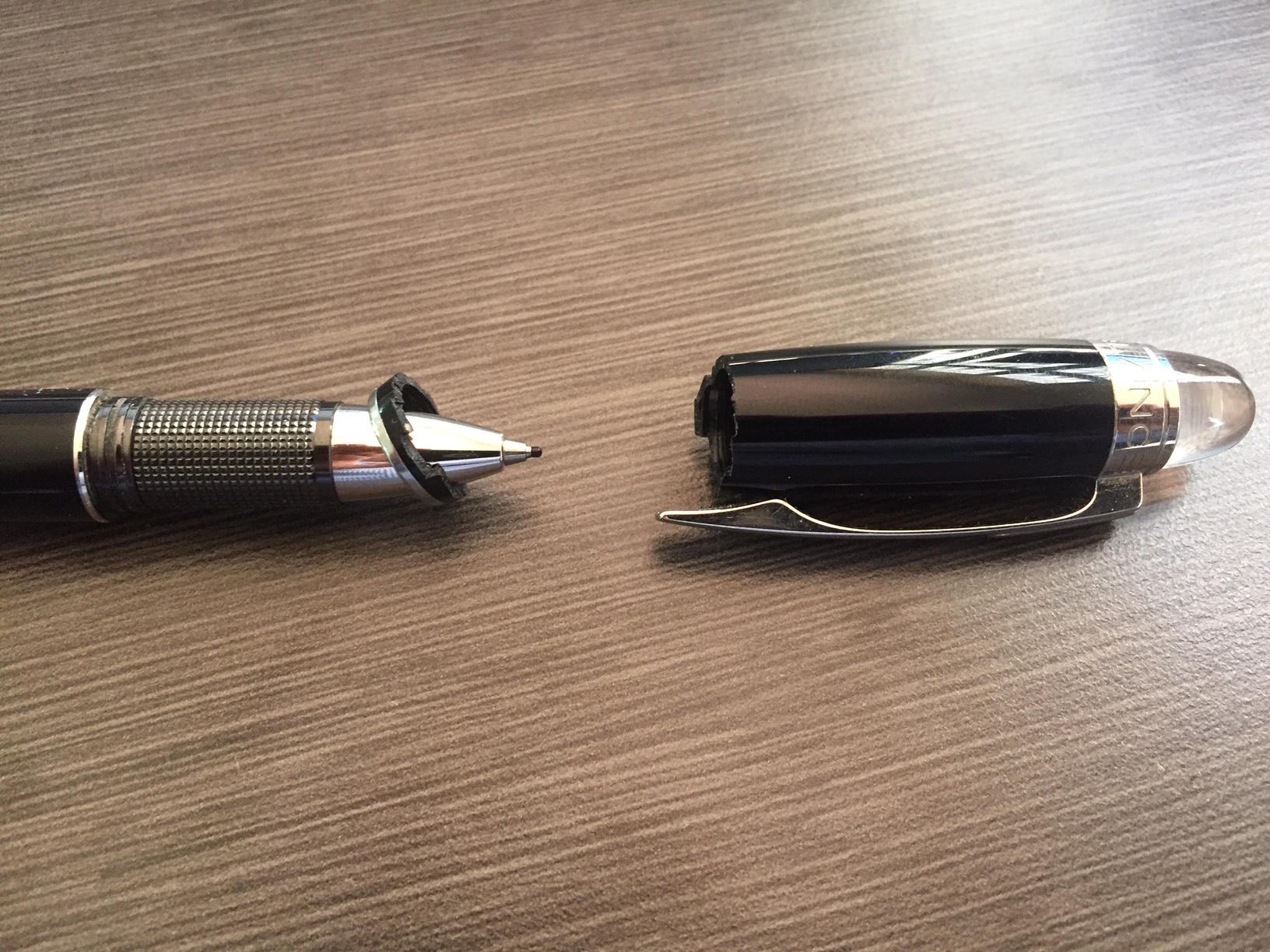
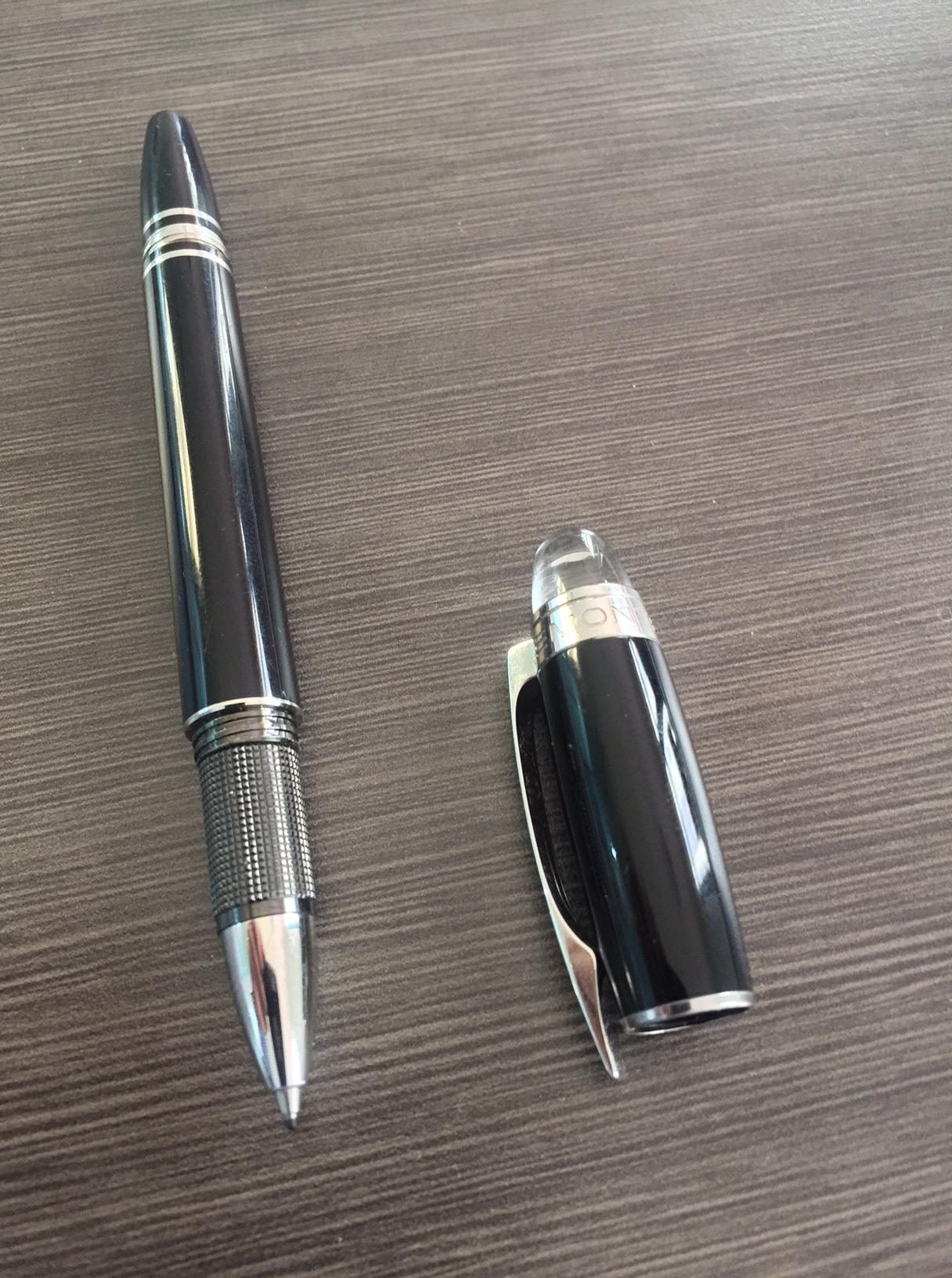
It stayed on my desk and was reserved for signing cheques, letters and the occasional greeting card. I cherished that pen more than anything. And then one day it broke. I was unscrewing it like it was meant to be unscrewed and the cap snapped.
And it snapped at the point where the cap screws onto the pen shaft. I went on the Montblanc website to find out the warranty information and found this confusing statement, “Montblanc writing instruments are under a 24 month warranty from date of purchase or receipt as a gift, against manufacturer’s defects.
Obviously a manufacturing flaw
Manufacturer’s defects do not include lost parts, damage resulting from everyday use, or if the product has been dropped or banged against a hard surface.”
After reading the warranty information I was none the wiser but this being a luxury product, I was confident I could get the pen fixed under warranty but when I contacted Montblanc they told me, very nicely that there was a 2 year warranty on the pen but it didn’t cover my problem.
So basically here I was with a product that was sold as a ‘beacon in the luxury brand market for nearly a century’ and ‘the paramount creator of writing instruments’, but in reality wasn’t fit for purpose due to what seemed to me to be a design flaw.
I’m no pen expert but it was obvious to me that it was a design or materials flaw because there is too much pressure on the cap. The cap material simply wasn’t strong enough to sustain the strength of the screw on the shaft.
Perhaps the screw was made in Europe but the pen top was made in China?
So the branding issue is what should Montblanc do? Do they deliver on their promise that they are a leader in the luxury brand market, admit the issue is their fault, do the right thing and replace the pen or at least the top? Or do they ignore the customer and hope he will go away and accept that luxury lasts 2 years?
Historically a brand would simply quote the terms and conditions of the purchase, which is what Montblanc did. A case of ‘thanks for buying our expensive product that only lasts 2 years. We’re sorry, but it’s too bad’.
This initial experience with Montblanc was a huge disappointment. It bought me crashing down to earth. This luxury brand with impeccable heritage was refusing to deliver on the promises made on its website.
The brand refused to take responsibility for what was obviously a design flaw and told me I had to pay for the repairs.
Like a good citizen I got a quote from a Montblanc shop and they told me the repairs would cost US$125. I was basically between a rock and a hard place. Either pay the US$125 or have half a luxury pen.
Now in the mass economy when branding was transactional, I would have had limited opportunity to voice my frustrations or influence future purchases. I might have written a letter to the editor of my daily newspaper or to the company.
And I could probably influence my family and a few friends to never buy a Montblanc but the brand could live with that.
But in today’s much more competitive, social and relational environment, the consumer now defines the brand and brands need to understand that not only must they deliver on any promises they make, they must also look to every single sale not as a transaction, but as the beginning of a relationship.
That’s the responsibility they have. They might not like it but if they want the customer’s money, that’s what it costs. It’s not easy to maintain those relationships but with relationships comes trust and trust allows companies to charge higher prices.
Smart brands understand that today, if they make a promise they have to live up to it. They understand that there are certain ethics they need to aspire to in order to deliver on their brand promise.
Montblanc promised me luxury and distinguished heritage of close to 100 years but hedged their bets with a 24 month warranty. That’s essentially hypocritical.
I wasn’t happy so took my frustrations to the Montblanc Facebook page where I complained. Initially Montblanc refused to accept responsibility for the matter and referred me to the opaque warranty. This was not a good idea.
So I got ready to launch a rant on Twitter, create videos for YouTube and post pictures on Instagram, write negative blog posts, share the videos, comment on forums and search for discussions on pens so that I could share my experiences.
I mapped out what I was going to say on anti Montblanc websites and Facebook pages that I would create and even use the experience as a case study in my next book.
When faced with complaints, great brands listen carefully and do their research before doing the right thing by their customers. I think that Montblanc initially anyway, acted fast but then reflected.
Because a couple of days later I got a call from Terence Tan, the retail manager of Montblanc in Kuala Lumpur. He asked me to bring the pen to the shop and they would fix it for me at no cost.
Thanks Montblanc, you did the right thing & trust in your brand is restored
I took the pen in and Terence was apologetic and professional. He outlined the process and that I would be called once the pen was fixed. And sure enough he called me personally and told me who to speak to if he wasn’t around because he was travelling in the next week.
In other words, Montblanc supported what it says on the website.
And as a result, instead of all the negativity I mentioned above, I’m writing about my positive experience with the brand. I’m enhancing their reputation, substantiating their brand promise and creating more emotional connections with the brand.
Montblanc can now use my positive experience in its brand building strategy. And this is important because up to 70% of customers rely on customer reviews before making a purchasing decision.
These reviews provide the social proof increasingly cynical and jaded consumers need before making purchasing decisions.
Integrated into the Montblanc brand strategy and shared across the ecosystem, Montblanc has the chance to turn a disgruntled customer into a brand advocate by leveraging on the positive feeling created at minimal cost to the brand.
Because now I’m no longer a component of a transaction, I’m now in a relationship with a brand I care for and who obviously cares for me.
So the next time someone complains about your brand, have a think about the complaint. Look at it from their perspective, not from yours. And think about it from a relational, not transactional perspective.
If you do, you may not only make a sale, you may make and keep a customer.
The English Premier League is broadcast to 70% of the world’s 2.1 billion football fans in 212 countries and territories around the world. Asia and Oceania represents 35% of that global audience.
In China alone, up to 18 broadcasters show nearly every game every week to more than 350 million fans across the country.
As of last year, a number of Asian brands including Thailand’s Chang beer (Everton) and King Power (Leicester City), Japan’s Yokohama Tyres (Chelsea), Yanmar and Epsom (Manchester United), Hong Kong’s AIA (Tottenham Hotspur) and GWFX (Swansea City) could be seen on advertising at grounds and/or on shirts.
Betting firms such as 138.com and UK-K8 who are targeting Asia are represented on the jerseys of West Bromwich Albion, Bournemouth, Watford and Crystal Palace.
In the championship, AirAsia sponsors Queens Park Rangers and Malaysia has a relationship with Cardiff city. Last year Malaysia Airlines signed a three year deal to be the official carrier of Liverpool after Garuda Indonesia relinquished the role.
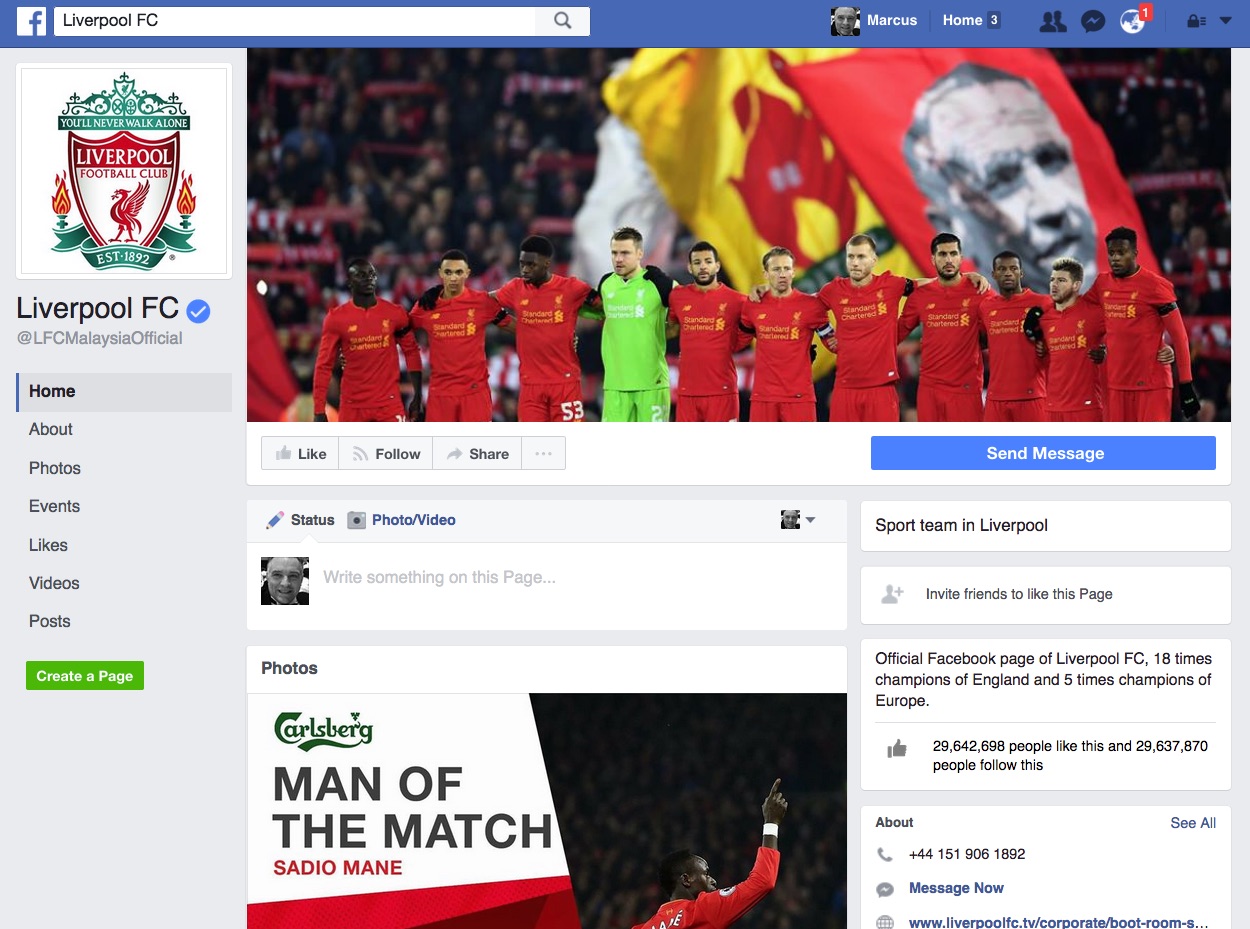
Any reference to Malaysia Airlines on the Liverpool Facebook page?
Football has become popular with big global brands because of its impressive reach and because traditional channels such as TV are becoming fragmented as new services like Netflix, iflix and Amazon prime as well as Youtube, Facebook and others make it increasingly hard to gain the eyeballs all brands insist they need.
Football gives these brands the opportunity to reach a mass audience as well as be associated with what is obviously a very popular sport.
But in an economy driven not by what a company says it does but by what its customers experience, I question the relevance or validity of this approach.
I also think that if the logic is that by supporting a football team, a brand reaches out to all that team’s fans then surely fans of other teams will not support that brand?
And what if the team does badly? How does the association with a badly performing product reflect on the brand?
Take the case of Malaysia Airlines and Liverpool. Liverpool is one of the greatest, most iconic football clubs in the UK. The club was established in 1892, four years after the original premier league was set up.
The club’s trophy cabinet contains eighteen domestic League titles, seven FA Cups and eight League Cups, more than any other club.
They’ve also won five European Cups, three UEFA Cups and three UEFA Super Cups which means they’ve won more European trophies than any other English team in history except Manchester United (also 41).
That’s an impressive record but there’s a problem, they haven’t won an EPL title since 1992. Does that matter? Well it should do.
Does a brand such as Malaysia Airlines, which is going through a business turnaround plan to make it more competitive, efficient and effective, want to be associated with a team that hasn’t won anything significant for nearly 40 years?
And over the last few years, Liverpool has developed a reputation for poor winter form. The team won 2 out of ten matches at the start of 2016. In January 2017, Jurgen Klopp’s team lost 3 matches at Anfield in one week and as a result, was unceremoniously dumped out of two major competitions.
The team narrowly missed their worst run of losses at home since 1923 with a 1-1 draw against Chelsea at the end of January but the poor form continued into February with the recent 2-0 defeat away to lowly Hull City, 15 places below them. Only time will tell if last Saturday’s win against high flying Tottenham was the beginning of a new dawn or a flash in the pan.
If the latter, how does that reflect on Malaysia Airlines?
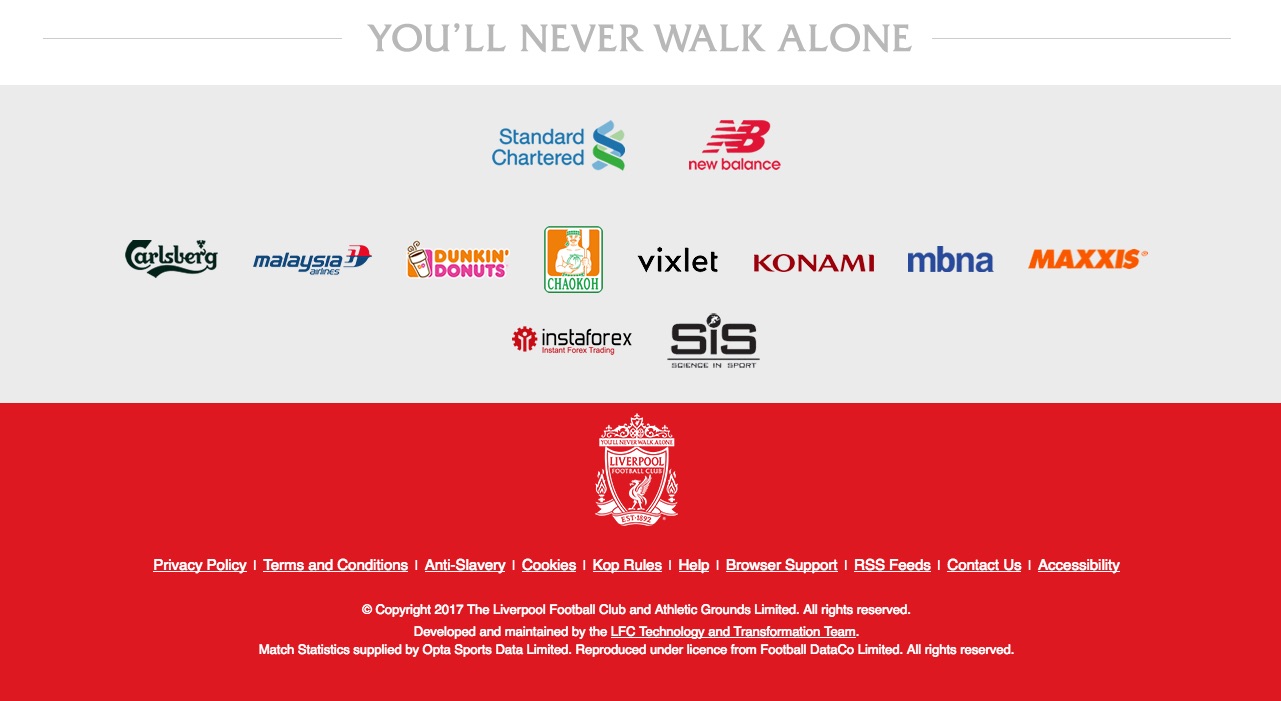
The Malaysia Airlines logo appears at the bottom of the home page, between the beer and the donuts
Liverpool are now 13 points off the leaders Chelsea and definitely under achieving.
Sure Malaysia Airlines is getting the eyballs, assuming viewers are watching the LED panels around the ground but is it the right environment for the brand? Is being associated with a team that is underachieving going to leave a positive impression?
You could argue that all Malaysia Airlines is doing is trying to raise awareness. But is raising awareness the right way forward? Is there anyone out there NOT aware of Malaysia Airlines?
Before Malaysia Airlines stepped in, Garuda International was the official carrier of Liverpool but after three years and a comprehensive study to determine if the airline was benefiting from the sponsorship, they pulled the plug. Surely if they felt they were getting value for money, they would have stayed on?
Garuda wasn’t the only sponsor to see little value in sponsoring teams in the EPL. In June 2016, Chinese smartphone maker Huawei ended its relationship as “official smartphone partner” to Arsenal after two years, citing “limited visibility.”
Malaysia Airlines hasn’t disclosed the amount it is paying to be the official carrier but Garuda forked out US$9 million (RM40 million) a year for the privilege.
So if Malaysia Airlines is paying the same (probably more but anyway), that’s US$27 million or RM125 million for brand exposure on LED and static boards at each home game, exposure on the Liverpool FC website which seems to consist of the logo at the bottom of the page, in publications and on the Facebook page although a quick look at the Liverpool page failed to find any reference to Malaysia Airlines.
The package is also supposed to include co-branding opportunities, merchandising rights and pitch side access with players and legends.
That’s a lot of money to pay to increase awareness of an airline that is probably known to everyone on the planet. But Malaysia Airlines CEO Peter Bellew thinks the deal, “has changed perception radically for us, in China, in Thailand, in the U.K.”
He didn’t explain what the perception of Malaysia Airlines was before the deal and how advertising on LED panels can change those perceptions.
The first game at which Malaysia Airlines appeared was a Liverpool v Manchester United match at the beginning of the 2016/17 season.
Liverpool managed to hang on for a draw, not an auspicious start. During the game, Malaysia Airlines advertised roundtrip fares between Kuala Lumpur and London at a ridiculously cheap £395 (RM2,299).
Branding is not about sales, it’s about relationships
Confusingly, Bellews credits the passenger load increase on the Kuala Lumpur to London route from 45% in May 2016 to 63% in December 2016 to the Liverpool deal and was quoted in one newspaper as saying, “Old-fashioned sales and marketing works.”
Slashing prices to the bone and spending RM125 million to raise awareness (and to change perceptions) and tell football fans you are selling tickets at £395 when other airlines are selling the same route at £500 isn’t really old fashioned sales and marketing, it’s just old fashioned and more importantly, unsustainable.
And to be frank, it’s hard not to fill a plane from Malaysia to the UK in December as thousands of expatriates head home for Christmas and thousands more Malaysians head to Europe for the long holiday.
Irrespective of the fact that Malaysia Airlines is sponsoring a weak product, there is also the question of whether football fans in Asia, watching matches as they do in coffee shops, bars and roadside stalls at 2, 3 or even 4am really take in the messages on the LED billboards.
And even if consumers do take in and accept the limited messages that can be communicated on a pitchside screen there is another flaw to this process. What if performance doesn’t match any perception created?
Of course in the ‘old fashioned’ world that didn’t matter because the focus was more on acquistion anyway and there was a belief that there were always going to be new customers.
At least that’s what TWA, Swissair and the other 300 airlines that have failed over the past 50 years thought.
Brands such as Malaysia Airlines generally succeed, or fail not based on their advertising, positioning or associations but on operational issues, service capabilities, retention and the experiences of others we relate to.
The problem for Malaysia Airlines is that today, all of the above are played out on Facebook, in the letters pages of newspapers and in the comments sections of popular bloggers.
Dissatisfied customers can change perceptions and damage brands on social media much faster than those brands can change perceptions through pitchside LED screens.
In the ‘old fashioned’ world, brands reached out to the masses. Awareness and sales took precedent over customer development.
I get the feeling that Malaysia Airlines is focussing too much on getting back into the black, no matter what the cost. Selling tickets at RM2,299 and old fashioned sales and marketing tactics may just do that.
But what happens when the carrier wants to increase prices? If Malaysia Airlines has been attracting price conscious customers, won’t they move on to the cheapest carrier?
And if this model is successful, then it will probably be the next advertiser on those LCD screens.
Peter Bellew the Chief Executive of Malaysia Airlines appeared chuffed to bits earlier this month when announcing the carrier had made its first monthly profit for a number of years in December 2016. I don’t want to appear pedantic but the former Chief Executive, Christoph Mueller announced last April that the carrier made its first monthly profit in February 2016 in this interview with Business Insider.
In the same interview, Mueller also said, “the airline’s products are “tired” and don’t appeal to young travelers.” Fast forward a year and the Nikkei Asian Review (NAR) is telling the industry, “Bellew’s efforts in improving the management and work culture, including at the baggage and maintenance departments, and a marketing strategy to attract Malaysians to fly on its planes again, has worked.”
Making a profit, but at what cost to the brand?
In the article, Bellew is quoted as saying, “About a year ago, the company was flying Boeing 737 jets with only 5-10 passengers on board some flights. On Airbus A380 super jumbo flights to London in November 2015, some flights only carried 50 passengers.”
The article continues, “As of last May, the carrier was filling 45% of seats on its London flights. Last month, however, the figure reached 63%. Overall, the company filled 90% of seats in December and 82% in the last quarter, he said. That was up from the 79.3% reported for July-September. Business bookings are running at double year-ago levels.
What does this mean exactly? May is traditionally a slow month for the European routes whereas December is a peak month. I would suggest then that 45% in May is nothing to write home about but it is not terrible. But he says ‘last month’ which I presume is referring to December 2016 (the interview was in January 2017) the figure reached 63%. If that is referring to December then it is worrying.
Business class on Malaysia Airlines is not what it used to be
But confusingly, the article then says the company filled 90% of seats in December which seems to contradict the initial statement. What we do know is that Bellew and Mueller have slashed operating costs to such an extent that Malaysia Airlines is now essentially a LCC, especially for domestic flights.
What I’ve noticed, and many others are also of the same opinion, is that its people do not have the communication skills required to engage effectively with passengers when there is a situation. Reasonable requests for explanations are met with a shrug or a mumbled reply.
When I flew business class recently and a fellow passenger’s phone repeatedly beeped during the approach, suggesting incoming messages which meant his phone was on when it shouldn’t be, the flight attendants did nothing. As I exited the plane I asked them why and they simply shrugged and moved to the galley.
There’s a reason why phones have an airplane setting. Sure, there are no proven examples of a phone causing a problem on an aircraft but I don’t want to be there when a phone does adversely affect the outcome of a flight and, bearing in mind the last couple of years, I don’t think Bellew would want it to be on his carrier.
What bothered me so much about her experience was not that the flight was overbooked – this is Chinese New Year after all and these things happen – but how she was dealt with by Malaysia Airlines representatives at the airport. There appeared to be a complete lack of empathy for a young mother with a toddler and a baby, indifference to her predicament and no attempt to solve the problem in a way that may protect the brand.
And the irony is that this goes against what Malaysia Airlines is trying to sell through its new videos for Chinese New Year. The video closes with a flight attendant saying, “I would like to wish everyone a pleasant journey this Chinese New Year, see you on board!” Unless of course, in the case of Fourfeetnine and her family, you happen to be travelling home to Penang.
The blogger has taken her experience online and inevitably her story has gone viral. It’s had over 5,500 Likes on Facebook, thousands of shares and generated hundreds of comments, many of them also negative experiences about the carrier. This narrative will over shadow all corporate driven messages and make the job of getting bums on seats even harder.
In the past Malaysia Airlines was a product comparable to CX and SQ but today it is no better than a LCC. Crucially, consumers are beginning to treat it like a LCC. Once perceived as a LCC, Malaysia Airlines will get business based on price. But as soon as it tries to increase prices, it will be judged even more on the experiences of passengers like fourfeetnine and all the others with negative experiences shared across the ecosystem.
Malaysia Airlines really needs to start investing in the experience. From the clunky, outdated booking engine to the physical touchpoints it needs to be delivering on the promises it makes. Otherwise it’ll always be known as a Low Cost Carrier. And not a very good one.
Towards the end of 2016 I read an article in Business Insider that had the audacity to suggest Microsoft is more innovative than Apple.
Now I believe that’s a bit of a stretch but there are definately problems at Apple. Since Steve Jobs moved on, the brand has made three critical mistakes. One is that it no longer has direction or if it has direction, it’s the wrong direction – driverless cars? Two it appears to have stopped listening to the voice of the customer and three, it’s products are very nearly not fit for purpose.
The next ‘must have Mac?’ Probably not
These three things are leading to a perfect storm of problems for Apple. If they are not addressed quickly, the brand will lose its loyal following from the creative sector. Indeed, Microsoft, yes Microsoft is already making inroads into this segment. Consumers are not as loyal to brands as they used to be, especially when those brands aren’t listening to them.
In a nutshell, he wants the company to focus on delivering getting the existing products right rather than diversifying into new areas, to lose the gimmicks and deliver quality, to get the integration across platforms seamless, as promised. And he has a point.
It’s good to know I’m not the only one increasingly disillusioned with my Apple products.
Google the words ‘Visit Penang’ and you get the following results:
‘Visit Penang’ search results
The next step would be to click on the visitpenang website link that takes the visitor to a site that has no video on the homepage even though a video on a homepage is reported to increase conversion rates by more than 20%.
Indeed, the way consumers are absorbing information via video is well documented. According to YouTube reports, mobile video consumption rises 100% every year. Of course that will peak at some stage but it isn’t even slowing at the moment. In fact, more video content is uploaded in 30 days than all three major US TV networks combined created in the last 30 years.
And when it comes to travel and destination related videos, YouTube is the most used site with 79% of users looking at personal travel options. YouTube says that 66% of all travellers watch online films when they are thinking of taking a trip.
Someone sent me a link to a new tourism video for Penang and asked my opinion. The video, launched earlier this year lists a number of quotes stretching back to one from Yahoo in 2011. I presume the video is supposed to lure more visitors to the island but I couldn’t make out who it is targetted at.
I get the impression that it’s one of those ads designed to communicate with everyone that ends up communicating with no one. Yes it features everything that is well known about Penang but it didn’t bring us anything not already on the web. Penang is known for its Char Kway Teow and the dish is featured in the video but who is going to travel to Penang for a plate of noodles and besides, is it new?
Moreover, there are more popular, well established Vloggers on YouTube such as Roseanntangrs who have over a million followers including a Vlog about Penang food that has over 160,000 views (and plenty of negative comments that need to be addressed by the author). This would have been a smart channel to use to promote Penang food.
Here’s the Penang video. I feel like it’s about 20 years out of date, it’s like a TV commercial pushed out across digital.
It’s a real shame because Penang is a must visit destination for anyone coming to South East Asia. I felt this video didn’t do justice to the destination.
Inevitably after watching this I had to search YouTube to see if it was the worst tourism ad ever. I was surprised to find plenty of material including this one from Singapore that really is the worst destination ad I’ve ever seen or heard.
I don’t know what Singapore Tourism was doing when it commissioned this ad but it very thoughtfully pulled it off the visit Singapore site.
Thankfully or not, depending on your point of view, YouTube hasn’t been so considerate. Stick with it to the end because the punchline will have you heading for cringetowm.
Penang’s video isn’t as bad as Singapores but it will be as inneffective. Indeed after seven months it has only had 9,500 views. But what should Penang tourism’s approach be when developing destination videos?
Here are 6 top tips Fusionbrand recommends Penang take into account next time they want to use video as part of their brand strategy:
1) You can’t be all things to all people. And you can’t include everything about a destination in one video so don’t try. Hook the viewer with the first video and YouTube will do the rest of the work for you because they will link similar videos to the one the viewer first watched.
2) Think about the audience for your film. What will they want to get from a film about your destination and how can you make the content relevant to their needs? Because if it doesn’t resonate with a few seconds, they’ll move on.
3) Think about how travellers use the IoT. Basically it begins with explore and discover before moving onto consider and connect. That’s followed by evaluate and engage and finally adopt, buyin, embrace and share/endorse/advocate. You must be clear about what part of the buyer process your videos are aiming at and the content must reflect that. Don’t try and cover everything in one video.
4) Be real and human. The days of the corporate controlled ‘big idea’ and message pushed out across media are over. Consumers don’t believe it and besides, it’s been done to death. Instead show events that happen during filming, things that go wrong and the people involved in the filming.
5) Instead of spending your money on expensive production of one video, make it real and make it often. Publish and share film on an ongoing basis.
6) Creating the video is only the start. You then need to share it, comment, respond, write about it and so on. An editorial plan should be developed around all videos.
Videos the future, for now anyway. But destinations like Penang need to stand out, not add to the noise. Otherwise branding investments are wasted and tax payers funds are too important to waste.
This year John Lewis has for the first time cast a black family as the stars of the ad. Actually that’s not true. The stars of the show are a whole series of animals including the family pet Buster the Boxer.
You can watch the ad here and let me know what you think.
This being Christmas you are encouraged to ignore reality and the fact that the hedgehog would have been in bed since November and foxes are a nuisance (more on that later).
After two days the ad has generated 4 million views on Youtube, 32,000 Likes and 3,000 comments, most of them positive and many of them amusing, ensuring the narrative continues!
Banter!!
The store spent about £1 million on the ad and will spend £6 million on TV spots nationwide. Fans can also download Snapchat filters featuring Buster the dog. Merchandise on sale in the stores includes soft toys, clothing, animal themed children’s books and trampolines. And in the Oxford Street store, there will be a virtual reality version of the commercial.
The dog also has his own Twitter hashtag #BusterTheBoxer and Twitter stickers. But Twitter reactions have been mixed. @Basscrazy66 suggested Santa should be putting the trampoline together.
What about Santa?
@Gregjames missed the sadvertising approach with this tweet.
I want to be miserable at Christmas
Meanwhile, @DanielBruce_8 brought a bit of regional humour to the narrative.
This is known as Scottish humour
Earlier in November 2016, an A level student in the UK created a fake John Lewis ad that fooled a number of people. Taking sadvertising to a new level, the ad features an unhappy snowperson trapped in a snow globe desperate to get out of the globe so he can enjoy Christmas with a free snowperson. There are rumours the student will soon be interviewed by the head of creative at John Lewis.
Even though it’s only been out a few days, the John Lewis ad has been parodied. Make sure you watch this parody to the end!
According to the creators of this parody, James Herring, Jasper Gibson and Dave Packer, they are “raising awareness of the mild annoyance of urban wildlife experienced by middle class city dwellers”.
John Lewis has announced that 10pc of all toy sales will be given to the country’s Wildlife Trusts charities. What do you think, is this the best ever John Lewis ad? Vote in our poll.
In April 2016, Apple announced its first ever reduction in iPhone sales. The company played down the decline suggesting it was in line with slowing smart phone sales around the world but the reality is that Android is becoming an unstopable force and consumers are getting bored with the iPhone.
So the launch of the iPhone 7 is really important for the Apple brand. I haven’t played with the iPhone 7 so I can’t say how it is but it needs to be interesting, exciting and desirable and that’s going to be tough to deliver.
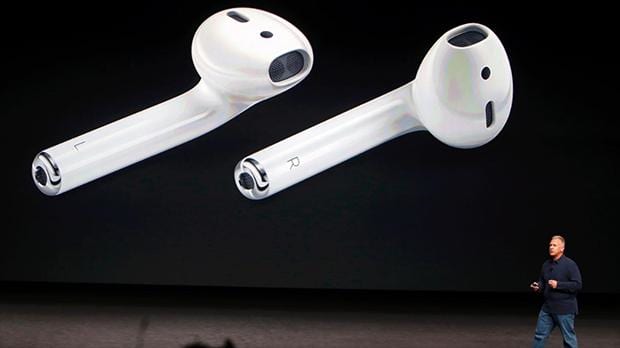
What I do find interesting is related to the removal of the 3.5mm circular headphone jack on the left side of the bottom edge of the iPhone 6. Instead of traditional wired headphones the iPhone 7 will work with wireless EarPod headphones which don’t, I am now told, ship with the phone. According to Apple, this move is part of the plan for a wireless future and that makes sense although the rest of the ecosystem is still wired so that might be an issue in many situations you find yourself in.
EarPods – wirelessly wired. Thanks customers
Traditionally, when Apple makes such a move – remember when it redesigned the MacBook and MacBook Air computers a few years ago, the MagSafe charger got a refresh too which meant you couldn’t use your old charger with your new laptop. And every Mac user will complain about Mac adaptors for monitors, Ethernet cables and God knows what else – it doesn’t think about the consumer.
Well this time, the new iPhone ships with an adaptor that plugs into the Lightning port which is normally used in its chargers. This means you can still use your expensive wired headphones. But you’ll still have to fork out for a separate adaptor if you want to charge your phone while listening to music.
Apparently, the new lightning EarPod headphones offer a better quality sound than ‘wired’ versions which tend to sound a bit tinny. This is something to do with an inbuilt digital-to-analogue music converter (DAC) present in lightning connector headphones.
What this tells us is that Apple listens to its customers and that’s something a lot of brands need to do. It also tells us Apple values the voice of the customer and that is a major step in the right direction for a brand that hasn’t really needed to in the past. It’s a small but important step for Apple and shows that even the most valuable brand in the world must and is listening to its customers. Are you?
In the post I wrote that gold and platinum members of the Malaysia Airlines FFP programme couldn’t use the lounge but someone also not flying Malaysia Airlines, who had never flown Malaysia Airlines and may never do so again, could enter the lounge if they paid RM200 (US$40).
I explained that this lack of appreciation for loyal customers did not make branding sense.
I was making the point that what other airlines do is irrelevant. That what is normal doesn’t matter because Malaysia Airlines isn’t any other airline going through normal. That Malaysia Airlines needs to work harder than any other airline to rebuild its brand following the twin tragedies of 2014 and that the first place it should start was with members of its frequent flyer programme but that it had largely ignored them.
Brands, especially airline brands are always looking for an edge. And they especially like to be seen to be human, to be caring, to be willing to do something extra. A colleague reminded me of what we call ‘thoughtful gestures’ branding. It’s happening more and more in the era of the long idea because thoughtful gestures have long legs on social media.
Think of all those airline ads that show the captain giving a kid a toy plane, a stewardess adjusting the blanket of a sleeping passenger, the offer to heat up a milk bottle for a baby, etc. All cliches and all used by Malaysia Airlines in its advertising in the past.
No frequent flyer, including me is entitled to anything that’s not in the terms and conditions but if they ask for something minor or simple, such as a free coffee or a pen or a postcard or want to use the bathroom in the lounge then although it’s against the rules, it would be a great opportunity for a “thoughtful gesture” that made an impression and more importantly, may then be discussed on social media and negate some of the negative narrative.
The mistake I made was that I personalized a minor issue and as a result, people focused on my behavior instead of the airline’s attitude.
I copped a lot of abuse and I won’t make that mistake again. Although I can promise you I’m not an unctuous twat and do not consider myself entitled!
Although this post is almost inevitably a branding lesson for Malaysia Airlines, it’s also a branding lesson for any company that doesn’t appreciate the importance of retaining customers.
At the risk of stating the obvious, customers are key to a brand’s success. After all, you can’t build a brand without customers although there are probably some advertising agencies that would dispute that.
Retention not aquisition should be at the heart of any Malaysia Airlines restructuring
Loyal customers are generally the most profitable of all. And as I wrote in my book, if you have enough loyal customers and look after them, you don’t need to spend the equivalent of the GDP of a small Scandinavian country on advertising to keep selling to new people.
Just think about it. If every customer you ever had came back over and over again and never left you, it would hardly matter how slowly the numbers built up. Fast or slow, your business would grow.
If every new customer became a convert for life, most of the risks would be taken out of running your business. Simply put, you’d be able to plan your sales and production, predict your cash flow, know when to open and when to close, recruit the right people at the right time and know exactly when to commit yourself to a new factory or, in the case of an airline, new aircraft.
Branding means looking after your customers. If you do, why would they leave?
In a situation like that, the only way is up. Unfortunately, though, it’s not going to happen. Customers don’t just come. Repeat business and customer retention rates are never going to be anywhere near 100 per cent in practice. Customers will leave too. But the absolute key to building a brand is getting more of them to stay.
And the reason why is because once they’ve become a customer presuming the experience from their perspective was a success, they are likely to come back again. According to one report, once a customer buys something, there’s a 70% chance of him coming back. And, once he’s back, he’s likely to stay.
So how do you get more customers to stay? Obviously, by offering something that’s more attractive than the offer your competitors put up against it. Actually it’s easier than that because quite often a loyal customer will be oblivious to what the competition as to offer anyway.
But that’s not as easy today as it was 20 or even 10 years ago. There are companies out there who can manufacture what you manufacture more cheaply. There are companies out there who can get the same product as you to the market more quickly and in smaller or larger quantities than you.
Unless you are very lucky, there’s only really one advantage that you have over your competitors and that is your company’s relationship with your customers. That relationship, managed properly can never be duplicated.
And good relationships are the key to repeat business. Once Malaysia Airlines returns to profitability, and take it from me that it will do and ahead of target it will then need to start rebuilding it’s brand.
Customer experiences must be improved at Malaysia Airlines
And if it really wants to rebuild its brand, and continue to make a profit once it starts to increase prices, which it will have to do, it must start to place relationships with existing and especially loyal customers at the heart of its turnaround strategy.
Malaysia Airlines must be prepared to invest in getting to know its customers by collecting the right data about them, developing relationships with them and then leveraging those relationships to generate higher sales and the referrals that will bring in more customers.
Malaysia Airlines must understand that building businesses today requires a relational, rather than a transactional, approach to doing business. This will be an almost 180 degree change in direction from the way it is managed at the moment.
The customer who is attracted to the airline because of a discounted fare but has no relationship with it will walk away the moment he sees the same thing cheaper somewhere else.
But customers who feel they are getting something out of the relationship, beyond the individual transaction, will stick around.
That ‘something’ the customer gains will depend on its ability to deliver emotional, economic and experiential value to every customer. And this is going to be hard because a lot of customers have now experienced the competition.
Branding isn’t transactional, it’s relational
This is where branding gets complicated because it requires C level executives and senior management to refocus and move away from the ingrained, traditional ways of running a business. And for Malaysia Airlines it will mean tearing up the very strategy that got it back to profitability.
Most difficult of all, it means they have to give more responsibility to front line staff, many of whom they frankly don’t trust to do the right thing.
And much of that lack of trust is based on the fact that those management and C level executives see staff as a cost not an investment.
Even after the massive cull that has seen more than 6,000 workers retrenched, the carrier is staffed with people who simply don’t have the skills to represent the brand at this critical time.
But it’s also because whilst the ‘turnaround’ focus has been on slashing costs, the organization still suffers from a traditional, top down approach to managing the business.
A case in point is yet another depressingly familiar experience with Malaysia Airlines. As I’ve said many times before, I fly fifty times a year domestically with Malaysia Airlines and anything from two to ten times internationally. I’m not a major customer but I am a loyal one and continued to fly with them through the dark days of 2014.
If you are a regular reader of this blog, you will know how loyal I’ve been to Malaysia Airlines. You’ll know how I flew repeatedly following those 2 tragic events of 2014 and despite the fear and the mess the management and government made of engaging with the global media, family of those lost in the disasters and other stakeholders, I kept flying.
I don’t expect to be treated like a VIP but I expect to be appreciated otherwise I’ll take my business elsewhere
But like just about every other consumer, my loyalty shouldn’t be taken for granted. And if the quality of the product provided deteriorates and there is no attempt to reach out to me in a human way during that process, then it’s only logical that I’ll start to look for other suppliers. If those other suppliers deliver value to me, why would I go back?
Malaysia Airlines never reached out to me despite my loyalty. I wasn’t looking for much, perhaps an unexpected upgrade here, an invitation to use a lounge when travelling economy or perhaps some bonus miles as a gesture of appreciation.
Sure there were times when I picked up a few bargains during travel fairs but they weren’t personal and required me to invest hours of my time sitting in front of my computer waiting for the page to load.
Since 2014, the brand continued on its downward spiral to ignominy thanks to a ‘transformation plan’ that resembled the cast of a disaster movie as they stripped everything out of a plane in a desperate attempt to keep it in the air.
The quality of the product, the aircraft, the offering, the service, the ability of the brand to deliver value to me and on my terms degenerated to such an extent that I’ve finally started to cut the umbilical chord and over the last 12 months, I’ve booked me and/or my family on British Airways, Emirates, Singapore Airlines, Silk Air, Air Asia and most recently, Malindo.
All of the bookings are on routes served by Malaysia Airlines and only one of them because Malaysia Airlines was full on that sector.
Last week I was flying Malindo on a domestic sector that I always fly Malaysia Airlines. My Malindo experience wasn’t perfect (For the first time ever, my flight departure time was brought FORWARD which could have caused havoc with my work schedule) but my expectations weren’t high anyway.
Although I wasn’t even travelling on Malaysia Airlines, I still managed to have a negative experience with the carrier.
Let me explain. When I got to KLIA I thought I’d try to use the Malaysia Airlines business class lounge. After all I was flying business class and besides, I’m a gold member of their frequent flyer programme (FFP) and have been as long as they’ve had one.
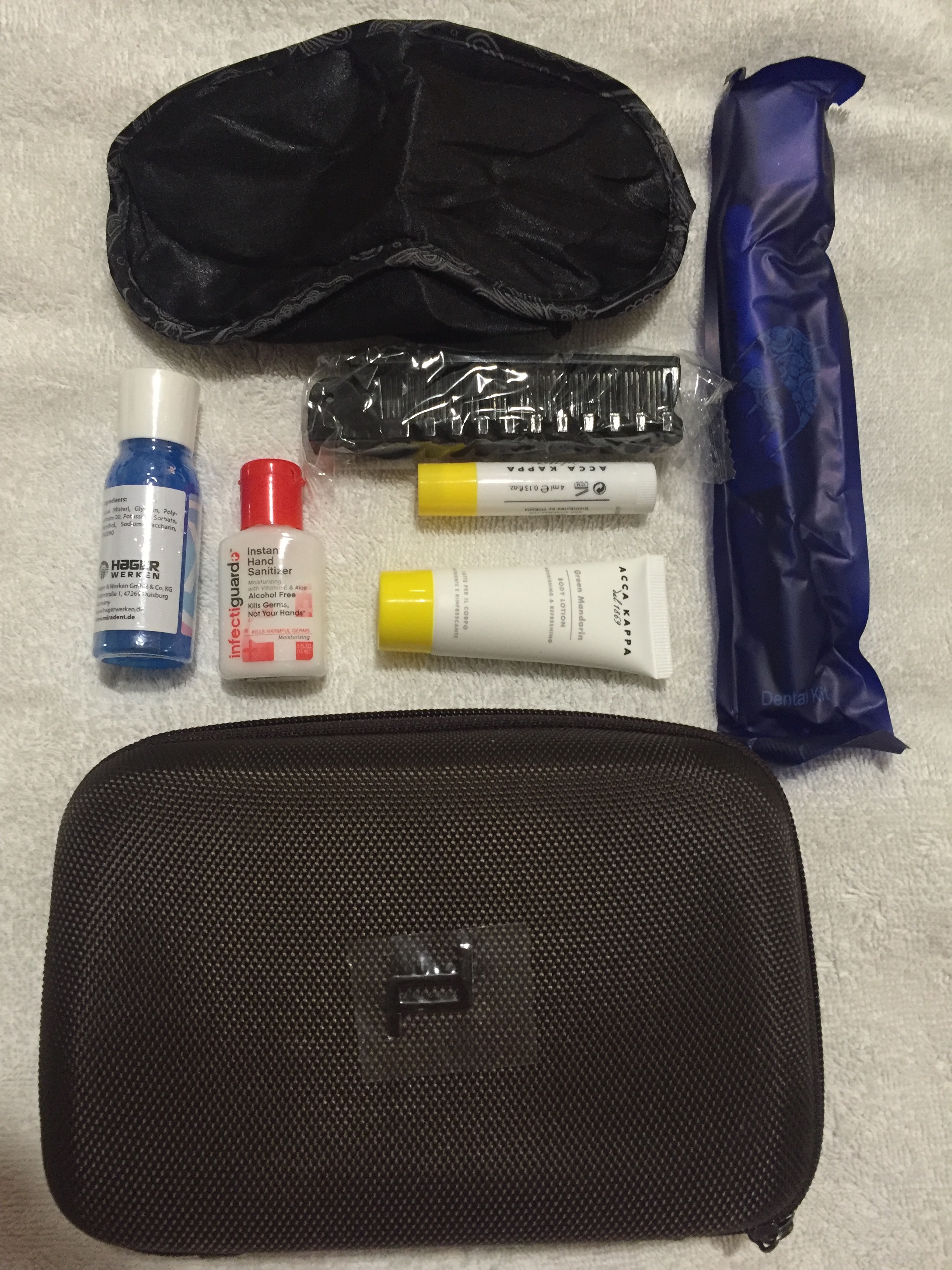
A tale of two toiletry bags. Emirates offers a brand experienceMalaysia Airlines does what it has to do
To qualify for a Gold card which is what I have, you need 50,000 Elite Miles or 50 Elite Sectors. If I’m not mistaken, you get 2 elite sectors for each business class flight and one for each economy class flight. This means I’ve travelled at least 25 times in business or 50 times in economy.
My most common route is KL to Kuching so let’s say for the sake of argument that all of those sectors were KL to Kuching. The fare to Kuching is about RM1,000 for business class so at a minimum I’ve spent RM25,000 to get those 50 elite sectors. Not a lot but if you add it to the other fares it starts to add up. To become a Platinum member I’d need to spend about RM65,000.
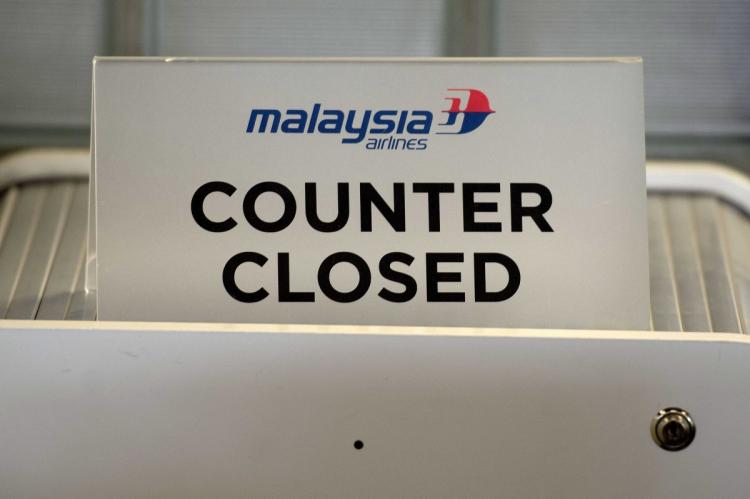
When I got to the Malaysia Airlines lounge I asked if I could get a cup of coffee. Long story short, the receptionist said I couldn’t and nor could a Platinum member however, and here’s the kicker, anyone can access the lounge for RM200 (US$50).
As you can imagine, this wound me up. Royally. I support a brand through the most difficult period of its history and encourage others to do so but I can’t get a cup of coffee in the lounge.
However, someone who has never flown the airline before and may never do so, can drop RM200 at the door and sit in the lounge as long as he likes.
That simply doesn’t make branding sense. Whilst the motivation for doing this is obvious, isn’t it a bit shortsighted? It was the last straw and I wrote this in my business class seat on an Emirates flight to London.
Sitting next to me was my wife and in economy were two of our kids. We spent about RM30,000 (US$7,500) on this trip but would have spent it on Malaysia Airlines. During the trip to London we met up with a group of about 20 Malaysian all of whom, bar two had flown in on Emirates.
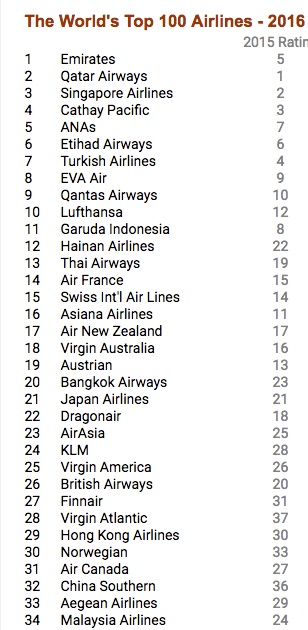
Now I’ve flown the ‘world’s best airline’ it’s going to pretty hard for Malaysia Airlines to win back my business. Even my wife who travels more than I do and is a true patriot and blindly loyal to Malaysia Airlines admits it’s going to be tough to go back.
You could argue that not allowing me to use the lounge for 10 minutes has cost the airline perhaps RM250,000 a year from my family. Every year for the next say 10 years. That’s RM2,500,000 of lost revenue.
Of the group we met, 2 travelled first class on Emirates, 10 travelled business class and the rest economy. How much has that cost Malaysia Airlines? And it doesn’t take into account anyone who reads this or listens to my rants offline. Was it worth losing all that business over RM200? Of course not.
The Chairman doesn’t understand what constitutes a brand and what is required to build a brand. He probably assumed a rebrand was a new name or logo or positioning statement implemented with a global advertising campaign pushed out across all media for as long as the budget would allow.
Whilst Malaysia Airlines is restructuring it’s brand is being sacrificed
Someone on the restructuring task force should have been able to educate the rest of the team on what constitutes a brand and its importance during the turnaround process. As mentioned already, emphasis should have been placed on delivering value to customers and not simply slashing costs.
More responsibility should have been given to those staff on the front line who were interfacing with the few customers still travelling on the airline.
The FFP should have been revamped immediately with personalized communications, ongoing engagement through unique dialogues to build an ecosystem of supporters willing to discuss the brand positively.
A concerted effort should have been placed on creating positivity about the airline. A transparent approach to building a new narrative, openness and humility should have been the foundation for any communications, not poorly thought out advertising campaigns.
Instead, with no one guiding the brand, much of the narrative around Malaysia Airlines has been negative, related to the 6,000 plus personnel that have been laid off and the replacement of modern aircraft with old, worn out planes.
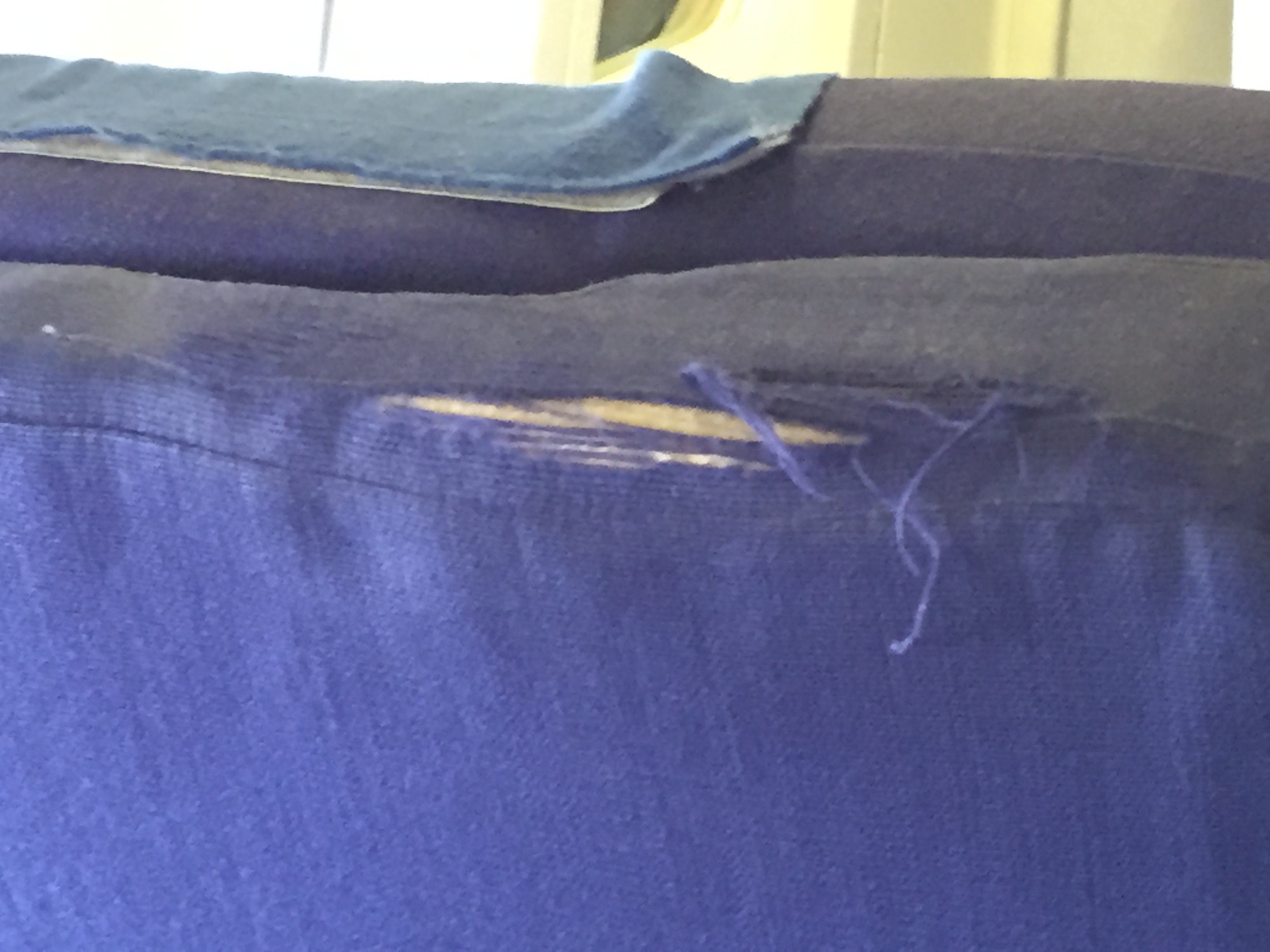
Pictures appeared online of masking tape used to fix breaks in the business class cabins of old 737s on routes that had normally been served by much newer aircraft.
Unlikely to inspire confidence in the Malaysia Airlines brand
Discussions and complaints raged about the lack of alcohol on flights of less than 3 hours and then the departure of the CEO after only a year or so of a 3 year contract generated more negativity. More recently, the new CEO made headlines for his comments about charges at terminals one and two.
Non stop negativity surrounding Malaysia Airlines is destroying the brand
Now I expect a lot of people reading this will say I’m being petty and besides, the airline is right. They need to have rules in place and if the front line staff were given freedom to make such decisions, it would be open to abuse.
Others will say that few airlines will let travellers into a lounge if they are not flying with the airline and they are probably right although many of them would let a frequent flyer use the lounge. Bbut that’s not the point because unlike the Malaysia Airlines brand, the majority of these airlines don’t have a broken brand.
But most importantly of all, branding today is about small steps, it’s about the small things that matter to customers. There is no more ‘big idea’ or other traditional mass media solution that speaks to everyone in the same way.
If you want to restore a broken brand you need to focus on many, many little things to make sure the brand get’s fixed quickly. Move the narrative away from negativity to positivity, from mass communictions to personalized collaboration.
Emirates is a classic example of an airline that understands branding. It spends a phenomenal amount of money building its brand. Not just through communications but in the experience and relationships.
Despite suggestions of a deeper issue at DXB, Emirates investments in its brand meant it had plenty of equity in the bank. Crucially, this meant there was little negative news to write about the carrier following the crash.
The event and the fall out was managed effectively and efficiently. Fortunately other than one brave fireman, there were no fatalities and the international media had little interest in building a story around the crash.
That’s one of the many benefits of real branding. The equity you have comes in handy when you need it. A week after the crash, it’s business as usual at Emirates.
Compare that to Malaysia Airlines, two years after the twin tragedies. It’s still struggling and continues to slash prices and the quality of the product.
Malaysia Airlines will return to profitability thanks to labour cuts, more old aircraft, new supplier deals and low oil prices. But unless it learns some harsh branding lessons and starts to invest in its brand, it is unlikely to stay profitable for very long and will struggle when it begins to increase fares.
Back in February 2016, Volvo VP of global marketing Thomas Andersson talked to marketing week about the new global vision for Volvo after the launch of their rather cliche ridden yet compelling emotive ad questioning the motivations of automotive manufacturers around the world.
You can read the full interview here. To be honest, I found it a bit confusing. Andersson says, “We want to have a strong social message as if we just went down the same old route as our rivals [with celebrity campaigns] we would just be one of many, we wouldn’t be adding anything new. I believe the public want brands to stand for something important.”
The interview ends with a reference to the brand’s association with Avicii. I don’t know what this is exactly but do associations with DJ’s communicate importance?
Another comment that got my attention was ““Social plays such an important role when it comes to early adopters. They want to engage with Volvo but if we don’t respond quickly they will lose interest and move on. There’s a huge opportunity for us to engage more quickly and be there when people want to talk to us, and these changes enable that to happen.”
Yet the above video was deemed ‘unlisted’ on Youtube and carried a warning to “Be considerate and think twice before sharing.” I’ve never seen that before and seems to go against the very point of posting a video on Youtube. Unsurprisingly then, the video has only been viewed 1,771 times. I was surprised though to see that there was no attempt by Volvo to respond to the three comments.
Not long after I came across this digital ad from Volvo here in Malaysia. I couldn’t make sense of the ad, can you?
What is the point of this ad?
The Volvo brand has been tinkered with too often and it’s good to see them getting back to their safety roots. I think there is mileage in this approach. But they need to join up the global dots quickly. Local implementation is good but it still needs to be monitored and linked back to the global strategy.







 brandconsultantasia.com