When we develop a social media strategy for a company we often have a hard time getting them to understand that there is a definite need for a well structured strategy with carefully thought out ideas and schedules. And once we’ve done that, we then have an even harder time explaining that because of it’s very dynamic nature, social media also requires the ability to have a nimble and loose approach to engagment. It’s almost a contradiction in terms.
But the ability to engage consumers and address certain issues ‘on the fly’ and in a human way is often more important and more effective than trying to push out corporate driven ideas and messages. Often, consumers will look at the way a company reacts to a unexpected situation and develop their perception of the brand based on that interaction.
A story broke today (Wednesday) about a young customer at Pret a Manger, the legendary UK sandwich bar that has grown from one outlet in London in 1984 to 374 outlets in 2015 and turnover of £500 million. Now Pret a Manger will have a social media team either in house or outsourced. That team will have a strategy but also SOPs for unique situations.
The customer purchased a ‘Chef’s special avocado and crayfish wrap’ from his local branch that he said, from the first bite was, “possibly the worst tasting item I have ever eaten. It tastes like my daughter’s sandpit.”
He went on Twitter and told the company how unhappy he was with his lunch and they responded immediately with an offer (after taking the discussion out of the public domain and into direct messages) of a free lunch as compensation.
The right people in the right place can do wonders for your brand
Impressed, he congratulated them on their service and shot off a text that was apparently a reference to a Jay Z and Kanye West song about Paris.
Pret got it immediately and responded with a pun of a Jay Z lyric from his Problems song. The customer then came back again, this time with a play on Silento lyrics which Pret responded to using a play of the Weeknd’s ‘I can’t feel my face’ song.
And so it went on for about two hours, with references to Taylor Swift, Notorious BIG, Dizzee Rascal and finally Adele.
The story was taken up by the national press in the UK with both tabloids and serious papers running stories that reached millions of British consumers in a very short time and hundreds of them commented on the issue or shared it across Facebook, Twitter and other platforms, thereby increasing the positive narrative about the brand. And all from a negative experience.
In addition to the ability of social media to cover many traditional roles, this is a great example of why it is important to have the right people with the right authority who understand the organisation’s values responsible for the brand.
Other lessons to be learned from this little exchange include
1) A humanized approach works on social media. Don’t try to be a corporation, it’s the wrong place
2) Know when to go with the flow. In other words, don’t do social, be social
3) Your customers generally have good intentions. Be nice and they’ll be nice to you
4) A sense of humour goes a long way on social media. Just like in real life, which social media is
5) There really is something called a free lunch. Well this time anyway
6) A structured social media strategy is important but knowing your contemporary music is a must. Presuming you have 2 hours to kill and your boss isn’t around
7) Social media has a reach traditional media can only dream about. So why are you still putting all your money into traditional media?
8) Who needs advertising? Seriously, who does?
9) The right social media approach gets instant results. Are you using the right model?
10) In the right hands, social media is an effective sales/marketing/advertising/customer service/retention/awareness tool. Is your social media in the right hands?
What’s the downside of this experience? There really isn’t one. The exposure was phenomenal and cost Pret nothing more than another sandwich and two hours of a social media team members time. A bit of creativity from the social media team generated more effective brand exposure than any billboard, TV or print ad could ever do. And for a fraction of the cost.
What I’m interested to see is how Pret a Manger leverages the experience going forward. If I hear anything I’ll let you know.
We’re into December 2015 and this is an auspicious month. But it is not just auspicious because of the holidays, it will be remembered as the month Malaysia Airlines launched its new brand.
You only need to look at recent images of the Malaysia airlines CEO Christoph Mueller to see how stressful it is cutting 7,000 jobs from a bloated workforce, reducing the number of suppliers from 20,000, (yes 20,000) to an industry average of around 2,500, renegotiating sweetheart deals such as the one with the caterer and changing the focus of the carrier from a global one to a regional one.
The strain is evident on the face of Malaysia Airlines CEO Christoph Mueller
But there is plenty of good news for Mr Mueller and the industry. Global passenger traffic is up 6% this year and long term, Airbus predicts the Asia Pacific region will lead the world in air traffic by 2034 with 41% of all passengers.
Meanwhile, aviation fuel, which accounts for anything from 40% to 55% of an airline’s operating cost is down more than 40% year on year. And as this saving doesn’t appear to have been passed onto passengers, Malaysia Airlines could make a profit earlier than the predicted 2018.
So with huge reductions in the cost of operations, improved efficiencies and a new brand, things are looking up for MAB. But the road to the new brand has been uneven. Reuters announced in late May 2015 that a new name, livery and rebrand would be unveiled in June 2015. This didn’t happen.
The company did change its name from Malaysia Airline System Bhd to Malaysia Airlines Bhd and this was reported by some quarters as a rebrand but it’s not. It’s actually the company’s fifth name change and besides, the company continues to be known as Malaysia Airlines.
Most recently, the CEO of Malaysia Airlines stated, “The entire brand needs a ‘refresh’ and will be like a start up with a new culture, values and ideas.” That’s more like it.
He also admitted that the airline had “fallen behind in the past three years and the rebrand would be much more than a new name and coat of paint”. He said the focus would be on ‘making the customer experience change’. OK, now we’re getting somewhere. All the talk of logos, image and refreshes was beginning to concern me.
Let’s hope the new cabin upgrades include domestic business class
According to Mueller, from December 2015 the airline, “will begin installing new cabin seating and improving inflight entertainment, customer service and on time performance. New technology, lounge concepts and catering would be introduced and the uniforms may change.”
Now we’re cooking with gas and I’m excited because this is more like branding and these changes are long overdue. Some of the planes I’ve flown recently, from the B737-800 to the A380 have looked tired and the business class lounge at KLIA is more like a cafeteria.
He’s banking on the new product improvements to renew customer confidence and trust in the brand. But while these upgrades are important, it will take more than a new lounge, new seating and new equipment to revive the brand. After all, these changes will only bring the brand back up to speed with the rest of the industry.
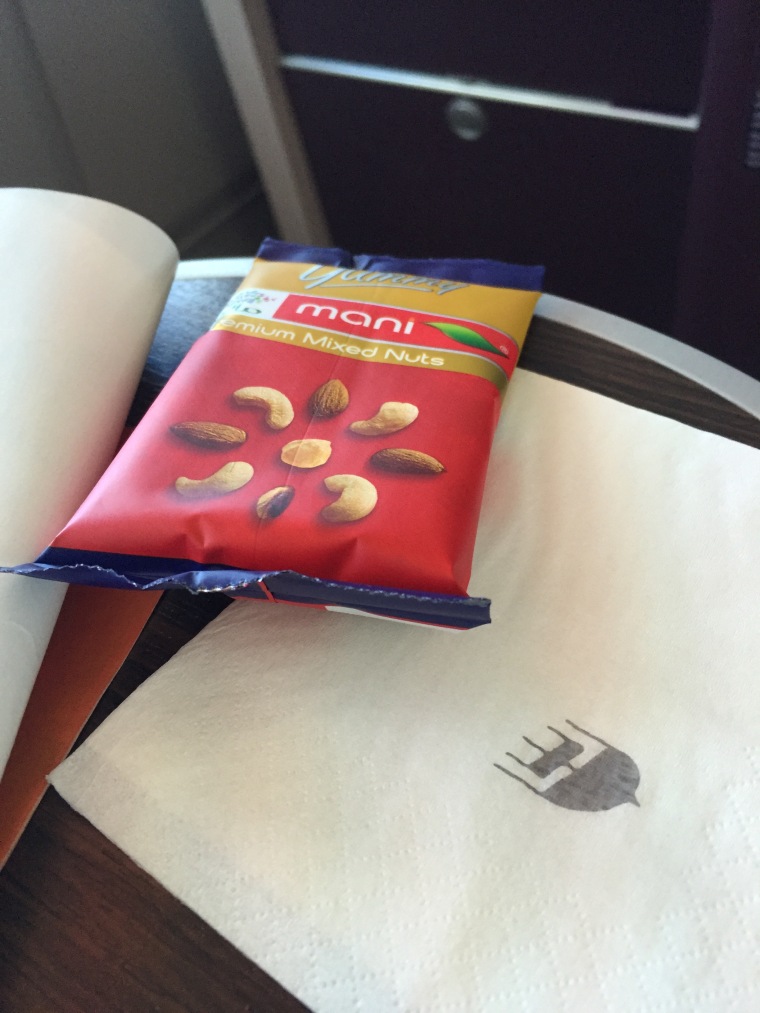
The current snack offering to Malaysia Airlines business class passengers on the A380
Branding success in the aviation business comes with a number of small successes at key touch points in the customer journey. And these successes are built on delivering value on the customer’s terms.
Nowadays that journey begins not with an advertisement but with the customer discovering the brand, most often online or, in the case of the lucrative but undervalued existing customer during the relationship that the airline builds with the customer once they have finished their journey.
Emirates A380 business class. It’s all about the experience
At every step of the way, those experiences involve interactions with personnel that know how to represent the brand and deliver that value.
Having been a customer of Malaysia Airlines for over 21 years, and having flown nearly 100 times on the carrier since MH370 I can say, with some authority that the majority of staff don’t understand branding and the role each of them has in the success of the brand.
It’s not their fault because years of mismanagement have inculcated the ‘tidak apa’ (Don’t care) culture across the organisation. It’s not that the airline or its people are bad, it’s just that it has been driven into the ground in an attempt to milk it for every penny. And this has created a sense of every man for himself.
The mismanagement has created an organizational culture that lacks the required values. All of its processes, attitudes and systems have evolved to do the bare minimum required to get by. Recently, in an attempt to try and stem the hemorrhaging with the layoffs and supplier renegotiations, morale has hit rock bottom and the company is hanging even further over the precipice.
So will the rebrand make a difference? We’ll have to wait and see. My concern is that it is going to be advertising and promotion driven. A ‘big idea’ will be created and pushed out across the world in a massive advertising blitz that will make a big splash before being lost in all the noise.
We’ve seen this approach before and it doesn’t work. In an era when delivering value to customers has become the norm, Malaysia Airlines’ seems to be struggling to come to terms with the new branding order.
Numerous personal experiences, countless anecdotes and negative reviews, comments and discussions on and offline talk about the airline not caring or negative interactions with staff.
In an era when customers not companies define brands, and they define those brands based on the economic, experiential and emotional value those brands deliver to them, the rebranding of Malaysia Airlines will be successful only if the firm gets to know its customers and staff are primed to deliver consistent, knowledgeable, exceptional, personalised engagement with each of the very diverse audiences.
It maybe that Mr Mueller doesn’t want to go this route. That the investment will be too much and his ‘start up’ will be a glorified low cost carrier masquerading as a national carrier. The ramifications of such a move on the Malaysia Nation brand will be substantial and only negative. Let’s hope that’s not the plan.
I prefer to remain positive. Today is December 1st 2015. The country and the world is watching and waiting for the new brand. I hope they get it right. My next flight on Malaysia Airlines is on December 8th. I’ll let you know if anything has changed.
There’s an ‘ad’ for Aston Martin cars doing the rounds on Facebook in Malaysia. A lot of men, and probably a few girls are salivating at the image of a scantily dressed, leggy woman leaning against a counter in a kitchen.
The caption with the ad says “Aston Martin’s newest advertisement for pre-owned cars” and the actual tagline is “You know your not the first but do you care?” Followed by the Aston Martin logo and name.
Not a real Aston Martin ad
It’s a great looking ad and appears genuine. However, just after the Aston Martin name are the words ‘PRE OWED.” Now this could be an extension of the gimmick or it could be slack proof reading but that’s not the case.
The truth is it’s a spoof. This image originally went viral back in early 2013 and was featured on an unofficial Aston Martin blog. What surprised me was the response of Aston Martin’s lawyers who wrote to the owner and asked him to take down the image.
In the social economy, this sort of earned media – word of mouth and viral mentions, shares, reposts and content created as a sort of homage to the brand is gold dust for savvy brands. These brands realise they can no longer control the message so encourage users to develop their own content and share it across the ecosystem. This is how a brand’s narrative develops. And to be honest, I think the discussion this ad created sits nicely with the Aston Martin Brand.
Predictably, the comments in response to the lawyer’s letter were not very complimentary and I’m happy to say that Aston Martin wrote to the blog owner apologizing for the snotty legal letter.
A real BMW ad
For the record, the same concept and tagline was used before, back in 2009 by BMW as a campaign to market their premium selection used cars in Greece and before that by a Belgium company called Nearly New Cars.
Luxury brands, especially those with significant exposure to China have had a tough 2015. Swatch group annouced a 20% drop in 1H2015 profit whilst Prada saw a 25% drop in its 1st half profits, citing a slump in demand from China and Hong Kong. Jaguar Land Rover sales in China have fallen 20% in 2015 and Maserati closed its Beijing financial street showroom.
Growth in Asia was essentially driven by opening more stores, filling them with a lot of stock and mass advertising. On the whole, luxury brands ignored or at best paid lip service to digital.
This was a huge mistake as Asia’s e-commerce market is now worth US$525bn in online sales and is growing at 25% per annum. This article in CMO magazine that I contributed to, explores what went wrong and what luxury brands need to do to engage Asian consumers online.
Flying into Kuching this morning on Malaysia Airlines the haze was so bad the pilot aborted the landing and went around again. The same thing happened last week. The haze isn’t MAS MAB fault but it has a significant impact on its brand.
Last week, the pilot came on the PA and explained the problem, reassuring everyone with his confidence and authority. This time the flight deck was silent. So we the passengers are sitting there wondering why the landing was aborted.
Without any information and aware of the carriers recent issues, we start asking ourselves, “Is there a problem with the aircraft?” or “Perhaps the airport is closed?” In that case, “Do we have enough fuel to go elsewhere?” “Are the pilot and co-pilot ill or even conscious?” An intimidating situation such as this one can have a negative effect on the brand. Yet at the same time, it can be part of the rebranding process.
It’s the little things that make or break a brand. Especially one that is already broken. A simple 30 second explanation was all that was needed to calm everyone down and earn a little bit of respect. Communication is a key part of branding. Successful brands have an emotional connection with consumers.
MAB has a credibility problem and that credibility problem needs to be fixed. One of the problems is the lack of an emotional connection. How can consumers connect with a brand that doesn’t communicate? If there is no connection the rebrand will fail. It certainly won’t be fixed with pressing the flesh, a new name, new livery, new advertising and a new logo.
It’ll be fixed by creating an emotional connection with customers and delivering economic, experiential and emotional value to those consumers.
I wrote a blog post recently about print ads and how I was convinced that print advertising was in decline. You can read the post here. I also shared the post on the Advertising Copywriting group on Linkedin and it generated a lot of comment, most of it ridiculing my stand. You can see the thread here.
A lot of people, especially those from the advertising industry were not very happy with what I wrote. And some of them quoted, rather predictably the mighty advertisers Coca Cola and McDonalds. Yet despite spending US$1 billion on advertising in 2014, McDonalds profits were down 15%! And are now lower than they were 5 years ago. Samsung spent US$14 billion on marketing in 2014 and suffered 3 straight quarters of losses for the first time ever.
And I asked how much have Nokia and Blackberry spent on advertising over the last 10 years to get them to the brink of extinction?
Others looked at the quality of ads, with one copywriter stating, “Quite frankly, the quality of most print ads is abominable. They are either badly written or designed, or so “avante garde” that the company’s name and logo are hidden.”
And this is a huge problem in South East Asia where, on the whole what constitutes a good ad – a strong headline or call to action, unique image, and well written copy is often lost in the charge for fast turnaround of materials, low budgets and the habit of marketing professionals not challenging bosses, business owners or even their spouses!
The results can often be catastrophic as immediately forgetable ads that fail to connect with target markets, don’t deliver the right information, are too confusing or worse, look like other ads appear across newspapers and magazines.
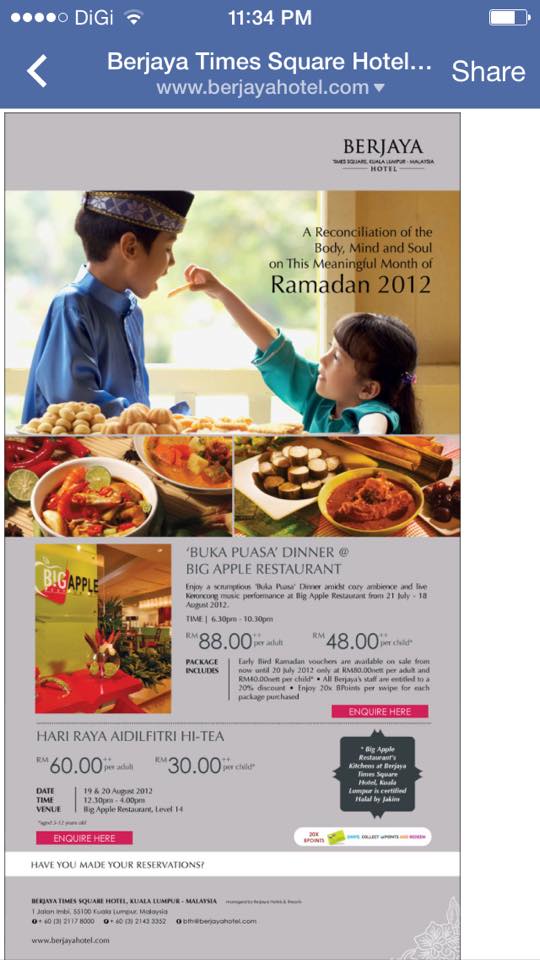
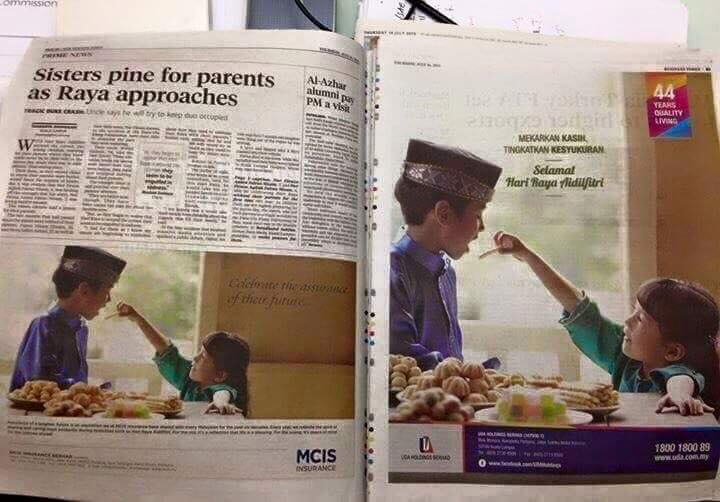
The following ads illustrate the approach to advertising in Malaysia over five years of five different companies from telecommunications, hospitality and insurance.
Share or reconnect?
Much of the copy is weak, the messages, if there are any are obscure or try to do too much and the calls to action, if they can be called that, don’t make sense and there are more than one!
But most tragic of all, they have all used the same image to try and connect with their audience.
These ads will accomplish little and are a waste of money. They have very little value for the company and will most likely be ignored by consumers. I suspect they were done in house and no doubt the image is a free download from an image bank.
I cannot imagine any professional marketing director allowing these ads to go out so one can only assume they were approved by bosses who don’t know the importance of a good ad.
Firms wonder why advertising doesn’t work and question why they should have to pay for advertising agencies. Well this sort of advertising is not the solution. Until firms appreciate the importance of a good ad, they would be better off throwing money down a drain.
Memac Ogilvy Dubai and FP7/DXB Dubai, two top tier advertising agencies in the Middle East have come up with a novel idea to sell expensive sugary water.
They’ve taken a group of strangers, sat them around a dinner table in a dark room and got them to describe themselves to each other and then asked them to guess what they look like and the type of character they are.
The video has been viewed more than 8 million times on Youtube and has got over 11,000 Likes in a week.
When the lights come on and the characters are revealed, the results are predictable. And then each participant is invited to reach under the table and take out a box.
As the camera zooms into the box it is opened and we see a (drum roll) box of limited edition Coke cans without the brand name but instead the caption “Labels are for cans, not for people” printed on the can.
Throughout Ramadhan, Coca Cola bottles and cans with this caption and not the brand name will be distributed at events across the Middle East.
It’s neat and is part of Coca Cola’s global ‘Let’s take an extra second’ campaign that encourages people to stop and get to know each other. Coke has seen a rise in sales, certainly in the US but I have a sneaking suspicion that the long term outlook for sugary water isn’t bullish. Nice touch though, what do you think?
2 days after sending out termination letters to 6,000 staff, MAS is advertising for new staffThere’s a saying in our company that if a client’s employees are happy then that happiness will show in the way those employees interact with prospects and customers, thereby improving their experiences and the reputation of the brand.
When working on an Internal brand audit we’ll take a long hard look at the hiring and firing process and often make small but effective changes to the process. This is particularly so when looking at how firms fire people because unhappy staff often have a grudge to bear when they are let go and in a social media world this can be damaging.
Malaysia Airlines is already a damaged brand which is why it has embarked on a restructuring exercise that includes more than 6,000 job cuts. A lot of effort is being put into helping those staff reintegrate themselves back into the economy but this is not simply about getting them another job.
Keeping all those ex staff after they have left MAS will require very skillful communications and an integrated effort by all departments concerned. The news that 2 days after 6,000 staff were sent their termination letters, the MAS website is still recruiting cabin crew and suggesting there are other vacancies is a huge mistake on the part of those responsible for the brand.
There is no room for error in the restructuring of Malaysia’s finest, most high profile global brand.
Advertising continues to lose its credibility with consumers and brands and as a result has to resort to doing whatever it can to grab our attention. There is an advertising agency with an office on the Federal Highway in Malaysia that has the tagline, “Truth well told” but the truth is the truth is rarely explored in advertising today.
There was a time when ads made sense. When ads gave us some information about a product that made us want to learn more or even test or buy the product. Back in the day, we used to see an ad and scramble for a pen and paper to write the brand name down in the hope that when we went shopping we would be able to find the brand on a shelf or in a showroom.
Nowadays, ads seem to be created for awards panels or to impress us with their creativity, the cleverness of the photography, the humour, the beauty of the models, their entertainment value.
This latest ad from Coco De Mer (I think they are a lingerie brand but they might be a brothel, advertising agency, soft porn company or high class call girl agency) was rated ad of the day by respected advertising publication adweek.
Walter Campbell, the creator of the ad is quoted as saying, “The erotic doesn’t get the same overt attention as everything else on the cultural menu, so we created a film to surprise, excite and most importantly, encourage people to delve that little bit deeper into their fantasies—to reignite that connection.”
Sorry, but that’s not what advertising is about. Advertising should be credible, it should be useful to me, it should encourage me to learn about a product or service, show how it is relevant to me and how it can be useful to me and if it features people like me – testimonials are even better – I might buy into it.
According to this report, 84% of Millennials don’t trust traditional advertising and it is probably ads like the one above that have contributed to this lack of trust. This lack of trust is causing a crisis in advertising because trust is key.
Until advertising accepts this and gets back to basics, the crisis in advertising will continue and that trust will be lost, perhaps for ever.
My book “Stop advertising and start branding” will be out soon. To register for an early copy, please contact me here or on Twitter @brandconsultant
If you are responsible for a country or destination brand, read on.
As cheap air travel and the package tour (as well as the devaluation of the Spanish Peseta and the abolition of currency controls in the UK) helped jump start international travel in the 1960s, 1970s and 1980s, the world was still a fairly predictable place and countries were, on the whole inhabited mainly by citizens of that country and not by the multicultural citizens living in most cities today.
Moreover, due to the social and economic structure of Western countries, consumers were only just beginning to have disposable income that allowed them to experience the concept of leisure time.
At the same time, mass media was becoming increasingly influential as consumers purchased more and more TVs and radios.
So, with more disposable income, more leisure time and the establishment of commercial television, it was now possible to reach large swathes of a population reasonably quickly and relatively inexpensively.
In this environment countries put their faith in creativity to build brands, hoping that an exotic image, tagline or promotion would resonate with prospects and increase visitor arrivals.
And generally, because of the cultural and social predictability of countries, the same message could be used to communicate with everyone.
Moreover, with few conduits to increasingly wealthy consumers who had more disposable income than ever before and with limited competition in the market place, this type of creative driven branding often raised the profile of countries enough to attract visitors.
Countries and destinations such as Spain, the UK, Kenya, Florida, Greece, The Algarve, Singapore and Italy as well as many other destinations used this approach. And in this mass market economy, mass media – TV, Print, Outdoor, with its huge reach, was the logical vehicle to enhance the impact of creative-driven branding with reach and repetition.
Early tourism ads worked because markets were similar, new, eager and easy to reach
But that mass-market economy no longer exists. Today’s consumers are increasingly overwhelmed with those creative images, taglines and promotions. And many of the messages have become so similar that it is virtually impossible to differentiate one from another. And of course, consumers have also become fed up with countries failing to deliver on promises made.
Despite this new world order, countries, agencies and consultants continue to try and build country brands by using ‘cool’ advertising, creative or symbolic logo’s with pretty colours, catchy taglines and so on.
But these activities are nothing more than advertising campaigns and do very little to build a nation brand. And even the one’s that have made us sit up, take notice and seek more information are more often than not soon forgotten or overtaken by a new campaign from a competitor destination or the recommendation of a friend.
But most worrying of all, these advertising campaigns lull countries into a false sense of security. ‘Visitor arrivals are up so everything is good in the world’. The problem is that an advertising campaign might draw the attention of visitors to a destination but it doesn’t build a destination brand.
An advertising campaign may be important but it is part of what should be a well researched and planned brand strategy that takes into account all brand related activities.
These include internal buy in and a thorough understanding of external stakeholder requirements for value and other elements such as content development, social media, PR and most important of all for a country, crisis management. Traditional communications pushed out across traditional and digital media, may still have a role to play, but they are not a total solution.
Sadly, too many countries and destinations have short cut the process to try and get their ads out quickly. This has resulted in the demise of the brand strategy. Yet failure to invest in such a brand strategy can be detrimental to the long term success of the brand.
A case in point. The Maldives has invested more than US$10 million in the last three years on advertising itself as a luxury destination. But in 2012, political turmoil saw arrivals from the lucrative European markets fall, with the UK registering a 12.2% drop. If it weren’t for a sharp rise in low yield arrivals from China, the Maldives would probably have registered a major drop in arrivals.
To the detriment of the country, participants or perhaps victims of the political turmoil in the Maldives called for a boycott of the tourism business and attempts by the new government to develop the tourism business are constantly thwarted by opponents.
One example was when the Twitter hashtag #sunnysideoflife (the official tagline) was hijacked and brochures entitled ‘The cloudy side of life’ threw scorn on tourism players and drew the readers attention to human rights abuses and police brutality against Maldivians.
This year has seen further negative press after a 15 year old girl raped by her stepfather and sexually abused by other men was sentenced to 100 lashes for having pre marital sex.
So far the Maldives government hasn’t responded, leading one to suspect they don’t have a brand strategy with a crisis plan to deal with such a situation. What is certainly true is that this complicated issue will not be solved with an advertising campaign.
In 2012 Jakarta initiated an advertising campaign across Asia in an attempt to attract visitors to the capital and largest city in Indonesia. The campaign was poorly planned, conceived and executed. You can read more about the Jakarta campaign here.
Based on the advertising campaign and the website, it is fairly safe to assume these two elements were not part of a brand strategy.
Does this ad make you want to get more information on Jakarta?Lack of integration and poor content suggests little or no planning
India is famous for its ‘Incredible India’ campaign launched in 2002. By 2009, India was spending US$200 million advertising the country. This iconic advertising campaign is still going strong and in November 2012 at the World Travel Market in London and to great fanfare, India announced a new advertising campaign headlined, “Find what you seek”.
Early ‘incredible India’ ads – excellent execution
Officially launched by the new Indian minister of tourism at a hotel in London in front of 400 guests, the new Incredible India campaign highlighted to consumers ‘that they will find whatever they are looking for from a holiday in India.’
It was also announced at the launch event that the goal of the campaign is to increase international arrivals by 12% annual till 2016.
Little more than a month later, in December 2012 in Delhi a woman was brutally gang raped and left for dead on a public bus. The story made headlines around the world.
And then in March 2013, a Swiss woman was gang raped whilst on a cycling tour of Madhya Pradesh and soon after, a British woman was attacked in Delhi and only avoided further suffering after jumping from a hotel window to escape.
Within a matter of weeks, tour operators were reporting a 35% cancellation rate from women and a 25% drop in all arrivals with multiple cancellations from the lucrative markets of Australia, the UK, Canada and the United States.
Much of the outrage toward these events is related to the treatment of woman in India and numerous stories that would not normally feature on international news are now making headlines globally including the stoning, arrests and murder of Indian women. None of these events will be addressed by advertising.
If you are responsible for developing a Nation, country or destination brand, don’t allow yourself to be lulled into a false sense of security over a ‘successful’ advertising and promotions campaign telling the world how great is your country or destination.
To build a strong brand amid increasing international competition and unforeseen circumstances that are carried across social media and possibly across mass media as well, destinations must have in place a well defined brand strategy that covers all potential scenarios and doesn’t just focus on communications.
A brand strategy has other benefits. Here are five more reasons for developing a brand strategy:
1) A brand strategy clearly defines the organisation values and promises and ensures stakeholders understand what is required of them to deliver on those promises and values. For a nation brand this internal branding is critical to the success of the brand.
2) Staying with the internal brand, lots of tourism boards and CVBs attend trade shows but if I had a pound for every time I’ve been to ITB or WTM and seen poorly trained personnel representing countries or states, I’d be a very wealthy man. Trade shows cost a lot of money. A brand strategy will ensure training occurs at the best possible time.
3) A brand strategy ensures the brand is ready for every eventuality, with a crisis plan to address issues such as those that have happened in India, the Maldives and most recently, Boston.
4) A brand strategy ensures all stakeholders are pulling in the same direction. If one state is targeting visitors at the same time as another state, resources are being wasted. A brand strategy will ensure integration and engagement, not individual tactics.
5) A brand strategy ensures time isn’t wasted on stand alone tactical initiatives implemented at the whim of a government servant or other person who should know better.
Far too many countries or destinations give the responsibility of building their brand to creative advertising agencies. These agencies are called advertising agencies for a reason. They do advertising.









 brandconsultantasia.com