British Airways promotion


One of the greatest branding success stories has to be British Airways, the blue riband aviation brand.

Recently the airline hired agency BBH to create a new campaign to explain the history of the company. The final work can be seen below

As part of their work, the agency chose a row of 747s at a terminal. Unfortunately not all the aircraft were BA 747s!

Never mind, the agency got the digital guys to put BA livery on the planes.

Unfortunately, they forgot to delete the serial code of the nearest aircraft which was actually a Virgin aircraft! Not clever, especially as Virgin is BA’s sworn enemy!

Fortunately, during an internal showing to staff, a hawk eyed engineer spotted the offending information and alerted the marketing department!

Ironically, the director, Frederic Planchon is renown for his attention to detail!

You can see the edited shot about 56 seconds into what is in my opinion, a beautifully crafted video.

5 Essential Rules for Social Media and your small business brand


The original version of this article first appeared in the August 26th 2011 print edition of The Malaysian Reserve.

It is not a question of if you will stick your corporate toes in the social media waters, but when. Whether you like it or not, social media is taking the world of business by storm.

In a recent survey by Nielsen, a research company 73% of connected consumers in Indonesia, Malaysia, the Philippines, Singapore, Thailand and Vietnam agreed they had been influenced by advertisements on social media.

Firms that continue to believe that social media is a fad or fun or not for business are only doing one thing, giving their competitors an advantage.

Research from Hubspot and MSN shows that companies with a social media brand strategy are seeing a significant increase in awareness, traffic to websites, search engine rankings, and social-media-generated qualified leads, perhaps the most important element of all. Moreover, statistics increasingly show that more and more people like to do business with businesses that have a strong social media presence.

But social media is much more than setting up a Twitter account or starting a Facebook page. Social media activities must be elements of your brand strategy in the same way as advertising, direct mail, email, PR are. The problem with these traditional activities is that they are reactive, you put it out there and wait for something to happen. If nothing happens you spend more money on another idea. If that doesn’t work you try something else.

A social media strategy, if done properly is proactive and can actually offer you all the things your traditional campaign can’t offer you – accountability, retention, a measureable return on investment, effectiveness tracking and more. Data from a 2010 report by Nielsen, a research company showed that social media had better results than traditional marketing activities.

So how should a small business enter the world of social media? The following five rules are relevant to any firm that seeks to develop a contemporary platform to raise awareness and be heard over the noise, acquire customers, increase sales and better serve customers which will in turn ensure customers are retained and not released to the competition.

1. Social media is not a technology issue it is relational and requires cultural changes within organizations.

The social media space is not the place for people with a traditional marketing mindset. Social media is exactly that, SOCIAL and requires you to use social skills to build rapport with consumers so that they may eventually become prospects, customers and possible evangelists. Trying to use a traditional marketing approach in social media and using a hard sell and trying to push a product or service in social media will damage your reputation.

2. Identify who in your organization will be responsible for your social media strategy.
You will need to have a social media strategy and it will have to be integrated with your brand strategy. If you don’t already have someone, you must be looking to hire a social media manager who reports directly to the CEO and not to a marketing or sales director. And because social media is incredibly dynamic and changes are happening 24/7, you are going to have to be prepared to give this person a lot of autonomy to interact with consumers and make decisions, some of which will be financial, that directly impact the relationship with prospects and customers.

In the old days of mass advertising across mass media you had control of the messages related to your brand. Social media is fluid, consumer driven and places the control of your brand in the hands of consumers. Accept that you have to relinquish control.

3. Social media is not a technical initiative, it is a relational initiative
Relationships don’t stop for an hour at lunchtime, at 5pm or over the weekend and nor does social media. Success in social media takes time as firms seek to build the credibility needed for consumers to trust them. Make sure posts are made daily and questions or requests attended to immediately even if raised over the weekend.

Although your social media strategy is not a technical initiative, social media personel need to have at least an understanding of related technology such as Google Analytics, Content Management Systems (like WordPress), and third party social media software like Tweetdeck and HootSuite – so as to assign metrics by which to assess and respond quickly.

4. Define your core audience and messages for those audiences.
Traditional marketing attempts to be all things to all people. This model won’t work on social media. If you intend to educate, identify who you want to educate and do so but don’t try to sell to them. If you have targeted them effectively, they will take the initiative and seek out more information about your organization and how you can provide value to them.

5. Social media is not a volume business
Someone once said that volume is vanity, value is sanity. What this means is that firms should look to increase profitability not sales. Used properly, social media can help you reduce your cost of acquisition and increase profitability. Don’t set out trying to have lots of followers who never buy your product or service. A single follower or friend who is engaged and interacts with you is worth more than a thousand followers or friends who only drop by once a year.

Social media is participatory and is an efficient tool for your organization to learn, exchange and build professional networks so take time to build individual relationships. Once you have a follower or friend or contact, you have their permission to interact with them in a consultative manner. It is not about broadcasting messages but holding conversations.

When a consumer gives an organization permission to speak to them, it is because they like what the organization is saying and want to hear more of it. An organization must engage, gain trust and then solve the problem. But be warned, this means that the organization’s messaging must be relevant just about 100% of the time.

This may take time and you may find it difficult to open up, especially if you and your marketing department, educated on a diet of broadcasting corporate driven messages to as many people as possible, are not used to sharing information, especially with prospects.

However, get it right and you will find that you build relationships and followers quickly, and inexpensively and this will lead to increased sales and more loyal customers who will not only spend more with you, they will share their experiences with your brand with their friends.

Repositioning won’t solve Nokia’s problems


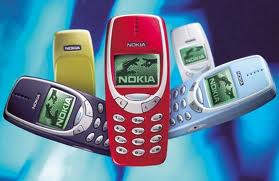
In 2002, Nokia was Britain’s number two super brand; by 2010 it was 89th. But Nokia doesn’t have a branding problem.

Although I no longer use a Nokia, I still have some brand loyalty and track the performance of the Finnish mobile phone behemoth and although it’s global share of mobile sales dropped below 30% for the first time since 1999, it still sold 450 million handsets in 2010, outselling Apple 10 to one.

10 years ago, in 2000, Nokia sold 128 million handsets out of a total of 405 million, giving it just under 32% of the market and with margins of 20%, Nokia was well placed in the sector as Motorola and Ericsson struggled.
By the end of 2003, Nokia had increased its share of the global handset market to 34.6%. By the end of the first quarter, 2004, that share had slipped to 28.4%. This 20% drop in market share was despite a year-over-year increase of mobile shipments of 29.3%. Nokia found itself in this potentially dangerous position because it was slow to introduce clamshell style phones and colour displays.

Fast forward to 2007 and Nokia was once again humiliating competitors in the handset stakes, and in particular Motorola. In the first quarter of 2007, Nokia shipped 92 million units, a 20.6% growth compared with Motorola’s 47.5 million units shipped during the same period. 2007 also saw handset sales break through the one billion units level with a total of 1.17 units sold, a 16% increase over the 990 million phones sold in 2006.

Nokia’s global market share climbed to 38% whilst Motorola’s slumped to a dismal 13%. Analysts thought at the time that Nokia’s share of the global market could climb to an all-time high of 40% by the end of 2007.

On 2nd August of that year, Nokia announced an astonishing 57% increase in second quarter operating profits to US$3.2 billion. And when the definitive metric for measuring brands is profitability, Nokia sizzled again with operating margins for the combined mobile device business of 20.9%. The company also had US$9.5 billion in cash and no debt.

But 2007 saw the launch of the iPhone and suddenly the mobile phone became a smartphone. By the third quarter of 2007 the iPhone had 20% of the smartphone market, way behind RIM with the Blackberry at 39% but more than the smartphone sales of Motorola, Nokia and Palm combined.

By 2010 Nokia’s market share had slid from a 36.4 percent share in 2009 to 28.9%. Nokia still sells more mobile phones than any other company but consumers no longer want mobile phones, they want smartphones.

And at the heart of the smartphone is the operating system. By January 2011, Google’s Android, and its Chinese versions Tapas and OMS had become the top smartphone platform in the world with an 888% year-over-year growth.

Nokia’s Symbian system is a very close second with Research in Motion a distant third and Apple’s iOS way back in fourth. Microsoft’s mobile operating system barely warrants a mention with 4% of the market.

Under pressure in a market it once dominated and essentially still does, Nokia has panicked. Realising the key to smartphone sales is the OS, it has mucked about with Symbian, a perfectly good OS with no more flaws than the iOS.

But because of the now huge size of the organisation, issues bought up during the testing of touch screens and browsers were often ignored.

Desperate, Nokia launched the N-Gage with too few poor quality games and terrible network connectivity for multiplayers, the phone was blown away by the PSP and DS.

Next came another disaster, the Ovi. Nokia’s answer to the iTunes Store was an unmitigated disaster. In 2007, Nokia restarted its touchscreen development after deciding in 2006 that touchscreens were essentially a gimmick.

This delay meant that the N95 and N97, both good smartphones in their own right and with email, music players, the Internet and GPS as well as a slide out Querty keyboard were supposed to compete with the cool iPhone.

Next up, the beautiful N8, launched in 3Q2010. Engineering porn in my opinion with a 12 megapixel camera used by professionals. But the N8 was outsold 6 to one in Europe and did even worse in the gadget hungry, fast growing Asian markets.

Then it tried a completely new Linux based OS called MeeGo but it’s corporate heart wasn’t in it and MeeGo only got a year.

Now, in what could be seen as a last throw of the dice, Nokia has teamed up with Microsoft and is launching the partnership with a US$112m global brand repositioning campaign, which will see the launch of its first phone running on the Windows 7 operating system in October 2011.

This is a big mistake. Microsoft’s Phone 7 was launched for Q4/2010 on about twelve handsets from a number of manufacturers. During the quarter it achieved a meagre 1.5 million sales, earning it about a 2% market share and worse than Windows Mobile which had 4%.

During the same period, the latest version of Symbian (the all new user-friendly touch screen version that powers the N8) was launched on 3 Nokia smartphones and sold 5 million units. All Symbian products sold a respectable 32 million units.

Although I don’t know the objectives of the six month reposition campaign, one assumes it is an attempt by Nokia to try and regain lost market share from rivals Android, Apple and Blackberry.

But this won’t happen because some ad agency or agencies have created a position that they intend to push out, no doubt primarily across traditional mass media because that’s where most of the eyes are supposed to be and it pays the highest commissions.

And I’m sure the same message will be communicated in all countries, irrespective of local cultures, smartphone habits and so on.

And of course there will also be a nod to digital and social media. And with US$100 million to play with there will no doubt be an attempt at a clever Old Spice type viral campaign.

But the problem is, Nokia’s issues cannot be solved with a communications campaign that will no doubt generate lots of interest but will not change the fact that the Windows OS is an unpopular OS.

Nokia doesn’t have a brand problem, it has an organisational problem that cannot be solved by a repositioning campaign.

Nokia products don’t come close to delivering the experience Android, RIM and Apple smartphone products offer. And that won’t change with seven. Especially as Nokia has had very little influence over the first Windows 7 devices.

And if you can’t offer a compelling experience, you won’t solve the problems Nokia has.

Nokia would be better off taking that US$100 million and giving it to the Symbian crew to improve what is almost a very good OS capable of competing with Android and iOS.

Effective email campaigns must be part of your brand strategy


You’ve probably never heard of unsolicited bulk Email (UBE) or for that matter, unsolicited commercial email (UCE) but you have of course heard of junk mail or spam, the more common moniker.

The earliest known spam was a message sent in 1978 and the earliest known commercial spam message was sent in March 1994. This latter event coincided with the opening up of the Internet and the amount of spam has grown exponentially since then and the forecast is that seven trillion spam messages will be sent in 2011, making up about 85% of all emails sent worldwide.

This constant carpet bombing of consumer inboxes with irrelevant messages has had a detrimental effect on email marketing and now, with the advent of social media, our belief and trust in email is wavering. Nevertheless, email is still an effective tool in the communications of any brand strategy. It can be used as a marketing, sales, retention and CRM tool and response rates to personalized emails have been reported to be as high as 62% although 2-4% is the average. Still impressive.

But it is critical for marketers to ensure that their emails are relevant to the target market, well written and succinct enough to gain the attention of the reader in the roughly three seconds they have before the reader hits the delete/spam button.

It is also critically important to ensure before the campaign begins, that you know what the purpose of the campaign is and, most important of all, that your database is clean and up to date.

I am constantly stunned at the amount of shockingly written, poorly thought out and irrelevant emails that land in my inbox. I’m equally stunned at the amount of times I receive the same email from the same organization.

For instance this email, from an organization that recently spent RM15 million (US$5 million) on a ‘rebranding’ exercise, is exclusively for Mastercard owners yet I don’t have a mastercard!

Furthermore, the email is addressed to ‘undisclosed recipients’ and contains no cover message or other form of personalization. Finally, to the detriment of the brand, it has been sent to me an incredible six times in less than a month!

Takaful Malaysia which refurbished its 13 platinum branches and outdoor signs and billboards during the rebranding exercise should have also looked at its communications processes and systems, including qualification, lead and list management and other elements. As its stated aim is to ‘make the company more appealing to the younger age group, it should also review its creatives! But I digress!

What should Takaful Malaysia and other companies, who are thinking of carrying out email campaigns do to ensure those email campaigns create leads and prospects rather than brand antagonists?

Here are 10 recommendations that will help them and others get the most out of email:

1. Target your message
It’s critical that the subject line grabs the attention of the reader and encourages them to open the email. The best way to do this is to personalize the subject line. The Takaful Malaysia subject was the name of the product. Few people buy products. A better option would have been “Can I help you protect your family?”

2. Segment your target markets
Keep list sizes to a manageable amount. Don’t send gazillions of messages and then be unable to respond to them in an acceptable time frame (24 hours). Segmenting your targets will stop this happening.

3. Target messages
Keeping list sizes to a manageable level will allow you to develop multiple messages for multiple segments, critical to successful tracking. There is no one-size-fits-all solution.

4. Use a Salutation
The whole point of the exercise is to get a response, not to make a sale. If you met someone at a convention, you wouldn’t start pitching to them the moment you are introduced and it is the same with an email campaign. Be contemporary, slightly informal and inviting. Start prospecting emails with a greeting and, depending on the product or service, the contact’s first or last name, such as “Dear Mr Smith” or “Hi Fatima.”

If you don’t have the first and last name, don’t send the email until you have the correct information. The majority of emails without a name will go straight to the trash folder.

5. Keep Your Email Short
Lay the content out so that it is easy to read and keep the first email short to ensure it is skimmed. You want the prospect to read the entire email but they won’t stick around for long so make it a fast, easy read.

Keep the email to three paragraphs of no more than three or four sentences. You can also close with a one-line sentence.

6. Track each segment within each campaign
One of the great advantages of email campaigns over traditional advertising campaigns is the ability to calculate an exact CROI (campaign return on investment).

But don’t limit your calculations to response and conversion rates. Depending on the goals of the campaign, track demographics, territories, consumer data, page visits, click-throughs, time spent on pages, and other elements. Use this information to influence future email campaigns with more efficient and effective content.

7. Have a hook
Business owners and C level executives are busier than ever. They don’t have time to waste so have an instant hook. We are in difficult economic times and businesses are looking to save money, especially small businesses so an obvious hook would be related to saving money for a business. Ensure content resonates with target markets.

8. Content is still king
Mention specific issues relevant to target segments. There is so much information available that it is easy to identify issues affecting segments. It may take a little more preparation but it will be worth it in the long term.

9. Don’t go overboard on design
I’ve received emails with video clips, multiple graphics, embedded links, audio and so on. These are all distracting and time consuming when opened on a mobile device at an airport. Keep it simple.

10. Email marketing should form part of a brand strategy
Many firms conduct email campaigns on a whim, without any real thought or planning. This is a bit like driving a Ferrari in first gear, the car does everything you want it to but is it getting the best out of the car?

Incorporate your email campaigns into your brand strategy. Identify your quiet periods and implement an email campaign to boost sales in that period.

Email is still the most effective way to reach a lot of new prospects quickly and inexpensively. Email campaigns also have impressive response rates.

But email campaigns, carried out in an amateur way, can have a negative effect on your brand. However, if you follow these email best practices, prospects will take notice and respond, increasing your sales and building your brand.

Why the iPad will fail – Part 3


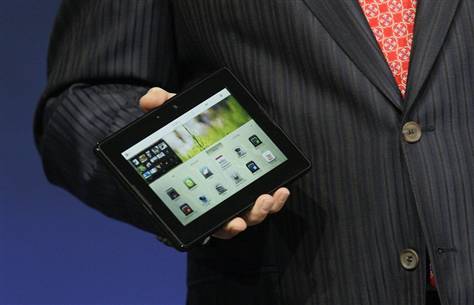
The announcement yesterday by RIM that it will release a tablet device in early 2011 may be the death knell for the iPad. The new device comes with a 7-inch multi touch touchscreen and a new operating system developed by newly acquired developer QNX.

Called the PlayBook (I’m not sure why they came up with such a lame name), BlackBerry is calling it “the first professional tablet”, and is marketing it as “an incredible gaming platform for publishers and the players”.

Whilst the choice of name for a business tool that is for gamers and publishers is a little confusing, the hardware does a lot of things the iPad doesn’t.

For a start, the new tablet will run Adobe’s Flash, which Apple’s iPad doesn’t. It offers micro – USB ports and micro – HDMI, again not offered with the iPad. It has dual (front and rear) HD cameras for video calling, also unavailable on the iPad. It weighs about 400g. 16GB and 32GB models will be available. One drawback is that it will initially connect to the web via wifi or via a BlackBerry smartphone, however 3G and 4G models are in the works.

BlackBerry is very excited about the new operating system that will offer open standards, which the smartphone maker promises to be “a breakthrough development platform for IT departments and developers”. The developers’ kit will be out in the next few weeks.

This new tool is undoubtedly a smart move by RIM as it dominates the business tool segment. According to research firm ComScore RIM has a 39.3% share of the smartphone market in the US. The iPhone’s share of the same market is only 23.8% whilst Google’s relatively new Android already has 17%.

Some are forecasting the tablet space to be worth up to US$40 billion by 2012 and is becoming increasingly competitive with the recent announcement by Samsung of its Galaxy tablet and the 5 inch Streak introduced by Dell recently and with HTC, Lenovo, Acer and Asus as well as Google and Microsoft all threatening to launch tablets, the battle of the tablets has begun in earnest.

It is too early to say whether or not RIM can deliver on promises made, especially as the new tablet will be introducing another operating system. But if it can keep the price attractive for everyday users and retain all the high quality features, it will pose a serious challenge to the iPad, and may even see off what is essentially after all, a superfluous gadget that no one really needs.

Nation Branding and Social Media


A key element of a successful nation branding initiative depends on how well your audience absorbs, understands, adopts and redistributes the message based on their requirements for value. Back in the day this was done at a coffee shop, sundry store, mosque, church, football club or where ever else consumers congregated. Today those same people are increasingly likely to hang out in communities online. Facebook is the most popular home for many communities and it and other forms of Social Media need to be part of any strategic nation branding initiative.

But the Social Media rules are very different to the traditional media rules. And although many nations, organisations and government institutions or destinations believe they understand the new rules, the output of many of them would suggest otherwise. And this is detrimental to the long term success of the nation brand. Social Media channels or tools may not survive as long as many traditional media channels, but Social Media is here to stay.

One country that seems to be doing Social Media right, is the US. The importance of Social Media, and in particular Facebook during Obama’s presidential election campaign is now the stuff of legend. Key to the successes of the campaigns was that campaign personnel asked people what was important to them and then fed that information back to the main office where local service projects were implemented as quickly as possible. Many of of those vote winning projects continue today.

At one stage, in November 2008, Obama had 2,155,244 friends on Facebook, McCain had 578,651 and George W. Bush had none! Little wonder then who won.

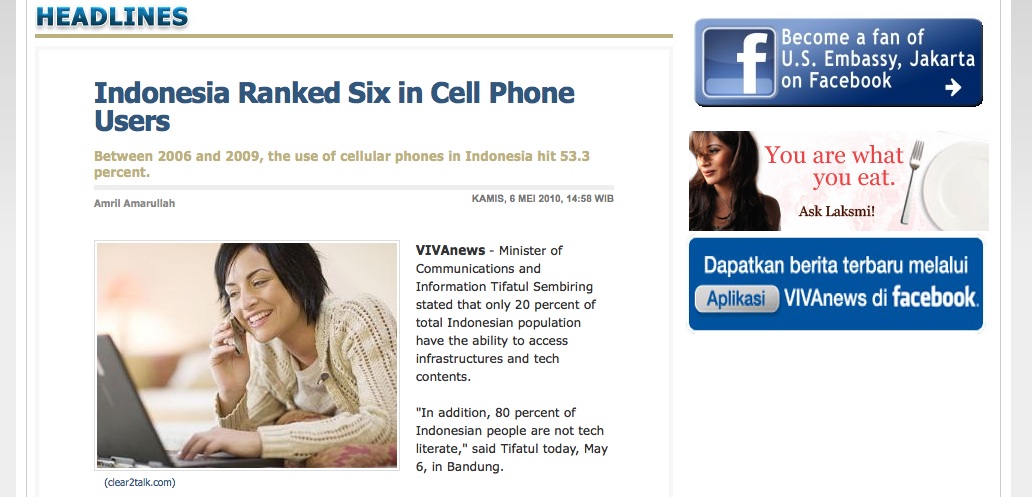
The US has since expanded its use of Social Media to the international arena and the increasing importance of Social Media channels is reflected in the Facebook efforts of the US embassy in Jakarta, Indonesia. The Embassy has invested significant resources into Social Media just as the use of Social Media in the country takes off – the number of active Facebook users in the world’s most populous Muslim country has grown from 2,325,840 in March 2009 to 20,775,320 in March 2010, an increase of 793%!

As the US Embassy in Jakarta has ramped up its presence on Facebook, its fan base has ballooned from 35,000 followers to 131,000 in little more than a month! This in a country not known for its love of the US. But the US embassy understands that this is not a soap box to try and hard sell or influence Indonesians with US policies and attitudes.

As a result, the tone of the Facebook site is light and cheerful. One recent post on the homepage related to Indonesia Batik, has received over 795 comments and more than 2,300 thumbs up. Most of the posts receive 100+ comments and significant numbers of thumbs up. Batik is err a common thread throughout the site and most of the postings are related to American life and culture, and in particular sport, music and popular green initiatives. Other initiatives include Blogger workshops.

Tourism, primarily destinations in the United States are also featured, including a rather ambitious and possibly poorly targetted attempt by Nebraska to attract Indonesians to the Great Plains state. Despite the remoteness of the destination, the video has received over 50 mainly positive comments. Other states using the site to market themselves include Tennessee and Ohio.

The US Embassy markets the site via advertising on local sites such as this one

Social Media and, in this particular case, Facebook is undoubtedly an excellent channel for nations to build their brands by engaging with consumers and offering value to those consumers based on the needs of those consumers, whilst understanding the environment. The USA, certainly in Indonesia seems to know this better than most.

Thanks to unspun for the inspiration for this story

8 reasons why the iPad will fail


Apple owns some of the finest brands on the planet. And I’m an Apple loyalist and brand ambassador. I bought the green iMac when it first arrived in Malaysia. Even though there wasn’t any software to run on it and because it wasn’t compatible with anything else it required multiple peripherals. And even though it spent more time being fixed than it did on my desk and despite the fact that the keyboard was awkward and the mouse hopeless, I loved it and I’ve never had anything else since.

I now have macs in my home and at the office. Every morning when I walk into the office I catch my breath as I look at the sleek lines and brilliant screen of my top of the line iMac.

Every member of my family has an iPod and my two older kids have macbooks. I even convinced my luddite wife to switch from PCs to macs and her company now has 10 of them. Baes on my recommendations, at least one friend bought macs for his event management firm.

I’ve seen the stock I once owned soar over 5,000% from the price I sold it at.

And even though I know that Apple is making margins of over 40% on some of the products I own, I buy them because they are cutting edge in terms of design and functionality, are easy to use and have great features. And because the experience I have with my sales agent is brilliant and he’ll come to my house at nine o’clock at night to help me troubleshoot. At every touchpoint, it’s a great brand.

So you’ll never hear me say a bad word about a mac product. But I think the iPad is a mistake. And here are 8 reasons why:

1) It doesn’t have a camera or a webcam. If the iPod can have a camera, why can’t the iPad? A webcam would also have made sense.
2) The touch screen on the iPod is temperamental so if it’s the same with the iPad, users will need an external keyboard. Reading through the information, users will have to buy a separate keyboard that costs US$75 and can’t use any of their existing Apple keyboards.
3) The iPad doesn’t have any USB ports or card slots so I’m not sure how users are supposed to transfer documents from other devices. There is an iPod connector feature that means users will have to buy another adapter.
4) The iPad doesn’t have Adobe flash which means that any web pages that have applications, videos or advertisements on them will have large blank areas. You read that correctly, users can’t watch video on websites. If true, what are the implications for the travel industry?
5) The iPad doesn’t allow more than one programme to run at a time. So users can’t be working on a document in word and have a video downloading on youtube at the same time.
6) The iPad is not HD ready so watching movies will not be the experience it should be.
7) It can’t be used as a phone.
8) Apple will be able to remotely disable applications.

Before the launch of the iPad The Wall Street Journal wrote: ‘The last time there was this much excitement about a tablet, it had some commandments written on it.’ Apple leapt on that and included it in there marketing collateral at the launch.

Personally, whilst it won’t affect Apple’s position as one of the finest brands on the planet, I don’t think the iPad will fly. Only time will tell if I am right. What do you think?