Endless Possibilities has endless potential


The response to the “Endless possibilities” tagline has been, as one would expect when discussing a Nation Branding project, emotionally charged.

Much of the focus has been on whether or not the tagline has been used by Israel or for that matter Mongolia. In fact, it would seem the tagline has been used not only by both Israel and Mongolia but also Sagada in the Philippines.

sagada-2010-marlboro-country-endless-possibilities

And while we’re at it, “Endless possibilities” has also been used by a lot of companies such as BHS in India who used it for an advertising campaign and by Florian pearls. It’s also the name of a thrift shop in the USA, a change management company in the UK and it also appears on a tee shirt underneath an infinity loop.

But most commentators and those members of the public who have cast scathing comments in blogs, forums and on social media sites are missing the point. There may be questions around the chosen tagline, how it was researched and why it was chosen but the reality is, the tagline doesn’t really matter. Yes it is a bit embarrassing that it has been used by other countries but it’s important to understand that this is not the Malaysia Nation brand.

It is a tagline. And like the majority of taglines, it will soon be forgotten. In fact, taking a macro view it will have very little influence on the success of the Malaysia Nation Brand project.

Sadly, it is not unusual for organisations to launch a brand strategy with the creative side of the project. This is wrong but unfortunately it is common. What will make or break the success of the Malaysia Nation Branding project is what the strategy consists of and what comes next.

This will be mapped out in a well researched, comprehensive brand plan that will not only form the foundations of attempts to drive the brand forward but also be the glue that keeps stakeholders together.

The world is loose, more fluid and more collaborative than ever before. As a result, nations have less control over the Nation Brand than they are used to but that doesn’t mean they should forgo a well-researched brand plan and let consumers define the brand, something that may already be happening in Malaysia. The Nation Brand plan is more important than ever as it serves as a blueprint for all stakeholders to adhere to.

Specifically, the Malaysia Nation Brand plan must communicate a positive and dynamic personality with economic, experiential and emotional values that reflect target audience requirements.

The brand plan must be holistic and comprehensive to enhance export promotion, economic development, tourism, foreign direct investment and other key national initiatives.

It must also communicate the intended message to the target constituents and stakeholders in multiple countries and at the same time, it must lay guidelines to strengthen the strategic, communications and visual impact of the Nation Brand.

The blueprint must also systemically connect the Nation Brand to the country’s core industries, corporate brands and Small and Medium Enterprise (SME) sector brands.

This must be established via a systematic, holistic process that accommodates the requirements of both national and international stakeholders. This process must not only be effective to optimize the Malaysia Nation Brand, but also maximize limited national resources.

But at the same time, the team tasked with this project must be flexible and open in the implementation of the plan. Let events influence the plan and be ready to adapt to events and opportunities.

The new Malaysia logo (thanks to thestar.com.my)

But right now, all we have to go on is the tagline, a logo, a website and a commercial featuring the Prime Minister that was aired on CNN a few months ago. There is a Facebook page for Visit Malaysia Year 2014 that features the new logo but the site hasn’t been updated since March 2013.
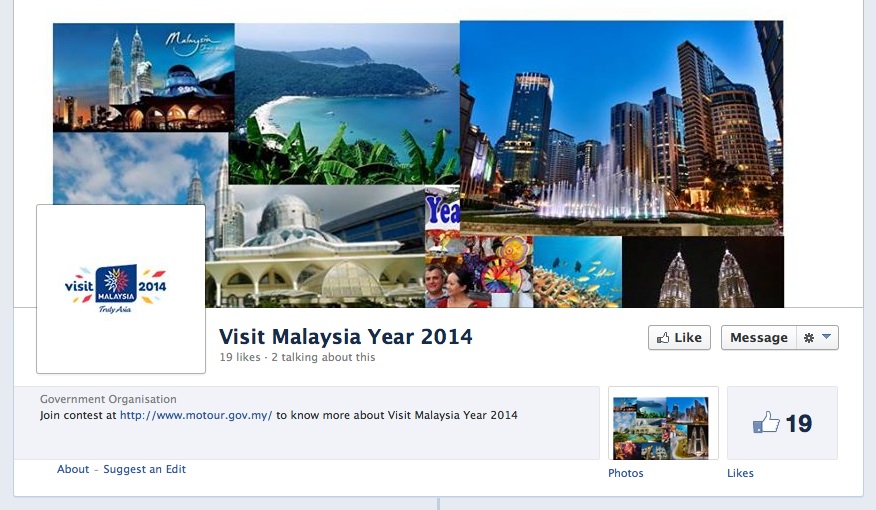
VMY 2014 FB page
VMY 2014 FB page

The Facebook page features a link to a competition but this actually goes to the Ministry of Tourism website. Such competitions will help drive interest in the country and there is no reason why a competition can’t be created for businesses that may want to invest in or relocate to Malaysia.

The message of the TV commercial was to attract Foreign Direct Investment (FDI) while the message of the website is “Whether your passion is food, culture, sports or art; whether you’re a traveler or entrepreneur; Malaysia has something amazing to offer. The journey starts here”.

The malaysia.my home page

One might be forgiven for thinking that sounds like a tourism message however the site features a number of feel good stories about successful Malaysian entrepreneurs, achievements, news, activities and more.

As the website evolves, it may need to focus or at least segment activities more clearly and provide refreshing and new content that is of interest to stakeholders and not repeat content that is already in the public domain. This new content will create interest in the country, be picked up by search engines and robots and drive traffic to the site.

The team tasked with the responsibility of making the Malaysia Nation Brand project a success will also need to engage stakeholders on an ongoing basis and not just use digital platforms to broadcast corporate driven messages.

Right now, a search of “Endless Possibilities” on Youtube doesn’t send visitors to any Malaysia site. The Brand plan will also map out tactics for driving users and search engine robots to original content.
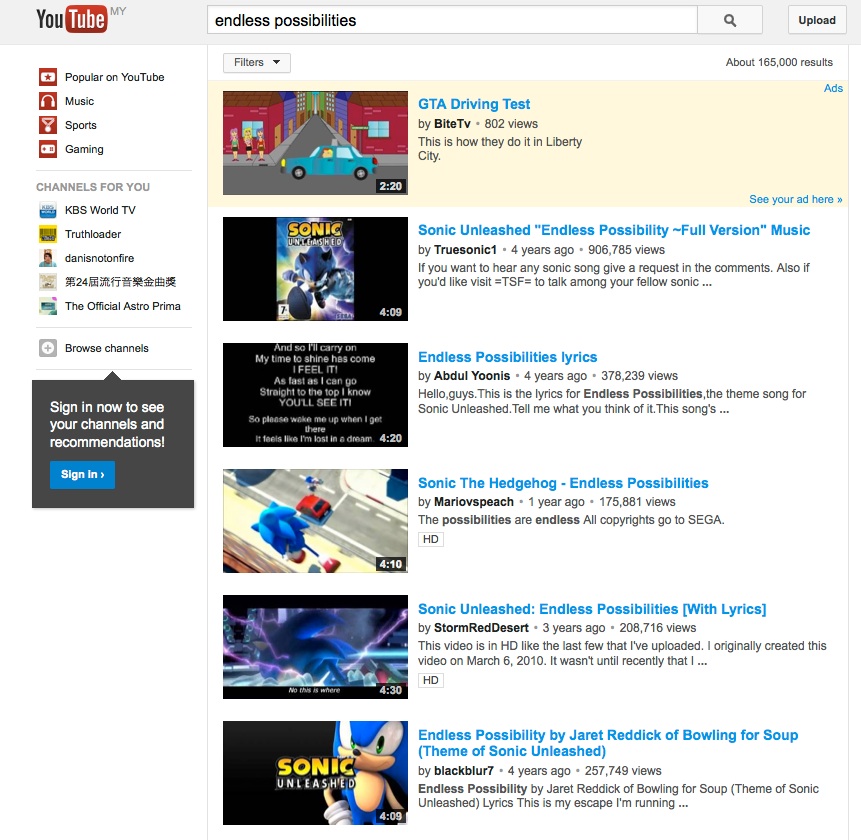
you tube search of 'endless possibilities'
you tube search of ‘endless possibilities’

The launch of the new Brand strategy is set for 17th September and we should know more about the project then. But I believe, done properly and based on a comprehensive Nation Brand plan, “Endless Possibilities” really does have endless potential.

How to make the Malaysia Nation Brand strategy successful


Let’s get something straight. A catchy tagline, symbolic logo, pretty colours that symbolize the ‘personality’ of the brand and a custom designed font are not Nation Branding.

Glossy advertisements that push the creative envelope and consist of content that is impossible for stakeholders to buy into or live up to, is not Nation Branding.

Expensive brochures and other marketing collateral that use light gray colours on white backgrounds and font sizes impossible to read is not Nation Branding.

Hugely expensive billboards that create awareness but do little else and are soon lost in the fog of the tens of thousands of messages consumers are exposed to every day is not Nation Branding.

It might have been possible to use such creative-driven branding to build a Nation Brand in the 1960s – 1990s, when countries and their advertising agencies focused more on getting attention than getting results.

But this is a different era. There are now so many channels to consumers, so many competitors all with a similar offering and so many distractions that it is no longer possible to build a Nation Brand in this way.

Furthermore, too many taglines have made promises the Nation couldn’t possibly keep or their marketing or PR collateral has left potential customers underwhelmed. This may not have been the fault of the Nation or it may be the result of poor internal implementation but it has resulted in a delivery failure that has negatively impacted all efforts till then. A case in point is the Incredible India campaign and the multiple attacks on women over the last year.

Moreover, engaging (not reaching) target markets through traditional channels with traditional tools is virtually impossible today. Especially in the digital age when consumers are more knowledgeable, have more choice and are more demanding.

So how do we make the Malaysia Nation Brand successful?
Reach, awareness etc are all irrelevant. Nation Brands today are defined based on the economic, experiential and emotional value they deliver to all stakeholders.

What will make or break the success of the Malaysia Nation Branding project is the work that has gone into determining what are the key elements of the Malaysia Nation Brand.

Identifying and understanding what we have, what is unique, who are the stakeholders, what are we are going to do to get their buy in, how we identify target segments, the knowledge we learn about them and their requirements for value and deliver value to target segments (all of whom are very different and have very different requirements for value and must therefore be engaged with content that resonates with them), how we build our relationships with them, how we work with them and provide solutions to their problems.

The ability to build lasting relationships with stakeholders, a highly trained team capable of matching country attributes to those stakeholder requirements and the ability to consistently deliver value are required.

External communications battles are not fought on the right hand pages of national newspapers, during commercial breaks on terrestrial TV or on the outside back cover of business publications. They are not even fought on the pages of digital media or on corporate websites.

The battles for the hearts and minds of prospects are fought in the comments sections of blogs, on third party sites through user experience comments, through account manager emails, forums, search engines and ongoing personalized relationships.

If the people responsible for this project can match your Nation Brand to the value customers are looking for, they may have a chance of building a successful Malaysia Nation Brand.

I am reliably informed the Malaysia Nation Brand project has a budget of RM30 million. But it’s not known what that covers. If it is simply for a communications campaign then it will not be money well spent and the project will fail.

However, if it is for a comprehensive brand audit and Nation Brand plan (which will have been developed once the brand audit was completed and will focus on internal and external stakeholders) that outlines how to deliver value as defined above and based on the “Endless Possibilities” tagline, then that will be terrific use of taxpayers money and the country will benefit for many, many years.

Building the Malaysia Nation Brand requires a strategic approach


The development of a Malaysia nation brand has been discussed for a number of years. As part of the Industrial Master Plan (IMP3), a National Branding Task Force was established and tasked with building the Malaysia Nation Brand. In 2008, through the Malaysian External Trade Development Corporation (MATRADE) and after extensive research and a nationwide tender, the project was awarded to a brand consultancy.

After a letter of award was issued to the consultancy and the project team was mobilized, the then Prime Minister stepped down and six months later the project was cancelled. Soon after the National Branding Task Force was disbanded.

Since then there hasn’t really been any organization established to develop a Malaysia Nation Brand. Some of you will say that 1 Malaysia was a Nation Brand but it wasn’t.

At the end of 2011, some firms were invited to “submit slogans for a new Nation Branding project”. Of course a slogan isn’t a Nation Branding project but it was considered a start.

The slogan chosen was probably “Endless Possibilities” because this was used during the World Economic Forum in Davos to promote Malaysia as a South East Asia location for investment and tourism.

Without any warning, a sixty second TV commercial aired on CNN in March 2013. If you have a weak stomach, I don’t recommend you read any of the reader/viewer comments below the video.

It’s hard to identify who posted the video but there is reference to a brief with the comment, “The brief from the Prime Minister’s Office of Malaysia was to promote Malaysia as a dynamic country with well developed infrastructure and an aggressive economic growth plan for the future.”

More recently, the Prime Minister was spotted wearing a badge with a design that has been described as “a starburst in red, yellow and white against a blue background.” Malaysia, in a custom font is underneath the logo.

The new Malaysia logo (thanks to thestar.com.my)

In late August 2013, a local news portal reported that Prime Minister Najib Razak will launch a new national branding effort and that the national branding effort comes with the slogan or tagline, “Endless Possibilities”.

This is exciting news, so what should we expect from the Malaysia Nation Branding project?

It is important that Malaysia doesn’t fall into the trap many other countries fall into – jumping head first into a well produced communications campaign in a misguided attempt to build a brand.

India is famous for its ‘Incredible India’ advertising campaign launched in 2002. By 2009, India was spending US$200 million advertising the country. In November 2012 India announced that a new advertising campaign headlined, “Find what you seek” would be launched to build on the Incredible India efforts.

The new Indian minister of tourism announced that the new campaign highlighted to consumers that ‘they will find whatever they are looking for from a holiday in India.’

The goal of the new campaign was to increase international arrivals by 12% annually till 2016. Unfortunately, little more than a month later, a woman in Delhi was brutally gang raped and left for dead on a public bus. The story made headlines around the world.

Four months later, a Swiss woman was gang raped whilst on a cycling tour of Madhya Pradesh and soon after, a British woman was attacked in Delhi and only avoided potential death after jumping from a hotel window to escape.

Within a matter of weeks, instead of announcing increased interest, tour operators were reporting a 35% cancellation rate from women and a 25% drop in all arrivals with multiple cancellations from the lucrative markets of Australia, the UK, Canada and the United States.

Meanwhile, FDI dropped 29% in 2012 despite the ongoing advertising campaign. An advertising campaign, however good, isn’t going to change perceptions caused by crime or reverse FDI declines caused by the global economic situation. So years of the Incredible India campaign, if remembered at all will now be replaced with harrowing tales of the treatment of women in India and depressing economic data.

What nation brands have to understand is that today, not only are constituents in target markets more segmented and more knowledgeable, they also live their lives very differently, source their information more socially and in many countries, no longer believe corporate driven messages anyway.

But most important of all, in today’s dynamic, fluid social, Internet fuelled world the corporate driven message, created after months of brain storming by consultants and the like and communicated to all and sundry at enormous expense repeatedly can be undone in a moment and replaced with harrowing tales of criminality and economic woe.

Building a Nation Brand is a strategic initiative not a tactical one. A communications campaign is a tactical activity and it is not possible to build a Nation Brand with a communications campaign, especially one that is created to convince both internal and external stakeholders of something that is hard to prove.

Today, building a Nation Brand requires multiple elements that are critical to the success of any such project. However there are two in particular that will make or break the Malaysia Nation Branding project.

The first is that the community must be involved in the development of the Nation Brand and agreed values must be clearly defined and understood by all stakeholders and integrated into their lives and applied to every touch point.

Sure there must be a CEO with the knowledge, strength and unbiased objective viewpoint to drive the project but without this early stage buy in from stakeholders, the chance of success are very low.

And the second critical element is that promises made must be kept. It is simply not good enough anymore to say you are something or you are going to do something without delivering on that promise at every touchpoint.

I don’t know the full extent of this project and how the community was involved but in the video aired on CNN, the Prime Minister says, “Malaysia is the unique place where the best of Asia comes alive.” That’s a bold statement that will require buy in from all Malaysians and will be tough to deliver to all stakeholders.

So let’s hope the Prime Minister and his team pulls it off because in the current economic climate, a well defined brand that has the buy in of key constituents, resonates with target markets and delivers on promises made will give Malaysia a significant edge over competitors in an increasingly competitive environment.

Building a country brand requires more than just a well executed advertising campaign


If you are responsible for a country or destination brand, read on.

As cheap air travel and the package tour (as well as the devaluation of the Spanish Peseta and the abolition of currency controls in the UK) helped jump start international travel in the 1960s, 1970s and 1980s, the world was still a fairly predictable place and countries were, on the whole inhabited mainly by citizens of that country and not by the multicultural citizens living in most cities today.

Moreover, due to the social and economic structure of Western countries, consumers were only just beginning to have disposable income that allowed them to experience the concept of leisure time.

At the same time, mass media was becoming increasingly influential as consumers purchased more and more TVs and radios.

So, with more disposable income, more leisure time and the establishment of commercial television, it was now possible to reach large swathes of a population reasonably quickly and relatively inexpensively.

In this environment countries put their faith in creativity to build brands, hoping that an exotic image, tagline or promotion would resonate with prospects and increase visitor arrivals.

And generally, because of the cultural and social predictability of countries, the same message could be used to communicate with everyone.

Moreover, with few conduits to increasingly wealthy consumers who had more disposable income than ever before and with limited competition in the market place, this type of creative driven branding often raised the profile of countries enough to attract visitors.

Countries and destinations such as Spain, the UK, Kenya, Florida, Greece, The Algarve, Singapore and Italy as well as many other destinations used this approach. And in this mass market economy, mass media – TV, Print, Outdoor, with its huge reach, was the logical vehicle to enhance the impact of creative-driven branding with reach and repetition.

bemuda

italy

Early tourism ads worked because markets were similar, new, eager and easy to reach

But that mass-market economy no longer exists. Today’s consumers are increasingly overwhelmed with those creative images, taglines and promotions. And many of the messages have become so similar that it is virtually impossible to differentiate one from another. And of course, consumers have also become fed up with countries failing to deliver on promises made.

Same images, sames messages = irrelevant

Despite this new world order, countries, agencies and consultants continue to try and build country brands by using ‘cool’ advertising, creative or symbolic logo’s with pretty colours, catchy taglines and so on.

But these activities are nothing more than advertising campaigns and do very little to build a nation brand. And even the one’s that have made us sit up, take notice and seek more information are more often than not soon forgotten or overtaken by a new campaign from a competitor destination or the recommendation of a friend.

But most worrying of all, these advertising campaigns lull countries into a false sense of security. ‘Visitor arrivals are up so everything is good in the world’. The problem is that an advertising campaign might draw the attention of visitors to a destination but it doesn’t build a destination brand.

An advertising campaign may be important but it is part of what should be a well researched and planned brand strategy that takes into account all brand related activities.

These include internal buy in and a thorough understanding of external stakeholder requirements for value and other elements such as content development, social media, PR and most important of all for a country, crisis management. Traditional communications pushed out across traditional and digital media, may still have a role to play, but they are not a total solution.

Sadly, too many countries and destinations have short cut the process to try and get their ads out quickly. This has resulted in the demise of the brand strategy. Yet failure to invest in such a brand strategy can be detrimental to the long term success of the brand.

A case in point. The Maldives has invested more than US$10 million in the last three years on advertising itself as a luxury destination. But in 2012, political turmoil saw arrivals from the lucrative European markets fall, with the UK registering a 12.2% drop. If it weren’t for a sharp rise in low yield arrivals from China, the Maldives would probably have registered a major drop in arrivals.

To the detriment of the country, participants or perhaps victims of the political turmoil in the Maldives called for a boycott of the tourism business and attempts by the new government to develop the tourism business are constantly thwarted by opponents.

One example was when the Twitter hashtag #sunnysideoflife (the official tagline) was hijacked and brochures entitled ‘The cloudy side of life’ threw scorn on tourism players and drew the readers attention to human rights abuses and police brutality against Maldivians.

This year has seen further negative press after a 15 year old girl raped by her stepfather and sexually abused by other men was sentenced to 100 lashes for having pre marital sex.

So far the Maldives government hasn’t responded, leading one to suspect they don’t have a brand strategy with a crisis plan to deal with such a situation. What is certainly true is that this complicated issue will not be solved with an advertising campaign.

In 2012 Jakarta initiated an advertising campaign across Asia in an attempt to attract visitors to the capital and largest city in Indonesia. The campaign was poorly planned, conceived and executed. You can read more about the Jakarta campaign here.

Based on the advertising campaign and the website, it is fairly safe to assume these two elements were not part of a brand strategy.

Does this ad make you want to get more information on Jakarta?
Lack of integration and poor content suggests little or no planning

India is famous for its ‘Incredible India’ campaign launched in 2002. By 2009, India was spending US$200 million advertising the country. This iconic advertising campaign is still going strong and in November 2012 at the World Travel Market in London and to great fanfare, India announced a new advertising campaign headlined, “Find what you seek”.

Early 'incredible India' ads - excellent execution
Early ‘incredible India’ ads – excellent execution

Officially launched by the new Indian minister of tourism at a hotel in London in front of 400 guests, the new Incredible India campaign highlighted to consumers ‘that they will find whatever they are looking for from a holiday in India.’

The Minister of Tourism India launches the new Incredible India campaign, a week later 10 years of advertising were lost due to a lack of planning for disasters

It was also announced at the launch event that the goal of the campaign is to increase international arrivals by 12% annual till 2016.

Little more than a month later, in December 2012 in Delhi a woman was brutally gang raped and left for dead on a public bus. The story made headlines around the world.

And then in March 2013, a Swiss woman was gang raped whilst on a cycling tour of Madhya Pradesh and soon after, a British woman was attacked in Delhi and only avoided further suffering after jumping from a hotel window to escape.

Within a matter of weeks, tour operators were reporting a 35% cancellation rate from women and a 25% drop in all arrivals with multiple cancellations from the lucrative markets of Australia, the UK, Canada and the United States.

Much of the outrage toward these events is related to the treatment of woman in India and numerous stories that would not normally feature on international news are now making headlines globally including the stoning, arrests and murder of Indian women. None of these events will be addressed by advertising.

If you are responsible for developing a Nation, country or destination brand, don’t allow yourself to be lulled into a false sense of security over a ‘successful’ advertising and promotions campaign telling the world how great is your country or destination.

To build a strong brand amid increasing international competition and unforeseen circumstances that are carried across social media and possibly across mass media as well, destinations must have in place a well defined brand strategy that covers all potential scenarios and doesn’t just focus on communications.

A brand strategy has other benefits. Here are five more reasons for developing a brand strategy:

1) A brand strategy clearly defines the organisation values and promises and ensures stakeholders understand what is required of them to deliver on those promises and values. For a nation brand this internal branding is critical to the success of the brand.
2) Staying with the internal brand, lots of tourism boards and CVBs attend trade shows but if I had a pound for every time I’ve been to ITB or WTM and seen poorly trained personnel representing countries or states, I’d be a very wealthy man. Trade shows cost a lot of money. A brand strategy will ensure training occurs at the best possible time.
3) A brand strategy ensures the brand is ready for every eventuality, with a crisis plan to address issues such as those that have happened in India, the Maldives and most recently, Boston.
4) A brand strategy ensures all stakeholders are pulling in the same direction. If one state is targeting visitors at the same time as another state, resources are being wasted. A brand strategy will ensure integration and engagement, not individual tactics.
5) A brand strategy ensures time isn’t wasted on stand alone tactical initiatives implemented at the whim of a government servant or other person who should know better.

Far too many countries or destinations give the responsibility of building their brand to creative advertising agencies. These agencies are called advertising agencies for a reason. They do advertising.

Building the Malaysia brand, one step at a time


I’m a brand consultant (that’s brand consultant not advertising agency marketing itself as a brand consultant – you can learn the difference here).

We’ve worked with many elements of the Malaysia Nation Brand and were once appointed to develop the Malaysia Nation Brand. Unfortunately, due to one of those cruel twists of fate and through no fault of our own, the project was cancelled.

However we still track developments in this space and are confident once those who are currently responsible for developing the Brand realise it can’t be built using communications and traditional tools such as PR and advertising, we will be called in again.

At the heart of our approach is the need to carry out brand audits to identify perception gaps, seek data on where the country is going wrong (and right), identify organisational issues that impact the brand delivery, recommendations for improvement and more. These brand audits require both qualitative and quantitative research including talking to relevant stakeholders including citizens.

You can read more about brand audits here.

These brand audits are critical to the success of a Nation Branding exercise. There are other principles involved and for more information on those, please read this post.

In addition to the brand audits and because no private sector organisation is going to develop a Nation brand strategy, the process also requires a heavy investment by the government in something that is strategic even though most governments have a tactical outlook. Finally, a Nation Brand strategy also requires investment in new activities, tools and departments and inculcating new cultures into those departments.

One of those new departments set up by the Malaysian Government is TalentCorp. Talentcorp is tasked with attracting top talent working abroad to return to Malaysia. It was a sensible idea to set up TalentCorp and although it is finding the going tough, it is having some success.

Recently though, I came across a rather scathing letter in the combative online news portal Malaysia today from a Malaysian citizen living abroad who had been invited to an event hosted by TalentCorp in Qatar.

You can read the full letter here.

Although the letter is not very complimentary, I hope that TalentCorp will be happy to receive this feedback and will use it to improve what is, like any organisation, big or small, new or established a work in progress.

But I do find it puzzling that the writer felt the need to write to news portal rather than the company itself. Surely if one’s intentions are honourable, then any such feedback should be sent directly to the organisation? If one has issues with the way something is done, why not write, at least initially anyway, directly to the organisation and not use a popular soapbox to air one’s grievances.

TalentCorp cannot be expected to achieve miracles but it is attempting to reverse the brain drain, which by the way is not unique to Malaysia – 500,000 wealthy Brits have left or are leaving the UK. Last year a survey there said 48% of Brits would leave if they could. The first thing Aussies do when they get the chance is leave the country. Almost 4 million Canadians live abroad.

The writer comments on the Malaysian education system and other related issues. But TalentCorp is not responsible for overhauling the education system or for addressing the “systematic discrimination amongst employers” – That’s a sweeping generalisation by the way. TalentCorp is responsible for encouraging Malaysians to come home.

Another comment in the letter states, “there is bias in the Malaysian oil and gas sector that allows certain foreign nationals to dominate various technical sectors.” I’d like to know more about this point because oil companies answer to shareholders. They need the best people at the best price. 30 years ago the majority of oil industry engineers were British with some Lebanese but mostly British.

Far sighted governments in India and the Philippines may have spotted an opportunity to encourage universities to develop courses to create engineers who now dominate many industries. If Malaysia missed the boat, it’s a shame but that isn’t TalentCorp’s fault.

Nor is it TalentCorp’s fault that many Malaysian graduates ‘are not up to the high standards required by the energy sector’. If it is true, it’s also not TalentCorp’s fault that ‘there is bias in the Malaysian oil and gas sector that allows certain foreign nationals to dominate various technical sectors’.

I also don’t think it is TalentCorp’s responsibility to improve the Malaysian job market. I also don’t think it is the responsibility of the Malaysian government to challenge the private sector. The issue with employers in Malaysia is a complex one that has at its heart the belief that employees are a cost not an investment.

Part of the blame for that lies at the feet of employers but the other part lies at the feet of the employee. And for both of them to change will take time. But that too is not the responsibility of TalentCorp.

I think the writer has been harsh in his criticism which often comes across as a rant against the government rather than TalentCorp. And no matter who one votes for, we have to accept that in a democracy, as many as 49.9% of the population can be unhappy with an election result but they have to live with it.

Besides the Nation Brand is much longer term than the government of the day and any efforts by the government to improve that Nation Brand – and the creation of TalentCorp is one key element to that process – should be applauded and given the support of citizens.

Responsible citizens with honest intentions should voice their grievances to the organisation but not to a controversial and confrontational news portal. And as part of the required corporate cultural changes, the organisation – in this case TalentCorp – must be open to such feedback and see it as that and not criticism.

I think the letter has actionable data that can help improve TalentCorp and I find it positive that this citizen was concerned enough to write a letter. I hope more citizens will provide more feedback in order for these companies to improve and build the Malaysia brand, one step at a time.

In case you are wondering, I don’t work for TalentCorp and don’t have any connection with them. However as an individual I’ve had dealings with them and I must say there is room for improvement. But I’ll take that up with them directly!

Good consumer generated content will build destination brands better than any corporate commercials


It’s well documented how numerous companies waste huge amounts of money on ineffective advertising. Generally the advertising is ineffective because it is poorly written, isn’t tested or has been developed to appeal to as many vastly different segments as possible.

This is especially true of country brands. If I had £1 for every ‘me too’ destination advertisement that I’ve seen on TV, heard on radio or seen on a website, I’d be a rich man. Time and time again I see beautifully executed ads for destinations such as Thailand, Egypt, Malta, Malaysia, Bali and others that are all selling the same things – beautiful white sandy beaches, crystal clear waters and cloudless blue skies.

These ads are pushed out across traditional media in the hope that enough people will see them, buy into them and eventually visit the country. If the campaign doesn’t work (and no one knows whether they work or not), the agency is generally sacked, a new one appointed and the whole process starts again.

Basically this model uses Hope as a strategy – hope the timing is right, hope it will be seen, hope it will be liked, hope it will be remembered, hope it will influence viewers enough to reject previous choices, hope the destination will be researched, hope the inevitable competitors that are seen at the same time will not influence viewers, hope this and hope that.

But it doesn’t need to be like that anymore. In the social media era, when consumers not countries define brands and the Internet provides copius amounts of information from other like minded consumers to help influence the decision making process, destinations need to be reaching out across this channel and leveraging consumer produced media to market themselves.

This approach requires a massive mindset change and will revolutionise the traditional organisational hierarchy but it has to start soon or destinations will lose the increasingly brutal competition for heads in beds.

To illustrate this point, I came across one video that is an outstanding advertisement for Kuala Lumpur, the capital of Malaysia. It didn’t cost the Malaysian Tourism Board a penny and is a far better advertisement than any advertising agency produced Television Commercial.

Tourism Malaysia needs to have a community team scouring the web for such content and must then distribute such content across multiple channels to generate buzz and interest. This content will allow destinations to engage directly with influencers and other consumers in a way that traditional media does not allow them to.

This really is an impressive video. I suspect that after you watch it, Malaysia will go to the top of your list of must visit destinations.

Enjoy!

<a href="

Kuala Lumpur DAY-NIGHT from Rob Whitworth on Vimeo.

” target=”_blank”>

How effective is your country brand strategy?


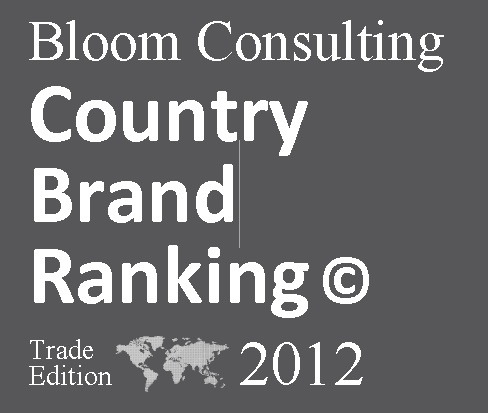
Bloom Consulting has just published the 2012 Bloom Consulting Country Brand Ranking which classifies countries based on the effectiveness of their country brand strategies and the impact this has on GDP.

the 2012 Country Brand ranking

In an email to me the Ranking was explained as having a different methodology to other indexes such as the Futurebrand or Simon Anholt rankings as it “conveys dozens of variables in order to position the countries by facts and mathematical algorithms instead of pure opinions, like other country branding rankings do”.

The ranking “takes into account both hard and soft data and includes ground breaking processes to show the relationship between the country’s economic performance and the projections of the country’s brand strategy.”

It doesn’t explain what those processes are, how it gets access to those projections or how it measures them but I do like the fact that someone is trying to develop branding metrics for destination branding initiatives.

“The methodology measures the coherency between the external messages of a country and its actual economic performance under a certain period of time.

The higher a country is on the list, the better they are compared to their competitors, in positioning themselves to attract either Foreign Direct Investment (FDI) or tourists”.

Bloom doesn’t believe that it is possible to develop a single promise for a country and this I agree with (and have been saying for years – please read this article on nation branding). We’re working with destinations in Asia trying to attract tourists from the region, talent from the country and heavy industries from North Asia and North America. Trying to create an umbrella promise for such diverse target markets will be an exercise in futility!

The email went on to say, “this year Bloom incorporated Online Search Demand (OSD) into the ranking. This looks at the gap between what countries are promoting (supply) and what investors and tourists are searching for (demand).

Bloom Consulting uses the OSD along with an analysis of each country’s brand strategy to assign each nation a Country Brand Strategy (CBS) Rating©. This identifies the accuracy match between supply and demand and allows Bloom Consulting to assess the best country brands”.

You can read the report and get more information on the methodology, from this page. Or you can look at an interactive version here.

What’s interesting from an Asian perspective is that Asian countries are big winners in 2012, especially in tourism. Although the USA was top for the second year running, eight Asian countries were in the top 25.

China was the top Asian country at 4th, Thailand 6th, Macao came in 8th, Hong Kong 13th, Malaysia 14th and Singapore 22nd.

Japan was down in 28th place, no doubt the Tsunami played a part although the Arab Spring didn’t seem to have too much of a negative impact on Eqypt which, all things considered did well to come in at 31st.

To engage consumers, Jakarta needs to improve its communications


As the world attempts to shake loose the shackles of the economic meltdown, competition for tourists from both established and new markets is gathering pace.

But the new environment is an even more competitive one. There are almost 200 countries worldwide and over 100,000 places in Asia alone, actively seeking to attract and retain tourists.

As a result, it is increasingly important that destinations seeking domestic and international visitors have a well researched, structured, long-term strategy for increasing visibility & engaging the right segments to generate arrivals.

One relative newcomer to this tourism marketing battleground is the city of Jakarta, the capital of Indonesia, located on the island of Java and the capital of Indonesia. If you haven’t been to Jakarta I recommend you go as soon as possible because it is a fascinatiing destination.

I spotted this ad in a Malaysian daily recently.

Does this ad make you want to get more information on Jakarta?

It would appear that the people at the Jakarta tourism and culture department are looking to attract visitors to Jakarta with the promise of great shopping. However, as a consumer, without knowing anything about the rest of this campaign I can tell you that this ad needs work.

Firstly, what is the headline trying to tell us? Is it telling us that time is irrelevant? This is an existential argument and possibly true but in this situation not relevant. Perhaps it is saying, “don’t worry about time when you go shopping in Jakarta”? Or to be more specific, when you go shopping for shoes because after looking at this ad, am I wrong to assume Jakarta is a great place to buy shoes?

There is no call to action, the image of the shoe boxes looks photo shopped onto the main image and there isn’t a website address to gather more information.

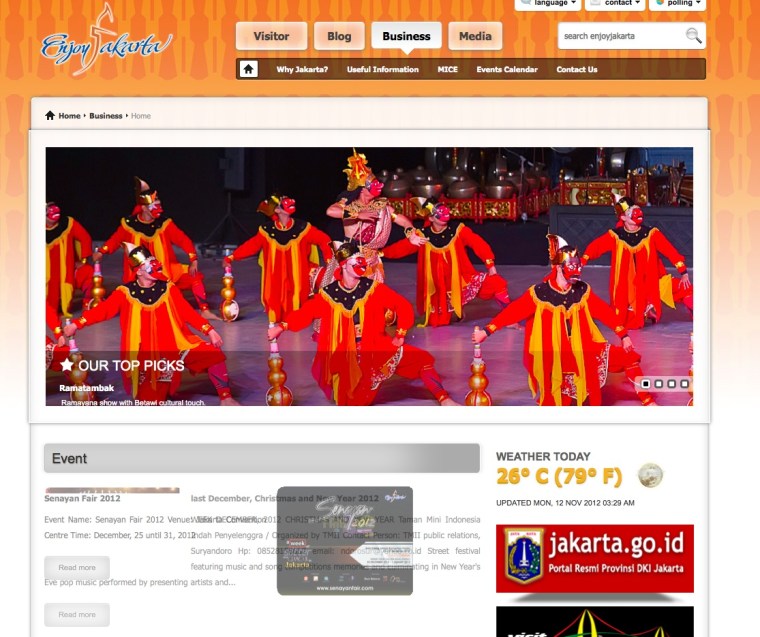
So I took it on myself to google (other search engines are available) “Enjoy Jakarta” and arrived at the official Jakarta travel website where I couldn’t find any information on enjoying Jakarta, shopping or even shoe shopping.

Not the best introduction to what Jakarta has to offer

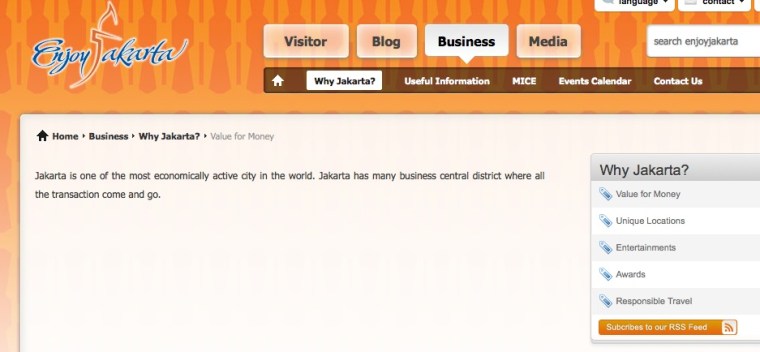
I spent some time on the site and for what it’s worth, I found the site very slow, difficult to navigate with limited information and English that needs proof reading before pubication. When I clicked on the “Why Jakarta” tab on the drop down menu, the information provided was hardly compelling and unlikely to attract investors. And talking of investors, is this a tourism site or a business site?

Not the most compelling of arguments

Moreover, I found the information above the fold didn’t match the information below the fold and when I clicked on Wine and Dine in the footer, all I got was a list of restaurants which to a first time visitor would mean nothing.

This won't mean much to anyone
This won’t mean much to anyone

Today, audiences rely less on traditional media to source information, making them increasingly hard to reach. Furthermore, consumers are less inclined to see or be interested in a corporate driven message delivered across traditional media.

But as the reliance on traditional media diminishes, opportunities arise in new and social media. Where before, companies were dependent on content from the media owners, today they can create their own content that resonates with specific consumers and their interests.

Consumers too are developing their own content and it’s important that destination brands such as Jakarta understand this and provide channels for consumers to create and share content.

It is good to see Jakarta looking to encourage visitors to this exciting city but it will take more than the print campaign and website reviewed in this article to be successful.

Good experiences will help build the Malaysia Nation Brand


I read an interesting article on the Malaysia Nation Brand which can be found here.

But I was particularly taken by one of the reader’s comments.

As someone who has worked on a number of elements of the Malaysia brand and who has written numerous articles on it, I believe I can add value to this discussion.

Firstly, it is incredibly hard to write about the Malaysia Nation Brand or any other Nation Brand in an article of a thousand words or so! It’s a thankless task which is why many experts have trouble writing a relevant or coherent book on the subject!

And, because the world is so dynamic, what is a ‘cutting edge’ tool today maybe obsolete tomorrow and a tactical solution recommended yesterday may not be relevant tomorrow.

Anyway, back to the contributor. He appeared to state that maintenance in Malaysia is not a problem and insinuated that it was irrelevant anyway because it had no bearing on the Malaysia Nation Brand.

The author of the article responded saying that maintenance is very important and forms part of the confusing image of Malaysia. The author goes on to say that poor maintenance of buildings contributes to the experience and therefore the success of the brand.

Let me state here that maintenance is a major cause for concern in Malaysia, especially at Government venues but also at privately owned venues.

Last Saturday and Sunday, I was at the Bukit Jalil indoor stadium for a world class sporting event (ATP Tennis) and the place is a sad, shabby, tired mess. Walls are filthy, the place smells, doors are broken, clocks don’t work, ventilation is poor and navigation complicated. I won’t event mention the toilets. Furthermore, the TV sets are old and either not working or showing a picture that looks as if there is a snow storm going – the list of poor experiences is endless.

As I left I looked up at the beautiful main stadium and could see numerous holes in the roof, abandoned scaffolding and other signs of neglect. And we all know this scene is replicated around the country.

If we want to build a nation brand, it will require more than a tagline, a brand essence or a glossy advertising campaign. To build a Malaysia Nation Brand will require a massive change in mindset. Part of this will require an understanding that positive experiences create positive memories which lead to positive word of mouth and an improved Nation Brand.

Because it is the experiences people have when they interact with numerous touchpoints that they will remember and communicate to others.

World class sporting events are a major way of improving a brands image and the organisers should be commended for bringing in this prestigious event. But the authorities should also do their part and make sure the experience is unforgettable, for the right reasons.

If you are interested I wrote an article on the Malaysia Nation Brand and you can find it here.