This infographic from McKinsey offers a fantastic insight into how two key European markets are engaging with digital and how it is revolutionising the buying habits of their citizens.
Are you ready for how digital is changing the way consumers interact with brands?
The implications of these new realities are significant to say the least. As more and more of the population buys online, traditional retailers will have to reinvent themselves or risk going out of business. Because these traditional retailers tend to move slowly, more of them are going out of business than reinventing themselves.
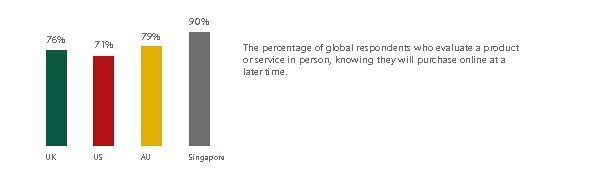
South East Asian countries tend to a year or two behind Europe in how technology is integrated into our lives however we’re already seeing digital influence how we interact with brands in Asia. For instance a recent survey by SDL in the UK found that 90% of Singaporeans evaluate a product or service in person before buying online.
Unless Asian brands wake up to the way consumers are using digital to research and choose brands – and that means more than using a traditional model of mass and invasive ads across news and other sites – they will find it hard to compete and that won’t have a happy ending.
A fascinating insight into the social media and mobile shopping habits of consumers in the United States, United Kingdom, Australia and Singapore has just been released by SDL in the UK.
The survey size is a little small – 4,000 people in four countries – but the results unearth new data on how social media and mobile are influencing how consumers interact and build relations with brands.
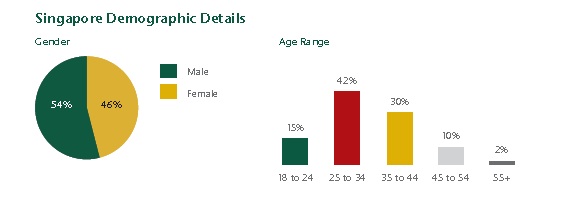
Singapore participant breakdown
Findings include:
33% of respondents from all four countries have acted on promotions seen on social media.
58% of respondents have shared positive experiences online and have sought advice from friends and family when talking about brands on social media.
U.K. respondents are more likely than respondents from the other four countries to complain about service on social.
When respondents express feedback, Facebook is the most popular platform to do this.
Showrooming (visiting a physical location to evaluate products and services even when you know you will buy online at another time) is increasingly prevalent as 77% of participants showroom.
Experiential branding key to branding success
62% of the participants use a mobile device when in stores to compare product prices.
69% of respondents from all four countries expect a brand’s online store, mobile app, and physical store to offer the same pricing, discounts and sales.
Pricing consistency is expected in all countries
What can brands learn from this thought provoking survey?
They need to understand their relationship with consumers and what resonates with those consumers.
Brands that ensure parity in pricing and products across multiple channels will have to place greater emphasis on the customer experience and experiential branding if they want to win and retain business. Those that compete on price alone will soon be out of business.
Department stores and other retail outlets that represent multiple brands will have to work harder to engage consumers and ensure a positive brand experience otherwise they face the prospect of losing customers, possibly forever.
Mobiles are changing the way consumers research and learn about brands.
Brands that take the time to build relationships with core fans or brand evangelists will see their brands promoted to thousands of fans for minimal financial investment.
Those brands with digital brand strategies that go beyond tactical campaigns online are increasing sales through loyalty and advocacy.
Brands that try to control content and manage corporate driven messages and ignore consumers are unlikely to last very long in the consumer economy of today.
Telling the brand story online should be done across Facebook and other popular platforms with the ongoing development of corporate and consumer content.
Italy is the fifth most visited country in the world and gets over 44 million tourists a year. Tourism is estimated to generate revenue of £120 billion (RM600 billion) per year.
It’s a lucrative industry and one that needs protecting. So the last thing they need is a negative story that could drive visitors away.
Recently, 4 British tourists visited Rome and were forced to pay £54 (RM270) for four ice creams. Now I know Italian ice cream is supposed to be the best in the world but it isn’t THAT good.
Stunned, the group paid but later complained to an Italian newspaper and soon after the story made the front pages of many newspapers in the UK.
Mindful of the impact negative stories have had on other countries such as India where brutal gang rapes of female tourists have resulted in a 25% drop in arrivals, tourism officials were quick to react.
They got in touch with the tourists and invited them back to the city as guests of the mayor. This time they were flown to the city, met at the airport, given free accommodation at the luxury Jumeirah Grand Hotel – rooms from £500 (RM2,500) per night, free meals and free tours of the city.
No trip to Rome is complete without a trip to Harry’s Bar
They were treated like kings and shown around the Piazza Navona, Capitoline Museums and archeological remains of ancient Villas. And of course they stopped off at Harry’s Bar on the Via Veneto for a drink.
The response from quick thinking Italian tourism officials has turned a negative news story into a positive one and ensured the story did not escalate into something that could have had a detrimental effect on the lucrative tourism industry. Simple but effective. In the event of something similar happening to you, do you have a plan in place to do the same?
The Malaysian automotive industry consists of two low-end manufacturers. To help these manufacturers, the government protects them with massive import duties, sales and other taxes that can jack up the price of an imported car with a large engine by as much as 155%.
In addition to these taxes an Approved Permit (AP) is required to import a car. These can cost around RM30,000 (US$10,000) each.
This makes it a tough country in which to sell foreign cars, especially luxury vehicles. To give you an example, a BMW 3 series that costs approximately £30,000 (RM150,000) in the UK, will cost about RM230,000 (£46,000) in Malaysia.
Top selling luxury cars in Malaysia
The BMW 3 series and the Mercedes C class are the most popular of all luxury vehicles in Malaysia. Sales of the BMW 3 series are around 2,000 units per year and the Mercedes C class slightly higher at 2,200 units. Both these models account for about 40% of each manufacturer’s total annual sales in Malaysia.
Mercedes Benz C class interior
So you would expect any dealer that makes a living selling and servicing luxury cars to be on top of their game. Right?
In November and December 2012, a prospect visited a number of luxury auto dealers and had a few test drives. During one test drive, the sales person spent the whole time texting.
On another occasion, at a different showroom he was approached by an executive who began the discussion by arguing about whether a particular vehicle in the showroom was the latest model.
Despite operating in a very competitive space, neither sales executive followed up on the prospect’s visit. However one of them does send ad hoc emails focusing on discounts.
Eventually the prospect asked a friend to refer him to someone at one of the main dealers. He was introduced to a senior Director who referred him to a manager who referred him to an assistant manager. Despite this the prospect purchased a new Mercedes Benz C250 because this dealer offered a larger discount than any of the other dealers.
Even this luxury car dealer who got a referral from a supplier and made a sale with zero marketing investment has done little to build a relationship with the customer, preferring instead to simply sell a car. More on this later.
Selling a luxury product is not like selling a bag of rice
More than any other sector, luxury brands must have people who know how to build relationships with customers. The market for these brands is 0.02% of the Malaysian population. It is not like selling rice, LCD TVs, Computers or Fax machines where volume is the key to success.
Ensuring a luxury purchase requires an investment in time and effort to build a relationship. A one-to-one relationship with a representative that offers individual specific value, exclusivity and personalisation is what customers want.
Levels of service must be exemplary because customers in this space have so much choice and have worked hard for their disposable income.
They want to be seen as special, important and part of a select club and not simply as another anonymous person in an anonymous crowd buying an anonymous product.
In the first month after purchase, our buyer received two or three calls and both times the callers were essentially going through the motions of ticking service and satisfaction boxes.
Since then he has heard nothing. Then last week he received a text message. It is enclosed here, in full.
Poorly written, too familiar and a lazy way to try and upsell a luxury product!
Pathetic I know. And the cars listed in the text are not cheaper. We’re talking about RM350,000 (£75,000) and upwards!
Now manufacturers, dealers and salesmen are going to say that all that matters is price and discounts but that is only because you cannot be bothered to build relationships with prospects and customers.
So what should this dealer of luxury automobiles do differently? Here are 10 things they need to do and do fast:
1) Recruit the right people and train them not with generic training courses that are used for automotive today and property tomorrow, but with bespoke training relevant to your brand, your industry and your customers.
2) Use technology correctly. Text messages are not a sales tool.
3) Put in place processes and systems that must be adhered to. For instance, if a member of staff has never met a customer before, the relationship must start on a formal footing, at least to begin with. Depending on how the relationship evolves, staff may be allowed to become more familiar.
4) Telling isn’t selling. Appeal to prospect emotions by identifying individual requirements for value and matching your product attributes to those preferences. You don’t sell cars, you realize dreams.
5) Service, service, service. Every interaction with a luxury brand must be of the highest level and expectations must be exceeded every time.
6) Make the experience of dealing with the brand special, unique, glorious but never, ever assume the customer will come back.
7) Too many brands spend a fortune on marketing and then practically ignore the customer. You have a 50% chance of selling to an existing customer and only a 15% chance of selling to a new customer. But sending a poorly written text is not going to retain a customer.
8) Don’t discount.
9) Carry out a sales process audit and sales skills analysis (yes, we can do that for you) and improve the skills of your customer facing staff.
10) Don’t waste time measuring satisfaction. It offers no value.
There is talk of liberalisation of the Malaysian automotive market but the reality is there won’t be any significant changes soon. Luxury brands need to know how to build relationships and realise dreams, not sell cars.
This infographic shows how spending on advertising on social networks is growing at a phenomenal pace. Whilst this is an area that any brand should be looking in to, it is important to understand that consumer behaviour in these environments is very different and the approach to content must take this into account.
A recent report on digiday stated that a consumer is more likely to die in a plane crash than click on a banner ad and that 50% of clicks on mobile banner ads are accidental! The same report also stated that 8% of Internet users account for 85% of clicks on banner ads.
So if you want to ensure a ROI from your social advertising campaigns, make sure you understand target market requirements for value before launching a social media campaign otherwise consumers will continue to avoid online advertising, and that includes yours.
When Starbucks first came to South East Asia the general perception was that no one in the region would pay US$4 and upwards for a cup of coffee when a decent cup of local coffee (kopi-O as we call it here in Malaysia and we’re the ones who drink it without sugar or condensed milk) would set you back no more than one dollar.
But Starbucks is a classic brand that understands better than most the new realities of branding. And one of those new realities is the experience consumers have with the brand. Get that experience right and consumers will pay well over the odds for the product.
Starbucks has got it right globally and the special experience Starbuck’s personnel create for each customer is what brings customers back time and time again.
Part of the Starbucks experience is the greeting and their use of your name to identify your drink from all the others at the serving area.
One traveller called Veronica went to a Starbucks in Hong Kong and as you can see from the image below, the Barista didn’t quite get her name right.
Ooops!
She was unimpressed although I don’t really see the big deal. After all, most of us in this part of the world have experienced this at least once. My first name is Marcus and it has been translated into Marks, Marqus and bizarrely, Fungus. I’m serious. Now, I just say Max and it works every time.
Whilst researching a chapter for my new book (you can get an idea of how the book will go by reading this article here) I came across a fascinating company called Undercurrent.
One of the key players in the firm is a guy called Aaron Dignan. You can follow him on Twitter here.
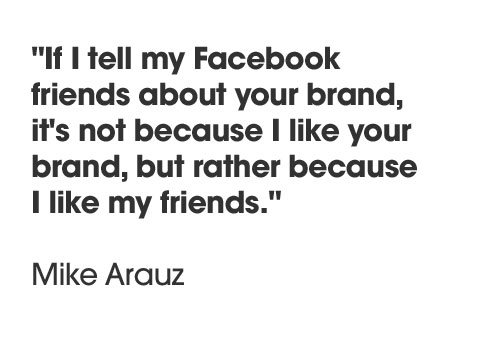
I was impressed by much of what I read on their website but whilst continuing my research, I also found this quote from Aaron:
Do you really understand Facebook?
This simple quote sums up the new world order of branding. It is not about you. Consumers really don’t care about you and your brand. There are so many brands out there that consumers are no longer buying into brands in the same way as they did before.
There are exceptions but on the whole, the world is changing and brands can no longer expect to have the loyalty they used to take for granted. Do you agree?
Are you happy with your branding activities? Or do you find the money you spend does little to build your brand?
Unfortunately, most branding initiatives revolve around a creative campaign developed by an advertising agency. Depending on budget, the creative campaign will be implemented with a one-size-fits-all message communicated to all and sundry and across multiple mass media platforms for as long as budget allows.
The model essentially revolves around hope – hope that lots of people will see the campaign, hope that amongst those people will be the target markets, hope that the message will resonate with those target markets, hope that those target markets will remember and hope that if they remember they will act.
In a noisy world, is a traditional approach to building a brand going to make you stand out?
So basically, the ‘strategy’ is one of hope. Chances are if it doesn’t work, the agency will, if you haven’t already fired them, propose more of the same.
For most brands this approach is an exercise in futility. Wouldn’t it be better to first get an understanding of where your brand is – both internally and externally?
In the social economy, where consumers not companies define brands, don’t you want to know what your stakeholders want from your brand, what you are doing right (and wrong), the channels they are most likely to interface with, their influencers and more?
Internal and external brand and communications audits can both help determine how effective your branding activities have been and, more importantly, what they need to accomplish in the future.
In the social economy, a brand audit is the first step to building a brand
Brand audits have multiple advantages. They provide a benchmark to evaluate the current brand position. Carried out every 2 years they can evaluate progress toward branding goals. They also unify an organization. Too often, everyone has a different definition of branding. A brand audit will identify this and provide recommendations for improvement.
Indeed, a brand audit can provide a consistent, universally accepted brand DNA and from that a definition that ensures that everyone in the organisation is marching to the beat of the same branding drum. Finally, a brand audit can help eliminate the all-too-common disconnect between what companies believe their brand to be and what customers perceive it to be.
An internal brand audit takes the brand temperature from corporate executives and other personnel. One-on-one confidential interviews probe to determine each individual’s perceptions of the brand, branding goals, evaluation of past branding activities, knowledge of key corporate or brand messages and other key points.
An Internal brand audit is a key component of any brand strategy, when did you last carry out an Internal brand audit?
What are the current branding and customer processes, and how can they be improved? One great question to ask is: “Imagine it is five years from now, and the company is celebrating historic financial and market success. How did the company arrive at this point? What are some of the activities that brought us to such success?”
A brand audit can cover a wide cross section of departments but must have the customer and the customer’s needs at its core. What do we know about customers? Are we collecting THE RIGHT data? Is relevant customer data being added to corporate databases? Is customer information shared with other areas of the company? What initiatives are on the horizon that will affect certain customers and how will this be addressed?
A minimum of 25 minutes is required for each interview, but they can take up to an hour. Questions can be prepared beforehand, but the most valuable insights often result from free-ranging discussions on relevant topics.
A key component of a brand audit is a communications audit, which is especially useful for larger firms with multiple divisions or departments that get involved in branding activities.
A communications audit looks at all the visual material that represents a brand – the brand identity, sales documentation, press releases, ads, brochures, Web sites, social media channels, merchandise, vehicles, logos, etc.
Too many so called brand strategies are really just pointless journeys to unknown destinations
Analysis then determines the amount of consistency and integration in appearance/design, messages and their relevance to target markets (in a noisy world where consumers are time poor, content is so, so important) and adherence to corporate standards. Ideally, a brand manual is in place to provide a benchmark.
The role of social media in both internal and external corporate communications is increasingly important and a social media audit must be included in the communications audit. Communications across social media require different skill sets to traditional marketing and this is scaring some companies away but it must be addressed.
A social media audit lays the foundations for the social media strategy that has an crucial role to play in the brand strategy developed later.
Internal brand and communications audits often reveal a stunning amount of discrepancies that result in mixed messages to both prospective personnel and customers, incompatible branding efforts or even disagreement about branding goals.
An external brand audit looks at how various stakeholders (or, more accurately, constituencies) view the brand. Such constituencies include customers, prospects, media, distributors/retailers, regulatory bodies and suppliers.
Sometimes, an external brand audit is combined with a loss analysis to determine why a contract or other business went to a competitor. These constituencies are asked their perceptions and experiences with the brand and crucially, asked “What do we have to do to win back your business?”
For some companies, it should also be combined with a customer acquisition audit to see if relationships are being developed effectively.
Sample questions can include: “Why did you buy the first time?” “Why will you buy again?” “How useful and relevant are corporate communications?” “How responsive is our support?” “How do our competitors compare to us?” One revealing question we’ve used in the past is: “If you were running our company, what would you do to better meet your requirements?”
The number involved in brand audits can vary greatly according to time, cost or other constraints. Even as few as 5 – 10 qualitative interviews may produce actionable insights.
The success of a brand audit will be determined by the people involved. They must understand branding imperatives, be familiar with the relevant products and company and have superb questioning, listening and analytical skills.
Results of brand audits (the good and the bad) must not only be shared as widely as possible but also incorporated into internal and external branding efforts, including employee communications, advertising and PR.
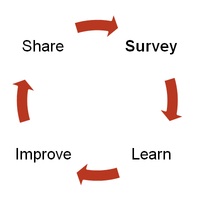
Share research data, not just the good stuff!
It is especially important to use the results to drive changes in sales, service, support and other customer-facing activities.
Finally, remember to use brand audits as guidelines for improvement, not as sticks for punishment.
“You’ll find many ‘marketers’ pushing their social and interactive expertise with little true marketing experience in their backgrounds. This results in tactically driven campaigns that do not support a company brand promise or any kind of overarching strategy. It’s talking for the sake of having a mouth – but ultimately saying nothing.”
CEOs and or CMOs, already under pressure time wise, are giving too much responsibility to creative advertising agencies to manage their brands. This is a sweeping generalisation but the fact is creative advertising agencies do creative advertising because that’s all they do. Good luck to them but creativity design alone cannot build a brand.
Brand strategy is being sacrificed for speed, creativity, originality and one off tactics that have no longevity. Shareholders and consumers are the losers.
If you are responsible for a country or destination brand, read on.
As cheap air travel and the package tour (as well as the devaluation of the Spanish Peseta and the abolition of currency controls in the UK) helped jump start international travel in the 1960s, 1970s and 1980s, the world was still a fairly predictable place and countries were, on the whole inhabited mainly by citizens of that country and not by the multicultural citizens living in most cities today.
Moreover, due to the social and economic structure of Western countries, consumers were only just beginning to have disposable income that allowed them to experience the concept of leisure time.
At the same time, mass media was becoming increasingly influential as consumers purchased more and more TVs and radios.
So, with more disposable income, more leisure time and the establishment of commercial television, it was now possible to reach large swathes of a population reasonably quickly and relatively inexpensively.
In this environment countries put their faith in creativity to build brands, hoping that an exotic image, tagline or promotion would resonate with prospects and increase visitor arrivals.
And generally, because of the cultural and social predictability of countries, the same message could be used to communicate with everyone.
Moreover, with few conduits to increasingly wealthy consumers who had more disposable income than ever before and with limited competition in the market place, this type of creative driven branding often raised the profile of countries enough to attract visitors.
Countries and destinations such as Spain, the UK, Kenya, Florida, Greece, The Algarve, Singapore and Italy as well as many other destinations used this approach. And in this mass market economy, mass media – TV, Print, Outdoor, with its huge reach, was the logical vehicle to enhance the impact of creative-driven branding with reach and repetition.
Early tourism ads worked because markets were similar, new, eager and easy to reach
But that mass-market economy no longer exists. Today’s consumers are increasingly overwhelmed with those creative images, taglines and promotions. And many of the messages have become so similar that it is virtually impossible to differentiate one from another. And of course, consumers have also become fed up with countries failing to deliver on promises made.
Despite this new world order, countries, agencies and consultants continue to try and build country brands by using ‘cool’ advertising, creative or symbolic logo’s with pretty colours, catchy taglines and so on.
But these activities are nothing more than advertising campaigns and do very little to build a nation brand. And even the one’s that have made us sit up, take notice and seek more information are more often than not soon forgotten or overtaken by a new campaign from a competitor destination or the recommendation of a friend.
But most worrying of all, these advertising campaigns lull countries into a false sense of security. ‘Visitor arrivals are up so everything is good in the world’. The problem is that an advertising campaign might draw the attention of visitors to a destination but it doesn’t build a destination brand.
An advertising campaign may be important but it is part of what should be a well researched and planned brand strategy that takes into account all brand related activities.
These include internal buy in and a thorough understanding of external stakeholder requirements for value and other elements such as content development, social media, PR and most important of all for a country, crisis management. Traditional communications pushed out across traditional and digital media, may still have a role to play, but they are not a total solution.
Sadly, too many countries and destinations have short cut the process to try and get their ads out quickly. This has resulted in the demise of the brand strategy. Yet failure to invest in such a brand strategy can be detrimental to the long term success of the brand.
A case in point. The Maldives has invested more than US$10 million in the last three years on advertising itself as a luxury destination. But in 2012, political turmoil saw arrivals from the lucrative European markets fall, with the UK registering a 12.2% drop. If it weren’t for a sharp rise in low yield arrivals from China, the Maldives would probably have registered a major drop in arrivals.
To the detriment of the country, participants or perhaps victims of the political turmoil in the Maldives called for a boycott of the tourism business and attempts by the new government to develop the tourism business are constantly thwarted by opponents.
One example was when the Twitter hashtag #sunnysideoflife (the official tagline) was hijacked and brochures entitled ‘The cloudy side of life’ threw scorn on tourism players and drew the readers attention to human rights abuses and police brutality against Maldivians.
This year has seen further negative press after a 15 year old girl raped by her stepfather and sexually abused by other men was sentenced to 100 lashes for having pre marital sex.
So far the Maldives government hasn’t responded, leading one to suspect they don’t have a brand strategy with a crisis plan to deal with such a situation. What is certainly true is that this complicated issue will not be solved with an advertising campaign.
In 2012 Jakarta initiated an advertising campaign across Asia in an attempt to attract visitors to the capital and largest city in Indonesia. The campaign was poorly planned, conceived and executed. You can read more about the Jakarta campaign here.
Based on the advertising campaign and the website, it is fairly safe to assume these two elements were not part of a brand strategy.
Does this ad make you want to get more information on Jakarta?Lack of integration and poor content suggests little or no planning
India is famous for its ‘Incredible India’ campaign launched in 2002. By 2009, India was spending US$200 million advertising the country. This iconic advertising campaign is still going strong and in November 2012 at the World Travel Market in London and to great fanfare, India announced a new advertising campaign headlined, “Find what you seek”.
Early ‘incredible India’ ads – excellent execution
Officially launched by the new Indian minister of tourism at a hotel in London in front of 400 guests, the new Incredible India campaign highlighted to consumers ‘that they will find whatever they are looking for from a holiday in India.’
It was also announced at the launch event that the goal of the campaign is to increase international arrivals by 12% annual till 2016.
Little more than a month later, in December 2012 in Delhi a woman was brutally gang raped and left for dead on a public bus. The story made headlines around the world.
And then in March 2013, a Swiss woman was gang raped whilst on a cycling tour of Madhya Pradesh and soon after, a British woman was attacked in Delhi and only avoided further suffering after jumping from a hotel window to escape.
Within a matter of weeks, tour operators were reporting a 35% cancellation rate from women and a 25% drop in all arrivals with multiple cancellations from the lucrative markets of Australia, the UK, Canada and the United States.
Much of the outrage toward these events is related to the treatment of woman in India and numerous stories that would not normally feature on international news are now making headlines globally including the stoning, arrests and murder of Indian women. None of these events will be addressed by advertising.
If you are responsible for developing a Nation, country or destination brand, don’t allow yourself to be lulled into a false sense of security over a ‘successful’ advertising and promotions campaign telling the world how great is your country or destination.
To build a strong brand amid increasing international competition and unforeseen circumstances that are carried across social media and possibly across mass media as well, destinations must have in place a well defined brand strategy that covers all potential scenarios and doesn’t just focus on communications.
A brand strategy has other benefits. Here are five more reasons for developing a brand strategy:
1) A brand strategy clearly defines the organisation values and promises and ensures stakeholders understand what is required of them to deliver on those promises and values. For a nation brand this internal branding is critical to the success of the brand.
2) Staying with the internal brand, lots of tourism boards and CVBs attend trade shows but if I had a pound for every time I’ve been to ITB or WTM and seen poorly trained personnel representing countries or states, I’d be a very wealthy man. Trade shows cost a lot of money. A brand strategy will ensure training occurs at the best possible time.
3) A brand strategy ensures the brand is ready for every eventuality, with a crisis plan to address issues such as those that have happened in India, the Maldives and most recently, Boston.
4) A brand strategy ensures all stakeholders are pulling in the same direction. If one state is targeting visitors at the same time as another state, resources are being wasted. A brand strategy will ensure integration and engagement, not individual tactics.
5) A brand strategy ensures time isn’t wasted on stand alone tactical initiatives implemented at the whim of a government servant or other person who should know better.
Far too many countries or destinations give the responsibility of building their brand to creative advertising agencies. These agencies are called advertising agencies for a reason. They do advertising.















 brandconsultantasia.com