Good experiences will help build the Malaysia Nation Brand


I read an interesting article on the Malaysia Nation Brand which can be found here.

But I was particularly taken by one of the reader’s comments.

As someone who has worked on a number of elements of the Malaysia brand and who has written numerous articles on it, I believe I can add value to this discussion.

Firstly, it is incredibly hard to write about the Malaysia Nation Brand or any other Nation Brand in an article of a thousand words or so! It’s a thankless task which is why many experts have trouble writing a relevant or coherent book on the subject!

And, because the world is so dynamic, what is a ‘cutting edge’ tool today maybe obsolete tomorrow and a tactical solution recommended yesterday may not be relevant tomorrow.

Anyway, back to the contributor. He appeared to state that maintenance in Malaysia is not a problem and insinuated that it was irrelevant anyway because it had no bearing on the Malaysia Nation Brand.

The author of the article responded saying that maintenance is very important and forms part of the confusing image of Malaysia. The author goes on to say that poor maintenance of buildings contributes to the experience and therefore the success of the brand.

Let me state here that maintenance is a major cause for concern in Malaysia, especially at Government venues but also at privately owned venues.

Last Saturday and Sunday, I was at the Bukit Jalil indoor stadium for a world class sporting event (ATP Tennis) and the place is a sad, shabby, tired mess. Walls are filthy, the place smells, doors are broken, clocks don’t work, ventilation is poor and navigation complicated. I won’t event mention the toilets. Furthermore, the TV sets are old and either not working or showing a picture that looks as if there is a snow storm going – the list of poor experiences is endless.

As I left I looked up at the beautiful main stadium and could see numerous holes in the roof, abandoned scaffolding and other signs of neglect. And we all know this scene is replicated around the country.

If we want to build a nation brand, it will require more than a tagline, a brand essence or a glossy advertising campaign. To build a Malaysia Nation Brand will require a massive change in mindset. Part of this will require an understanding that positive experiences create positive memories which lead to positive word of mouth and an improved Nation Brand.

Because it is the experiences people have when they interact with numerous touchpoints that they will remember and communicate to others.

World class sporting events are a major way of improving a brands image and the organisers should be commended for bringing in this prestigious event. But the authorities should also do their part and make sure the experience is unforgettable, for the right reasons.

If you are interested I wrote an article on the Malaysia Nation Brand and you can find it here.

A nice tactical campaign from Nestle


Nestle in the UK has come up with a great tactical campaign to sell some iconic chocolate bars.

The campaign, called ‘We will find you’ is simple. They’ve placed a military grade tracking device in the wrappers of six top selling chocolate bars and spread them around the UK. Posters have been put up around the country and there is a well executed advertising campaign on TV.

<a href="

” target=”_blank”>

If you are one of the lucky ones and you open one of the six wrappers, the tracking device is activated and sends a signal to an HQ apparently set up for the project.

The HQ will then instruct a team of ‘commandos’ in a helicopter to track you down within 24 hours and ambush you with a delivery of £10,000 (RM50,000) in cash.

Whilst it’s an original, exciting and well executed campaign, I’d like to know what happens if you throw the wrapper away before they track you down?

Don’t let a bad copywriter ruin your brand


David M. Ogilvy erstwhile spy, farmer, researcher, promoter and of course iconic ad man wrote in his popular book “Confessions of an Advertising Man”, that there are essentially three main points of view on what is considered to be a good advertisement.

Ogilvy, “What is a good advertisement? There are three schools of thought. The cynics hold that a good advertisement is an advertisement with a client’s OK on it.

Another school accepts Raymond Rubicam’s definition, “The best identification of a great advertisement is that its public is not only strongly sold by it, but that both the public and the advertising world remember it for a long time as an admirable piece of work.”

I have produced my share of advertisements which have been remembered by the advertising world as “admirable pieces of work”, but I belong to the third school, which holds that a good advertisement is one which sells the product without drawing attention to itself. It should rivet the reader’s attention on the product. Instead of saying, “What a clever advertisement,” the reader says, “I never knew that before. I must try this product.”

Bearing these comments in mind, I would like to draw your attention to an advertisement that appeared recently in the Malaysia Daily Star newspaper.

In any market, good copywriting is needed to sell cars

Firstly have a look at the tagline, “This Season’s Style Icon.” What does that say to you? Does it say, “Buy this car and have trouble free motoring for years to come” or does it say, “quick get one now before the end of the season (traditionally a season in the fashion industry is 3 months) otherwise it will be out of date?”

One could argue that the good news is that there will be a newer model at the start of the next season.

I haven’t test driven the ASX but I’ve seen it on the road and it looks like a nice bit of kit and certainly doesn’t deserve to be portrayed as something fashionable to own for a season, especially when it costs almost US$50,000 in Malaysia.

In case you can’t read it, the sub heading reads, “The exceptionally stylish Mitsubishi ASX Euro.”

And the copy proclaims, “They say it’s the clothes that make the man (There’s the link to the fashion industry but I doubt it encourages many women to pay attention). In our case, that means the panoramic glass roof (Malaysia is a tropical country and the last thing anyone wants is a panoramic sun roof magnifying the sun’s glare) and 8-way power leather seat (Has anyone ever bought a car because of the number of options available on the power seat?) in our latest ASX Euro.

Not only do they (that’s the sun roof and leather seats) make this Euro-spec (does that mean it comes with a heater?) urban utility vehicle look classy (the sun roof that no one can see because it is on the, well roof and the seats make it look classy?), but also anyone who’s behind the wheel (So a sun roof and leather seats will make me look classy? Have you seen me?). If that’s not alluring enough, it’s only limited to 200 units. So hurry down to your nearest showroom today (Does anyone hurry to buy a car?).

I believe the art of copywriting is really under appreciated in Malaysia and you can see why. I think that this is one of the many reasons why 86% of Malaysian consumers no longer believe what they read in advertisements.

The poor quality of copywriting has led to shortcuts and the use of increasingly ridiculous claims that are at times laughable.

A copywriter should communicate a relevant or legitimate meaning quickly, connect with needs of the target segment, influence and hopefully persuade that segment to seek more information.

I don’t see how this ad does that. But it must have the client’s OK on it… What do you think?

What is the difference between an advertising agency and a brand consultancy?


As the consumer landscape changes and consumer habits and the purchase decision making process evolves, it is imperative that brand owners understand where, when and how to spend their valuable and increasingly limited resources.

Historically advertising agencies defined and controlled a brand’s message and through which channels it was broadcast. They would then blitz consumers with intrusive advertising and messages. The goal was to reach as large and as broad a target audience as possible on those platforms with the most extensive penetration.

But in the social economy, consumers have little faith in such corporate driven messages broadcast across mass media channels to which they are paying less and less attention.

Today consumers spend their time in a variety of social networks or in niche online communities with likeminded people. And it is to these people they look to when seeking information on products and services.

So does this mean the end of advertising agencies and advertising? Definitely not, there is still a need for good advertising agencies that create good work but the process has changed and the advertising agency can no longer be given responsibility for building brands.

In the past, branding and advertising used to be elements of marketing. Today, marketing and advertising are now part of branding and it is the brand consultant you should look to if you want to build a brand.

So here is an outline of the difference between an advertising agency and a brand consultancy. Hopefully this will give you enough knowledge to make an informed decision on who should build your brand.

1) Branding is strategic and advertising is tactical. The most strategic actions you will get from an advertising agency will be a brief. The brief will define the proposition that the advertising must communicate and to which segments. But then what? And what about internally? How will you get personnel on brand? Does the delivery driver or sales assistant know what their role is in the delivery of the promise/s made?

A brand consultant will develop a brand plan or brand blueprint that will drive the brand strategy, both internally and externally. This holistic approach will address all key elements of the brand from the copy used in recruitment advertising to customer facing departments and their ability to represent the brand to point of sale and retention strategies and more.

The brand consultant will then work with you to determine the best resources to use to get the whole organisation on brand.

It is not possible to define a brand through an advertising brief but it is possible to define a brand through a brand plan or blueprint.

2) Advertising agencies do advertising. That’s what they are good at. In fact some of them are very good at it. Advertising uses creativity and a slick message (normally defined by the organisation) to get your attention.

And this is done via campaigns pushed out across TV, radio, billboards, websites and so on. The idea is that enough people will see the campaign and the message will hopefully resonate with as many people as possible. And of course the agency gets a commission for placing these ads with the channels.

If it doesn’t work you either get the agency to come up with another creative idea and go through the whole process again, get rid of the agency, hire another one and hope they can come up with a creative campaign that does resonate or you can go out of business.

And as consumers have lost faith in traditional marketing and now distrust the messages contained in such campaigns or simply miss them because of the clutter, it is increasingly difficult to build a brand using such a model.

So unless you have very, very deep pockets and can advertise consistently for long periods of time, this approach is simply going to waste valuable resources.

A brand consultant will carry out an audit of your business, industry, processes, systems, stakeholders and more and then determine the best way forward for you.

Solutions may require advertising but will also look to improve R&D, sales, production, supply chains, operations, customer relationships and retention strategies.

3) If you are looking to go with an advertising agency, your strategy is likely to be in the hands of a creative director and his team. If the agency is going through a difficult period and doesn’t have many staff when they win your business, the agency will attempt to employ talent with experience in your industry.

Unfortunately, if the talent isn’t available, perhaps because they are working for competitor agencies, you will end up with sub standard people working on your brand and your chances of success are reduced further.

Because branding is a strategic institutional initiative, not a marketing initiative and therefore must have the buy in of executive management, a brand consultant will insist on having C level involvement in the development of the brand which places your brand strategy where it should be, in the hands of executive management.

4) Advertising agencies are often deemed successful if they have won lots of awards for creativity not whether a campaign increases sales or profitability.

There aren’t many awards for brand consultants which is a good thing because this allows them to focus on increasing profitability, often through developing and strengthening relationships with stakeholders and customers.

5) Most advertising focuses on a series of tactical initiatives to acquire customers. A brand consultant will develop a strategy to acquire and retain customers.

6) Traditional marketing activities are enormously wasteful as much of the advertising targets irrelevant demographics or customers that cannot afford or are not interested in the product. A recent report in the Harvard Business Review quoted a UK study that reported 72% of CEOs are tired of being asked for money from marketing departments without an explanation of how it will increase business.

Furthermore, in the same survey, 77% of CEOs have had enough of talk about ‘brand equity’ that can’t be linked to any real equity. A brand consultant will ensure budgets are spent on the right strategies for the right segments with metrics for measurement.

7) An advertising agency uses a one size fits all series of tactical advertising campaigns that use mass marketing across mass media with only a nod to digital and below the line activities.

A brand consultant will look to collect and leverage specific data to develop targetted communications across digital channels to engage prospects, whilst carrying on conversations with existing customers.

8) An advertising agency will often look at what the competition is doing and try to position an offering based on competitor actions. This approach is flawed because successful organisations are nimble and by the time you have developed your position the competition’s strategy will have evolved.

A brand consultant will be aware of competitor activities and will use that knowledge to strengthen the firm’s competitive advantage but will not allow competitors to define strategy going forward.

9) The impact of an advertising agency’s work is difficult to measure. A brand consultant will develop metrics to measure promotions, advertising and other activities.

Customer retention is not the same as customer loyalty


I read an interesting post on The Free Malaysia Today website about customer loyalty and you can read the full article here

It’s a useful article that any Malaysian business owner should pay attention to. But as often happens, it blurs the lines between customer loyalty and customer retention. They are not the same thing.

A retention program is not the same as a loyalty program because a retention program is normally price driven and those customers acquired as a result of a retention program can often be lost to competitors.

A loyalty program on the other hand will help increase share of wallet by encouraging more purchases, often of more premium products and, more pertinently in the social economy encourage customers to become brand advocates and communicate positively about the brand and experiences with the brand.

A case in point for me personally is MAS. I am a member of the MAS frequent flyer program but it does not buy my loyalty. MAS retains me as a customer but I am always looking for a better deal with other carriers.

If another carrier were to invest in building a relationship with me I would switch in a heart beat. I also tend to talk negatively about MAS and even when it delivers a positive experience I tend to take it for granted.

Whilst I’m on the topic of MAS I should mention that one way MAS could improve its business is by investing in its loyalty program and in particular software that can mine the database more effectively. As it is, all the loyalty program does is try to blanket sell all offerings to all members.

Loyalty is no longer about personal relationships and how often you take someone to karaoke or for teh tarik. Customers also expect you to know their industry, the challenges they face, who are their competitors and crucially, who are their customers, potential customers and who are the influencers of those customers.

If you understand and integrate a loyalty program into your brand strategy you will be on the way to building a strong brand. But if you mistake a loyalty program for a retention program, you may do more harm than good.

Marketing is dead


In June 2009 I wrote a blog post explaining that in today’s social economy where consumers not companies define brands, the concept of positioning was no longer relevant.

You can read the full article here but the crux of the article is that the concept of positioning, a key element of marketing is no longer relevant.

In September 2009 I wrote another post about how the Malaysian Ministry of health spent over US$35 million on a traditional marketing campaign that failed to reduce smoking in the country. You can read the full article here

In January 2010 I wrote an article about how 95% of products fail to become brands despite US$1.5 trillion spent on marketing annually. You can read the full article here

There are lots more similar articles all saying the same thing – that in the new world order, where customers not companies define brands – the old rules of marketing are dead. Feel free to browse my blog to find them.

Now Bill Lee over at Harvard Business Review has got on the bandwagon. He claims in this article, and rightly so that marketing is dead and provides three very good reasons.

Traditional marketing is dead

a) consumers aren’t listening to traditional messages. He provides empirical evidence that proves that in the consumer decision making process, traditional marketing has no relevance.

b) CEOs have lost patience with marketing departments. A 2011 study reports that “73% of CEOs said that CMOs lack business credibility and the ability to generate sufficient business growth, 72% are tired of being asked for money (by CMOs) without explaining how it will generate increased business, and 77% have had it with all the talk about brand equity that can’t be linked to actual firm equity. (I believe measuring brand equity is a futile exercise and you can read more about what you should measure here).

c) In a social world dominated by social media and the way we use it, traditional marketing doesn’t work and doesn’t make sense.

Bill goes on to provide some excellent advice on how to move forward with building a brand. If you have been spending too much on traditional marketing activities and can’t see the benefits, it may be time to review your strategy.

You know where to find us!

Art meets advertising


This is a beautiful video of what maybe the last of the billboard painters.

Hand-painted billboards first appeared in the USA in the 1950s and are still seen in some parts of the USA especially in LA where they are often used to promote a new movie.

The Red Army in China used them to err motivate citizens and they are still a common sight in parts of South East Asia and India. However the quality leaves a lot to be desired and may not compare to these American billboards.

Thanks to these guys for the heads up on this video.

Street art goes to war against outdoor advertising


Here’s something interesting from the UK.

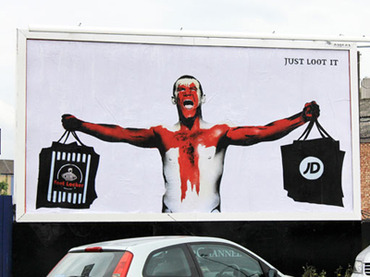
A group of artists from the UK, Italy and France have embarked on a project around the UK that is called “Brandalism” which aims to “challenge the destructive impacts of the advertising industry.”

Brandalism is essentially a campaign to hijack a number of billboards around London and ‘refresh’ them with new work by 26 street artists.

These guys are not happy with the advertising industry, claiming the industry takes no responsibility for the messages they force-feed consumers and don’t give those consumers a chance to opt out from these intrusions into public and personal spaces.

Nike is just one of the brands targetted by the group

The project has so far targetted outdoor campaigns by Nike, Footlocker, JD Sports and McDonald’s and Locog have been “refreshed” by the artists among others. The group has also posted anti advertising campaigns in Leeds, Manchester, Birmingham and Bristol.

This is being portrayed as street art against branding when in fact it should be street art against outdoor advertising.

Outdoor advertising is an element of advertising which is an element of communications which is an element of branding.

I don’t quite understand how taking a billboard with one message and painting over with another message is going to stop the intrusive attempts by advertisers (and their clients) to get our attention.

There’s also a danger that they will become guilty of the ‘crime’ they are so against, don’t you think?

You can read more about the project here