Good consumer generated content will build destination brands better than any corporate commercials


It’s well documented how numerous companies waste huge amounts of money on ineffective advertising. Generally the advertising is ineffective because it is poorly written, isn’t tested or has been developed to appeal to as many vastly different segments as possible.

This is especially true of country brands. If I had £1 for every ‘me too’ destination advertisement that I’ve seen on TV, heard on radio or seen on a website, I’d be a rich man. Time and time again I see beautifully executed ads for destinations such as Thailand, Egypt, Malta, Malaysia, Bali and others that are all selling the same things – beautiful white sandy beaches, crystal clear waters and cloudless blue skies.

These ads are pushed out across traditional media in the hope that enough people will see them, buy into them and eventually visit the country. If the campaign doesn’t work (and no one knows whether they work or not), the agency is generally sacked, a new one appointed and the whole process starts again.

Basically this model uses Hope as a strategy – hope the timing is right, hope it will be seen, hope it will be liked, hope it will be remembered, hope it will influence viewers enough to reject previous choices, hope the destination will be researched, hope the inevitable competitors that are seen at the same time will not influence viewers, hope this and hope that.

But it doesn’t need to be like that anymore. In the social media era, when consumers not countries define brands and the Internet provides copius amounts of information from other like minded consumers to help influence the decision making process, destinations need to be reaching out across this channel and leveraging consumer produced media to market themselves.

This approach requires a massive mindset change and will revolutionise the traditional organisational hierarchy but it has to start soon or destinations will lose the increasingly brutal competition for heads in beds.

To illustrate this point, I came across one video that is an outstanding advertisement for Kuala Lumpur, the capital of Malaysia. It didn’t cost the Malaysian Tourism Board a penny and is a far better advertisement than any advertising agency produced Television Commercial.

Tourism Malaysia needs to have a community team scouring the web for such content and must then distribute such content across multiple channels to generate buzz and interest. This content will allow destinations to engage directly with influencers and other consumers in a way that traditional media does not allow them to.

This really is an impressive video. I suspect that after you watch it, Malaysia will go to the top of your list of must visit destinations.

Enjoy!

<a href="

Kuala Lumpur DAY-NIGHT from Rob Whitworth on Vimeo.

” target=”_blank”>

Sabah criticised for low growth in tourist arrivals, is it justified?


One of the less mainstream online newspapers carried a scathing attack on Sabah Tourism Board today. You can read the article here

The paper carried extensive comments from a local activist who slammed the State government for recording what he called a ‘paltry’ 1.1% growth in arrivals for 2012 and blames this growth on a lack of planning.

I’ve worked to develop the tourism brand in Malaysia at both the federal level and with some of the State tourism boards and I have to say that although I have not worked with Sabah, from a distance, I think Sabah tourism is one of the most accomplished State tourism boards in Malaysia.

I do know that the State has invested in Tourism infrasture and although it has made some mistakes (name me a country, State or region that hasn’t), the Sabah Tourism Board appears to have worked hard to develop the industry and attract visitors to the State.

However, I do agree that a well thought out short, medium and long term plan that is flexible enough to react to the dynamic world today that focusses on delivering economic, experiential and emotional value (and not ‘me too’ advertising campaigns that do nothing more than waste valuable funds) is key to delivering a destination that not only survives but thrives. And as far as I know, not one State in Malaysia has a clearly defined brand strategy going forward.

One other issue that Sabah and Malaysia in general face is the lack of new products in the state and indeed in the country. Many of the visitors to competitor destinations return year after year because there are new products, opportunities and more.

In the face of growing regional and international competition and the changing tourism demographics that will see tourists from India and China looking for more than a beach resort with a well stocked bar, States such as Sabah and countries like Malaysia will have to invest in new products otherwise any growth, however low will soon turn into a decline.

How effective is your country brand strategy?


Bloom Consulting has just published the 2012 Bloom Consulting Country Brand Ranking which classifies countries based on the effectiveness of their country brand strategies and the impact this has on GDP.

the 2012 Country Brand ranking

In an email to me the Ranking was explained as having a different methodology to other indexes such as the Futurebrand or Simon Anholt rankings as it “conveys dozens of variables in order to position the countries by facts and mathematical algorithms instead of pure opinions, like other country branding rankings do”.

The ranking “takes into account both hard and soft data and includes ground breaking processes to show the relationship between the country’s economic performance and the projections of the country’s brand strategy.”

It doesn’t explain what those processes are, how it gets access to those projections or how it measures them but I do like the fact that someone is trying to develop branding metrics for destination branding initiatives.

“The methodology measures the coherency between the external messages of a country and its actual economic performance under a certain period of time.

The higher a country is on the list, the better they are compared to their competitors, in positioning themselves to attract either Foreign Direct Investment (FDI) or tourists”.

Bloom doesn’t believe that it is possible to develop a single promise for a country and this I agree with (and have been saying for years – please read this article on nation branding). We’re working with destinations in Asia trying to attract tourists from the region, talent from the country and heavy industries from North Asia and North America. Trying to create an umbrella promise for such diverse target markets will be an exercise in futility!

The email went on to say, “this year Bloom incorporated Online Search Demand (OSD) into the ranking. This looks at the gap between what countries are promoting (supply) and what investors and tourists are searching for (demand).

Bloom Consulting uses the OSD along with an analysis of each country’s brand strategy to assign each nation a Country Brand Strategy (CBS) Rating©. This identifies the accuracy match between supply and demand and allows Bloom Consulting to assess the best country brands”.

You can read the report and get more information on the methodology, from this page. Or you can look at an interactive version here.

What’s interesting from an Asian perspective is that Asian countries are big winners in 2012, especially in tourism. Although the USA was top for the second year running, eight Asian countries were in the top 25.

China was the top Asian country at 4th, Thailand 6th, Macao came in 8th, Hong Kong 13th, Malaysia 14th and Singapore 22nd.

Japan was down in 28th place, no doubt the Tsunami played a part although the Arab Spring didn’t seem to have too much of a negative impact on Eqypt which, all things considered did well to come in at 31st.

Good experiences will help build the Malaysia Nation Brand


I read an interesting article on the Malaysia Nation Brand which can be found here.

But I was particularly taken by one of the reader’s comments.

As someone who has worked on a number of elements of the Malaysia brand and who has written numerous articles on it, I believe I can add value to this discussion.

Firstly, it is incredibly hard to write about the Malaysia Nation Brand or any other Nation Brand in an article of a thousand words or so! It’s a thankless task which is why many experts have trouble writing a relevant or coherent book on the subject!

And, because the world is so dynamic, what is a ‘cutting edge’ tool today maybe obsolete tomorrow and a tactical solution recommended yesterday may not be relevant tomorrow.

Anyway, back to the contributor. He appeared to state that maintenance in Malaysia is not a problem and insinuated that it was irrelevant anyway because it had no bearing on the Malaysia Nation Brand.

The author of the article responded saying that maintenance is very important and forms part of the confusing image of Malaysia. The author goes on to say that poor maintenance of buildings contributes to the experience and therefore the success of the brand.

Let me state here that maintenance is a major cause for concern in Malaysia, especially at Government venues but also at privately owned venues.

Last Saturday and Sunday, I was at the Bukit Jalil indoor stadium for a world class sporting event (ATP Tennis) and the place is a sad, shabby, tired mess. Walls are filthy, the place smells, doors are broken, clocks don’t work, ventilation is poor and navigation complicated. I won’t event mention the toilets. Furthermore, the TV sets are old and either not working or showing a picture that looks as if there is a snow storm going – the list of poor experiences is endless.

As I left I looked up at the beautiful main stadium and could see numerous holes in the roof, abandoned scaffolding and other signs of neglect. And we all know this scene is replicated around the country.

If we want to build a nation brand, it will require more than a tagline, a brand essence or a glossy advertising campaign. To build a Malaysia Nation Brand will require a massive change in mindset. Part of this will require an understanding that positive experiences create positive memories which lead to positive word of mouth and an improved Nation Brand.

Because it is the experiences people have when they interact with numerous touchpoints that they will remember and communicate to others.

World class sporting events are a major way of improving a brands image and the organisers should be commended for bringing in this prestigious event. But the authorities should also do their part and make sure the experience is unforgettable, for the right reasons.

If you are interested I wrote an article on the Malaysia Nation Brand and you can find it here.

Destination branding for small cities


Back in 2007, Destination Branding consultant Bill Baker released one of the best ‘how to’ books for city branding practitioners, mayors, planners, governors and anyone else tasked with or interested in the branding of cities.

‘Destination Branding for Small Cities: The Essentials for Successful Place Branding’ was so successful that he has updated it and you can find the updated version on amazon here

Bill Baker, defining the city branding process from the trenches

Bill understands better than most that city branding is much more than a logo, tag line or a communications exercise. With more than 30 years experience branding destinations, Bill outlines and explains the complexities of developing a place brand, the research needed, the stakeholders involved and the importance of developing a well defined strategy.

With plenty of case studies and comments from other practitioners (My contribution is below), this book should be required reading not only of practioners and government servants but also of students of marketing and branding.

Here’s my contribution to the book:
Singapore and Hong Kong have built internationally respected brands. This was achieved not by using creative taglines or cool advertising campaigns, but through their holistic approach to the process of branding.

Other Asian cities can benefit by emulating their practices through a better understanding of the elements required to build a destination brand and by having a more customer-centered approach.

Unfortunately, when it comes to destination branding, too many Asian cities have a top-down focus with a fixation on taglines or a brand essence or a one size fits all communications campaign that develops what it thinks is an interesting message that tries to speak to everyone, but really speak to no one.

As an example, in an attempt to boost tourism, the State government of Perak in Malaysia announced that the state capital, Ipoh would be known as the ‘City of White Coffee’.

Ipoh – city of white coffee. Would this tempt you to visit Ipoh?

A State executive said at the time, “Ipoh should have its own identity and branding just like Shenzhen (China) that is known as the “Shoe City” and Paris which has long been known as the “City of Fashion”. This shows a lack of understanding of what is destination branding and is an unrealistic expectation and hardly a concept to drive significant tourism growth.

I wrote an article about how to brand Ipoh, a beautiful city with massive potential and only a couple of hours north of Kuala Lumpur at the end of 2010. You can read the article here.

Similarly, the large Indonesian city of Surabaya has developed the tagline, ‘Sparkling Surabaya’ in an attempt to communicate the sparkling of the city as a centre for jewelry.

Surubaya tagline

In addition to being rather naive, the idea was controversial because citizens felt that the concept did not fully represent their city. A more thorough branding process might have helped avoid this situation.

On the other hand, the branding of the city of Zamboanga in the Philippines as ‘Asia’s Latin City’ has gained wide endorsement because it speaks well to the city’s culture and strong Latin influence, and appeals to external audiences as well.

The globally accepted principles of place branding are certainly valid in Asia however, the level of their application is very patchy at best.

Few demonstrate what can be considered ‘best practice’, and too many are influenced by basic misunderstandings concerning the practice and processes required, and how a city brand should be communicated and perform.

In general, too many see city branding as simply a tourism driven creative advertising campaign or a new slogan pushed out across traditional media.

10 Principles to build the Malaysia Nation Brand


Minister in the Prime Minister’s department, Datuk Seri Idris Jala announced yesterday that the Prime Minister, Datuk Sri Najib Razak has a team in place and they are working full time to create a national brand for Malaysia.

Datuk Seri Idris said that the brand would involve Malaysian perspectives on national policy as well as the pattern of behaviour of Malaysians. He was quoted as saying, “If we can align these, then we can have a national brand”.

It is good to note that Datuk Seri Idris isn’t suggesting PR and advertising will drive the process. However, I don’t quite know what he means by “the brand would involve Malaysian perspectives on national policy…”, but I am sure he knows what he is doing.

One concern I have is that his statement might give some people the impression that building a Nation Brand is a relatively simple process and that it can be managed and controlled by internal forces.

Whilst the behaviour of Malaysians will have a distinct bearing on the success of a Malaysian Nation Brand, the process will also require significant investment in many other areas, many of which cannot be controlled by internal forces.

And as mentioned above and repeated later, Nation Branding is not a communications process. We cannot convince potential investors or tourists that Malaysia is the place to invest in, move to or visit.

We can influence the reputation of the country by building relationships and delivering on promises – multiple promises to multiple sectors – but we will never convince anyone of anything.

To help the PM and his team develop the Nation Brand, I’ve come up with ten key principles for a strategic Nation branding initiative. Although there isn’t a standard formula for building a Nation Brand because of course they all start from a different place, these principles will help form the foundations of any Nation brand strategy.

The same model should also be applied to government ministries, departments and agencies. And of course, these stakeholders should also form part of the internal element of any Nation Brand initiative.

• Nation Branding is a collaborative process
The best news to come out of Malaysia is that the Prime Minister is driving this initiative because without the CEOs buy in, any branding initiative is doomed. His involvement makes a statement to all those who will be involved that this is very important.

But the PM will need assistance from government representatives in each of the states and from other stakeholders. Most successful destination branding initiatives come from situations where key constituents move beyond turf protection/building, put aside their political affiliations and step out of their comfort zone and show some originality and courage.

Nation branding is difficult, requiring planning, support and coordination from a wide array of public and private entities. But even the best plan in the world will not succeed without buy-in from Nation brand stakeholders.

The most important step to ensuring buy-in is involvement in the research and planning process. As much as possible, brand stakeholders that are involved in implementation must have the opportunity to add their input to the plan.

Such buy-in has two advantages. First, it allows valuable perspectives and experiences to be incorporated into the plan, making the brand plan stronger and more effective.

Next, it facilitates better, more effective execution. If all the parties involved have a complete understanding of the entire plan and their role in it and what its success means to them, then redundant efforts can be avoided and resources maximized.

(I didn’t say this was going to be easy!)

• Research and data are fundamental
Sadly too many Nations (and companies) see Branding as a creative driven process of repetitively pushing government defined tourism and other messages out across traditional media, ad infinitum. The hope is that the message will resonate with someone or enough ‘someones’ to make it worthwhile.

Historically, this process has been the responsibility of the tourism board with support from other departments/agencies such as the agency responsible for inward investment and the Foreign Affairs Ministry.

Often the tourist board drives the Nation Brand

The tourism board delivers its message with a combination of slick, well-produced communications across mainly traditional media, PR and familiarization trips, trade shows and other trade related initiatives.

But just because the concept of carpet-bombing consumers with slickly produced commercials and PR messages worked (although this is contentious) for athletic shoes, automobiles, breakfast cereals and toothpaste in the mass economy (which incidentally no longer exists) of the post war years, doesn’t mean it is the way forward for the Malaysia Nation Brand.

Now, more than ever, step two in the Nation Branding process must include extensive qualitative and quantitative research with multiple stakeholders, both internal and external and from previously identified sectors.

Without research and data, branding decisions are no more than guesswork and the Malaysia Nation Brand is too important to base strategic decisions (or, any decisions) on guesswork.

The right research is vital for uncovering perceptions, attitudes and requirements for emotional, experiential and economic value, the three key elements of a successful Nation brand. Research also provides benchmarks for measurement and accountability.

Most perceptions about countries have been formed long ago but they can be changed, despite what Simon Anholt says! But the way they are changed in America will require a very different approach to the way they are changed in France, UK or Germany.

And of course the requirements for value of an automotive manufacturer from Detroit looking for an Asian country to set up a manufacturing base, will be very different to the value requirements of a financial institution from the city of London.

You’ll also need to know what target industries/segments think of you and also what they want from you, who/where they get their information from and what are their hot buttons.

It will be tempting to develop a common approach for these and other targetted yet diverse industries, but the reality is that each one will require information that is different and therefore more emphasis will have to be placed on relationship building than any communications.

The research will also allow you to identify what firms or institutions you should be going after and which ones you should not. And this is where the balance between the Nation Brand and the immediate success factors critical to political survival become entwined.

Because some industries are more attractive than others but if a firm from a controversial industry waves a couple of billion dollars in your face, the short term political benefits maybe significant but the long term branding benefits may be few, if any.

Of course it will require a very brave CEO to eschew those short-term political benefits for the long term benefit of the Nation. But such decisions will have to be made and to make them more palatable, they must be leveraged effectively for the benefit of the official and the government of the day.

• It is impossible for a Nation Brand to reach its greatest potential using creativity alone
Too much is at stake – both in terms of a country’s brand and resources invested – to depend on a creative-driven branding campaign (and that’s all it is because it is impossible to sustain) to form the foundations of your brand.

Furthermore, a creative campaign is best suited for mass markets and mass media – we’re back to running shoes, shampoo and so on.

Consumers are being inundated with so many messages they've stopped listening

Think of a TV commercial for a country or enterprise zone (you probably won’t be able to remember any, even if you are looking for one). They all say pretty much the same thing – how good the accessibility is, how great the country is, how special/unique their incentives are, how well educated their talent pool is, how extensive is their public transport system and so on.

But the reality is that if you are looking for somewhere to relocate to, the first thing you will do is get on the Internet and use a search engine to explore options.

Increasingly, the information you review will come from consumer generated media across social media platforms. It doesn’t matter how much a country spends on a cool logo or pushing a creative driven message out across traditional media, prospects will still go to the Internet and look for real world experiences.

Another issue I have with the creative driven approach is that it is essentially an acquisition driven model and doesn’t take into account existing prospects and investors.

But most damning of all, this approach leaves the strategy for the Nation in the hands of the advertising agency not in the hands of the CEO and executive management.

• Plan your work and work your plan
Once you have carried out your research and aligned your stakeholders, you can start to map out a Nation Brand plan that will not only form the foundations of attempts to drive the brand forward but also be the glue that keeps stakeholders together.

The world is loose, more fluid and more collaborative than ever before. And you have less control over the Nation Brand than ever before but that doesn’t mean you should forgo a well-researched brand plan and let consumers define your brand. In fact the plan is more important than ever as it serves as a blueprint for all stakeholders to adhere to.

Specifically, the Malaysia Nation Brand plan must communicate a positive and dynamic personality with economic, experiential and emotional values that reflect target audience requirements.

The brand plan must be holistic and comprehensive to enhance export promotion, economic development, tourism, foreign direct investment and other key national initiatives.

It must also communicate the intended message to the target constituents and stakeholders in multiple countries and at the same time, it must lay guidelines to strengthen the strategic, communications and visual impact of the Nation Brand.

The blueprint must also systemically connect the Nation Brand to the country’s core industries, corporate brands and Small and Medium Enterprise (SME) sector brands (more on SMEs later).

This must be established via a systematic, holistic process that accommodates the requirements of both national and international stakeholders. This process must not only be effective to optimize the Malaysia Nation Brand, but also maximize limited national resources.

But be flexible and open to the implementation of the plan. Let events influence the plan and be ready to adapt to events and opportunities.

• The essence of the Malaysia Nation Brand is more important than the brand guidelines so beloved of advertising agencies
It is common practice for companies to spend a great deal of money and time producing, communicating and training personnel about brand guidelines and how to police those brand guidelines.

What they really should be doing is spending those resources on building and nurturing a national appreciation and understanding of the brand and what it stands for, and developing a culture that will deliver a consistent brand across all touch points.

A great example is the South West of England that spent more offering free customer engagement and relationship training to key visitor facing companies than it did on advertising.

• Segmentation enables differentiation
Despite, or because of the power and sweep of globalization, which has Malaysians wearing the same fashions as Italians and Aston Martins in hot demand from Brazil to India and China, each country has its own requirements and world-views.

Once research has revealed the differing characteristics of various audiences, branding must be devoted to tailoring messages, media, channels and activities to the specific values and requirements of target markets.

Such segmentation not only ensures more receptive targets but also easily ensures differentiation from competitive countries trying to be all things to all people.

Social media and the voice of the consumer will drive online discussion and it is imperative that a social media strategy is initiated and integrated with the brand plan.

But communications are not enough. Relationships will be the key to successful development of a Malaysia Nation Brand. The successful implementation of these relationships will require unique and diverse talents that will be able to go out and sell the country. And it is important to match the right level of personnel with the prospects.

• Nation branding is a marathon, not a sprint
There is no quick win or quick fixes in any branding and this applies especially to Nation branding. Even in these technology driven times, establishing a Nation brand may take as long as a generation to develop.

For example, the current view of Japan as a nation famed for its precision and electronics is not based on its weak economic performance over the last decade. Rather, the seeds of Japan’s current nation brand were planted more than thirty years ago, when it began exporting transistor radios and two-cycle engines overseas.

But because it invested heavily in the development of the Japan Nation Brand, it has withstood the effects of the ‘lost decade’ and in fact, many argue that the Japan brand has improved, despite the economic impact of that lost decade and the terrible Tsunami of 2011.

Just as Malaysia launched its Vision 2020 program in 1991 to become a developed nation by 2020, the country must adopt a similar long-term view for Nation branding. Malaysia must look at establishing a Nation brand not for us – but for our children.

The good news is that signs of improvement and the benefits of investing in the Nation Brand development process can be enjoyed more quickly as witnessed by countries such as Croatia, Slovenia and to a lesser extent, Bosnia. These countries have invested heavily in research, product development, training and communications and as a result are building promising Nation Brands.

• The private sector, and in particular SMEs must carry its weight
The Government of Malaysia has tried to develop policies and funding and other resource allocation for SMEs to build brands. The Brand Promotion Grant was one such initiative.

However what would work better for the SMEs would be Brand development grants because Malaysian SMEs, supposedly responsible for as much as 97% of the economy, need to build brands before they can promote them.

The Malaysian government has tried to do a lot for the Nation brand – but it cannot do it alone. The private sector and SMEs need to start pulling their weight.

One way of doing this that would also generate a lot of positive publicity for the government would be to commission a reality TV programme that looks to find 25, 50 or 100 companies with the potential to make it globally.

Every season viewers vote for the SME they think has the most potential and the winner is given the opportunity and significant resources to become a global brand.

This would give SMEs a clear roadmap to success and fast track ‘country of origin’ development for Malaysian products.

Global sporting events will also help to build the Malaysia Nation Brand. It is probably not the right time to suggest Malaysia host the Olympics (although personally, I think Malaysia should be exploring the possibility of co-hosting the event with Indonesia. This would also do wonders for relationships with its neighbour).

Other private sector initiatives can range from promoting country of origin on foods and industrial goods, as Australia has done, to helping to fund trade missions to even good business ethics.

Tourism shouldn’t be neglected but if there is a strategy, it needs to be reviewed because current communications are very tactical and fall into the ‘me too’ category with little differentiation from competitors.

1Malaysia is a good concept but it needs more structure and strategy, not least to protect it otherwise it’s strength and potential will be diluted. It also needs to be better sold to Malaysians.

• Measurement and evaluation
Why should money or resources ever be spent without knowing the return? Wherever possible, perceptions, activities and processes must be measured, ideally with quantitative benchmarks.

Such measurement and evaluation must be used to establish accountability and to ensure continuous improvement.

But don’t rely on polls such as the Nation Brand Index. Such a tool, whilst perhaps relevant to Western countries offers little value to developing countries. People are too worried about their own situations to worry about Malaysia.

The western world is looking to Asia to drag it out of the economic quagmire. We may never get such an opportunity again. The timing of this initiative by the Prime Minister is perfect but we need to move fast.

Destination Branding – Take advantage of opportunities when they come your way


A luxury cruise ship, the Azamara Quest caught fire a couple of days ago whilst sailing in the South China Seas. The ship was travelling from Manila on its way to Sulawesi, Bali and Komodo before heading off to its final destination of Singapore.

By all accounts, the Azamara Quest is a beautifully designed and well built ship and the crew extinguished the fire quickly and professionally and with little if any danger to the passengers.

But the ship is now running on limited power from its generator and the passengers are probably suffering, especially if there isn’t any air conditioning.

It is not clear if the ship was scheduled to stop at Sandakan on the eastern side of north Borneo because it is not listed as a destination on the company website. But anyway that doesn’t matter because it will be stopping there now!

Sandakan has a chance to leverage this opportunity to great effect. I don’t want to take anything away from the misfortune of the company and the passengers but up to 1,000 wealthy and influential, mainly European and American visitors are about to make an unscheduled stop at what is one of the best kept secrets in South East Asia.

Furthermore, because cruise ships have had a rotten press lately, the industry is reeling and as a result, this story is getting more coverage than is typical so many journalists from around the world are covering the story and may make their way there to talk to passengers when they dock.

It is a wonderful opportunity for Sandakan and Sabah, the Malaysian state in which Sandakan is the second largest city, to gain valuable exposure.

So what should Sabah tourism do?

Find a way of communicating with the passengers before they arrive and identify what they want when they get to port and make sure you give it to them. Depending on how long it will take to repair the ship, will determine how long the passengers are staying in Sandakan. Offer the cruise ship owner accommodation to all the passengers at hotels and make sure the rate is very attractive.

Being wealthy and influential passengers, many of them will be on tight schedules and this may mean the end of their holiday. If they leave Sandakan feeling unhappy, Sandakan may be guilty by association. Make sure those passengers that need to leave quickly are assisted in anyway possible and work with partners in Kuala Lumpur and other transit points to ensure their departure is a positive experience.

Assign well trained representatives to welcome the passengers and make sure they are easily contactable, given decision making responsibilities and budgets to help passengers in any way.

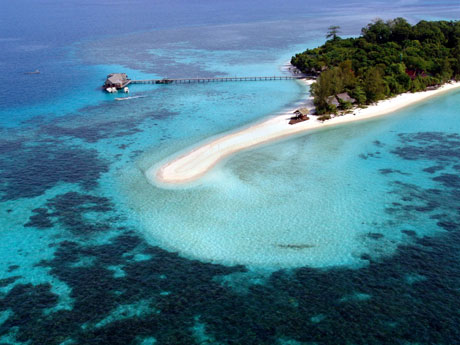
Use this opportunity to show off places like Lankayan island by providing free transfers to the island and subsidised rates for those passengers that would like to go diving.

Offer free trips to visit other attractions such as Gomantong caves, the Turtle island park, the Proboscis monkey sanctuary and of course, for anyone who has their clubs, a round of golf at the golf and country club.

All these efforts should be underwritten by the Sabah Tourism Board. There will be a temptation to see this an an opportunity to make some extra money and even charge more to the cruise ship passengers. This would be a mistake.

Wherever possible, get contact information, email addresses, twitter profiles, tumblr information and track them once they’ve left and stay in touch with those with influence.

Such gestures will also form the foundations for future negotiations with this and other cruise lines who will certainly learn of the generous and proactive approach of Sabah Tourism.

This is a marketing/PR/reputation opportunity and should be seen in such a way. These efforts won’t cost much, will leave an indelible impression on the visitors who will discuss the welcome they received in Sabah for years to come.

Simon Anholt comments on the Public Relations efforts of Malaysia


Simon Anholt, the originator of the term nation brand and for many years an authority on managing national identity was interviewed by BFM radio in Kuala Lumpur recently. You can hear the interview here.

The interview was also covered by the online media and you can read about it here.

My thoughts on this issue are as follows

No disrespect Datuk Seri, but Malaysia and her future is much bigger and more important than Datuk Seri Najib Razak, UMNO and BN. Indeed, I am sure Datuk Seri Najib would be the first to agree with me.

Politically, the facts are that citizens of Malaysia voted for the government and gave that government a mandate to rule and represent the people. If about 35% of the population didn’t vote for a party within the government coalition and voted instead for another party (assuming they did vote – if they didn’t they should keep quiet) they have to accept that their party lost, and get on with working to build a global nation for their children and grand children.

Recently, the Malaysian government, elected by the people to manage the country on behalf of the people, decided to use traditional media, as part of what I hope is an integrated, multi pronged country brand communications strategy to help improve the image of the country.

It is unlikely this is an isolated tactic but part of multiple, integrated initiatives that are planned and coordinated by a plan that measures and leverages results.

If the government decides to work with a company that appears to have impecable credentials (and FCB media have them in spades) but appears to mislead the government then that government must dispense with such companies and its services, which is exactly what the Malaysian government has done with FCB media.

It is an unfortunate event but I sincerely believe that the government is not to blame for the debacle.

What perhaps should be questioned is not that the goverment tried to improve the image of the country – how can that be a bad thing and show me a country that doesn’t want to improve its image – but what were the justifications for using FCB media, what were the channels used and are they as effective today as they were say 25 years ago, what was the scope of work, what did FCB promise, was it necessary to pay such large sums of money to FCB, what did FCB use that money for and what metrics were used to calculate ROI?

On the face of it the amount spent appears to be excessive but without a breakdown of the expenditure we can’t be sure. And although it is not justification for spending so much money, show me a country that doesn’t waste taxpayer’s money? Only today, the UK has announced it wasted £11.5 BILLION on a National Health Service project that has been abandoned despite the huge sums spent.

Personally, I’m surprised that Simon Anholt has chosen to make such damning comments about one tactic that is, I assume part of a larger more integrated and holistic Malaysia country brand strategy.

I’m also surprised at his suggestion that countries can only make themselves more relevant by ‘making themselves more useful’. And the way to do this is by tackling a list of predictable issues – climate change, women’s rights, terrorism and financial insecurity – currently being addressed by many countries already.

I also think it is a little naive to think that Malaysia isn’t playing its part in some or all of those issues already. In fact, one could argue Malaysia has successfully combatted terrorism for longer than many countries except perhaps Northern Ireland.

I’m also surprised that he cites becoming a ‘widely recognised and widely appreciated country’ as goals. These are rather wishy washy goals and probably irrelevant as it wouldn’t be difficult to identify millions of people worldwide who recognise Malaysia and the country is probably ‘widely appreciated’ by hundreds of millions of people already.

You can read my earlier post on how Malaysia should build a nation brand here

Sri Lanka: A Big Miracle


After the domestic travel trade complained repeatedly that it doesn’t spend enough money promoting the country internationally, The Sri Lanka tourism development Authority (SLTDA) announced that it will launch a new tourism campaign in the next few months to increase visibility in key source markets. The campaign is expected to be in addition to existing marketing efforts.

This is going on at the same time as a new tourism policy is being drafted that should include a new tagline that is rumoured to be “Refreshingly Sri Lanka – Wonder of Asia”. This will be the first tagline since “Sri Lanka: Small Miracle” was binned in 2009.

Sri Lanka’s annual marketing budget is about 500 million Sri Lankan rupees (RM1 = 35 Sri Lankan rupees) which is about RM14 million.

SLTDA spends about RM5.5 million on international trade fairs and about RM1 million on sponsoring international travel writers to visit the country. The balance of about RM7 million is spent on advertising and other through the line activities. It is not clear if funding for the new campaign will come from this RM7 million or additional funds will be made available.

I find it hard to understand what the domestic travel trade is complaining about and why the SLTDA is giving in. I get the feeling this is just an exercise to shut up the domestic travel trade. In my opinion, SLTDA is doing very little wrong.

Arrivals to Sri Lanka in 2010 were up an impressive 46% over 2009. Indeed arrivals reached 654,476 in 2010, the highest since the 566,202 arrivals in 2004. Revenue from tourism in 2010 was over RM1.5 billion (US$500 million).

The government is targeting 750,000 arrivals in 2011 and early indications are that that target will be achieved. In the first six months of 2011, about 381,000 visitors arrived in the country.

The record of 2004 was set after the government and the Tamil Tigers agreed a peace treaty. In May 2009 the government defeated the Tamil separatists to end the 30 year civil war and tourism arrivals have risen every month thereafter.

Furthermore, the country’s tourism business has secured US$1.2 billion in FDI already this year and has another US$3 billion of deals in the pipeline.

Surely the travel trade should be very happy with what the SLTDA has done so far on a relatively small budget?

And surely spending money on egocentric ‘look at me’ awareness campaigns that will be lost in the clutter are not the way forward?

And even if they do work, can Sri lanka manage the influx of visitors? And if it can’t what are the potential ramifications? And what does Sri Lanka do after the campaign?

It would make more sense to invest what funds it has into a well researched brand strategy and implement that brand strategy rather than spending money for the sake of it on a tactical campaign that seems to be driven by misguided travel industry workers.