Will Malaysia miss the coming travel and tourism boom?


Mass tourism is barely forty years old. I can still remember family discussions back in the seventies about how a British traveller was only allowed to take a maximum of £50 out of the country which meant few people could travel. With a father based in Malta and Gibraltar, as well as Hong Kong and Singapore, I was lucky enough to see more of the world than many.

Anyway, a few years ago we were hired by Malaysia’s tourism ministry to carty out what was at the time, and probably still is today, the most comprehensive brand audit ever done for a country’s tourism board. You can get a copy of a case study on the project by sending me your email address.

Due to client confidentiality rules, I can’t disclose all of our more than 300 recommendations but I can say that one of the recommendations was for a comprehensive overhaul of the incentives offered to the private sector to encourage more investment in the stagnant tourism sector.

During the brand audit discussions with visitors who had visited Malaysia, an often repeated comment was that they loved the country but didn’t think there was enough here to make them come back again. Yet to build a successful destination brand, you need that repeat visitation. This requires ongoing investment in products.

One of the problems in Malaysia is that property development is essentially risk free because of the sell then build model used here. What this means is that projects are often sold before work on them begins. Compare that to an investment in a hotel than has no guarantee of success and even if it is successful, can take 10 – 15 years before the developer sees a return on investment.

To my knowledge there have been few changes made to major tourism related policies because outside of Kuala Lumpur, there has been very little investment in the tourism sector. In fact, one frustrated operator complained recently that there are more 5 star hotels in Hua Hin Thailand than there are in the whole of Malaysia, excluding Kuala Lumpur.

This has to change and it has to change soon before this opportunity is lost. Because the next 10 years are expected to see a travel and tourism boom.

Travel and tourism can help Malaysia's economy
Travel and tourism can help Malaysia’s economy

Which is why South East Asian countries are investing heavily in their tourism products. After years of rising room rates and high occupancy, Australian investors and developers are increasing hotel development from Perth to Sydney and Hobart and up to Melbourne and Brisbane.

Australia’s hotel supply is growing 2.5 times faster than its long term average rate and 12,000 rooms will be added to the inventory by 2020. Tourism related investments are now close to A$30 billion, up from $17 billion in 2014.

Tourism investment is a priority for Indonesia as the government aims to attract 20 million visitors by 2019 and is revamping it’s tourism incentive programme to encourage investment.

According to the Saudi Gazette, the King of Saudi Arabia will spend 12 days in the country from March 1st as part of his Asian tour, and tourism development will be high on the agenda as the country targets over US$25 billion investment from Saudi.

Confident of positive long-term growth prospects for Thailand’s tourism industry, institutional investors from Hong Kong and Singapore accounted for around 45% of the total transaction volume in the country.

In Malaysia, according to Pemandu, the organisation set up to oversee the government’s transformation programme, RM24.5 billion (US$6 billion) of private investment was made in the tourism sector in Malaysia in 2015, making it the second highest private investment contributor, despite an alarming fall of 6% in arrivals in that year.

During the King of Saudi Arabia’s tour of Asia, he will also spend 3 days in Malaysia but the country’s ailing O&G industry appears to be the main topic on the agenda. Other figures for investment in tourism in Malaysia are hard to come by. However, outside of the capital, anecdotal evidence suggests investment is minimal.

Malaysia also suffers from a weak international image as well as a lack of buy in from stakeholders such as taxi drivers, travel and tour operators, hoteliers and retailers.

This needs to change otherwise Malaysia may miss out on the increased arrivals into the region as evidenced by the image above that shows the fastest growing flight routes around the world.

According to this chart, outside of India and China, the fastest growing routes will be to SE Asia. If Malaysia wants a bigger piece of this dynamic industry, it needs to make some significant policy changes to encourage more investment in the tourism sector.
Is spending US$12 billion to increase sales by 3.2% a good business strategy?


According to its website, Nestle is “the leading Nutrition, Health and Wellness Company”.

It also says, “We enhance lives with science-based nutrition and health solutions for all stages of life, helping consumers care for themselves and their families.”

Personally, I like their chocolates (I have a soft spot for dark chocolate KitKats), condensed milk and milk substitutes while our pets like their range of cat and dog foods.

I’m not sure how Carnation and Coffee Mate, or for that matter chocolates enhance my life but let’s not go there. But perhaps they should add ‘and their pets’ to the above claim.

Anyway, the Swiss icon, which is now the world’s largest packaged food group, reported sales of US$89.3 billion in 2016, up 3.2% on an organic basis. Well below the 4.2% growth in 2015 and is the fourth time Nestle has missed its “Nestle Model,” that aims for 5 – 6% growth per annum.

What’s interesting is that in the years 2011 – 2014, Nestle spent a cumulative US$12 billion on advertising. Not marketing, PR, promotions or anything else, just US$3 billion a year on advertising.

That’s a huge chunk of cash. And it’s like they need to spend that amount just to stand still because growth of 3.2% is not much better than standing still. Surely there’s a better way?

How Montblanc Malaysia turned an unhappy customer into a brand advocate


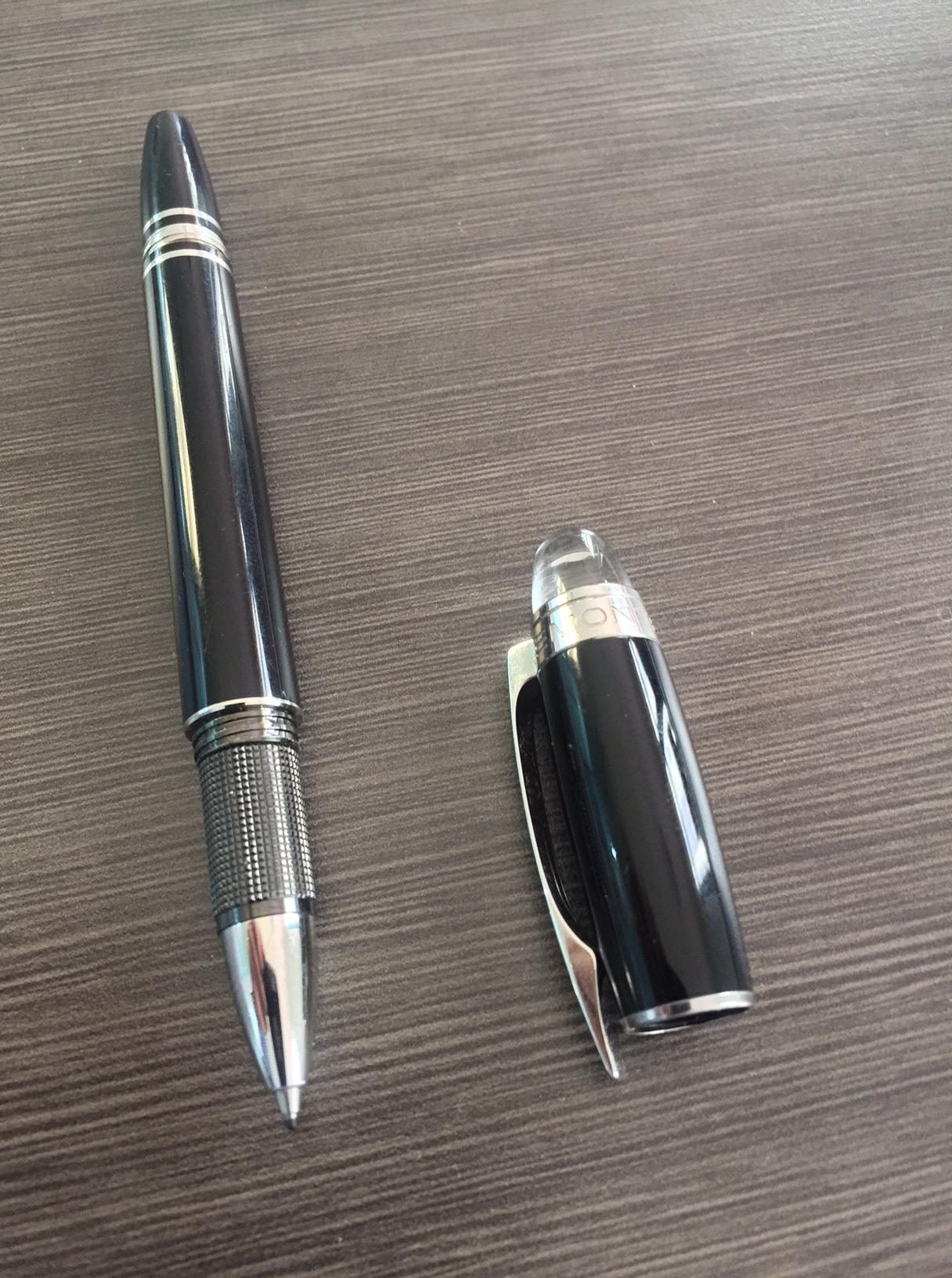
Montblanc is a famous pen brand that prides itself on its heritage, workmanship and quality.

The Montblanc web site says, “Montblanc has been a consistently present beacon in the luxury brand market for nearly a century. Having been celebrated for generations as the paramount creator of writing instruments, we have since branched out in order to offer you exquisite watches, leather pieces, jewelry, fragrance and eyewear.”

It’s a compelling proposition and one that my daughter thought I would buy into.

So she saved up enough money to buy me a Montblanc pen for my birthday. Like any father will tell you, this was a very important gesture for her and me. Although every present from her meant the world to me, it was a step up from the Mickey Mouse socks or The Who coffee mug I was used to getting.

And I cherish my Montblanc pen more than just about anything else. For a while I didn’t take it out of my home office. And then I took it on a business trip to London but was so worried I would lose it, I put it in my briefcase and didn’t use it until I got back to Malaysia.

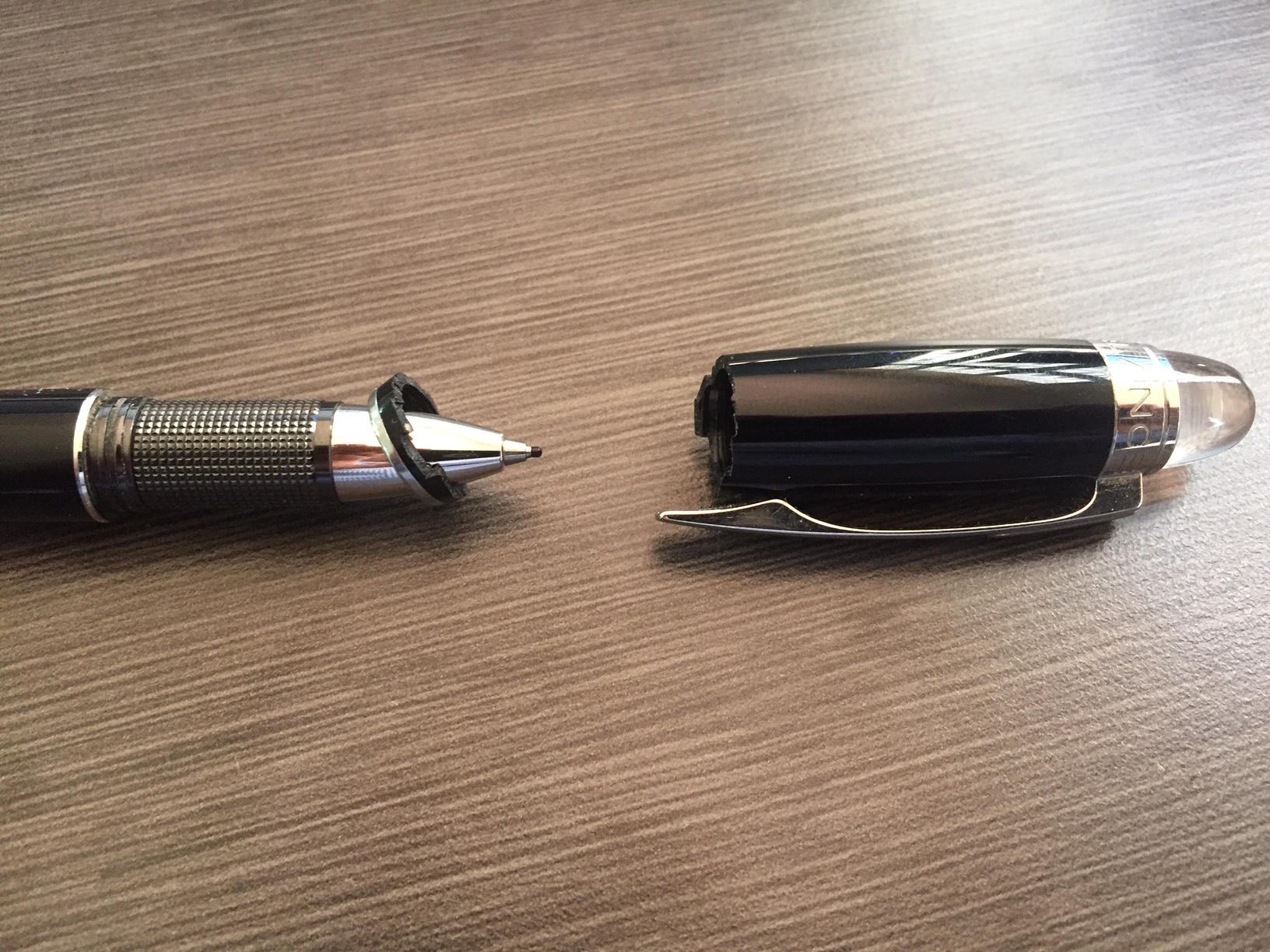
It stayed on my desk and was reserved for signing cheques, letters and the occasional greeting card. I cherished that pen more than anything. And then one day it broke. I was unscrewing it like it was meant to be unscrewed and the cap snapped.

And it snapped at the point where the cap screws onto the pen shaft. I went on the Montblanc website to find out the warranty information and found this confusing statement, “Montblanc writing instruments are under a 24 month warranty from date of purchase or receipt as a gift, against manufacturer’s defects.

Obviously a manufacturing flaw

Manufacturer’s defects do not include lost parts, damage resulting from everyday use, or if the product has been dropped or banged against a hard surface.”

After reading the warranty information I was none the wiser but this being a luxury product, I was confident I could get the pen fixed under warranty but when I contacted Montblanc they told me, very nicely that there was a 2 year warranty on the pen but it didn’t cover my problem.

So basically here I was with a product that was sold as a ‘beacon in the luxury brand market for nearly a century’ and ‘the paramount creator of writing instruments’, but in reality wasn’t fit for purpose due to what seemed to me to be a design flaw.

I’m no pen expert but it was obvious to me that it was a design or materials flaw because there is too much pressure on the cap. The cap material simply wasn’t strong enough to sustain the strength of the screw on the shaft.

Perhaps the screw was made in Europe but the pen top was made in China?

So the branding issue is what should Montblanc do? Do they deliver on their promise that they are a leader in the luxury brand market, admit the issue is their fault, do the right thing and replace the pen or at least the top? Or do they ignore the customer and hope he will go away and accept that luxury lasts 2 years?

Historically a brand would simply quote the terms and conditions of the purchase, which is what Montblanc did. A case of ‘thanks for buying our expensive product that only lasts 2 years. We’re sorry, but it’s too bad’.

This initial experience with Montblanc was a huge disappointment. It bought me crashing down to earth. This luxury brand with impeccable heritage was refusing to deliver on the promises made on its website.

The brand refused to take responsibility for what was obviously a design flaw and told me I had to pay for the repairs.

Like a good citizen I got a quote from a Montblanc shop and they told me the repairs would cost US$125. I was basically between a rock and a hard place. Either pay the US$125 or have half a luxury pen.

Now in the mass economy when branding was transactional, I would have had limited opportunity to voice my frustrations or influence future purchases. I might have written a letter to the editor of my daily newspaper or to the company.

And I could probably influence my family and a few friends to never buy a Montblanc but the brand could live with that.

But in today’s much more competitive, social and relational environment, the consumer now defines the brand and brands need to understand that not only must they deliver on any promises they make, they must also look to every single sale not as a transaction, but as the beginning of a relationship.

That’s the responsibility they have. They might not like it but if they want the customer’s money, that’s what it costs. It’s not easy to maintain those relationships but with relationships comes trust and trust allows companies to charge higher prices.

Smart brands understand that today, if they make a promise they have to live up to it. They understand that there are certain ethics they need to aspire to in order to deliver on their brand promise.

Montblanc promised me luxury and distinguished heritage of close to 100 years but hedged their bets with a 24 month warranty. That’s essentially hypocritical.

I wasn’t happy so took my frustrations to the Montblanc Facebook page where I complained. Initially Montblanc refused to accept responsibility for the matter and referred me to the opaque warranty. This was not a good idea.

So I got ready to launch a rant on Twitter, create videos for YouTube and post pictures on Instagram, write negative blog posts, share the videos, comment on forums and search for discussions on pens so that I could share my experiences.

I mapped out what I was going to say on anti Montblanc websites and Facebook pages that I would create and even use the experience as a case study in my next book.

When faced with complaints, great brands listen carefully and do their research before doing the right thing by their customers. I think that Montblanc initially anyway, acted fast but then reflected.

Because a couple of days later I got a call from Terence Tan, the retail manager of Montblanc in Kuala Lumpur. He asked me to bring the pen to the shop and they would fix it for me at no cost.

Thanks Montblanc, you did the right thing & trust in your brand is restored

I took the pen in and Terence was apologetic and professional. He outlined the process and that I would be called once the pen was fixed. And sure enough he called me personally and told me who to speak to if he wasn’t around because he was travelling in the next week.

In other words, Montblanc supported what it says on the website.

And as a result, instead of all the negativity I mentioned above, I’m writing about my positive experience with the brand. I’m enhancing their reputation, substantiating their brand promise and creating more emotional connections with the brand.

Montblanc can now use my positive experience in its brand building strategy. And this is important because up to 70% of customers rely on customer reviews before making a purchasing decision.

These reviews provide the social proof increasingly cynical and jaded consumers need before making purchasing decisions.

Integrated into the Montblanc brand strategy and shared across the ecosystem, Montblanc has the chance to turn a disgruntled customer into a brand advocate by leveraging on the positive feeling created at minimal cost to the brand.

Because now I’m no longer a component of a transaction, I’m now in a relationship with a brand I care for and who obviously cares for me.

So the next time someone complains about your brand, have a think about the complaint. Look at it from their perspective, not from yours. And think about it from a relational, not transactional perspective.

If you do, you may not only make a sale, you may make and keep a customer.

The Future of Branding is Debranding. Well maybe, but first you need to know what is branding


Here’s a link to an interesting article in the fast company owned site fastcodesign.com magazine, an online design driven website that is “inspiring stories about innovation and business, seen through the lens of design.” They recently ran a story cleverly titled The Future of Branding is Debranding.

I’m an occassional visitor to the site and particularly like their infographic of the day. Have a look at this one that depicts climate change as a haunting death spiral.

The article starts well enough with the fact that digital media is blunting the effects of advertising but then goes on to say that native advertising or branded content is a sham and nothing more than an attempt to trick customers into spending money. While getting customers to spend money is the aim of most advertising (as is quality design) it misses the point of what is branding.

The future of branding is debranding? Well maybe, but not if we're starting from the wrong place
The future of branding is debranding? Well maybe, but not if we’re starting from the wrong place

The article does make some valid points about branded content and how it is not a strategic exercise or a long game. And this is true, it’s simply a tactic employed by brands. But it loses it’s way as it confuses tactics with strategy. Branding is a strategic exercise, most branded content is a tactic although some firms such as Coca Cola do it properly (see video below) and integrate it across channels and make it strategic.

The post then goes on to make the bold but ultimately wrong statement that, “Branding is, fundamentally, just a form of communication.” This is simply not true and I’m surprised such an auspicious publication allows such a claim to be made.

Indeed, it’s claims like this, from prestigious sources that are muddying the branding waters. How can CEOs make the investments required in branding if they are confused by what constitutes branding in the first place?

To make matters worse, it then goes on to say that debranding shouldn’t be confused with visual branding! Using a couple of niche brands as examples it says, “Such visual identities could be the result of debranding, but they are not the end goal. The real goal is a well-made product.”

I don’t understand the visual bit, but a well a well made product is definately a goal and any brand should start with something that is fit for purpose because no amount of communications will make a crap product good and certainly won’t build a brand.

But what’s really important is that the brand delivers economic, experiential and emotional value every time, and at every touchpoint and with everyone.

The mistake too many brands make when they start branding (or the advice they are given is wrong) is that they think branding is based on acquisition – it isn’t and they think that stringing together a series of tactical campaigns will build a brand – it won’t.

Products or services need to be sold. Companies need to make those sales but the ability to start delivering value at the first and subsequent touch points is going to lay the foundations for the success, or not of that brand’s relationship with the prospect/customer. And that relationship is what builds the brand.

Advertising, branded content, design etc may be required at some point (although increasingly consumers are not influenced by such superficialities and look for more personalisation and relevance) but critical is the ability of the brand to deliver the value I keep mentioning.

The article finishes with the statement, “Don’t throw a new product on the market if it’s not intrinsically better and more durable than what already exists. We don’t need more branding; we need fewer, better-quality products. Fine-tune your product’s quality, design, and its durability. Become a producer of shoes again instead of surrogate spirituality”

Whilst Chinese products may have had short term success because they were cheap, most consumers are moving back to quality products from more established manufacturers who have invested in tools to improve their efficiencies, making consumers the winners as products are better.

So we’re definately moving away from ‘cheap as chips’ junk. But at the same time, with a growing global population with more disposable income, there will always be demand for commodities but again they shouldn’t be confused with brands.

And besides, despite the advertising, the branded content and all the other tactics used to try and entice you, you don’t need to change what you are already happy with.

And bearing in mind that 80% of what most of us buy are the same things, one could argue that a lot of brands are already doing the right thing.

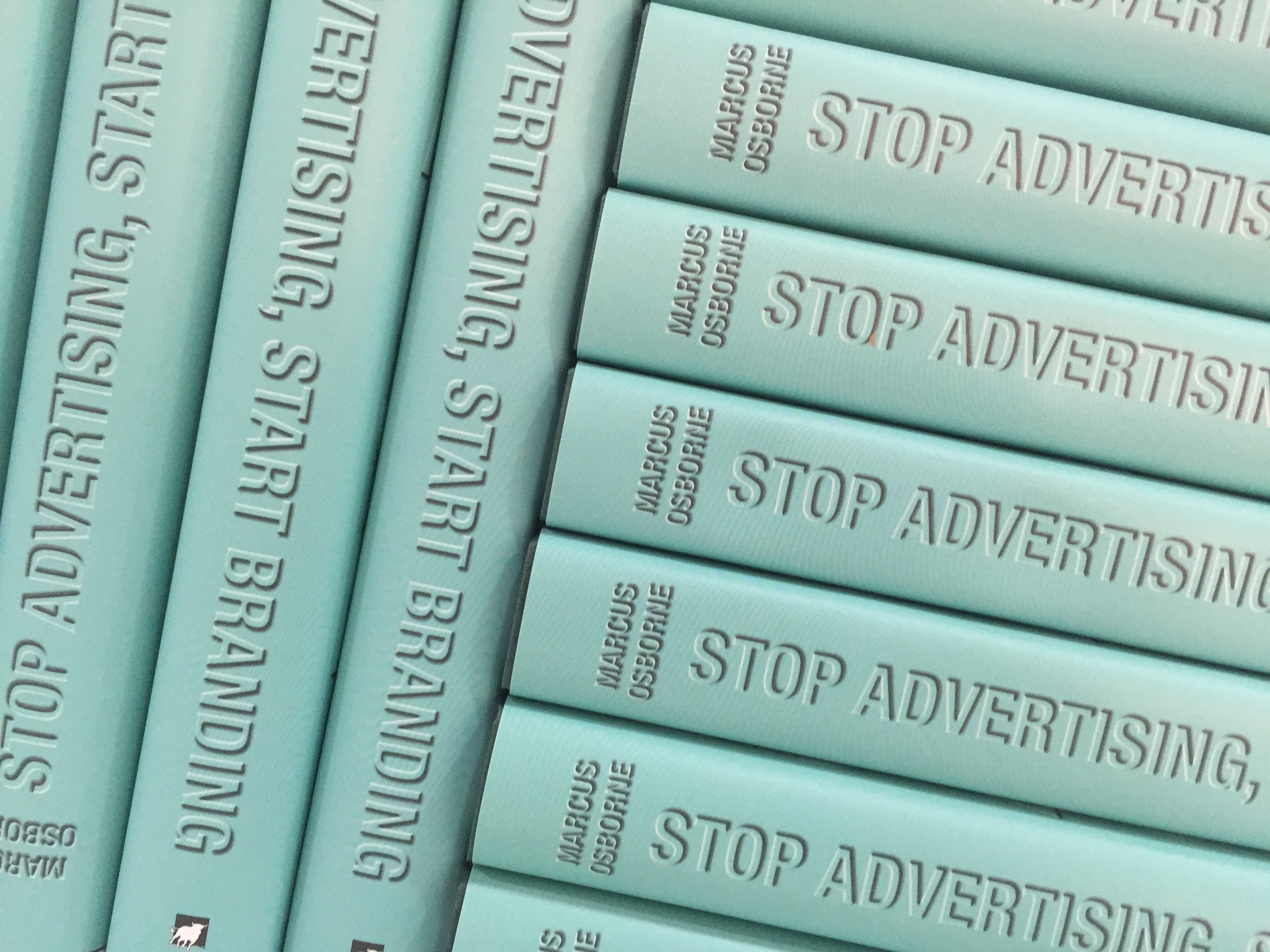
Stop Advertising Start Branding – the first book to help Malaysian, Singaporean and other Asian firms build brands that not only survive but thrive


Stop Advertising, Start Branding is the controversial new book by Malaysia based brand consultant Marcus Osborne. It’s already attracted flattering reviews with one reviewer calling it “South East Asia’s business book of the year.”

Marcus Osborne says, “If you are spending more on advertising yet struggling for sales, it could be because you are still using the advertising driven tactics of the mass economy when competition was limited, there were few TV and radio channels, magazines and billboards and visiting the cinema was not the positive experience it is today.

Stop Advertising Start Branding. Asia's business book of the year
Stop Advertising Start Branding. Asia’s business book of the year

He continues, “Today’s consumers are overwhelmed with data, information and choices. Malaysian households receive 200 TV channels, 24 hours a day. Singapore, with a population of no more than 5 million has 252 Free to Air or Pay-TV channels.

The advertising noise in Singapore is deafening whilst back in Malaysia there are more than 20 commercial radio stations broadcasting up to 20 minutes of commercials every hour, ads are on lampposts, shop lots, taxis and buses and billboards jostle for attention at every junction. Newspapers often have an ad to copy ratio of 60%-40% compared to the accepted norm of 30%-70%.”

“Such a barrage of messages does not include the more than 40 billion web pages and 20 million blogs on the Internet, Facebook, Instagram, Twitter and other social media and games. How can a consumer’s mind process so much data? Obviously it can’t. In fact it shuts much of it out which accounts for falling sales despite increased ad spend.”

Stop Advertising, Start Branding explains how to build a brand in this new environment. It’s about getting the fundamentals in place. Assuming your product or service is fit for purpose (and a lot are not) you start the brand building process by making sure your organization has clearly defined brand values that are real and achievable and can be articulated clearly to personnel and those personnel must be shown how to integrate those values into their every day operations.

Consumers in Malaysia are being ambushed by firms trying to get their attention.

Those personnel must know what is required of them to ensure the brand is able to deliver on any promises made time and time again, to different segments, all with different requirements for value and at every touch point. For many companies, this requires a 180 degree change in management style and can be difficult, especially for companies who look at staff as a cost not an investment.

Once the organisation is ready the implementation really depends on the industry. But new content must be constantly created and new tools and channels used properly. Millions of Singaporeans, Malaysians and others use Facebook but most brands simply advertise on Facebook or post images of the CEO at events and often ignore messages asking for help or information. This is rarely the right approach because Facebook requires firms to engage consumers with compelling content that will build interest.

Old school tactics such as advertising, roadshows and promotions still have a role to play but often, much of the advertising doesn’t make sense whilst many of the people representing firms at roadshows or promotions aren’t trained properly and simply go through the motions.

Stop Advertising, Start Branding explains that all the awareness in the world doesn’t mean a thing unless it translates into a profitable relationship. With plenty of local and international case studies the book shows that companies that focus strongly on building robust foundations for their brands, provide compelling content and develop relationships with customers based on delivering value to those customers, are more likely to succeed than brands who rely on advertising.

It isn’t as exciting or as `cool’ as TV commercials or huge billboards on major highways that 500,000 people see each day, but it’ll be more profitable.

About Marcus Osborne. He has lived and worked in Malaysia since 1994. He has helped build brands in Europe, the Middle East and South East Asia. His blog brandconsultantasia.com is the leading branding blog in Malaysia. Stop Advertising, Start Branding is his first book. It is available from all good bookshops in SE Asia and the UK or from Amazon.co.uk

He has written numerous articles for multiple publications and contributed a case study on the Malaysia Nation Brand to Nation Branding. Concepts. Issues. Practice. By Keith Dinnie. Contact him at marcus at fusionbrand dot com or +6 03 7954 2075.

Who are the advertising industry’s biggest wankers?


Please forgive the crude title but if you read on you will understand why I don’t have a choice.

I remember a few years ago Fusionbrand interviewed a young guy who was about 24 years old. He had only been working for 3 years but had already won more than 25 awards. I can’t remember what they were for but none of them were significant. However he genuinely believed winning those awards meant he was good at what he did and could command a bigger salary.

Nowadays, there are so many award shows for the advertising industry that one of them, in an attempt to stay different, has dropped the word advertising from the title. We’re regularly asked to propose ourselves for awards with suggestions on how to ensure we win. We’ve never done so which is why we’ve never won an award but have always been asked by clients to do additional work.

I don’t know if these award shows are an attempt by a dying industry to stay relevant or perhaps it’s a genuine belief that handing out awards to just about anyone who pitches up for work really will help keep advertising relevant.

Proudly display this award in your reception area

Anyway, there are some people in the advertising business who don’t take themselves too seriously and have noticed the handing out of awards has got out of well, hand. So they’ve created an amusing distraction for the digital era or for those who haven’t won enough awards. The Handy Awards website and app let’s you award yourself an award for anything you want.

All you need to do is download the handy awards app and shake your phone and you’ll win an award. The longer you shake the phone, the better the award. For those with real determination, there’s a Best in Hand award but that takes some real shaking but I know you can do it. And the good news is you can share the award with a friend.

You can even share your impressive award with a friend.

As the site says, “The Handys are the world’s first advertising award show where you can give yourself an award in the comfort of your studio apartment or at your desk within your agency’s open office. All without entering any work or having to sit through someone else’s boring case study video.”

It would appear that, judging by the awards it is only open to male creative wankers but sticking with the crude nature of this post, perhaps there is a female award, err coming?

Is Malaysia Airlines serious about rebuilding its brand?


I’ve been looking forward to the new Malaysia Airlines (MAB) brand from both a professional and a personal perspective. Professionally, I’m eager to see what direction a global company with a huge reputation proposes for the carrier. Personally, I’m a big fan of Malaysia Airlines and have been for over 20 years. I also believe a national carrier is a critical component of any nation brand and building a nation brand is harder without a national carrier.

Right now, despite a new CEO and one presumes new management, the brand seems to be directionless. I think 3 launch dates for the new brand have come and gone and each time the date passes, there is a deafening silence from management.

Meanwhile corporate driven messages tell us the new brand focus will be on ‘making the customer experience change.’ In mid 2015 we were told that in December 2015 the airline “will begin installing new cabin seating and improving inflight entertainment, customer service and on time performance. New technology, lounge concepts and catering would be introduced and the uniforms may change.”

This is not the new cabin seating I was expecting

But I can’t find anyone who has witnessed the ‘new cabin seating and improved inflight entertainment.’ I hear complaints about the poor state of aircraft and have witnessed it myself. Delays are inevitable when launching a new brand but in a social world, these delays must be explained. There is nothing wrong with being normal.

Poorly thought out announcements are made regarding long haul flights that result in global condemnation and humiliating U turns but management remains silent. Days later, as if nothing happened, a press release is sent out about the new beginning at MAB and how the CEO will ‘boost product offerings and rebuild confidence in the carrier.’

What does ‘boost offerings’ mean? Does it mean make it cheaper? The lines between Low Cost Carrier (LCC) and Legacy Carrier have become blurred. The low cost carrier (LCC) model is familiar to just about everyone who travels. Basically you purchase the use of a seat on a (very cramped) plane and then pay through the nose for anything else such as luggage, food, drinks and even the location of the seat.

The alternative is Legacy carriers but I’m not really sure what they are. The term came out of the USA but today, seems to apply to any national airline not making money. With a legacy carrier or national airline, you pay one fee that covers everything including what should be a postive, even memorable experience.

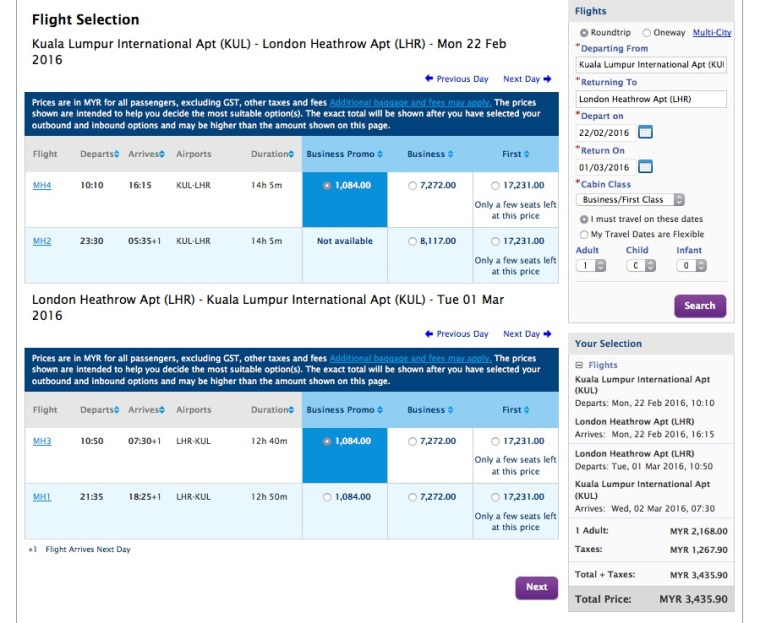
Nowadays, a lot of so called legacy carriers mimic the low cost carrier model. Many of them do it quite well, others not so well. Malaysia Airlines seems to bounce between the two. It recently offered business class seats to London at the ridiculously low return fare of RM3,400. However, just like LCCs the rate excluded GST (6%), taxes and fees and added a caveat that additional baggage and fees may apply. I didn’t check but I suspect this would have bought the figure to the same level as competitors.

MAB needs to focus on delivering on the promises it is making not slashing prices

This is a dangerous game because if Malaysia Airlines cannot compete on price with the Middle East carriers, it won’t be able to compete with LCCs like Air Asia. According to the Economist newspaper reporting on a KPMG study, “a legacy airline operating an Airbus A320 between London and Rome spends US$12,000 more on each round-trip than a low-cost airline.” Whilst the amounts may be different, the additional perceptage is no doubt the same in SE Asia.

Malaysia Airlines should focus more on improving its product than trying to discount its way through low seasons. Instead of trying to match the LCCs with their basic services and expensive add ons, Malaysia Airlines should seek to improve its relationships with its customers and offer a premium service rather than discounts, especially to its passengers at the front of the aircraft.

And it needs to start communicating with the public. Successful brands today are built on accessibility, transparency, collaboration, retention, personalisation and integrity. And consumers not companies determine the success of brands. Corporate driven press releases are not as effective as positive comments shared across social media. Malaysia Airlines needs to get its head around this.

And it must do it now because Air Asia, once the poster boy of LCCs is struggling to stay relevant and is looking to innovate. If it looks to Europe or Australia for inspiration, it will see the likes of Easy Jet and Virgin Australia morphing into legacy carriers. According to the Economist, this may leave legacy airlines “in a perilous state, regardless of their location and size.”

And before anyone says Malaysia Airlines is a private entity and doesn’t need to explain anything to anyone. Just remember that this is the 21st century not the 20th century. Consumers are smarter and acquire knowledge not from brands but from those who use them. And besides, Malaysians have invested billions in the carrier and they have a right to know what is happening and why deadlines are not being met.

If Malaysia Airlines is serious about its brand, someone needs to take charge of the communications and take charge now because I for one, don’t want to see this once great airline continue to make these elementary mistakes. Otherwise the only thing serious about the rebrand will be its inneffectiveness.

Is Malaysia Airlines turning the branding corner?


In my previous post I promised to report on the experience of flying Malaysia Airlines this December to see if there were any improvements in the experience following the earlier announcement that the new brand would be launched this month. These were my 40th and 41st flights on Malaysia Airlines this year so I had a decent benchmark.

The good news is that whilst 2 flights are not proof of overall improvements it can be seen as a sign of progress. I’m pleased to report the experience was a lot better than it has been for a while. The aircraft wasn’t new but it wasn’t as tatty as the one’s I’ve flown recently. The cabin crew were very professional and conveyed a confidence I haven’t seen for a while in Malaysia Airlines crew.

My return flight was delayed and I was informed of the delay via a text at least three hours before my departure time which meant I was able to continue working before leaving for the airport.

About two hours before departure, I received a call from a customer service representative who apologised for the delay. I asked him the reason for the delay and he put it down to the weather which, if you’ve been in Malaysia over the last month you will know has been rough.

I asked if I could be switched to an alternative flight and he was able to check for me and I presume, if there had been a flight available he would have transferred me to that flight. All signs of a potentially seamless brand experience.

One minor criticism, whilst waiting for my departure from KLIA I spotted an aircraft on the tarmac sporting livery from the 1980s that is celebrating an event from 2012. I really think it’s time to change the livery because it communicates laziness and a lack of urgency amongst other negatives.

This livery is celebrating an event in 2012. It's time to apply the current livery.
This livery is celebrating an event in 2012. It’s time to apply the current livery.

Are you wasting good money on bad advertising?


I wrote a blog post recently about print ads and how I was convinced that print advertising was in decline. You can read the post here. I also shared the post on the Advertising Copywriting group on Linkedin and it generated a lot of comment, most of it ridiculing my stand. You can see the thread here.

A lot of people, especially those from the advertising industry were not very happy with what I wrote. And some of them quoted, rather predictably the mighty advertisers Coca Cola and McDonalds. Yet despite spending US$1 billion on advertising in 2014, McDonalds profits were down 15%! And are now lower than they were 5 years ago. Samsung spent US$14 billion on marketing in 2014 and suffered 3 straight quarters of losses for the first time ever.

And I asked how much have Nokia and Blackberry spent on advertising over the last 10 years to get them to the brink of extinction?

Others looked at the quality of ads, with one copywriter stating, “Quite frankly, the quality of most print ads is abominable. They are either badly written or designed, or so “avante garde” that the company’s name and logo are hidden.”

And this is a huge problem in South East Asia where, on the whole what constitutes a good ad – a strong headline or call to action, unique image, and well written copy is often lost in the charge for fast turnaround of materials, low budgets and the habit of marketing professionals not challenging bosses, business owners or even their spouses!

The results can often be catastrophic as immediately forgetable ads that fail to connect with target markets, don’t deliver the right information, are too confusing or worse, look like other ads appear across newspapers and magazines.

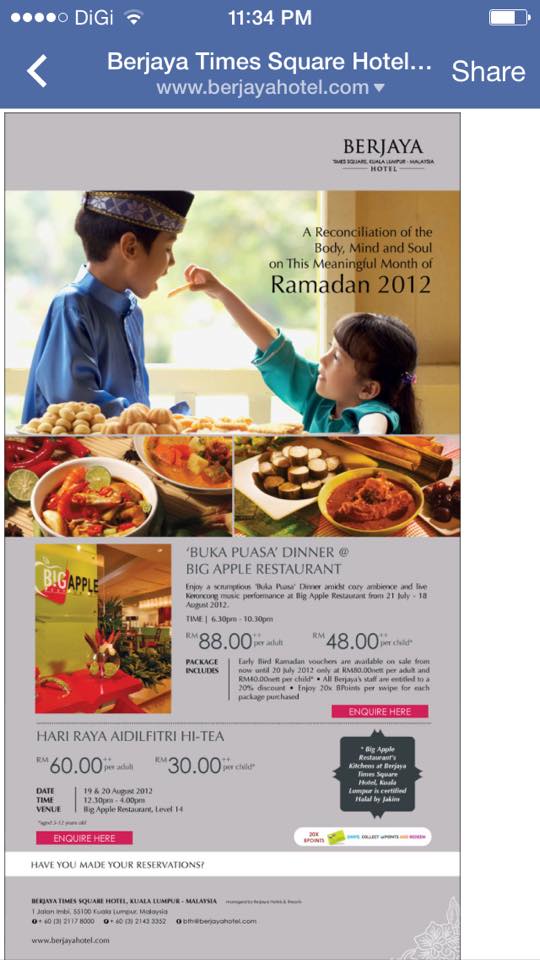
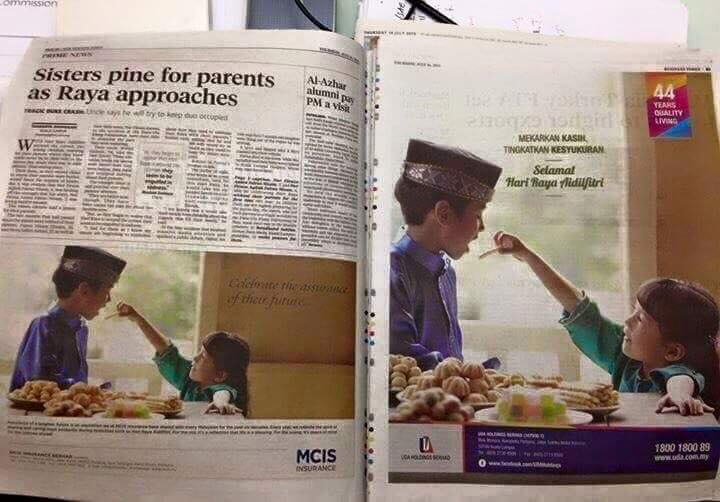
The following ads illustrate the approach to advertising in Malaysia over five years of five different companies from telecommunications, hospitality and insurance.

11698640_10155821247650416_1348248290595925206_n

11218072_10155821155380416_7420016036015256668_n

Share or reconnect?
Share or reconnect?

11705135_10155821247830416_2670629538737281677_n

Much of the copy is weak, the messages, if there are any are obscure or try to do too much and the calls to action, if they can be called that, don’t make sense and there are more than one!

But most tragic of all, they have all used the same image to try and connect with their audience.

These ads will accomplish little and are a waste of money. They have very little value for the company and will most likely be ignored by consumers. I suspect they were done in house and no doubt the image is a free download from an image bank.

I cannot imagine any professional marketing director allowing these ads to go out so one can only assume they were approved by bosses who don’t know the importance of a good ad.

Firms wonder why advertising doesn’t work and question why they should have to pay for advertising agencies. Well this sort of advertising is not the solution. Until firms appreciate the importance of a good ad, they would be better off throwing money down a drain.

This Ramadhan Coca Cola wants you to leave your prejudices at home


Memac Ogilvy Dubai and FP7/DXB Dubai, two top tier advertising agencies in the Middle East have come up with a novel idea to sell expensive sugary water.

They’ve taken a group of strangers, sat them around a dinner table in a dark room and got them to describe themselves to each other and then asked them to guess what they look like and the type of character they are.

The video has been viewed more than 8 million times on Youtube and has got over 11,000 Likes in a week.

When the lights come on and the characters are revealed, the results are predictable. And then each participant is invited to reach under the table and take out a box.

As the camera zooms into the box it is opened and we see a (drum roll) box of limited edition Coke cans without the brand name but instead the caption “Labels are for cans, not for people” printed on the can.

Throughout Ramadhan, Coca Cola bottles and cans with this caption and not the brand name will be distributed at events across the Middle East.

It’s neat and is part of Coca Cola’s global ‘Let’s take an extra second’ campaign that encourages people to stop and get to know each other. Coke has seen a rise in sales, certainly in the US but I have a sneaking suspicion that the long term outlook for sugary water isn’t bullish. Nice touch though, what do you think?