Last night I watched an episode of Mad Men where Harry Crane, the new head of the new television department at Sterling Cooper (It’s season 2) almost got fired because he allowed a Maytag commercial to appear in a TV programme related to communism.
He nearly lost his job because the brand didn’t want to be associated with a contentious or negative issue. This has been a standard approach of brands over the years which is why you won’t see a commercial for an airline aired on a programme about aviation disasters or a commercial for an automotive company in a programme that features a car crash.
Well that used to be the case. Recently Volkswagen in Hong Kong and O&M created an this campaign solely for cinema audiences. It’s interactive and gets the viewers attention.
I like the ad but I’d like to know more about it. What is it for, is it to sell cars? Or is it a public service exercise? If the former, does it send the right message and will consumers remember the brand for the right reason? If the latter, does it make a difference? Such ads don’t stop people smoking, taking drugs or drink driving so why will this one work?
Like I say it’s a great bit of creativity. VW had a record year in 2013, selling 2.51 million cars in China and Hong Kong. This will certainly help VW stay top of consumer’s minds. But I think Harry Crane is turning in his grave. That’s not a plot spoiler. Well I don’t think so as I’m only on season 2!
Few people know that just about everything we buy is owned by 10 jumbo companies such as Kraft, P&G, Nestle and Unilever. Last year Unilever spent more than US$10 billion (that’s about the same as the GDP of Iceland) on advertising and still managed to see a drop in sales of around 3%.
Unilever is the global market leader in ice cream and the business is worth about US$5 billion in revenue with about 40% of that coming from Cornetto and Ben & Jerry’s.
Cornetto sales in the US were down 2.5% last year and Europe isn’t much better. Sales there are affected by the inclement Northern Hemisphere weather and so the firm is looking to Asia for future growth.
Early results are good and we could see more of this sort of cheeky, unexpected humanised type of product building out here. Sells the product and shows a human side of the police force. Long overdue IMHO.
A few airlines have started thinking out of the box when developing their brands. Over the last couple of years Virgin and Air New Zealand have gained a reputation for creating innovative safety videos that go viral and build positive brand reputation.
You can see some of the videos in this earlier blog post. Combined, these safety videos have generated over 30 million views, more than 100,000 Likes and tens of thousands of comments, most of them positive. With such consumer generated power who needs a 30 second TV commercial?
Recently Air New Zealand created a new safety video, this time using cabin crew, Cook Island residents and some rather attractive Sports Illustrated swimwear models. The models show how to put on a seat belt, use an oxygen mask, inflate a life vest and leave the plane in an emergency. All done not on a plane but on a beach or by the pool in the Cook Islands.
All very clever and innovative. Unfortunately an Australian was offended by the ad, calling it sexist, irresponsible, offensive and insensitive to religious sensibilities. She bagan a petition online and soon had over 10,000 signatures, forcing Air New Zealand to pull the video and disable the comments section on Youtube, despite getting more than 11,000 Likes and less than 1,100 Dislikes.
To date the video has generated more than six million views on Youtube and quite a few of them me!. That’s more views than all of Air New Zealand’s previous safety videos combined.
If Malaysia Airlines (MAS) makes it to 2015 and beyond, 2014 will probably be remembered as an annus horribilis for the beleaguered brand. In fact it may go down as an annus horibilis for the Malaysia Nation brand but we’ll discuss that another day.
MAS weren’t ready for the ferocity of the global media
Certainly the first half of 2014 has been desperate for MAS with missed revenue targets, ineffecitve advertising campaigns universally mocked by the industry, reports of alleged sabotage, police investigations, negative press about the customer experience and of course the tragic circumstances surrounding MH370 and the subsequent weak handling of the global media by the airline.
The once mighty airline, an early poster boy for national carriers is struggling on a number of fronts with two big questions 1) Can MAS survive and 2) should it be allowed to fail? being asked in coffee shops, boardrooms and even in schools.
Mass media advertising does not build brands. THe sooner MAS understands this, the better
The answer to 1) is yes, and to 2) is no.
But to survive, someone is going to have to get very, very tough because MAS is in a mess. Since 2007, MAS has made 3 cash calls to the tune of RM7 billion (US$2.1 billion) and over the last 3 years has accumulated losses of RM4.1 billion (US$1.2 billion). Whatever they are doing isn’t working.
Morale is low, bookings are down especially from normally busy and profitable routes to and from China, the unions are throwing their weight around even though the airline is terribly over staffed – you only need to go to KLIA to see so many staff sitting around doing nothing and I heard one story recently of a new person who arrived to find someone asleep (with a pillow) at his desk.
Just to get an idea of the situation, Singapore airlines (SIA) has a fleet of 104 aircraft (MAS 107), flies to 62 destinations (MAS 61), has revenue of RM36 billion (MAS RM58 billion) and is staffed by 14,000 people (MAS 20,000) and yet in 2012 made RM1.150 billion ( during the same period MAS lost RM400 million).
SIA is flying to the same amount of destinations, operating the same amount of aircraft and using at least 6,000 less employees to do it. It turns over only about 60% of what MAS turns over yet makes an impressive profit.
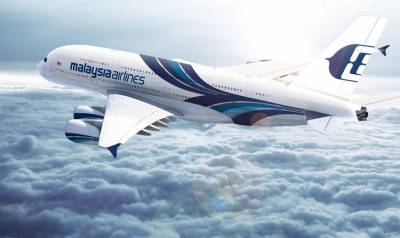
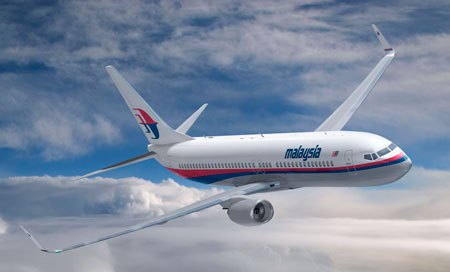
What is the MAS brand identity? Is it this?Os is this the MAS brand identity?
MAS needs a new strategy but cutting costs is not the way forward. In the interests of nation building and to ensure morale and belief in Malaysia doesn’t plummet further and to turn MAS around quickly, the firm needs to carry out a number of key initiatives immediately starting with
1) All suppliers have to accept that their existing agreements must be cancelled and be given the opportunity to submit new proposals that are acceptable to the airline. If they cannot agree terms, new tenders must be issued.
2) Moving forward, all procurement activities must be done transparently.
3) The unions have to understand that 5,000 staff must go. The government must underwrite any redundancy packages for 12 months to encourage staff to leave and reskill these staff to ensure they find work immediately.
4) Training of staff, especially front line staff has to be ramped up because these people are key to the success of the brand and at the moment their customer engagement skills are simply not good enough. But training providers must be recruited transparently.
5) MAS must review it’s sales policies, processes and systems. Right now they are not leveraging effectively on key opportunities such as the Enrich database.
6) MAS marketing and advertising is stuck in a time warp of mass media mediocrity. It needs to stop wasting huge amounts of money (I was told RM400 million in 2013) on irrelevant advertising campaigns and review it’s marketing approach now.
You can’t build a brand using mass media so stop trying to do so
7) MAS must understand that customers build brands not advertising departments. The new strategy must focus on the customer and delivering economic, experiential and emotional value to its customer segments and on their terms.
8) MAS appears to have 3 brand identities at the moment. It’s a mess and needs to be revamped quickly and there has never been a better time to do it as the MAS brand identity is tired and old and associated with MH370.
9) Successful airline brands today are innovative, creative, nimble and move fast. I remember being in discussions about updating the uniform in 2003. 11 years later it is essentially the same.
10) Years ago MAS aggressively marketed it’s Enrich programme and encouraged anyone to sign up. But the programme is antiquated and a mess. Children get offers to sign up for credit cards, there is limited segmentation and personalisation and opportunities to reward and leverage brand loyalists and identify and nurture influencers are missed.
Used properly, the MAS FFP is a potential revenue gold mine
There is an obsession at the moment that cutting costs is the way to make MAS profitable. It is the wrong approach. However by understanding the importance of branding and spending money on the right brand strategy and integrating that brand strategy with the corporate restructuring plan, significant savings can be made and crucially, those savings (obviously) save the company money but will also generate more income by negating the competition, increasing share of wallet and allowing MAS to increase not decrease ticket prices.
Malaysia Airlines (MAS) embarked on a massive restructuring plan towards the end of 2011 with the goal being to reduce costs and return to full year profitability in 2013.
At the same time, the airline reported a staggering RM2.52 Billion (US$850 million) loss for 2011.
MAS didn’t realise its stated goal because in late February 2014, the national carrier posted a 2013 net loss of RM1.17 billion (US$356 million). This was almost three times the airline’s 2012 net loss of RM432.6 million.
So despite the restructuring plan, MAS lost RM4 billion in 3 years. Ouch.
In 2012, one assumes as part of the restructuring plan, MAS announced a business strategy with two key strategic elements – one to focus on the premium sector and the other to focus on the competitive Asian market.
I don’t know what the airline’s definition of the premium sector is but bearing in mind premium passenger numbers appear flat, a large chunk of its business comes from the domestic government and the price sensitive kangaroo routes, this may be a major challenge.
Furthermore, I’ve seen nor heard of any premium customer strategy or tactics. The ‘Flying in luxury’ section of the March 2014 issue of Going Places offers little insight into what might be happening. Even the benefits of being a platinum member of the Enrich programme haven’t changed in a long time.
Premium passenger numbers appear flat
Of course they could be referring to the upgrades to the business and first class check in counters at KLIA. Whilst they are an improvement and certainly add an air of exclusivity to the experience, they are hardly ground breaking. And the attitude of some of the staff manning these counters is often indifferent at best.
But I digress. About 18 months ago, MAS announced that it was doubling its marketing budget. The marketing budget is reported to be as much as 2% of revenue which means that in 2012, MAS spent more than RM550 million or US$190 million to focus on the premium sector and the Asian market in an attempt to rebuild it’s battered brand. That’s a tidy sum. Did it work? Based on the latest figures, no.
In 2012, the company announced it will provide a ‘better and more branded customer experience and embark on a major advertising and promotions campaign′.
I don’t know exactly what is ‘a more branded customer experience’ but as a frequent flyer of the airline I haven’t witnessed a change in or better customer experience although the terrifying vibrations at 38,000 feet on a 737 flight from Kuching to KL in January 2014 were new but I don’t think that’s what they meant.
And judging by the negativity across the Internet it would appear few others have experienced an improvement in customer experience.
In 2012 talking about the appointment of Ogilvy and Mather as the airline’s agency, Al Ishal Ishak the senior vice president for marketing and promotions stated, “2012 will be a breakthrough year for Malaysia Airlines on our path to recovery. We recognised, however, that we could not achieve financial success without clearly defining our brand positioning.”
He went on to say, “Ogilvy understood this and throughout the pitch process were best able to translate our message into a powerful campaign idea. An idea that is big enough to help us transform our business and truly engage our customers like never before.”
Judging by the advertising campaign that soon followed, I can only assume that idea revolved around journeys and suitcases. It was, in my humble opinion one of the worst advertising campaigns I have ever seen. I wrote about it here and you can see the TVC below.
What is really depressing about this whole depressingly familiar scenario is that the O&M advertising campaign aims in part to create awareness and drive visitors to the MAS website. And if improvements were to be made to the experience, one would expect logically that the website experience would be the first experiential improvement.
Sadly no, despite a RM550 million marketing budget which I hope wasn’t spent just on the O&M advertising campaign, the first page of the MAS website has a bug in it that frustrates visitors every time and the bug hasn’t been fixed for at least a year!
Another area that one would expect to be addressed during the improvements to the customer experience would be interactions with the customer service department but again, judging by this negative blog posting, the airline has not managed to deliver on its promises.
So now that MAS has posted another net loss, despite doubling it’s marketing budget to clearly define it’s brand positioning and despite not improving the customer experience, what can the airline do now to salvage its reputation and rebuild its brand?
Here are 20 things MAS needs to do now to improve its brand
1) You and the unions need to wake up to reality and appreciate that market conditions are such that unless you get rid of a large number of staff, the airline will be on my list of brands that won’t make it past 2016.
2) The organization is the brand. Many MAS staff are trying really hard but they are let down by those that don’t care. Current middle management systems don’t seem to be working. Fix them.
3) The six principles to turning around an airline and used successfully by Air Canada, ANA and Aeroflot and probably being used by MAS (a logical assumption bearing in mind the influx of management from Air Canada) include a zero compromise on quality of customer service, investments in staff training and better internal and external communications. The company is failing miserably in all these activities and needs to carry out a comprehensive review and overhaul of current practices and service providers in these critical areas.
4) Forget about the big idea. In the social economy, when consumers not companies define brands and those consumers are spoilt for choice and rarely believe what advertisers tell them, the one size fits all ‘clearly defined’ brand positioning campaign is a futile exercise that does nothing more than waste valuable funds. In this case, RM550 million of valuable funds.
5) Focus instead on consistent, ongoing, personalised engagement with each of your very diverse audiences. And start with your Enrich database! Segment that database in a way that allows you to deliver value to relevant segments today and not segments that belong to the 1980s. Travellers are segmenting into smaller niche, groups and individual travellers and they are willing/able to manage the whole process themselves. Talking to them requires more than an advertising campaign. See point 5.
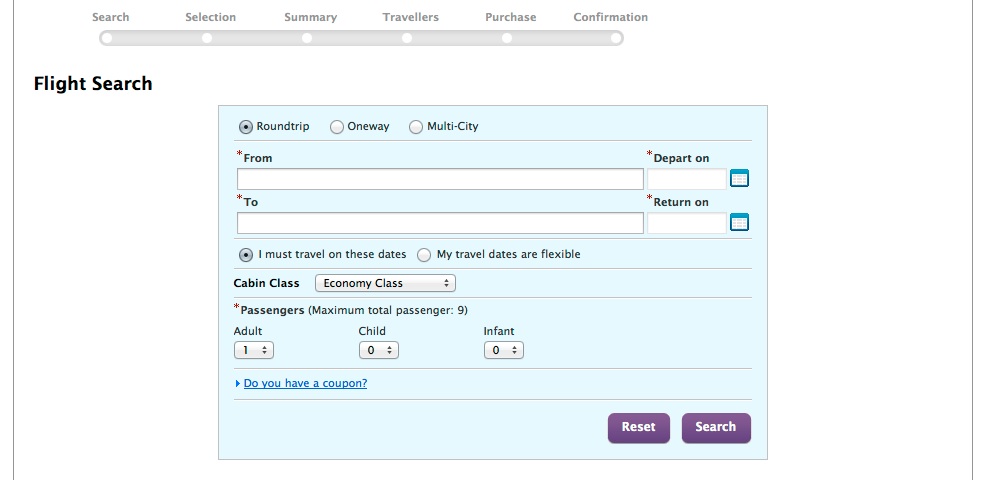
6) FIX THE BLOODY BUG IN YOUR BOOKING ENGINE! It doesn’t matter what it costs just fix it! If your global advertising campaign did make a prospect visit your site and she then had to go through the ridiculous moves required to enter a destination or departure city, they’d soon leave thinking, ‘if they can’t make a simple fix like that, what are they not fixing on their aircraft or elsewhere?’
Why is it so hard to fill in the ‘to’ and ‘from’ fields?
7) Because it’s so important, your database gets a double mention. A chunk of your brand’s profitability will come from your existing customers. Instead of spending RM550 million on an outdated advertising campaign that seems to want to acquire and retain customers, start to use what is probably one of the most comprehensive databases in South East Asia, properly.
8) Focus. These ‘one-size-fits-all’ advertising campaigns are an expensive exercise in naïve futility. Put an end to them now. If I’m repeating myself its because the marketing budget is being wasted on outdated mass market models.
9) Don’t do social, be social. Pushing one size fits all advertising campaigns out across social media is pointless. It’s not a television or a radio so don’t use it like one. Social is dynamic and you need to be dynamic to get the most out of it. Stop using your Facebook as another broadcast platform. And stop ignoring negative comments and blog posts and instead, engage with the authors.
10) Integrate all your solutions to make it easier for consumers to use them. 40% of business travellers and 25% of leisure travellers in Asia now use mobile or tablets for travel but as far as I can work out, the MAS app (when I can get it to work) isn’t integrated with my online profile. Why not?
11) Stop spending, no wasting huge amounts of money on forgettable mass market advertising campaigns and start building a brand.
12) Train your staff, and start with your customer relationship staff. Whoever is doing it now isn’t doing a good job. Find someone who really wants it and make your staff the best in the world.
13) You have a legion of brand angels out there who are desperate for you to succeed. Do you know who they are? If not, you need to identify influencers and quickly leverage on their passion for your brand.
14) Seek new revenue streams. Of course you are already doing this but there are a couple of opportunities that you are not exploiting and you should be.
15) You are not a low cost carrier so stop trying to be one.
16) Get those new aircraft, now.
17) Stop focussing on costs and start focussing on delivering value.
18) Don’t compromise on anything related to customer touch points, whatever the cost.
19) Image is everything. The change in the look of some aircraft was a great development but what about the rest of the fleet? There seem to be three different liveries for the MAS fleet. And what about the uniforms? A partial change was made to some male uniforms but what happened to the rest of them? Is this a strategic project or an ad hoc one? Whatever it is, consistency in a brand image is a must.
20) One last comment on segmentation. Each segment within each country has completely different requirements for value. In Indonesia small businesses employ 80% of employees. In Malaysia, SMEs account for as much as 99% of businesses. In Japan, 20% of leisure travel is by the over 65s. What do you know about these segments and do you have a brand strategy to communicate with them?
Not many legacy carriers have remained profitable following the intense competition in the airline industry. Even without the massive interference of the governments of the past, MAS has found it tough to adapt to increased customer expectations, LCC competition, fluctuating fuel prices and rising costs.
The days of using cost cutting and outdated mass marketing communications campaigns to drive restructuring plans are over. The future will require an even more nimble approach and a focus on delivering value to diverse segments on their terms.
Only then can MAS out maneuver budget airlines and other new entrants into the market and become profitable once again.
DHL understands better than most that a traditional advertising campaign is expensive and ineffective. But it still wanted to market itself, especially in the face of more efficient and effective competition.
So the firm decided to trick its competitors into advertising DHL across a city in the US.
DHL sent packages via competitors such as TNT and UPS to addresses that were awkward to deliver to. To ensure they weren’t caught the boxes were covered with a special ink that turned black when the boxes were chilled to sub-zero temperatures.
The ink was temperature-activated and as it warmed up, the ink faded revealing a large message that said “DHL is faster.”
The poor deliverymen had to struggle through crowds to deliver the large boxes. Whilst it’s unlikely many people actually noticed anything but it is bound to get a lot of viral exposure.
I’m looking forward to the response from UPS and the others!
Wonda Coffee, owned by Asahi Group of Japan used The New Straits Times (NST) a Malaysian daily to launch its hallmark canned coffee with what the NST called “its first 5D advertisement campaign.”
According to the NST the campaign for the ready to drink coffee was “widely touted as the most amazing print-enabled campaign.”
It ran for four days and readers of the newspaper were promised they would be able to “engage their senses of touch, sight, sound, smell and taste with the launch of Wonda.”
There were multiple teaser ads before the launch, at least four full page ads in one edition of the paper, wraparounds of another, a four page ‘pop-up’ ad and sponsorships of whole supplements of the paper that required the use of 3D glasses. The 3D glasses were supposed to come with the paper but ours didn’t.
There were advertorials on the benefits of coffee, teaser ads and even a little music box that played a Wonda coffee Jingle that probably went out across radio. I couldn’t get it to work although it does now play occasionally, normally when nobody is near it.
Typical Wonda print ad
There were also multiple messages, taglines and headings used in the campaign that I found confusing.
I don’t know the cost of this campaign but it won’t have been cheap. It is not uncommon for a brand to launch with a mass advertising campaign like this. It’s the wrong way but if you give your product launch to an advertising agency, what else can you expect?
One of the key points of a launch is to ensure that if any buzz is created and consumers buy into the idea of the product, their ability to engage physically with the brand must be seamless. In other words it needs to be available or better still be everywhere the consumer goes.
Although I’m a coffee drinker, I’m not a fan of instant coffee but I decided to buy the product. On the third day of the campaign, I went down to my local convenience store to buy Wonda. They sell most drinks here except it would seem, Wonda.
The following day the NST carried another full page ad for Wonda coffee with a coupon offering a can for 10 cents if you buy from 7eleven. So I tore out the coupon and went over to the local 7eleven. I had a look in the fridges and there was no sign of Wonda coffee. Competitor brands from Nescafe and others were represented and selling for RM1.90 (local brand) – RM2.20 (Nescafe).
I showed the coupon to the assistant and asked for my 10c drink. He wasn’t aware of the offer. However after some cajoling and a couple of rereads while the queue grew he went to the storeroom and got me a can. I asked what the retail price is and he said RM1.90. On the tin it says premium coffee yet is priced below Nescafe.
Since the big splash in the NST I’ve seen Wonda coffee posters at toll booths and there is at least one TVC (see below) so they are obviously spending a lot of money on traditional media.
But of course the initial buzz around the product launch will die down within a week or two once the advertising has stopped. In this era of social media, there is a great opportunity to maintain any traction by taking the marketing to the community.
I had a quick look on Youtube to see if there is a consumer driven competition there. All I could find was this TV commercial.
The TVC has been up for a month and has only received 400 views. Interestingly not one like or dislike. Seriously underwhelming but at least we know they haven’t paid for likes!
Determined now to find out how Wonda is engaging consumers on Social Media I figured there would be a big splash on Facebook, right? Nope. I couldn’t find anything. Twitter? Nothing.
I wonder why Wonda isn’t using FB to launch itself
So here we are in 2014, launching a new product in Malaysia and there doesn’t seem to be any use of social media!
Even though Facebook is the most visited site in Malaysia – There are 10.5 million Facebook users in Malaysia (out of a population of about 27 million) and 3.5 million of those are 18 – 24, probably the perfect target market for this product. Social media is responsible for 33% of all web traffic in Malaysia.
Globally 93% of marketers rate social tools as important and 90% of them support this by using social media channels for business. In this social media dominated era, why aren’t the team responsible for launching Wonda using Social media?
Now of course I don’t know what else is involved in the launch of Wonda and it could be that some sort of Social media presence is part 2 of the launch.
Although not the right way to launch a product, I hope this is the case because ultimately, it will be consumers on social media who determine the success or failure of Wonda Coffee and not a traditional campaign pushed out across traditional media, no matter how creative it is and how ‘amazing’ it is.
Asahi is targetting 20% of Malaysia’s coffee beverage market with Wonda. If it continues to use old fashioned methods to launch and market Wonda and doesn’t leverage on Social Media, it won’t achieve this goal.
Business today is brutally competitive. Many brands that have done the hard graft to get to the top of their industry, fail to stay there. It used to be that if you made it to the top you were sitting pretty. Not anymore, getting to the top is the easy part. Staying there is now the difficult bit.
Just ask these 5 brands who are unlikely to make it to Christmas 2014.
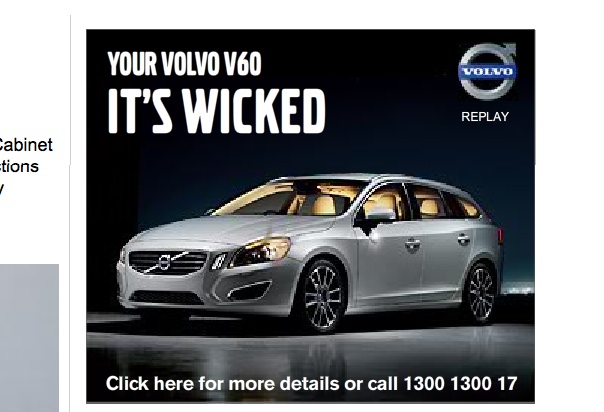
Volvo ad campaign tried to convince consumers it was wicked!
Crucially, Volvo doesn’t have enough models and is forced to compete in Asia and the US with entry level vehicles from luxury marques Audi, BMW and Mercedes as well as giants like Toyota and GM.
In the United States, Volvo’s market share hovers around the 0.3% mark. In Thailand, the largest automotive industry in South East Asia and the 9th largest in the world, Volvo has had a presence since the mid 1970s yet it only sells around 2,000 cars a year out of a predicted 1.3 million vehicle sales for 2013. In Malaysia it’s less than 1,500 out of a total industry volume of almost 600,000.
Volvo was bought by China’s Geely group in 2010 for US$1.6 billion. Geely targetted sales of 200,000 cars a year in China by 2015. To meet these targets, it’s rumoured that the dealers in mainland China inflated sales figures to generate cash incentives that should have gone to customers but were in fact retained by the sales force. It’s thought that as many as 20% of sales in China were ‘fake’.
A messy marketing approach, limited models and falling sales in key developing markets. Volvo needs to get its act together quickly if it wants to be around in 2015.
4 NOKIA
The Finnish handset giant has gone from hero to zero in a heartbeat. In 2010 Nokia, sold 450 million handsets, outselling Apple 10 to one.
Consumers don’t want phones they want smartphones
But Nokia’s mobile phone market share was already falling, from a high of 36.4% to 28.9% in 2010.
In 2012 the firm sold 16 million of its flagship Lumia handsets. In the same period, Samsung sold 384 mobile phones while Apple sold 125 million iPhones.
Nokia makes great phones. The trouble is consumers don’ want great phones they want great smartphones and a smartphone needs a good operating system.
And Nokia made the mistake of backing the wrong OS horse when it backed Windows mobile. A big mistake that it acknowledged when it went public with its frustrations with Microsoft’s failure to give smartphone users a good enough reason for using Windows.
As 2013 closes, Nokia is worth 10% of what it was 5 years ago and tragic though it is, Nokia is probably doomed.
3 DELL
Dell makes PCs. Lots of them and very cheaply. In 2000 it made more and sold more than any other company. Dell used to have very good customer service but somewhere along the way, Dell stopped focussing on its customers and focussed instead on producing cheap PCs.
Not anymore
But as Dell is finding out the hard way, cheap is not a differentiator. Worse still and unfortunately for Dell, global PC sales are tumbling as tablet sales skyrocket. So it now has a larger share of a declining market and a poor reputation with customers (a death sentence in the social economy if every there was one). No doubt this is major factor in the fact that in its fiscal second quarter, net income was down 72% from the same period a year earlier. That’s not good.
In September 2013 Dell shareholders approved a US$25 billion buy out by the founder Michael Dell and Silver Lake. This will allow Mr Dell to make acquisitions, increase R&D spend and target new markets away from the scrutiny of Wall Street. Mr Dell has also expressed considerable interest in next generation cloud based services to improve the way businesses operate.
This may keep Dell alive past December 2014 but it will be a very different company to the one we know now.
2. WINDOWS
In the mid 1990s Windows had over 90% of the computer operating system business. Today that share has shrunk to about 15% for sales of new devices and according to Gartner it is unlikely Windows will ever get back much above 15%.
Windows mobile may bury the brand
Windows 8, launched at the end of 2012 was supposed to give the mobile operating system a boost but it failed to ignite much interest and Windows phone now has 2.9% of the smartphone operating system market.
This despite advertising spend of more than US$9 billion over the last 10 years. Windows is probably too big to fail, but if Microsoft doesn’t sort out experiential problems with Windows, especially Windows mobile it may well crash and burn in 2014.
1 BLACKBERRY
The BlackBerry story is the most tragic of corporate tales. Originally Research in Motion, the company was renamed in 2014 but that hasn’t helped the company arrest rapidly declining sales and revenues.
At its peak, BlackBerry was the third biggest handset maker, thanks mainly to its BlackBerry messenger that allowed users to send messages to each other for free.
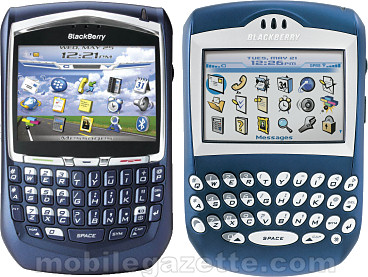
BlackBerry was once the 3rd biggest manufacturer of mobile devices. Will it make it to 2015?
For a while a BlackBerry was a major status symbol in Asia, especially for aspiring teens. But that all changed with Whatsapp and other free services and since then, BlackBerry has lost ground to Apple, Samsung, LG and other mostly Asian smartphone makers who are more nimble and aware of changing consumer needs.
New models and a revamped operating system were launched in 2013 but they failed to have much impact and in 3Q2013 BlackBerry revenue was down 56% over the same period in 2012.
Towards the end of 2013 over 4,500 staff or 40% of the workforce were made redundant and the firm is desperately trying to reduce expenses by a further 50%.
The one bright light is the BlackBerry Enterprise Server (BES 10) that has seen a rise in installations in 2013. Revenue from this ‘service’ business makes up half of the company’s income. If anything happens to BES 10 the firm will go under.
Why these 5 brands? I used a simple methodology to determine which brands are likely to fail. The key elements of the methodology are:
1. Reported sales figures
2. Competitor reported sales figures
3. Anecdotal reports of physical experiences with the brands
4. Professional view of the brand’s communications over a 12 month period
5. Manual tracking of Social media discussions by their existing or lost customers over a 2 month period
Let’s hope I got it completely wrong and these great brands are still around in January 2015.
Volvo trucks is going through a difficult period with a very public spat in the boardroom and stagnant sales in most mature markets. In an attempt to draw attention to its “Dynamic Steering System” the firm released a video featuring Jean Claude Van Damme doing the splits between two reversing lorries.
The Video has been viewed an impressive 62 million times on YouTube since 13th November 2013. You can read more about the video and Volvo here
His Expendables co-star Chuck Norris was so impressed with the 53 year olds flexibility, and possibly worried this might lead to Van Damme getting first dibs on all the upcoming movies that require flexible seniors with strong inner thighs, created his own video.
In the video ‘Chuck Norris’ is seen straddling the wings of two passenger jets with a human Christmas tree of paratroopers in all their kit balanced on his head.
Spoofing the Van Damme commercial even more, he recites a passage from Hamlet over an Inya song as the camera pans out and he does the splits while the paratroopers light flares and ‘Merry Christmas and Happy New Year’ fades in.
So far the video has only generated 5,000 views on YouTube but I’m sure that will change over the next week.
In the UK, the Christmas advertising season has begun and all the major retailers have pushed the creative envelope in an attempt to create both memorable and effective above the line advertising that will increase awareness, drive visitors to stores and improve sales at the most competitive time of the year for retailers.
In November and December, TV ad spend is already up 7% so far over the same period in 2012. John Lewis, the UK’s largest department store chain has set aside £7 million for a six week campaign. Struggling retailer Marks and Spencer’s Christmas campaign began in the first week of November.
Some of the ads are ‘awash’ with celebrities whilst others such as Tesco and Asda have reduced their advertising budgets and steered clear of the celebrity approach.
For many retailers, their corporate survival depends on the Christmas season. Company Watch predicts over 5,000 UK retailers will fail to make it to the ‘killing season’ the post festive months from the end of December to mid February.
But it’s not all doom and gloom, at least for some retailers. According to Deloitte, UK retail sales in the lead up to Christmas are expected to be £40 billion, up 3.5% on 2012. Capgemini expects online sales to be above £10 billion in December, the highest ever but still well below high street sales.
The big retailers will be aiming to get a piece of that using traditional mass media to communicate their messages to as many people as possible in the hope it will resonate with enough of them to get them into stores and to part with their hard earned cash.
Some of them are linking the campaigns to social media initiatives and of course all of the ads are available on Youtube.
Which is the best ad? Below is a round up of most of the ads and the number of views received on Youtube up to 17th December 2013.
We’ve also included our own poll so make sure you vote for your favourite ad!
1. Debenhams – Wishes Made Fabulous What happens – Beautiful people in Christmas situations wearing beautiful clothes and using beautiful things before freezing and becoming hand drawn versions of themselves Tagline – Whatever you wish for this Christmas, make it fabulous with Debenhams Christmas Anything else – Nice song, nice scenery Youtube views – 114,000.
2. Harvey Nichols – Sorry, I spent it on myself What happens – Excited people opening presents at Christmas are surprised to receive mundane gifts like elastic bands, paper clips and toothpicks from the Harvey Nichols “I spent it on myself’ range”. Meanwhile the gift givers look longingly at their new expensive shoes, bag and dress. Tagline – A little something for them, a bigger something for you. Anything else – It’s a lovely, original and amusing take on gift giving at Christmas. Youtube views – 382,000
3. John Lewis – The Bear And The Hare
What happens – During the winter when food is in short supply, Bears hibernate to stay alive. But the John Lewis bear knows a hare and the hare wants the bear to share the Christmas cheer so he gives him an alarm clock to wake up and experience Christmas. We’re not sure what he will eat though. Tagline – Give someone a Christmas they’ll never forget Anything else – Cracking animation, Lily Allen song. A Twitter feed to keep the story going. Youtube views – 11,008,000
4. Marks & Spencer – Believe In Magic & Sparkle What happens – British model Rosie Huntington-Whiteley (She’s big in the UK) falls down a manhole whilst chasing a cute dog and into a medley of classic fairytales including Aladdin, Alice In Wonderland, Hansel and Gretel, Little Red Riding Hood and The Wizard of Oz. She explores this fantasy world, often dressed in nothing but underwear until she eventually recovers the dog. Tagline – Believe in magic and sparkle. Anything else – Helena Bonham Carter makes an appearance. Youtube views – 1,000,300
5. Tesco – Forever young What happens – We’re taken through the life of a couple at Christmas courtesy of their ‘Home movies’ from newly weds to pensioners. Tagline – There’s nothing better than Christmas Anything else – It perfectly captures the nostalgia of Christmases past. Youtube views – 648,000
6. Morrisons – Go on… It’s Christmas What happens – Ant and Dec (UK celebrities) pit their acting skills against a singing, dancing gingerbread man(and come 2nd). Tagline – More of what matters Anything else – Animation is good Youtube views – 408,000
7. Asda – Snowmen
What happens – The four snowmen of the Apocalypse that is Christmas line up with Asda the biggest. Tagline – Why pay the same when you could be 10% better off at Asda? Anything else – Nope Youtube views – 59,500








 brandconsultantasia.com