Is this the best Christmas ad ever?


If you’ve experienced the build up to Christmas in the UK, you’ll know that the launches of the big retailers’ Christmas ads are eagerly awaited. In 2015 we ran a poll of the favourite Christmas ads and even though it was considered sadvertising (take note Petronas with Chinese New Year coming up) by many pundits, the John Lewis ad was a clear winner.

This year John Lewis has for the first time cast a black family as the stars of the ad. Actually that’s not true. The stars of the show are a whole series of animals including the family pet Buster the Boxer.

You can watch the ad here and let me know what you think.

https://youtu.be/sr6lr_VRsEo

This being Christmas you are encouraged to ignore reality and the fact that the hedgehog would have been in bed since November and foxes are a nuisance (more on that later).

After two days the ad has generated 4 million views on Youtube, 32,000 Likes and 3,000 comments, most of them positive and many of them amusing, ensuring the narrative continues!

Banter!!
Banter!!

The store spent about £1 million on the ad and will spend £6 million on TV spots nationwide. Fans can also download Snapchat filters featuring Buster the dog. Merchandise on sale in the stores includes soft toys, clothing, animal themed children’s books and trampolines. And in the Oxford Street store, there will be a virtual reality version of the commercial.

The dog also has his own Twitter hashtag #BusterTheBoxer and Twitter stickers. But Twitter reactions have been mixed. @Basscrazy66 suggested Santa should be putting the trampoline together.

What about Santa?
What about Santa?

@Gregjames missed the sadvertising approach with this tweet.

I want to be miserable at Christmas

Meanwhile, @DanielBruce_8 brought a bit of regional humour to the narrative.

This is known as Scottish humour

Earlier in November 2016, an A level student in the UK created a fake John Lewis ad that fooled a number of people. Taking sadvertising to a new level, the ad features an unhappy snowperson trapped in a snow globe desperate to get out of the globe so he can enjoy Christmas with a free snowperson. There are rumours the student will soon be interviewed by the head of creative at John Lewis.

https://youtu.be/4BptrhEepXI

Even though it’s only been out a few days, the John Lewis ad has been parodied. Make sure you watch this parody to the end!

According to the creators of this parody, James Herring, Jasper Gibson and Dave Packer, they are “raising awareness of the mild annoyance of urban wildlife experienced by middle class city dwellers”.

John Lewis has announced that 10pc of all toy sales will be given to the country’s Wildlife Trusts charities. What do you think, is this the best ever John Lewis ad? Vote in our poll.

New Samsung Galaxy Note 7 has an explosive start


Rumour has it the new flagship phablet from Samsung has a dodgy battery. Early reports on social media from Korea feature terrible images of burned units fresh out of the box. Samsung was quick to say only about 0.1% of the devices were affected but out of 7 million already sold, that’s an embarrassment they could have done without.

That's going to hurt
That’s going to hurt

The latest news is that they are going to issue a recall of all Galaxy Note 7s. This will be a massive blow to the mighty Korean electronics firm that has been banking on the Note 7 to stop the decline in profits of the last couple of years.

I haven’t played with it but cannot escape the relentless advertising across all media channels. With USB Type C charging (said to be the root of the problem), waterproofing and a futuristic iris scanner that uses your eye to unlock the phone, this was considered a real threat to Apple’s dominance.

With a new iPhone due to be released next week, it will be interesting to see how Samsung manages the fallout and whether it can continue to stay in touch with Apple. I expect Samsung to be very transparent and decisive about the whole issue. The recall suggests that’s the case. It’ll also take more marketing dollars, a lot of grovelling and lots of freebies to those affected.

Harder to win over maybe those who were considering switching from Apple to other devices. A category I include myself in. It just maybe that the winner will actually be Huawei. Huawei has seen a 40% spike in smartphone revenue and now has 9% of the smartphone market. To overtake Samsung, it’ll need to sell about 10 million more handsets. That’s a challenge but dodgy batteries and weak quality control at Samsung will help its cause.

Volvo needs to quickly join up its branding dots


Back in February 2016, Volvo VP of global marketing Thomas Andersson talked to marketing week about the new global vision for Volvo after the launch of their rather cliche ridden yet compelling emotive ad questioning the motivations of automotive manufacturers around the world.

You can read the full interview here. To be honest, I found it a bit confusing. Andersson says, “We want to have a strong social message as if we just went down the same old route as our rivals [with celebrity campaigns] we would just be one of many, we wouldn’t be adding anything new. I believe the public want brands to stand for something important.”

The interview ends with a reference to the brand’s association with Avicii. I don’t know what this is exactly but do associations with DJ’s communicate importance?

Another comment that got my attention was ““Social plays such an important role when it comes to early adopters. They want to engage with Volvo but if we don’t respond quickly they will lose interest and move on. There’s a huge opportunity for us to engage more quickly and be there when people want to talk to us, and these changes enable that to happen.”

Yet the above video was deemed ‘unlisted’ on Youtube and carried a warning to “Be considerate and think twice before sharing.” I’ve never seen that before and seems to go against the very point of posting a video on Youtube. Unsurprisingly then, the video has only been viewed 1,771 times. I was surprised though to see that there was no attempt by Volvo to respond to the three comments.

Not long after I came across this digital ad from Volvo here in Malaysia. I couldn’t make sense of the ad, can you?

What is the point of this ad?

The Volvo brand has been tinkered with too often and it’s good to see them getting back to their safety roots. I think there is mileage in this approach. But they need to join up the global dots quickly. Local implementation is good but it still needs to be monitored and linked back to the global strategy.

A kick in the teeth for Malaysia’s advertising industry


The Lions are awards given out at the Cannes festival, an eight day celebration of creativity. Tens of thousands of awards are submitted and every man and his dog in the advertising industry wants to win a Lion. An agency can bring in business for years if it’s won a Lion. Even if the creative genius who won it has long gone from the agency.

This year, despite submitting 325 entries, Malaysia’s advertising industry failed to win one single Lion, despite the number of Lions awarded to firms in Asia increasing from 209 last year to 263 this year.

The awards went to agencies from the following countries with last year’s awards in brackets:

1. Australia – 71 Lions from 1782 entries (51)
2. New Zealand – 57 Lions from 526 entries (20)
3. Japan – 46 Lions from 1736 entries (35)
4. India – 27 Lions from 1315 entries (15)
5. Thailand – 23 Lions from 558 entries (9)
6. Singapore – 14 Lions from 688 entries (18)
7. China – 9 Lions from 1022 entries (17)
8. Hong Kong – 5 Lions from 386 entries (2)
9. South Korea – 3 Lions from 309 entries ( 11)
10. Taiwan – 2 Lions from 144 entries (0)
10. The Philippines – 2 Lions from 253 entries (1)
10. Vietnam – 2 Lions from 89 entries (0)
13. Indonesia – 1 Lion from 119 entries (4)
13. Bangladesh – 1 Lion from 25 entries (0)

Other countries that didn’t win any awards were:
Malaysia – 0 Lions from 325 entries (6)
Sri Lanka – 0 Lions from 31 entries (0)
Pakistan – 0 Lions from 3 entries (3)

On the face of it this is a major kick in the teeth of the industry in Malaysia. Despite the fact that some advertising agencies have been known to create fake ads simply to try and win a Lion or two the Lions are still the holy grail of the industry. By the way, I’m not saying of course that that happens in Malaysia…

Personally, I think the empty and pointless measurement of the number of awards an agency has won in the past has nothing to do with the ability of the agency to deliver creative genius in the future. But sadly it’s enough to convince a CMO or CEO that the agency must be good. Of course we all know that the metric by which they should be judged is how many units of a product are sold.

But I think a lot of the blame lies at the feet of CMOs, CEOs and other business leaders in the country. To survive an agency can only really give a client what he wants and if he wants the same as the other guy then what can the agency do about it?

Is this another Malaysia Airlines branding fail?


Back in August 2014, as part of its ill conceived attempt to move on from the twin tragedies of earlier in the year, Malaysia Airlines launched a contest called “My Ultimate Bucket List” which Time magazine said was not such a good idea because a bucket list is made up of the things one wants to see or accomplish before dying.

Following the wave of criticism, the airline quickly apologized and the campaign was withdrawn but not before social medial let rip, with one Twitter user asking, “This is a sick, sick joke right? Marketing/PR needs to be fired.”

The focus at Malaysia Airlines has been an ambitious restructuring plan led by outgoing CEO Christoph Mueller who has cut unprofitable routes or offloaded them to competitors, slashed thousands of jobs, and brought in new management.

Is this the right image for Malaysia Airlines to use in its latest campaign?

But throughout this process, the carrier has developed a reputation for poorly conceived communications. Last Saturday I was flying out of Kuching International Airport and saw this strange image above the entrance.

Maybe it’s me but my first thought was that the woman looked like an angel. Doesn’t her hat look like a halo? My next thought was of MH370 and the tagline although totally innocent suggested an announcement was imminent.

And if it isn’t an angel, what is she supposed to be? A butterfly? And what’s the campaign about? Is the world waiting for her? Will she ever arrive?

Whatever it is, I couldn’t help but think this was the beginning of another bucket list fiasco. Or am I over thinking it? Tell me what you think!

The Future of Branding is Debranding. Well maybe, but first you need to know what is branding


Here’s a link to an interesting article in the fast company owned site fastcodesign.com magazine, an online design driven website that is “inspiring stories about innovation and business, seen through the lens of design.” They recently ran a story cleverly titled The Future of Branding is Debranding.

I’m an occassional visitor to the site and particularly like their infographic of the day. Have a look at this one that depicts climate change as a haunting death spiral.

The article starts well enough with the fact that digital media is blunting the effects of advertising but then goes on to say that native advertising or branded content is a sham and nothing more than an attempt to trick customers into spending money. While getting customers to spend money is the aim of most advertising (as is quality design) it misses the point of what is branding.

The future of branding is debranding? Well maybe, but not if we're starting from the wrong place
The future of branding is debranding? Well maybe, but not if we’re starting from the wrong place

The article does make some valid points about branded content and how it is not a strategic exercise or a long game. And this is true, it’s simply a tactic employed by brands. But it loses it’s way as it confuses tactics with strategy. Branding is a strategic exercise, most branded content is a tactic although some firms such as Coca Cola do it properly (see video below) and integrate it across channels and make it strategic.

The post then goes on to make the bold but ultimately wrong statement that, “Branding is, fundamentally, just a form of communication.” This is simply not true and I’m surprised such an auspicious publication allows such a claim to be made.

Indeed, it’s claims like this, from prestigious sources that are muddying the branding waters. How can CEOs make the investments required in branding if they are confused by what constitutes branding in the first place?

To make matters worse, it then goes on to say that debranding shouldn’t be confused with visual branding! Using a couple of niche brands as examples it says, “Such visual identities could be the result of debranding, but they are not the end goal. The real goal is a well-made product.”

I don’t understand the visual bit, but a well a well made product is definately a goal and any brand should start with something that is fit for purpose because no amount of communications will make a crap product good and certainly won’t build a brand.

But what’s really important is that the brand delivers economic, experiential and emotional value every time, and at every touchpoint and with everyone.

The mistake too many brands make when they start branding (or the advice they are given is wrong) is that they think branding is based on acquisition – it isn’t and they think that stringing together a series of tactical campaigns will build a brand – it won’t.

Products or services need to be sold. Companies need to make those sales but the ability to start delivering value at the first and subsequent touch points is going to lay the foundations for the success, or not of that brand’s relationship with the prospect/customer. And that relationship is what builds the brand.

Advertising, branded content, design etc may be required at some point (although increasingly consumers are not influenced by such superficialities and look for more personalisation and relevance) but critical is the ability of the brand to deliver the value I keep mentioning.

The article finishes with the statement, “Don’t throw a new product on the market if it’s not intrinsically better and more durable than what already exists. We don’t need more branding; we need fewer, better-quality products. Fine-tune your product’s quality, design, and its durability. Become a producer of shoes again instead of surrogate spirituality”

Whilst Chinese products may have had short term success because they were cheap, most consumers are moving back to quality products from more established manufacturers who have invested in tools to improve their efficiencies, making consumers the winners as products are better.

So we’re definately moving away from ‘cheap as chips’ junk. But at the same time, with a growing global population with more disposable income, there will always be demand for commodities but again they shouldn’t be confused with brands.

And besides, despite the advertising, the branded content and all the other tactics used to try and entice you, you don’t need to change what you are already happy with.

And bearing in mind that 80% of what most of us buy are the same things, one could argue that a lot of brands are already doing the right thing.

How to spot a shit brand consultant


A friend sent me a great link to a Mark Ritson rant in marketingweek yesterday. Mark Ritson is something of a God for many in the marketing business and sells himself really well. And so he should as he’s won more medals than Michael Phelps.

In the rant which you can read here, he recalled a recent evening in London where a friend told him how he had been ripped off by a brand consultant. Ritson doesn’t share how the friend was ripped off but goes on to outline a seven point system for identifying ‘shit’ brand consultants so you can avoid them like the plague.

Mark Ritson - more gongs than just about everyone
Mark Ritson – more gongs than just about everyone

The list goes something like this:

1) If the consultant mentions millennials, run a mile.
2) If the consultant offers advice without qualitative or quantitative research to back up his recommendations, run a mile.
3) The more concepts the brand consultant tries to sell you, the more ‘crapper’ he is.
4) If the brand consultant uses trigger words, he is unworthy. An example of a trigger word is Innovation. According to Ritson innovation ‘is a product orientated word and worthless as a result.’
5) Any brand consultant that mentions Maslow’s Hierarchy of Needs should be shown the door – after you’ve thrown something heavy at him.
6) Likewise, if the brand consultant shows you a picture of a cow being branded.
7) And again, if they tell you reputations take decades to build.
8) If the brand consultant has a trademark attached to their special branding methodology or they use an acronym like ‘RESULTZ’ or ‘PERFORM’ then walk out of the room, but before you do write WANK on the nearest whiteboard.
9) If your brand consultant waxes lyrical about Steve Jobs and Apple and insists that what he did is relevant to your business, head for the door.

OK that’s a 9 point list but I’m only the messenger. So what do people think of his rant and list? Judging by the comments section, most of his fans agree with him. However, John Robbins of newzpoint blames ‘shit’ brand managers rather than shit brand consultants, “Although I can’t help but think the main reason there are so many shit brand consultants is because there are so many shit brand managers and the fact that you have to prepare a guide for brand managers because they generally can’t tell the difference between good and bad consultants is recognition of this.”

Robbins continues, “Try talking in realistic terms to a shit client (there are tons of them, easy to find) and most of the time their eyes glaze over because they find common sense rather tedious and prefer to listen to inflated bullshit as it excites them more. The emperors cloths continue to be sold and resold every day and no doubt will for sometime. As the old adage goes – brand managers get the brand consultants they deserve.” Powerful stuff from Mr Robbins.

Another comment from Claire who focused on the reference to the millennial segment, “I am apparently a millennial and I’m married with a kid. My brother and sister in law are technically also millennials and living it up with no mortgage in London. The idea that we are both basically the same segment for targeting is ludicrous.”

So what do I think of it? Well I think Mr Ritson is spot on really. I mean the concept of doing anything and making any recommendations without doing research is borderline criminal in my book. But the research must be focused on identifying value requirements of target markets and not be determined by age or decade of birth.

Who needs logic when you can pay for for inflated bullshit?
Who needs logic when you can pay for inflated bullshit?

I mean, in an era when social media allows you to find like minded souls in groups on Facebook and other platforms, the concept of a ‘segment’ like 18 – 24 year olds or people born in a certain year or decade is rather naive.

Every customer is a segment now and they must be engaged with content that resonates with them. And that doesn’t have to be done through marketing. Indeed, it’s hard to do so, but it can be done when the prospect is researching the product or at the point of sale, after a connection or after a sale. If any segmentation is required, it should be separating prospects from existing customers.

Or as John Robbins said, the problem is often the client. If a client wants a brand consultant to go straight to implementation without doing any research, what is he supposed to do?

Should he walk away? Undoubtedly and many brand consultants probably do but if the economy were tanking and the pipeline was bare, who can blame them for taking the plunge? After all, the client will spend their money somewhere.

And besides, once on board the brand consultant can always try to convince the client to do the proper research.

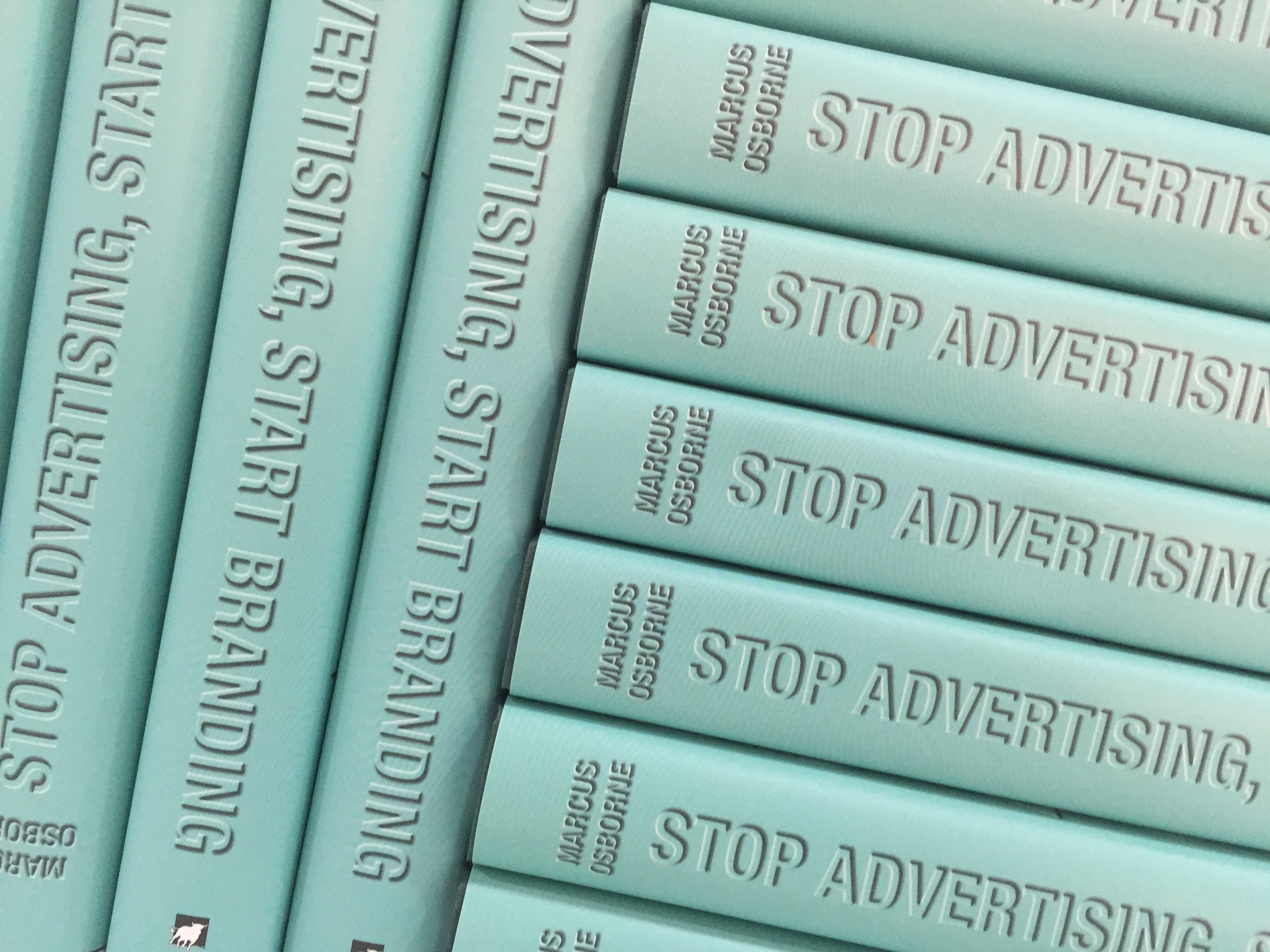
Stop Advertising Start Branding – the first book to help Malaysian, Singaporean and other Asian firms build brands that not only survive but thrive


Stop Advertising, Start Branding is the controversial new book by Malaysia based brand consultant Marcus Osborne. It’s already attracted flattering reviews with one reviewer calling it “South East Asia’s business book of the year.”

Marcus Osborne says, “If you are spending more on advertising yet struggling for sales, it could be because you are still using the advertising driven tactics of the mass economy when competition was limited, there were few TV and radio channels, magazines and billboards and visiting the cinema was not the positive experience it is today.

Stop Advertising Start Branding. Asia's business book of the year
Stop Advertising Start Branding. Asia’s business book of the year

He continues, “Today’s consumers are overwhelmed with data, information and choices. Malaysian households receive 200 TV channels, 24 hours a day. Singapore, with a population of no more than 5 million has 252 Free to Air or Pay-TV channels.

The advertising noise in Singapore is deafening whilst back in Malaysia there are more than 20 commercial radio stations broadcasting up to 20 minutes of commercials every hour, ads are on lampposts, shop lots, taxis and buses and billboards jostle for attention at every junction. Newspapers often have an ad to copy ratio of 60%-40% compared to the accepted norm of 30%-70%.”

“Such a barrage of messages does not include the more than 40 billion web pages and 20 million blogs on the Internet, Facebook, Instagram, Twitter and other social media and games. How can a consumer’s mind process so much data? Obviously it can’t. In fact it shuts much of it out which accounts for falling sales despite increased ad spend.”

Stop Advertising, Start Branding explains how to build a brand in this new environment. It’s about getting the fundamentals in place. Assuming your product or service is fit for purpose (and a lot are not) you start the brand building process by making sure your organization has clearly defined brand values that are real and achievable and can be articulated clearly to personnel and those personnel must be shown how to integrate those values into their every day operations.

Consumers in Malaysia are being ambushed by firms trying to get their attention.

Those personnel must know what is required of them to ensure the brand is able to deliver on any promises made time and time again, to different segments, all with different requirements for value and at every touch point. For many companies, this requires a 180 degree change in management style and can be difficult, especially for companies who look at staff as a cost not an investment.

Once the organisation is ready the implementation really depends on the industry. But new content must be constantly created and new tools and channels used properly. Millions of Singaporeans, Malaysians and others use Facebook but most brands simply advertise on Facebook or post images of the CEO at events and often ignore messages asking for help or information. This is rarely the right approach because Facebook requires firms to engage consumers with compelling content that will build interest.

Old school tactics such as advertising, roadshows and promotions still have a role to play but often, much of the advertising doesn’t make sense whilst many of the people representing firms at roadshows or promotions aren’t trained properly and simply go through the motions.

Stop Advertising, Start Branding explains that all the awareness in the world doesn’t mean a thing unless it translates into a profitable relationship. With plenty of local and international case studies the book shows that companies that focus strongly on building robust foundations for their brands, provide compelling content and develop relationships with customers based on delivering value to those customers, are more likely to succeed than brands who rely on advertising.

It isn’t as exciting or as `cool’ as TV commercials or huge billboards on major highways that 500,000 people see each day, but it’ll be more profitable.

About Marcus Osborne. He has lived and worked in Malaysia since 1994. He has helped build brands in Europe, the Middle East and South East Asia. His blog brandconsultantasia.com is the leading branding blog in Malaysia. Stop Advertising, Start Branding is his first book. It is available from all good bookshops in SE Asia and the UK or from Amazon.co.uk

He has written numerous articles for multiple publications and contributed a case study on the Malaysia Nation Brand to Nation Branding. Concepts. Issues. Practice. By Keith Dinnie. Contact him at marcus at fusionbrand dot com or +6 03 7954 2075.

Who are the advertising industry’s biggest wankers?


Please forgive the crude title but if you read on you will understand why I don’t have a choice.

I remember a few years ago Fusionbrand interviewed a young guy who was about 24 years old. He had only been working for 3 years but had already won more than 25 awards. I can’t remember what they were for but none of them were significant. However he genuinely believed winning those awards meant he was good at what he did and could command a bigger salary.

Nowadays, there are so many award shows for the advertising industry that one of them, in an attempt to stay different, has dropped the word advertising from the title. We’re regularly asked to propose ourselves for awards with suggestions on how to ensure we win. We’ve never done so which is why we’ve never won an award but have always been asked by clients to do additional work.

I don’t know if these award shows are an attempt by a dying industry to stay relevant or perhaps it’s a genuine belief that handing out awards to just about anyone who pitches up for work really will help keep advertising relevant.

Proudly display this award in your reception area

Anyway, there are some people in the advertising business who don’t take themselves too seriously and have noticed the handing out of awards has got out of well, hand. So they’ve created an amusing distraction for the digital era or for those who haven’t won enough awards. The Handy Awards website and app let’s you award yourself an award for anything you want.

All you need to do is download the handy awards app and shake your phone and you’ll win an award. The longer you shake the phone, the better the award. For those with real determination, there’s a Best in Hand award but that takes some real shaking but I know you can do it. And the good news is you can share the award with a friend.

You can even share your impressive award with a friend.

As the site says, “The Handys are the world’s first advertising award show where you can give yourself an award in the comfort of your studio apartment or at your desk within your agency’s open office. All without entering any work or having to sit through someone else’s boring case study video.”

It would appear that, judging by the awards it is only open to male creative wankers but sticking with the crude nature of this post, perhaps there is a female award, err coming?

Is this the first glimpse of the new Malaysia Airlines brand?


Malaysia Airlines has spent hundreds of millions of dollars on advertising campaigns in an effort to convince us that it’s a top carrier and we’ll all have fun flying the airline etc. You can read one of my scathing attacks on the marketing department here and another one here.

Unsurprisingly this 1960s approach to building a brand didn’t work so they focussed instead on cutting costs wherever costs could be cut, without giving much thought to the effects of these cuts.

Most recently the carrier was ripped apart in the Malaysia media because it has stopped serving alcohol on any flight of less than three hours and not just in economy but in business class as well. What appeared to be most galling to the hundreds of consumers who commented on the ban was the fact that the airline had implemented the rule below the radar. Without apparently any formal announcement. Scores of furious business class travellers took to Facebook to air their frustrations and to swear never to fly the carrier again.

And then a few days later the CEO stepped down, nearly two years before the end of his lucrative contract. We’ll come back to that in another post. Because this post is a positive one.

This afternoon I received an email from Malaysia Airlines telling me my flight was delayed. Now I know a lot of you are going to ask what is the big deal but this is the first time, for as long as I can remember that MAS has emailed me to inform me that my flight was delayed.

Rebuilding the Malaysia Airlines brand, one baby step at a time.

It’s not perfect. For instance I would also like to have received a text notifying me of the delay because I might not have checked my email before leaving for the airport. And of course you’d think that after more than 20 years of being a customer, they could address me by my name but that doesn’t matter.

What matters is that rebuilding the reputation of the Malaysia Airlines brand will require a greater investment in improving experiences at every touch point than in advertising campaigns that are lost in the sea of noise. I’m not holding my breath, but I hope this is the first step in the rebranding process.