The rebranding of MAS has already started and first impressions are good


The new Malaysia Airlines CEO Christoph Mueller has begun the process of rebranding MAS by stating Monday that the carrier is ‘technically bankrupt’ and that a brutal restructuring exercise is the only way forward. He went on to say that the rot had set in years before the mystery of flight MH370 and the tragic one-in-a-billion shooting down of MH17.

Christoph Mueller leading the MAS rebrand

Of course this is nothing new but by stating what we all know and confidently but empathetically, he has shown us that he is serious and perhaps most important of all, he is prepared to do what no previous CEO has been prepared (or was allowed) to do, namely to do what it takes to rebuild the damaged brand.

He has begun by announcing three high level areas – pillars that will over the next 3 years put Malaysia Airlines back where it belongs, at the top of the Asian aviation business.

Phase one requires massive job cuts to the bloated workforce, new contracts for staff, the renegotiation of supplier contracts (as well as cutting the number of suppliers by 90%), the axing of some international routes and reducing the flight frequency on others, reviewing the 777-200ER fleet and selling off 2 Airbus A380s. MAS thought the A380 could help turn the carrier around and at one stage put in an order for 60 of the mighty jets.

But the huge, fuel guzzling A380 has had mixed reviews from airlines and pilots and rumour has it there has been little interest in the 2 aircraft MAS is looking to sell. I’d be surprised though if they sell off the 777s unless they intend to replace them with more modern, fuel-efficient alternatives.
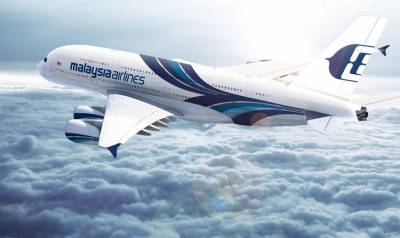
MAS wants to sell 2 A380s, reducing the fleet to 4 despite once ordering 60

Phase two will focus on transforming the carrier and apparently more than 40 areas for improvement have already been identified and the third phase will look at sustaining the new position of the airline.

So although the name hasn’t yet changed, the new Malaysia Airlines Brand is up and running.

Before you can go anywhere with a brand, you need three things. The first is a solid product offering. If you don’t have that, it doesn’t matter how much you spend on selling, marketing or advertising, the brand will not grow. We’ve seen that over the last 5 years as MAS spent more than RM1 billion trying to resuscitate the brand with advertising campaign after advertising campaign without addressing the brand’s structural issues.

Instead of trying to WOW customers with their product, former MAS CEOs cut costs, sold assets and ignored the passenger experience. The very heart and soul of what makes Malaysia unique – its people and the way they are – was ignored and instead cosmetic, shallow clichéd taglines were created and tacked together in a series of immediately forgettable tactical campaigns that did little for the brand.

The second thing you need when building a brand is a CEO who is prepared to look where others prefer not to look, who understands what needs to be done and is prepared to do what it takes and make the tough decisions, even if that means taking apart the existing brand and rebuilding it, brick by painful brick.

And the third key component is people who understand that the organization is the brand and that brand is part of a community. And this community, made up of people within and without the organisation will make or break the new brand. The new team will have to embrace and engage the community and understand that it is the community not the staff who make the MAS brand.

The new culture of MAS must be connected not aloof

This team will need to create an environment where people work toward a common, clearly defined organizational goal and not a personal one. Arrogance, ignorance or the ‘tidak apa’ culture will have no place in the new environment. Instead a humble, collaborative, connected and engaged culture based around delivering value, not on the company terms but on the customer terms will be the order of the day.

You’ll notice that I haven’t mentioned anything about the new livery, logo, brand architecture, uniforms, positioning, celebrities, the brand story and so on. That’s because they are irrelevant if the three points above are not addressed first.

Rebuilding the MAS brand was never going to be easy but the early signs are good, long may it continue.


Advertising is in crisis


Advertising continues to lose its credibility with consumers and brands and as a result has to resort to doing whatever it can to grab our attention. There is an advertising agency with an office on the Federal Highway in Malaysia that has the tagline, “Truth well told” but the truth is the truth is rarely explored in advertising today.

There was a time when ads made sense. When ads gave us some information about a product that made us want to learn more or even test or buy the product. Back in the day, we used to see an ad and scramble for a pen and paper to write the brand name down in the hope that when we went shopping we would be able to find the brand on a shelf or in a showroom.

Nowadays, ads seem to be created for awards panels or to impress us with their creativity, the cleverness of the photography, the humour, the beauty of the models, their entertainment value.

Coco de Mer: X from TBWA\London on Vimeo.

This latest ad from Coco De Mer (I think they are a lingerie brand but they might be a brothel, advertising agency, soft porn company or high class call girl agency) was rated ad of the day by respected advertising publication adweek.

Walter Campbell, the creator of the ad is quoted as saying, “The erotic doesn’t get the same overt attention as everything else on the cultural menu, so we created a film to surprise, excite and most importantly, encourage people to delve that little bit deeper into their fantasies—to reignite that connection.”

Sorry, but that’s not what advertising is about. Advertising should be credible, it should be useful to me, it should encourage me to learn about a product or service, show how it is relevant to me and how it can be useful to me and if it features people like me – testimonials are even better – I might buy into it.

According to this report, 84% of Millennials don’t trust traditional advertising and it is probably ads like the one above that have contributed to this lack of trust. This lack of trust is causing a crisis in advertising because trust is key.

Until advertising accepts this and gets back to basics, the crisis in advertising will continue and that trust will be lost, perhaps for ever.

My book “Stop advertising and start branding” will be out soon. To register for an early copy, please contact me here or on Twitter @brandconsultant

Is this the last throw of the dice for Malaysia Airlines?


Today marks the beginning of a new (and possibly the last) chapter in the life of the national airline of Malaysia. A new CEO Christoph Mueller officially starts work today, 1st May 2015. Many in the aviation business revere Mueller, primarily because he is credited with turning around the Irish carrier Aer Lingus in a stagnant, competitive European market.

MAS is selling it's A380s & rebranding
MAS is selling it’s A380s & rebranding

But his achievements at Aer Lingus will pale into insignificance when he starts peeling back the complicated cultural corporate layers at Malaysia Airlines (MAS).

What was once one of the most respected, envied and profitable carriers in the world has become a mere shadow of its former self. MAS is under fire from domestic and regional LCCs and if it stops flying to Amsterdam, Frankfurt and Paris will only be left with a couple of potentially lucrative long haul destinations servicing the kangaroo route from Heathrow to Australia. And these will come under further pressure with the return of British Airways flights to Kuala Lumpur from Heathrow at the end of May 2015.

MAS is hugely inefficient. It’s annual revenue per employee is down to about RM850 compared with RM1,675 at Cathay Pacific and RM2,250 at Singapore Airlines. MAS has 183 employees per aircraft compared with 138 at Singapore Airlines, 125 at Cathay pacific and 31 at Ryanair. Little wonder then that it has racked up debts in the region of US$2 billion since 2010.

Mr Mueller will no doubt focus on improving that revenue per employee and reducing the number of employees per aircraft. At least 6,000 staff are being offered redundancy and the airline has already announced it is selling all 6 of its Airbus A380s and four Boeing 777-200ER super ranger jets. The good news is that he has the support of the government and fuel prices have plummeted but that’s not enough.

He’ll also need to focus on rescuing the MAS brand and its reputation. And that won’t be easy because despite cutting costs and offering attractive incentives to agents in key markets such as Australia, the carrier is struggling to get bums on seats. And after the tragedies of 2014, years of poor management, low staff morale, and little focus on anything other than advertising, the MAS brand is in free fall.

Carpet bombing consumers with weak advertising will not rebrand MAS

Which is why the airline issued a rebranding request for proposals (RFP) a couple of weeks ago. Unfortunately the signs aren’t good that the people responsible for the brand understand what constitutes a brand and what is required to rescue the brand and its reputation.

We weren’t invited to submit a bid so I can’t comment on the contents of the RFP but I understand those invited were only given about two weeks to submit a bid as the deadline for submissions is 8th May 2015 with the rebranding supposed to be launched in July 2015.

Those are insane deadlines which is why cynics in the industry are suggesting the advertising agency tasked with carrying out the rebranding has already been chosen but there is no hard data to back up this claim. Rest assured though that the industry is watching developments carefully and if a certain agency gets the bulk of the work, there will be plenty more accusations ‘flying’ around.

Rumours aside, my worry is that those tasked with managing the rebrand will focus on a new name, new livery, new uniforms, new logos, new signboards and mass advertising creative campaigns but place very little attention on the key areas that need to be addressed, such as the ability to deliver economic, experiential and emotional value to all segments, at every touchpoint, at all times and on customer terms.

The first stage in the rebranding of MAS will require a cultural change that may have to come not just from the airline but the country itself. To rescue the brand MAS must move away from a centralized, top heavy organization staffed by employees trained to do as management says and not challenge questionable decisions.

The firm must move away from an ingrained belief that business is a one off transactional, price driven initiative and that every customer is purely a source of money, irrespective of their relationship with the brand, their influence and their loyalty.

In a social media world, where consumers not companies or advertising agencies define brands, changing the name, logo and livery of the airline and announcing the ‘rebrand’ with a global, one size fits all corporate driven communications campaign will actually have a negative impact on the brand and possibly do more damage than the twin tragedies of 2014, the years of mismanagement and the sweetheart supplier deals have done to date.

Instead the first stage of the rebranding must focus on creating a collaborative, personalised, relationship based, retention driven organization that understands customers and their needs.

Failure to focus on the internal branding first and getting it right will make any other investments an expensive exercise in naive futility. Which will see the end, sadly of a once iconic brand.

Customer loyalty builds brands


One of my favourite branding blogs is truly deeply from Australia and I recommend it to anyone even if you are not based in Australia.

This morning the author David Ansett Tweeted a link to a post from last year called customer loyalty, the holy grail for brands. It’s a short, thought provoking post.

We want to be part of all the brands we live with

It never ceases to amaze me that despite all the stats pointing to investment in retention and loyalty are key to building a profitable brand, most brand owners invest the majority of their marketing dollars in acquisition tactics that belong to a world that no longer exists.

The belief that advertising can build a brand in the social economy is laughable yet where do brand owners go when they want to build a brand? The nearest advertising agency. it’s ludicrous because if all you have is a hammer, everything looks like a nail. Advertising agencies only have advertising so all roads lead back to advertising and the problem with advertising is that NO ONE IS PAYING ATTENTION.

And this is where I disagree with David’s comment that “It is increasingly difficult to build long term relationships with hard won clients and customers”. I disagree because it has never been easier!

We know where everyone is, physically and digitally, we have their names, their addresses, both digital and physical, we know what they like, what they dislike, we know who their friends are, who they like, who they don’t like, who influences them, we know what winds them up and most important of all, we know that they want us to be part of their lives.

Yet most brands ignore building loyalty or give it a cursory nod in the form of generic, meaningless loyalty programmes that often provide ‘deals’ that are worse than what the customer can get himself.

Good customer service builds brands
Good customer service builds loyalty

Firms prefer instead to focus on acquisition and then, when there is a problem and brands fail to address the issue or worse, ignore the customer completely or address it in an amateurish, arrogant manner, brands wonder why those customers leave and angrily share their frustration across social media.

It has never been easier to build long term relationships with our clients and customers to improve loyalty, it’s just that most brands are going about it the wrong way.

I hate Thailand


Tourism accounts for about 10% of the Thai economy, employs hundreds of thousands of people and generates as much as US$65 billion in foreign currency.

But the ongoing political crisis that saw the military junta’s National Council for Peace and Order (NCPO) take power and the brutal murder of two British tourists in Phuket has seen arrival figures plummet.

According to Reuters tourist arrivals dropped 10.3% in the first 9 months of this year and 2014 will see negative arrival growth for the first time in years. The authorities have moved fast to stem the hemorrhaging with a crackdown on widespread crime, corruption and inflated costs encountered buy all but the most savvy visitors to the country.

In Phuket many of the illegal buildings, sunbed conmen, intimidating food and drink vendors, dubious boat operators and unscrupulous taxi operators have been yanked off the beach and a certain calm has returned.

Initial attempts to get tourists to come back included ramping up mass advertising and a travel insurance scheme that provided visitors who couldn’t get insurance because the country was under martial law, with insurance.

Unsurprisingly these didn’t have much of an impact. The Tourism Authority of Thailand (TAT) changed tack and came up with what it calls “A romantic comedy short film.” TAT initially released the video as consumer generated media but soon found itself having to explain the film was actually an advertisement for Thailand even though TAT wanted to create an ‘unbranded’ advertisement because ‘they receive more interest than conventional commercials.’

The spot is a counter intuitive attempt to show a more hospitable Thailand by featuring a young British tourist who has had his bag stolen and does the British thing of ranting at everyone as a result and finally declaring “I hate this place. I hate Thailand.”

Then he meets a beautiful Thai girl and a bunch of other people who rally round and help him. Sure enough, after some beautiful sunsets, scenes with kids and wonderful encounters his bag is returned with his passport and money still inside.

Counter intuitive differentiation is a brave model to use to sell a destination. But it’s also a model from a different era. An era when brands controlled the message and pushed it out across billboards, full page ads with tear offs in the corner and press releases. An era when consumers took those ads at face value and believed what brands told them. An era without the Internet.

The video is a fun piece that has received 1,500,000 views in 10 days with 21,000 Likes on YouTube. But here’s the rub. TAT should have been upfront about the video. As it is, they have given the impression it is consumer generated and that is wrong.

The video has also received more than 1,625 comments and the majority of them are not very complimentary. In fact some of them are downright hostile, talking about robberies, threats of violence, policemen that don’t speak English whilst others say the video is a scam and wrong.

One Thai commented, “Its too good to be true. No one would come by and give you a drink like that and Thai people wouldn’t give you sleepover at their house, especially in the tourist area.”

Another focused more on the deception, “How you will discover the truth by watching a fake video where the first words are already a lie. His name is not James. His name is Oliver Smith and he got paid by TAT to make this video. Look around yourself and consider how many real friends are left if you are out of money. This is not a Thai related issue it is everywhere around the world the same story. No money no honey. Same same but different. I love Thailand but I definately hate liars. And using lies to portrait (sic) a countries (sic) image is a mistake and an insult to all the honest Thai citizens. If they just made a short statement at the end of this clip that this is a TAT promotional video I would give my congratulations for that nice pink tinted heart moving clip.”

TAT is going to have to work harder than creating a video and passing it off as genuine consumer generated media to restore faith in the country.

It’ll need to work out a strategy and communicate that strategy effectively with multiple proof points. And if it wants to use social media and create influencers it needs to do it properly. There are no shortcuts in branding.

Real world examples of how to cost effectively use Social Media to build your Brand


To build a brand you need to get a number of things right both internally and externally. And then you need to develop a long term profitable bond between your offering and your customers.

The best way of doing that is by delivering economic, experiential and emotional value to those customers and on their terms. That’s universal and there are no shortcuts. Of course how you go about delivering that value depends on your firm, your industry and your customers.

Historically firms have tended to try and use creativity to communicate a corporate driven message to as many people as possible, whether potential or existing customers in the hope that enough of them will see/hear the message, respond to it and buy into it so that the firm can get through the year.

Does it make sense in the social economy?
Outdated and doesn’t make sense in the social economy.

According to Harvard Business Review and many other respected institutions, this model is obsolete. It’s also incredibly expensive with one expert saying it requires US$10 billion and ten years to build a brand in Europe this way.

Sadly that doesn’t stop millions of brands spending billions of dollars on an outdated and ineffective model that few of them can afford to sustain. This is particularly true of brands in Asia.

Nevertheless, there are some smart brands out there and social media provides an excellent platform to showcase their tactics. Instead of wasting marketing dollars on expensively produced and immediately forgetable advertising campaigns, these smart brands are investing more money on retaining customers than acquiring them.

Of course this makes branding a bit more complicated because it means these brands need to get to know their customers and their needs and not just shove a message down their throats and expect them to accept it. Unsurprisingly making such an effort isn’t that popular with many brands, especially here in Asia. Sure they talk about how they want to understand their customer needs, some even say they love their customers but those claims rarely translate into reality. As a result Asian consumers tend to be less loyal to brands.

OK, rant over! A couple of great tactical campaigns have come to my attention recently and there are a lot of brands around the region that can learn from these activities. They required an investment in researching customers, understanding them personally and then providing simple solutions that resonated with those customers. The investment was minimal but the exposure is exceptional and ongoing.

The first example is from Canada’s TD Bank. For a week in July, Automated Teller Machines (ATMs) in branches across Canada became Automated Thanking Machines and in addition to dispensing money, they spoke to and engaged customers, thanked them for banking with TD and delivered personalized gifts.

The bank gave out flight tickets to one customer so that she could fly to Trinidad to visit her daughter who had cancer. Another lucky recipient won savings accounts for her children each with C$1,000 deposited in the account.

Another customer won a trip to Disneyland and a Baseball fan won the right to throw the first pitch at a Toronto Blue Jays match, lots of merchandise and met one of the players. Phone and online customers were also given deposits directly into their bank account.

The response was phenomenal and four months later it continues to gain valuable coverage in social media and in the mainstream media with the UK’s Daily Mail covering the story in August.

In the first 4 months the video was viewed 17,500,000 times on Youtube, gained 50,000 Likes and 5,000 comments that generated extensive conversation that is still ongoing. On Facebook the TD Bank page has generated almost 550,000 Likes.

More recently, KLM wanted to reach out to customers travelling through the world famous Schiphol airport in a personalized way by giving friends and family the chance to say an extra goodbye. Working with the airport, the carrier identified families saying goodbye to each other at the airport and approached them with the chance to create a nice surprise for the traveller by personalizing the cover on their seat headrest.

In the first week the video on Youtube has already been viewed 208,000 times with 150 Likes and 30 comments. On Facebook the campaign has generated 16,500 Likes, nearly 2,000 shares and 550 comments. As the campaign gains momentum those numbers will, err soar skywards.

Social media allows brands to engage customers and allow them to participate in the development of the brand narrative in a way that those brands using a traditional approach can only dream of.

It’s very hard for a lot of brands to understand they can no longer control the message and instead they must pass on some of the control to consumers and let them develop it.

Once the campaign gains traction other consumers share it across the ecosystem and with the right management and before you know it, a minimal investment has generated far more brand goodwill and sales than any traditional advertising campaign is ever likely to do.

Brands have a responsibility to tell consumers the truth about their products


Numerous papers have been written on the influence of advertising in developing countries. Most of the papers suggest that historically advertising influences consumers more in the developing world than it does in developed countries.

This probably stems from a ‘traditional suspicion towards the ‘middleman’ as opposed to a belief that manufacturing or production is more ‘honourable’ or ‘respectable’’. Malcolm Harper “Advertising in a developing economy”. The assumption being that the manufacturer’s message has an air of respectability about it whilst the sales pitch of a salesman or middleman should be viewed with suspicion.

Firms, especially Western firms spend a lot of money on advertising in Asia to convince consumers to buy their products. The problem is of course that far too many consumers have been let down by products that fail to live up to the promises made in the advertising. This is one of the reasons quoted for the advertising fatigue across Asia.

In fact many experts suggest this is also why Asian consumers are so obsessed with discount and, perversely Western luxury brands with a clear evidence of a quality heritage. Clearly, if brands want to continue to have an influence on consumers, they must be honest with those consumers.

One firm that always spends big on advertising is Proctor & Gamble (P&G). According to Ad Age P&G spends an incredible US10 billion per year globally on advertising. In the first 9 months of 2014 P&G spent US$48 million on traditional media in Thailand and often its ads are dubbed to be shown across national borders.

The ad above was shown in Malaysia but looks as if it was produced in a different language. The ad shows a family all working together to get the son through his exams. However, the dad appears to have a cold and although the mum stops his sneeze with a pillow, the voiceover tells us that germs can spread through fabrics which the wife complains are hard to wash.

Cue voice over claims that Fabreze Ambi Pur eliminates flu viruses and odours, 99.9% of germs and freshens fabric, leaving a light scent behind”. The ad closes with the son getting an A+ and the line “Odours and flu virus go, freshness stays.”

I think that based on the ad, a lot of possibly gullible consumers are going to think that by using this product they won’t have to wash big items like blankets, carpets and cushion covers.

Air fresheners and in particular Fabreze Ambi Pur are very popular in South East Asia. Get into a car in Malaysia, Singapore, Indonesia or Thailand and the chances are you’ll see a Fabreze Ambi Pur product placed in front of the air conditioning vent.

Many government offices have machines on the wall that squirt out similar products at regular intervals. And the Malaysia Ambi Pur Facebook page has 90,000 Likes and the Thailand Facebook page has nearly 160,000 Likes.

That’s an impressive following. But can Ambi Pur really eliminate flu viruses? Can it really eliminate 99.9% of germs? And what are the effects on humans of the chemicals contained in these products?

According to the sustainable baby steps website, Fabreze is a dangerous product. The site claims it contains a total of 87 chemicals, many of which are supposedly dangerous to humans. It suggests that Fabreze doesn’t clean the air but instead masks the odours with chemicals. The site goes on to provide a number of natural, inexpensive ways to keep a home smelling fresh and healthy.

Another site that claims to ‘set the standards for safe self care’ says that Fabreze contains phthalates which are ‘hormone-disrupting chemicals that have been linked with childhood asthma.’

P&G doesn’t share any of the apparently harmful ingredients in Fabreze. Oddly, the Ambi Pur ad is filed under education on Youtube.

P&G is a global brand and an influential advertiser in South East Asia. It maybe that spraying chemicals on a cushion is not harmful. Whatever it is, P&G has a responsibility to educate consumers properly, truthfully and in a transparent manner. Otherwise, it will lose its respectable tag.

Slashing prices has not helped rebuild the MAS brand


Since the twin disasters of MH370 and MH17, Malaysia Airlines has slashed prices on just about all its fares, offered travel agents in Australia Rolex watches and free flights to promote the carrier and attempted to discount its way out of trouble. And it has tried to do this with a series of ill conceived and poorly executed ads and PR campaigns that I wrote about here.

At the same time, it continues to ignore those passengers who have supported the airline during this difficult period.

MAS has also sent out the same poorly thought out post flight survey to passengers that asks questions that can offer little actionable data to be used to save the iconic brand. An example of the survey is this question below:

Good to know but how useful is the data?

As an example, question A is about value for money. If a passenger has paid RM50 for a RM400 ticket then he will probably consider the flight to be good value for money. But if he has paid RM400 for the ticket and the person next to him has paid RM50, he probably won’t consider it good value for money. So how can MAS use the results?

I also wrote here that MAS should not be slashing prices because it was not going to work and once you’ve slashed prices, it is very hard to increase them.

Many people disagreed with me. Commenting on the article, Bob said, “At this time, the last thing they need is branding. They need to fill up seats for revenue so I don’t see any issues with the ads to be honest.”

I disagreed and said instead that MAS should focus on rebuilding its brand and offer more value rather than slash prices. Well if rumours from Reuters are to be believed, MAS is about to announce that the 3rd quarter 2014 was its worst quarter since it began operations 70 odd years ago. Reuters reports that despite the promotions and cheap flights, passenger numbers and yields were the loweest ever.

I’ll say it again, slashing prices does not work. This is what MAS needs to do NOW to save the brand. It’s time to stop reacting and start planning.

Can a cynical Christmas TV commercial save a luxury brand?


Luxury brands are beginning to feel the effects of slowing economic growth in Asia, political protests in Thailand and Hong Kong, political confrontation in Russia and Ukraine, political instability in the Middle East and the threat of Ebola.

Demand from Asia for luxury goods, especially expensive bags and other leather products appears to be on the wane. Struggling more than many others is Mulberry, one of the finest British luxury brands and manufacturers of exquisite leather goods that are actually made in England. In fact, as many brands look to increase profits by outsourcing their manufacturing to China, Mulberry is increasing production in the UK.

60% of Revenues from the UK
Mulberry generates more than 60% of its revenue from the UK but has been trying hard to grow sales outside of the UK, particularly in the US and Asia. In its quest to become a global luxury brand it has made some disastrous strategic decisions including raising its already high prices to differentiate itself from more affordable luxury brands.

For the British Mulberry was always an aspirational brand that offered affordable luxury but by going after the rich in Asia and America, it may have priced itself out of the segment it once dominated in the market it makes the most money.

At the beginning of 2014, the Chief Executive Bruno Guillon announced that he intends to bring ‘more excitement’ to the brand. From the outside this seemed to be nothing more than trying to create ever more expensive handbags that competed head on with Chanel, Hermes and Louis Vuitton. Bags that had once cost £500 got a makeover and were back on the shelves at £900.

The core customers were upset and drifted to other brands. By March 2014 Guillon was on his bike and Chairman Godfrey Davis returned to take the reins. In the summer of 2012, Mulberry’s share price topped £25 (RM140). By the time Guillon left it was around £6.40. Today it has regained some value at £7.30 (RM40) but is still off its peak.

Deserting middle England
Guillon was accused of deserting ‘middle England’ the middle classes that made the brand. Judging by the Mulberry 2014 Christmas ad it looks like the brand is trying to regain its relationship with that loyal segment.

Christmas in England is commonly associated with Santa Claus and reindeer, over eating, cottages covered with snow, a tree with lots of presents in front of an open fire, carols and goodwill to all men.

But in some families there is a darker side to Christmas that is rarely spoken about. The competition to give the best possible present, often to the most annoying and spoilt family member, can be intense. With this in mind, Mulberry has created a cynical but lovely parody in what I think is their first ever Christmas commercial.

33% of annual sales generated in November and December
In the west, retailers generate over 30% of annual sales during November and December and Mulberry will be hoping this ad will kick start the recovery of the business. Longer term they need to work on rebuilding their core values and create a Mulberry narrative that resonates with their target markets and once again become a successful aspirational brand.

But in the meantime, it’s Christmas morning, somewhere in middle England…

Hotlink advertising needs to be better than this


A friend just sent me the link to this ad.

I am sad, confused and bewildered. I mean what is this ad about? What is it for? What is the relevance of a coughing durian or a cat with big eyes and cat emoticons? Wait a minute, there’s a dinosaur in the background wearing a face mask. Is it about respiratory conditions?

The answer is no, it’s for a telco offering free social chat all day or at least I think it is because the closing tagline is ‘Keep the Ohhsome Internet always on’ which suggests to me that the Internet isn’t always on which in fact it is unless perhaps you are a Hotlink subscriber or used to be but now you are not because you don’t want to be associated with such a brand or perhaps Hotlink subscribers couldn’t use Viber, What’s app and all the other free tools for, well free.

Oh I don’t know but the 90 seconds I spent watching it three times to see if I had missed something (I hadn’t) are gone forever.