Branding is relational, not transactional. It's about retention, not acquisition. I work with companies and governments to identify and develop the strategies required to build the relationships that ensure ongoing branding success.
I call it data driven branding & it should not be confused with creative driven branding.
I'm also a rugby nut & devoted family man, probably in that order, but don't tell my wife!
The tie up between Malaysia Airlines (MAB) and Emirates is an interesting one. On the one hand, there must be money to be made from these routes otherwise Emirates wouldn’t touch them and the cost to Emirates will be minimal because they are flying all these sectors anyway.
MAB will still be able to show it offers flights on the CDG – KL route but in reality it will be an Emirates flight that goes via DXB. As a result, MAB will lose a substantial source of foreign currency and the carriers brand as well as the Malaysia brand will be diluted.
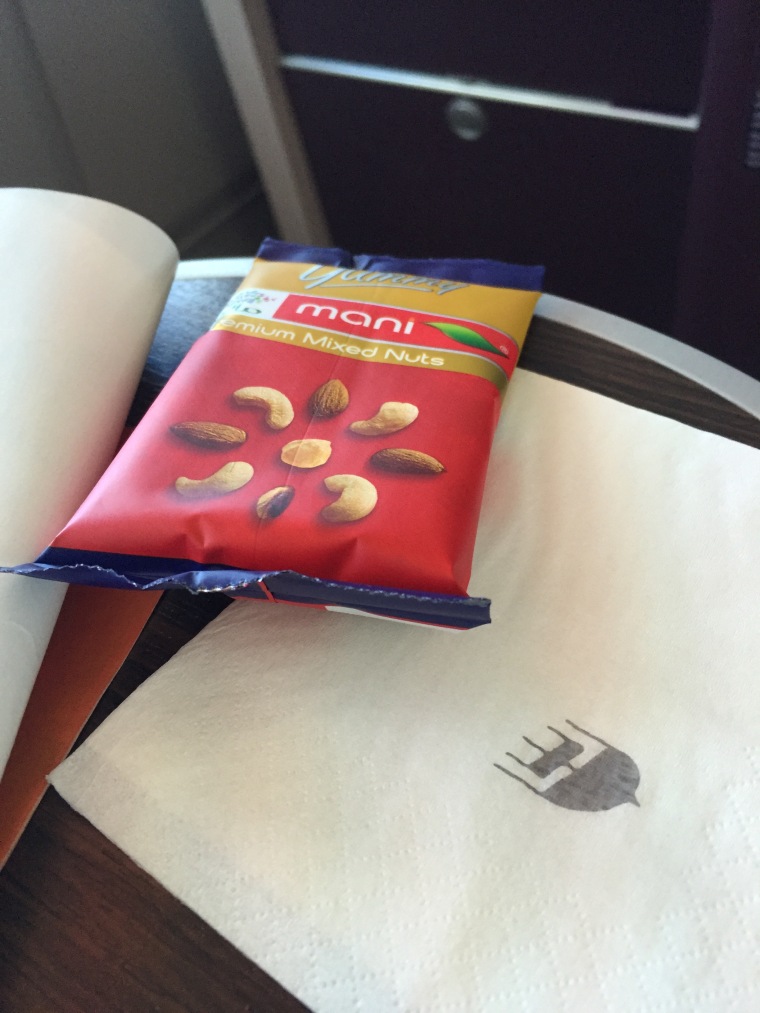
At least Malaysia Airlines passengers can use this on flights to Europe
It’ll also make it harder to sell Malaysia as a location for FDI to European companies because there are limited direct flights (to busy CEOs a 2 hour stopover in DXB each way is an expensive irritant) to the country.
On the other, it makes sense because Malaysia Airlines is now associated with the current poster boy of the aviation business (Sorry SIA) which should benefit the carrier. Although I wonder how this will work once Emirates gets a look at the weak offering MAB is, especially up the front of the bird.
It looks increasingly like Mueller wants to make Malaysia Airlines a small, regional quasi low cost carrier. That’s a tough ask in a market where loyalty is hard to come by. Whichever way you look at it, the brand is being diluted and that’s a costly shame for the carrier and the country.
I suspect there are KPIs involved that focus only on the bottom line and not on building a global brand that flies the flag for Malaysia and helps sell the country as a business and tourist destination. That’s a pity.
We’re into December 2015 and this is an auspicious month. But it is not just auspicious because of the holidays, it will be remembered as the month Malaysia Airlines launched its new brand.
You only need to look at recent images of the Malaysia airlines CEO Christoph Mueller to see how stressful it is cutting 7,000 jobs from a bloated workforce, reducing the number of suppliers from 20,000, (yes 20,000) to an industry average of around 2,500, renegotiating sweetheart deals such as the one with the caterer and changing the focus of the carrier from a global one to a regional one.
The strain is evident on the face of Malaysia Airlines CEO Christoph Mueller
But there is plenty of good news for Mr Mueller and the industry. Global passenger traffic is up 6% this year and long term, Airbus predicts the Asia Pacific region will lead the world in air traffic by 2034 with 41% of all passengers.
Meanwhile, aviation fuel, which accounts for anything from 40% to 55% of an airline’s operating cost is down more than 40% year on year. And as this saving doesn’t appear to have been passed onto passengers, Malaysia Airlines could make a profit earlier than the predicted 2018.
So with huge reductions in the cost of operations, improved efficiencies and a new brand, things are looking up for MAB. But the road to the new brand has been uneven. Reuters announced in late May 2015 that a new name, livery and rebrand would be unveiled in June 2015. This didn’t happen.
The company did change its name from Malaysia Airline System Bhd to Malaysia Airlines Bhd and this was reported by some quarters as a rebrand but it’s not. It’s actually the company’s fifth name change and besides, the company continues to be known as Malaysia Airlines.
Most recently, the CEO of Malaysia Airlines stated, “The entire brand needs a ‘refresh’ and will be like a start up with a new culture, values and ideas.” That’s more like it.
He also admitted that the airline had “fallen behind in the past three years and the rebrand would be much more than a new name and coat of paint”. He said the focus would be on ‘making the customer experience change’. OK, now we’re getting somewhere. All the talk of logos, image and refreshes was beginning to concern me.
Let’s hope the new cabin upgrades include domestic business class
According to Mueller, from December 2015 the airline, “will begin installing new cabin seating and improving inflight entertainment, customer service and on time performance. New technology, lounge concepts and catering would be introduced and the uniforms may change.”
Now we’re cooking with gas and I’m excited because this is more like branding and these changes are long overdue. Some of the planes I’ve flown recently, from the B737-800 to the A380 have looked tired and the business class lounge at KLIA is more like a cafeteria.
He’s banking on the new product improvements to renew customer confidence and trust in the brand. But while these upgrades are important, it will take more than a new lounge, new seating and new equipment to revive the brand. After all, these changes will only bring the brand back up to speed with the rest of the industry.
The current snack offering to Malaysia Airlines business class passengers on the A380
Branding success in the aviation business comes with a number of small successes at key touch points in the customer journey. And these successes are built on delivering value on the customer’s terms.
Nowadays that journey begins not with an advertisement but with the customer discovering the brand, most often online or, in the case of the lucrative but undervalued existing customer during the relationship that the airline builds with the customer once they have finished their journey.
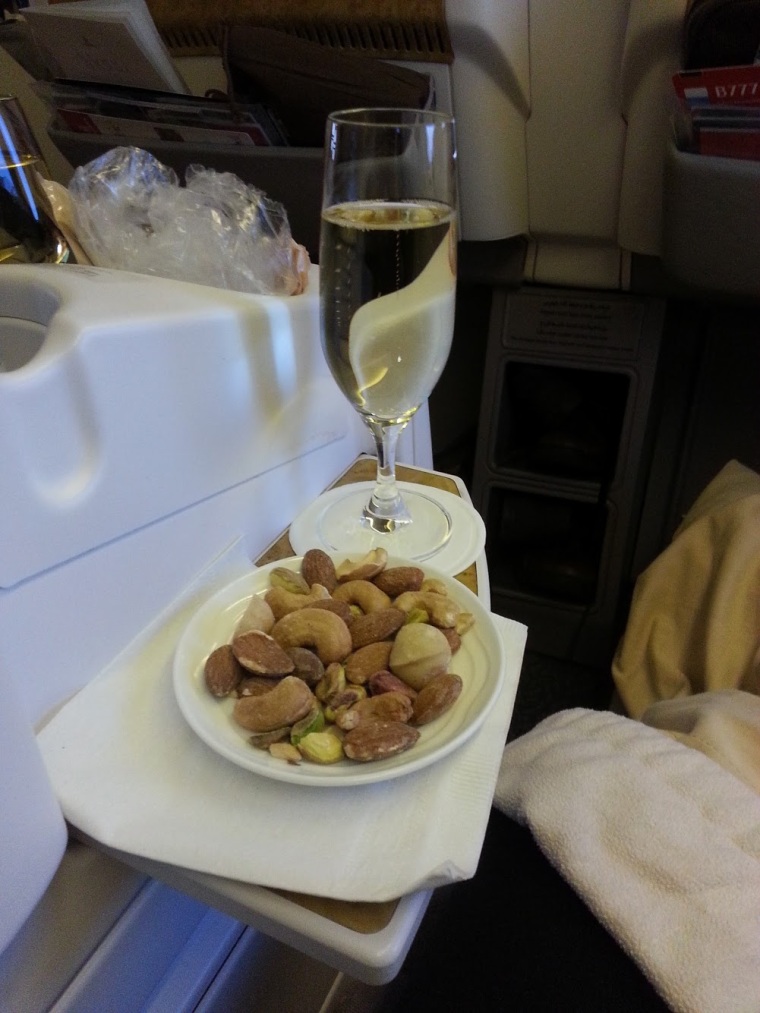
Emirates A380 business class. It’s all about the experience
At every step of the way, those experiences involve interactions with personnel that know how to represent the brand and deliver that value.
Having been a customer of Malaysia Airlines for over 21 years, and having flown nearly 100 times on the carrier since MH370 I can say, with some authority that the majority of staff don’t understand branding and the role each of them has in the success of the brand.
It’s not their fault because years of mismanagement have inculcated the ‘tidak apa’ (Don’t care) culture across the organisation. It’s not that the airline or its people are bad, it’s just that it has been driven into the ground in an attempt to milk it for every penny. And this has created a sense of every man for himself.
The mismanagement has created an organizational culture that lacks the required values. All of its processes, attitudes and systems have evolved to do the bare minimum required to get by. Recently, in an attempt to try and stem the hemorrhaging with the layoffs and supplier renegotiations, morale has hit rock bottom and the company is hanging even further over the precipice.
So will the rebrand make a difference? We’ll have to wait and see. My concern is that it is going to be advertising and promotion driven. A ‘big idea’ will be created and pushed out across the world in a massive advertising blitz that will make a big splash before being lost in all the noise.
We’ve seen this approach before and it doesn’t work. In an era when delivering value to customers has become the norm, Malaysia Airlines’ seems to be struggling to come to terms with the new branding order.
Numerous personal experiences, countless anecdotes and negative reviews, comments and discussions on and offline talk about the airline not caring or negative interactions with staff.
In an era when customers not companies define brands, and they define those brands based on the economic, experiential and emotional value those brands deliver to them, the rebranding of Malaysia Airlines will be successful only if the firm gets to know its customers and staff are primed to deliver consistent, knowledgeable, exceptional, personalised engagement with each of the very diverse audiences.
It maybe that Mr Mueller doesn’t want to go this route. That the investment will be too much and his ‘start up’ will be a glorified low cost carrier masquerading as a national carrier. The ramifications of such a move on the Malaysia Nation brand will be substantial and only negative. Let’s hope that’s not the plan.
I prefer to remain positive. Today is December 1st 2015. The country and the world is watching and waiting for the new brand. I hope they get it right. My next flight on Malaysia Airlines is on December 8th. I’ll let you know if anything has changed.
According to a recent Nielsen report, 9 out of 10 Malaysians believe the country is currently in a state of recession and are tightening their belts as a consequence.
This has led the Malaysia Retailers Association to lower their retail growth forecast to 4% with quarterly growth rates at their lowest since the Asian financial crisis of 1998.
Some sectors, such as supermarkets and department stores have seen quarterly slumps of 18% and with the end of the year sales and Christmas period unlikely to lift revenue, are bracing themselves for a terrible 2015.
No such issues for the UK retail industry as the Barclays Christmas survey 2015 reports 79% of UK retailers expect an increase in sales over 2014.
A far cry from 2013 when Company Watch predicted over 5,000 UK retailers would fail to make it to the ‘killing season’ the post festive months from the end of December to mid February.
With over 25% of retail sales generated in the next 6 weeks, the big retailers will be fighting tooth and nail over more than £40 billion in sales with Christmas advertising campaigns signalling the start of the contest.
Here’s a look at the first Christmas 2015 advertisements to be launched.
John Lewis – The Man on the moon What happens – A little girl on earth looks through a telescope and spots an old man on the moon. As the seasons change, she watches him sitting on a park bench staring wistfully at earth. Christmas arrives and presents are opened while the old man sits alone. Out of nowhere arrives a gift of a telescope. Tagline – Show someone they are loved this Christmas. Anything else – A reminder that many people will be alone at Christmas. Aurora sings ‘Half the World Away’ originally by Oasis. A Twitter feed to keep the story going and an app. Youtube views – 13,014,000 in the first week and 69,000 Likes. Facebook – Only the John Lewis page.
Sainsbury’s – Mog’s Christmas Calamity What happens – It’s Christmas Eve and the Thomas family are all dreaming except Mog the cat who is having a nightmare. In the nightmare he wreaks havoc and practically destroys the house and any chance of a joyous Christmas. Tagline – Christmas is for sharing. Anything else – Based on a character made famous by children’s author Judith Kerr. An illustrated book is available and profits go to Save the Children. Youtube views – 3,526,000 in the first day and 19,200 Likes. Facebook – Nothing yet.
Harvey Nichols – Avoid Giftface What happens – It’s Christmas Day and a large, middle class family are giving presents. Lizzy darling has a look of concern on her face but manages to remain gracious as she’s given a series of predictably bad gifts. Tagline – Avoid Giftface. Anything else – A bit more cynical, goes against the grain of the other ‘feel good’ Christmas commercials. Nothing on Facebook, Twitter or anywhere else as far as I can tell. Youtube views – 672 in the first 3 days and 2 Likes. Facebook – Nope.
Marks & Spencer – The Art of Christmas What happens – Everything happens! Christmas isn’t just about Christmas Day, it’s about the build up, the parties, the anticipation, the surprises and excitement and finally the big day, the meal and the nap. This series of ads aims to take the viewer on a blockbuster ride through all of those emotions. Tagline – The Art of Christmas. Anything else – There isn’t anything else! Links to Facebook, Twitter, Instagram, Pinterest and just about every other social media channel. Youtube views – 1,828,000 in the first week and 695 Likes. Facebook – Only the official M&S page.
There’s an ‘ad’ for Aston Martin cars doing the rounds on Facebook in Malaysia. A lot of men, and probably a few girls are salivating at the image of a scantily dressed, leggy woman leaning against a counter in a kitchen.
The caption with the ad says “Aston Martin’s newest advertisement for pre-owned cars” and the actual tagline is “You know your not the first but do you care?” Followed by the Aston Martin logo and name.
Not a real Aston Martin ad
It’s a great looking ad and appears genuine. However, just after the Aston Martin name are the words ‘PRE OWED.” Now this could be an extension of the gimmick or it could be slack proof reading but that’s not the case.
The truth is it’s a spoof. This image originally went viral back in early 2013 and was featured on an unofficial Aston Martin blog. What surprised me was the response of Aston Martin’s lawyers who wrote to the owner and asked him to take down the image.
In the social economy, this sort of earned media – word of mouth and viral mentions, shares, reposts and content created as a sort of homage to the brand is gold dust for savvy brands. These brands realise they can no longer control the message so encourage users to develop their own content and share it across the ecosystem. This is how a brand’s narrative develops. And to be honest, I think the discussion this ad created sits nicely with the Aston Martin Brand.
Predictably, the comments in response to the lawyer’s letter were not very complimentary and I’m happy to say that Aston Martin wrote to the blog owner apologizing for the snotty legal letter.
A real BMW ad
For the record, the same concept and tagline was used before, back in 2009 by BMW as a campaign to market their premium selection used cars in Greece and before that by a Belgium company called Nearly New Cars.
Luxury brands, especially those with significant exposure to China have had a tough 2015. Swatch group annouced a 20% drop in 1H2015 profit whilst Prada saw a 25% drop in its 1st half profits, citing a slump in demand from China and Hong Kong. Jaguar Land Rover sales in China have fallen 20% in 2015 and Maserati closed its Beijing financial street showroom.
Growth in Asia was essentially driven by opening more stores, filling them with a lot of stock and mass advertising. On the whole, luxury brands ignored or at best paid lip service to digital.
This was a huge mistake as Asia’s e-commerce market is now worth US$525bn in online sales and is growing at 25% per annum. This article in CMO magazine that I contributed to, explores what went wrong and what luxury brands need to do to engage Asian consumers online.
Flying into Kuching this morning on Malaysia Airlines the haze was so bad the pilot aborted the landing and went around again. The same thing happened last week. The haze isn’t MAS MAB fault but it has a significant impact on its brand.
Last week, the pilot came on the PA and explained the problem, reassuring everyone with his confidence and authority. This time the flight deck was silent. So we the passengers are sitting there wondering why the landing was aborted.
Without any information and aware of the carriers recent issues, we start asking ourselves, “Is there a problem with the aircraft?” or “Perhaps the airport is closed?” In that case, “Do we have enough fuel to go elsewhere?” “Are the pilot and co-pilot ill or even conscious?” An intimidating situation such as this one can have a negative effect on the brand. Yet at the same time, it can be part of the rebranding process.
It’s the little things that make or break a brand. Especially one that is already broken. A simple 30 second explanation was all that was needed to calm everyone down and earn a little bit of respect. Communication is a key part of branding. Successful brands have an emotional connection with consumers.
MAB has a credibility problem and that credibility problem needs to be fixed. One of the problems is the lack of an emotional connection. How can consumers connect with a brand that doesn’t communicate? If there is no connection the rebrand will fail. It certainly won’t be fixed with pressing the flesh, a new name, new livery, new advertising and a new logo.
It’ll be fixed by creating an emotional connection with customers and delivering economic, experiential and emotional value to those consumers.
According to marketing magazine, the new Malaysia Airlines brand was launched with what they call ‘a new branding campaign’. Now personally I don’t think you can have a branding campaign. In my opinion that’s an oxymoron but let’s not go there for now.
Marketing magazine reported that a new hashtag #todayishere is the new tagline. A hashtag is the new tagline? Is that from MAB or is that an assumption? And besides, what does ‘todayishere’ mean? Does it mean we can simply forget about the past? And what about tomorrow? How does todayishere reassure me that it is safe for me to fly or put my kids on Malaysia Airlines?
And how is todayishere going to improve the experience of interacting with Malaysia Airlines? Does anyone know? How is anyone going to build a brand narrative around todayishere? Perhaps the agency Prophet from Hong Kong can share with us the next stage of their rebrand strategy because I want to know if there is anything else to come?
Are the crew going to be trained to represent this ‘new brand?’ What improvements have been made to the key touchpoints of the brand? How will a first time user be engaged at the booking engine? Has the broken booking engine been fixed? If not, why bother with a new hashtag/tagline/rebrand launch? Why not wait till that key component of the experience is at least working properly?
Although I don’t consider ‘todayishere’ to be a tagline, it is borderline criminal to believe you can rebrand any organisation with a tagline. Just ask the Malaysian government. Almost 2 years ago to the day, they tried to launch the Malaysia nation brand with a tagline.
But you can’t retrofit a brand around a tagline. Branding is about delivering value, at every touchpoint and at everytime and on the customers terms. It’s actually very easy, provided you start from the right place, the organisation because the organisation is the brand. Not a tagline, not a hashtag, not an ad campaign, not a campaign, not a new logo. Please, someone pass the message to the Malaysia Airlines board.
I was under the impression that September 1st 2015 was the planned date for the launch of the Malaysia Airlines System (MAS) rebrand. As far as I can see, all that has happened is the name has been changed to Malaysia Airlines Berhad (MAB).
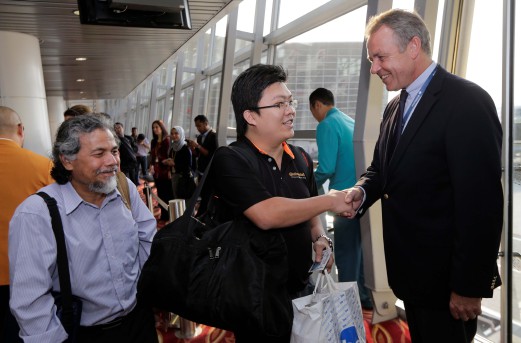
To launch the new company, MAB CEO Christoph Mueller led a team of senior managers around Kuala Lumpur international airport (KLIA) greeting passengers, handing out teddy bears and giving away a pair of business class tickets to Melbourne. This is a nice if old fashioned way of introducing a new product and the internet means these cute if short lived PR tactics can be leveraged online and potentially taken up by users across the ecosystem.
Malaysia Airlines CEO greeting passengers on the first day of the new company Pic credit: NSTP/Aizuddin Saad
Unfortunately I couldn’t find any reference to the airport visit on the Malaysia Airlines Facebook page. Not even a reference to the free tickets to Melbourne. Perhaps I missed it or the airline missed an opportunity to get some valuable positive earned media.
In conjunction with the launch of the new company, the CEO stated “We are very excited to welcome today, the start of our new company. We have been working hard for the past months to ensure a smooth and successful transition and we would like to thank our customers and airline partners for their continued support during this period.”
Interestingly, he added, “the new company was looking forward to enhancing its customer in-flight experiences and give them more reason to visit Malaysia.”
Although his comment suggests he’s more interested in new recreational customers than existing ones and visitors to Malaysia rather than citizens of Malayisa, it’s a reassuring place to start because the experiences (at all touchpoints and not just in-flight) are key to building a successful brand and not advertising, PR, cute PR gimmicks and corporate driven messages pushed out across all media.
Indeed, this is one of the reasons why MAS failed. The company thought it could spend more than a RM1 billion (US$400 million) in the years leading up to 2014 and pass that off as brand building whilst cutting costs that impacted every stage of the experience.
When a crisis hit, the brand was unable to deliver on promises it had made. In addition to gross mismanagement, failures at every touchpoint, lack of appreciation of the importance of existing customers and an inability to engage stakeholders, constituents and customers all contributed to the destruction of the once mighty brand.
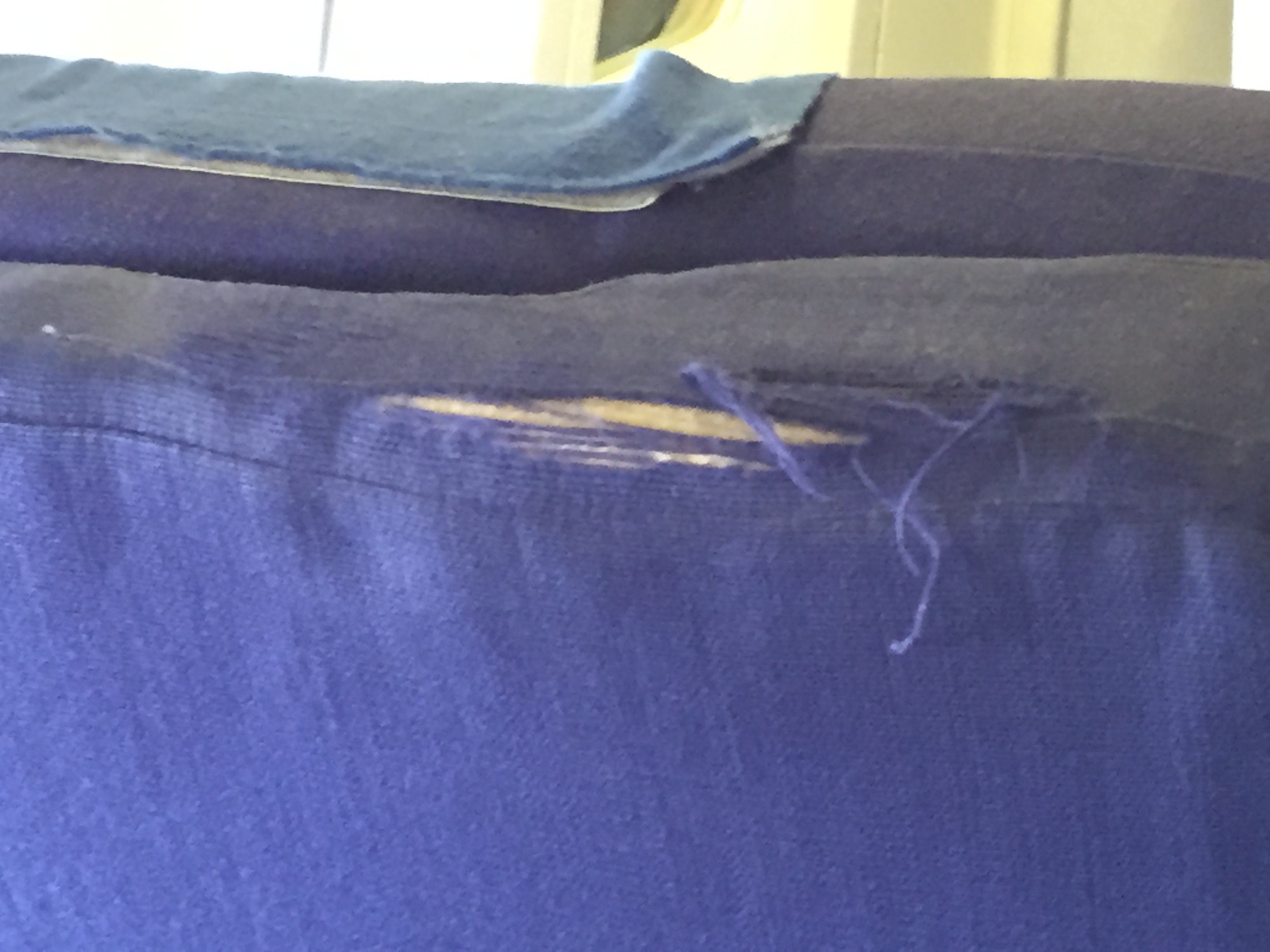
So Mueller’s comment about improving the customer experience is good to hear. But I have to say I’m a little skeptical and here’s why. Last week I flew business class to Kuching on MAS and I was shocked at how old the aircraft was. Seats in business class were falling apart as the image below shows. Normally MAS uses new 737s on this sector so I can only hope the new aircraft have been taken out of service for the application of a new MAB livery.
A week before the launch of the new Malaysia Airlines, domestic business class is ready for the upgrade!
The week before the trip above, I flew business class again to Kuching and 10 minutes out from Kuching the familiar alert sound of an incoming text message rang across the cabin. Then another and another. I figured someone in business class had turned on their phone whilst we were on our final approach.
I looked at the already seated stewardess who looked away in embarrassment. At least another 2 messages came in before we landed. When the stewardess got up to close the curtain I asked her if she was going to say anything. She replied yes and then went and hid in the galley.
A quick search online about the use of phones in flight throws up plenty of references. This is a quote from a Directorate General Civil Aviation (DGCA) report dated 2010 that refers specifically to the final approach: “Safety information internationally exchanged reveals specific cases where use of mobile telephones by passengers inside the aircraft cabin has caused erratic performance of aircraft airborne equipment leading to serious safety hazards during the flight. Typical instances include automatic disengagement of the autopilot at an altitude of 400 feet above ground level during an auto pilot assisted approach.”
Boeing the manufacturer of the aircraft I was travelling on has in the past written to all operators to warn of “the adverse effects of electromagnetic emissions on control, navigation and communications systems. Boeing is concerned that portable electronic devices carried by passengers on aircraft do not meet the stringent electromagnetic emission standards imposed on the certified airborne equipment used on its aircraft.”
As the passengers left the cabin the stewardess didn’t say anything. I was disappointed and explained to her as far as I was concerned, she was the boss of that cabin and if someone broke the law she should do something about it. She just looked at me blankly.
The last throw of the dice for the national carrier of Malaysia, a country that desperately needs some good news
So what’s this got to do with branding? Well first of all, the MAS brand is toxic at the moment and especially when it comes to matters of safety. And a new name or identity or logo or advertising campaign won’t change that.
What will change that are examples and experiences, especially those related to safety. And most of those experiences will involve the ground staff or cabin crew. So any rebranding should have started with a brand audit to identify that the MAS crew was in desperate need of training to get them up to speed with dealing with difficult customers.
If the stewardess had been retrained to represent the new brand, she would have had the skill and confidence to take charge of that cabin and seized the opportunity to show to half a dozen leading VIPs, businessmen and me that this was a new era for the brand. That it had a zero tolerance to matters of safety and breaking international law, that the crew is competent, knowledgeable and confident and the safety of the passengers, crew and reputation of the airline is paramount.
Meanwhile on September 3rd 2015, The Malay Mail carried a story about a Malaysia Airlines jet making an unscheduled stop in India because the lavatories on the plane weren’t working. Now I know that this sort of malfunction can happen to any airline anytime but the new national carrier of Malaysia isn’t any airline, not at the moment anyway. These maintenance issues, common and accepted generally will be seen as a reflection of the carriers lack of a maintenance culture and the inevitable question will be, “If they can’t fix the lavatories, what else is broken?”
The Malaysia Airlines Facebook page is bursting with negative comments from frustrated customers made to wait over 2 hours in queues at KLIA, wait days for the return of lost luggage or unprofessional customer service staff. When I checked in recently, I was told by a duty manager that 40% of staff scheduled to be on duty that morning didn’t show up for work.
Even today, four days after the launch of the new firm complaints are coming in about service at the business class lounge at the carriers home airport KLIA.
Has anything been done to improve the Malaysia Airlines experience?
The chances of a company surviving a disaster are small, the chances of surviving two are practically impossible. Little wonder then that Malaysia Airlines passenger numbers are down over a million in the first six months of this year.
The restructuring of the company was a necessity. This rebrand is the last throw of the dice for the national carrier of Malaysia, a country that desperately needs some good news.
As a branding professional and a loyal customer of Malaysia Airlines for over 20 years, my expectations of the rebrand go way beyond the name, the logo, the identity and promises made by the CEO that staff are not trained to deliver on.
I don’t know what has happened to the rebrand but my expectations are an end-to-end rebrand that will see Malaysia’s national carrier back where it belongs, at the top of it’s game. I genuinely hope the people tasked with rebranding the carrier, know what they are doing. Because if they don’t, Malaysia Airlines will fail.
These days logos are everywhere. We see them on buildings, business cards, billboards, buses, taxis, lamposts, food packets, print ads, TV ads and just about everywhere else you can stick a message. And they sell computers, clothes, cars, cosmetics, finances, food, fashion and fags, appliances, airlines and activities, and just about anything else in between.
There are good logos and bad logos, some change on a regular basis, others stay the same for years. We’re told logos must have colour because certain colours convey certain meanings yet logos must be instantly recognisable in black and white.
We’re told that generally a logo must be unique yet instantly recognisable and that each element of the logo has meaning. Logo designers sharp, straight lines communicate a strong, trustworthy brand.
Curved lines on the other hand communicate a caring and supportive product or service. The rationale for combining curved and straight lines is an ambitious company.
And we’re told that everyone should have a logo because they represent the brand and make you stand out from the crowd.
But are logos still relevant? I believe they are, certainly for a lot of businesses but the problem is far too many of them are created on the cheap. It’s important to get your logo design done properly. It always amazes me how many firms won’t spend money on a good logo.
Here’s an interesting infographic on the strategy required for a perfect logo from the design gurus at designmantic.
On the whole, it’s a good guide to creating a solid, robust, consistent, relevant, unique logo but be warned it isn’t the silver bullet that will allow your brand to outshine all your competitors.
And you need to take some of the comments with a pinch of salt. For instance, the suggestion that the Windows logo delivers one clear message instead of giving multiple messages is a bit of a stretch and besides, the idea of one message for all target markets is outdated.
Because firstly, why would you talk to all customers in the same way? Certainly it hasn’t worked for Windows because their share of the OS market is down from 95% to about 15% despite spending at least 5 billion over the last 10 years.
And of course there are some very successful brands that don’t have logos. Think Mobil, Etsy, FedEx, Craigslist, at&t, Sony, Coca Cola and Google for that matter.
So before you decide on whether or not to create a logo, talk to someone who knows a bit about building brands. It’ll be one of the smartest investments you make.
I wrote a blog post recently about print ads and how I was convinced that print advertising was in decline. You can read the post here. I also shared the post on the Advertising Copywriting group on Linkedin and it generated a lot of comment, most of it ridiculing my stand. You can see the thread here.
A lot of people, especially those from the advertising industry were not very happy with what I wrote. And some of them quoted, rather predictably the mighty advertisers Coca Cola and McDonalds. Yet despite spending US$1 billion on advertising in 2014, McDonalds profits were down 15%! And are now lower than they were 5 years ago. Samsung spent US$14 billion on marketing in 2014 and suffered 3 straight quarters of losses for the first time ever.
And I asked how much have Nokia and Blackberry spent on advertising over the last 10 years to get them to the brink of extinction?
Others looked at the quality of ads, with one copywriter stating, “Quite frankly, the quality of most print ads is abominable. They are either badly written or designed, or so “avante garde” that the company’s name and logo are hidden.”
And this is a huge problem in South East Asia where, on the whole what constitutes a good ad – a strong headline or call to action, unique image, and well written copy is often lost in the charge for fast turnaround of materials, low budgets and the habit of marketing professionals not challenging bosses, business owners or even their spouses!
The results can often be catastrophic as immediately forgetable ads that fail to connect with target markets, don’t deliver the right information, are too confusing or worse, look like other ads appear across newspapers and magazines.
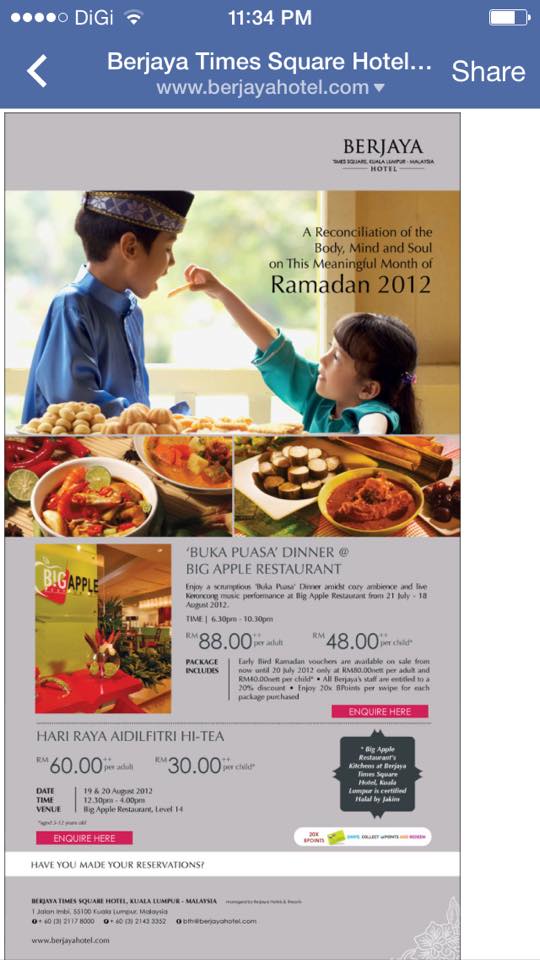
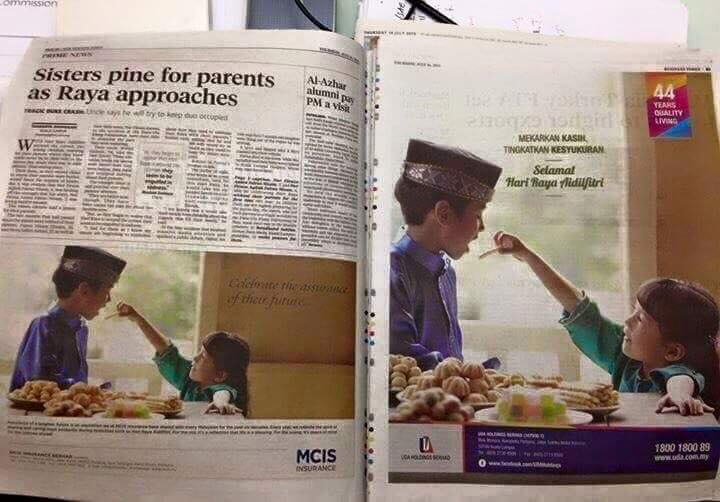
The following ads illustrate the approach to advertising in Malaysia over five years of five different companies from telecommunications, hospitality and insurance.
Share or reconnect?
Much of the copy is weak, the messages, if there are any are obscure or try to do too much and the calls to action, if they can be called that, don’t make sense and there are more than one!
But most tragic of all, they have all used the same image to try and connect with their audience.
These ads will accomplish little and are a waste of money. They have very little value for the company and will most likely be ignored by consumers. I suspect they were done in house and no doubt the image is a free download from an image bank.
I cannot imagine any professional marketing director allowing these ads to go out so one can only assume they were approved by bosses who don’t know the importance of a good ad.
Firms wonder why advertising doesn’t work and question why they should have to pay for advertising agencies. Well this sort of advertising is not the solution. Until firms appreciate the importance of a good ad, they would be better off throwing money down a drain.








 brandconsultantasia.com