Suggestions to improve a travel website


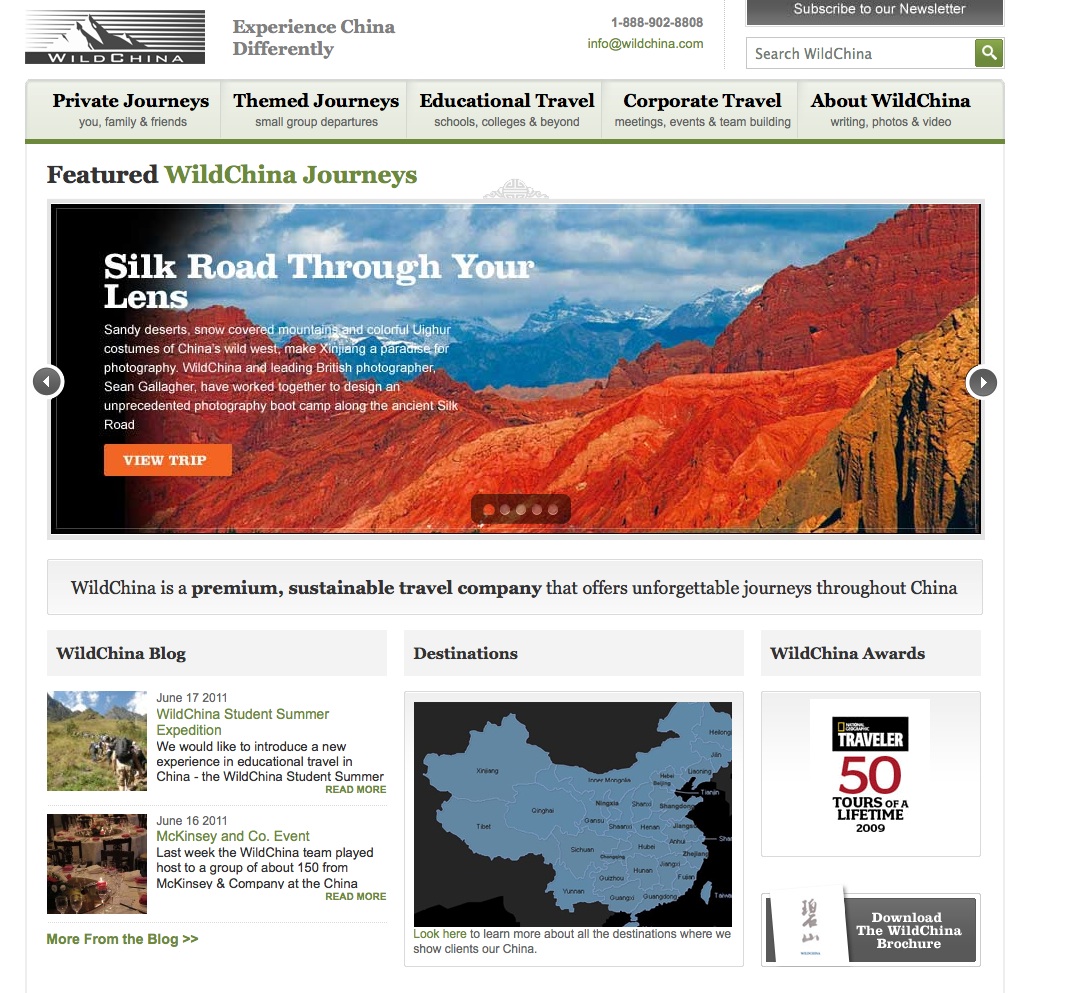
One of my favourite business sites, Bnet has an interesting case study of a site that offers bespoke or customised trips in China. The site is not doing as well as the owners expected.

The article asks the question “Why doesn’t this website draw more visitors” and there is an outline of the situation with the issues and readers are invited to comment. I tried to add my comments but as has happened before, I couldn’t add them so I am including them below.

The look and feel of the site is drab and reminds me of websites from 10 years ago. The content is too ‘traditional’ and rather predicatable.

If they are not happy with the number of visitors, then SEO is obviously an issue. So many companies spend a fortune designing a site and then sit back and wait for the orders to flow in. If only it were so easy…

So what would I do to make things happen?

They need to improve the writing. Although this won’t improve traffic to the site, it’ll keep visitors on the site once they are there.

I’d talk to existing customers and ask them what improvements they would like to see. I’d also talk to prospects that have visited the site and made enquiries but have not booked and identify why they didn’t book.

Before that, they need to invest more in driving traffic to the website, especially if as stated, 10% of the marketing budget generates 70% of enquiries. I’d also investigate and measure the number of leads generated from those 1,650 page views, source of visits, conversion rates from all channels, lost prospects and retention rates.

Other thoughts
1) The target market doesn’t have time to wait for flash to load. Furthermore, many of them are probably accessing from smartphones between appointments or via laptops whilst at airport lounges with poor internet speeds. Keep the information simple and bin the flash. Also you need a mobile version of the site.

2) So many companies think a website will make sales for them. It won’t, it is nothing more than a brochure to generate interest. Once an enquiry comes in, start building a one on one relationship with those prospects.

3) The form is too long. The target market is the wealthy but the wealthy are careful about sharing information, especially at the prospecting stage. If I buy you can have that data but not yet. Let’s stick to email communications for now. And maybe twitter.

4) Social Media initiatives aren’t engaging enough and there is too much broadcasting. Moreover there appear to be comments by readers/fans to which there hasn’t been a response.

5) Although I didn’t read the Blog articles, the headlines on the home page would suggest they are press releases not blog posts.

The key in any customer facing exercise is to put yourself in the shoes of the people you are looking to communicate with. And the best way of doing this is to talk to the people that visit your site, those that do business with you as well as those that don’t.

How to brand a destination to attract investors, the right businesses, talent and tourists


The destination branding rewards are high in terms of investment, jobs, development, tourism, exports, domestic and even international influence. But building destination brands is harder today than ever before. There are over 1,000 national and regional economic development agencies in South East Asia alone and the ongoing global economic crisis, political interference and a fragmented, tactical approach to a strategic initiative all help complicate the process.

It’s also hard because most destinations attempt to build their brands on a platform of familiar marketing and advertising campaigns that include one-size-fits-all positioning strategies driven by advertising in mass media, that do little more than add to the advertising clutter increasingly ignored by consumers. And more often than not, those campaigns are led by tourism.

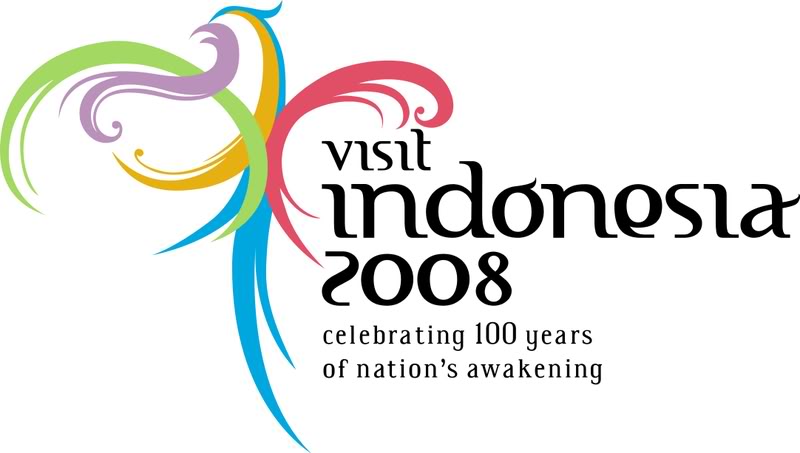
Tourism maybe about to become the number one industry in the world, but did Indonesia’s 2008 tourism campaign and the tagline “Celebrating 100 years of nation’s (That is not a typo) awakening.” influence South Korea’s Hankook Tire when it was looking for a location for a US$1.2 billion tyre plant? Of course it didn’t.

Hankook Tire sought a good location close to transport hubs, a secure source of quality rubber, abundant and cheap labour and probably the opportunity of an early crack at Southeast Asia’s biggest economy.

Indonesia is on something of a roll at the moment and is expecting as much as US$10 billion of investment from South Korea alone over the next four years. And it’s not just Korean firms that are looking hard at the country.

The steel company Arcelor Mittal is currently considering a US$5 billion investment and China Investment Corp is rumoured to be considering an investment of as much as US$25 billion. A number of other deals are also in the works but although details a sketchy, one thing is for sure, none of them will be swayed by positioning statements or slick advertising campaigns featuring white sandy beaches, azure skies and crystal clear seas.

These companies will make their destination decisions, and this is particularly true of Indonesia but also applies to other Asian destinations, on political stability, a clearly defined long term plan to invest in railways, roads, power plants and distribution networks, ports, transportation and more as well as concerted attempts to tackle bureaucratic red tape, graft, and unfriendly labour laws.

Indonesia understands this and regional competitors would be wrong to ignore this sleeping giant. President Susilo recently instructed the relevant federal and state or regional authorities to speed up spending, particularly on infrastructure. Assurances from the central bank that it would not impose outright capital controls will do a lot more to convince potential investors than any expensive tagline or one-size-fits-all positioning statement.

Don’t get me wrong, tourism has an major role to play in the development of many destinations but an international one-size-fits-all positioning statement that attempts to speak to potential investors, tourists, talent and others from diverse parts of the world with one message is not the way forward.

So what can regions, states or cities do to build destination brands that will attract investors, businesses, talent and tourists?

Once the infrastructure is in place or the blueprint outlining the infrastructural development with timelines, responsibilities and milestones is determined, destinations must carry out research to identify channels, communities and influencers within those channels and communities and develop content that resonates with those influencers and those communities.

Prospects from different industries from different parts of the world have different requirements for value. Sarawak corridor of renewable energy (SCORE) on Borneo is targetting ten core industries. Those industries are as diverse as Aluminum, Aquaculture, Fishing, Glass, Timber and Tourism. Such diverse industries with their different requirements for value, will seek information from and be influenced by completely different environments.

Identifying those requirements is mission critical, without it destinations are guessing and the success of a destination brand should not rely on guesswork. So destinations must talk to prospects and customers from each segment. Find out what value they seek and determine if the destination can deliver that value.

To avoid wasting valuable resources on advertising and marketing that is lost in the clutter, it is important to determine what online communities they inhabit and who or what influences them. Also identify why investors chose the destination. And talk to lost customers and find out why they chose another destination over yours.

At the same time, internal brand research must identify what are the core brand values of the destination and how will they be communicated internally so that the whole organization is on brand and understands the role they play in the successful implementation of the brand. And it is critical that the core brand values are developed with customers in mind and not from the destinations point of view.

The analysis and data from this key research will form the foundations of the destination brand strategy. And only once the brand strategy is developed can the implementation begin. The implementation must not neglect citizens and their communities who will be impacted by the changes to their environments.

There will be positive and negative implications for communities and these must where possible be predicted and dealt with accordingly. If they cannot be predicted, they must be dealt with in a consistent, transparent and confident manner. It is important for destinations to understand from the outset that without citizen and other stakeholder buy in, the destination will not succeed.

Increasingly fragmented media, the Internet and an increase in leisure time activities make it harder to reach consumers via traditional media. Destinations must look past the traditional broadcast approach to generate interest in the destination.

One destination in South East Asia purchased a double page spread in the International Herald Tribune to market the destination. The feature was really well written, with top quality images and provided a comprehensive overview of the destination. But the feature made the common mistake of trying to tell everyone about everything.

This approach hopes that the advertisement or feature will be seen by the right people at the right time and that they will invest the time required to read through the substantial feature in the hope that there will be something relevant to them. The problem is that there are lots of competitors doing the same thing and moreover, how many senior executives are willing to invest time reading such articles?

This particular feature also made the mistake of not including any tracking tool to identify the number of responses. Any marketing efforts must include tools to measure their effectiveness because if you don’t track the effectiveness of your marketing efforts, how do you know which ones are working and which are not?

Communications must also take into account changes in consumer behaviour and look past the traditional media channels with an emphasis on the Internet and Social Media. And this will require a comprehensive change in the thinking of CEOs and others tasked with developing a destination brand as it requires ongoing engagement with consumers rather than a traditional broadcast approach.

To be successful, destination brands must now adapt to these emerging business and customer imperatives. Imperatives that include a special emphasis on the right research and the right data collection and analysis, effective customer, channel and employee communications, operational excellence, accountability, service and the ongoing ability to meet customer requirements.

The potential rewards are huge but the stakes too are high and with competition coming from all angles, destinations will only get one shot at building a successful destination brand.
The Maldives is ‘rebranding’. Why?


I read here that the Maldives is starting a major rebranding initiative. The republic of the Maldives is an island nation in the Indian Ocean and consists of about 26 atolls with about 1,200 islands spread over approximately 90,000 square kilometers. Of those islands, about 200 are inhabited.

Its area and population of 300,000 make it one of the smallest Asian countries. It is also the lowest country in the world and at 2.3 metres above sea level, it is also the country with the lowest highest point.

Fortunately for the Maldives, it has some of the most stunning beaches on the planet and an ideal climate, all year round sunshine and beautiful calm seas have helped make the republic a popular destination.

You may recall the horrific images of death and destruction caused by the Tsunami in 2004. Despite the harrowing scenes and negative publicity after the Tsunami in 2004, the country has seen a steady increase in arrivals and 2009 saw arrivals surpass the pre Tsunami total of 500,000 visitors in 2003. Indeed, arrivals for 2009 were an all time high of almost 700,000. The main countries of origin for tourists to the Maldives are the UK, Italy, China, France, Germany, and Japan.

And there has been little negative reaction to the recent public relations disaster when an European couple were humiliated by hotel staff who were asked to bless their marriage. Probably because an apology to the couple was almost immediate and other fallout was handled confidently and quickly by authorities.

With limited natural resources, tourism and fishing have become the two key industries although the country does have a thriving cottage industry consisting of activities such as handicrafts and lacquer work.

Currently tourists spend most of their time in private bungalows in self-contained tourist resort islands designed specifically for tourism. Only one resort can be constructed on an island and the maximum built-up area of any resort island is limited to 20% of the land area and the building heights is not allowed to be higher than vegetation levels. Only 68% of a beach length can be utilised for guestrooms, 20% of each resort island beach is reserved for public use and 12% is classed as open space areas.

With such a fragile ecosystem, efficient waste management is vitally important and new resorts must install their own wastewater treatment plants, bottle crushers, incinerators and compactors. Sewerage disposal through soak-pits into the aquifer is no longer allowed. New resorts are also required to install desalination plants and this has substantially reduced the stress on ground water supplies.

The Maldives are seen by many to be the role model for sustainable tourism and it is such planning, strict environmental controls and policies that have ensured the Maldives retain their mystique.

When not in the resorts, most tourists spend time relaxing on private beaches, swimming, snorkeling, diving, fishing and boating. Sightseeing and visits to markets and local artisans in Male the capital are also popular.

So it would appear the Maldives, so to speak, is in a good place. It is managed efficiently, it is a role model for many countries, it has a thriving tourism business that works because of the policies and systems and processes put into place to protect the industry, it handles crises effectively and is probably in the top ten of most people’s ‘must go to destinations’ so you could be forgiven for thinking, “If it ain’t broke, why fix it?”

Thoyyib Mohamed, Minister of State for Tourism in the Maldives aims to “position the Maldives as the must-see destination of our time for all travelers.”

A recent press release goes on to state, “The (rebranding) initiative will focus on enhancing the positioning of the nation’s tourism product, strengthening its image in established key source markets while broadening its appeal to wider audiences and emerging niche markets.”

I’m not privy to just how many visitors the Maldives can take without breaking that fragile infrastructure and I don’t know what the targets are but I am fairly confident that broadening its appeal to wider audiences and niche markets may result in an increase in the number of arrivals. Even another 100,000 visitors, an increase of around 15% will put a tremendous strain on these beautiful islands and in addition to the added pressure on the environment and infrastructure these new arrivals will obviously bring, they may also cause social and cultural problems.

I would hazard a guess that the Maldives are known to most people who travel abroad for leisure. I also think it will be practically impossible to ‘enhance the image’ of what is for many an already perfectly enhanced image. And trying to position the country and creating awareness of the destination amongst those that don’t know the country will be a costly exercise that may do little more than waste valuable resources. Something no country can afford to do.

I recommend the Maldives focus on these 5 key areas

1) Retention. What does it need to do to get people to visit again?
2) Share of wallet. What does it need to do to get more out of visitors?
3) Instead of using outdated mass economy approaches like positioning, leverage the power of social media. There are numerous sites on Facebook about the Maldives but none seem to be managed.
4) If new markets are pursued, chose them carefully, only after extensive brand research. And go after them with a strategic plan that engages relevant communities in those countries and again, not via traditional media.
5) I just realised how good this point is so I have to keep it for a destination we’re working with, sorry!