Place branding is a generic term for all the elements of a nation or country brand, cities, states and regions and even destinations within those areas. In South East Asia alone there are more than 600,000 destinations competing for investment, talent and tourists. In an effort to match their destinations to stakeholder requirements for value, smart places are developing brands that investors, talent and tourists embrace.
Our company Fusionbrand is working on a brand for one state government in Malaysia and in the past have worked with other state governments, tourism boards, enterprise zones and the Malaysia Tourism Board. It’s always a privilege when we win a destination or place branding project because such projects have a major impact on society.
Many nation brands are victims of the politician’s need for quick wins
The Place Brand Observer heard about our work and got in touch with me in February and suggested an interview. The Place Brand Observer is a fantastic resource for anyone responsible for branding nations, cities, states and regions, public diplomacy and reputation management.
The site features insights into the industry, interviews with experts in destination branding from around the world as well as tutorials and case studies of successful branding of countries, regions, cities and destinations. It’s a meeting place for the brains and the brawn of the place branding industry. If you are involved in place branding or simply want to know more about the industry, I strongly recommend you sign up for their excellent news feeds.
You can read the full interview here . I thought it was a really good interview and we discussed data driven branding, country brands, Malaysia airlines and the link between the legacy carrier and the country. I hope you find the time to comment, good or bad!
I’ve been looking forward to the new Malaysia Airlines (MAB) brand from both a professional and a personal perspective. Professionally, I’m eager to see what direction a global company with a huge reputation proposes for the carrier. Personally, I’m a big fan of Malaysia Airlines and have been for over 20 years. I also believe a national carrier is a critical component of any nation brand and building a nation brand is harder without a national carrier.
Right now, despite a new CEO and one presumes new management, the brand seems to be directionless. I think 3 launch dates for the new brand have come and gone and each time the date passes, there is a deafening silence from management.
Meanwhile corporate driven messages tell us the new brand focus will be on ‘making the customer experience change.’ In mid 2015 we were told that in December 2015 the airline “will begin installing new cabin seating and improving inflight entertainment, customer service and on time performance. New technology, lounge concepts and catering would be introduced and the uniforms may change.”
This is not the new cabin seating I was expecting
But I can’t find anyone who has witnessed the ‘new cabin seating and improved inflight entertainment.’ I hear complaints about the poor state of aircraft and have witnessed it myself. Delays are inevitable when launching a new brand but in a social world, these delays must be explained. There is nothing wrong with being normal.
Poorly thought out announcements are made regarding long haul flights that result in global condemnation and humiliating U turns but management remains silent. Days later, as if nothing happened, a press release is sent out about the new beginning at MAB and how the CEO will ‘boost product offerings and rebuild confidence in the carrier.’
What does ‘boost offerings’ mean? Does it mean make it cheaper? The lines between Low Cost Carrier (LCC) and Legacy Carrier have become blurred. The low cost carrier (LCC) model is familiar to just about everyone who travels. Basically you purchase the use of a seat on a (very cramped) plane and then pay through the nose for anything else such as luggage, food, drinks and even the location of the seat.
The alternative is Legacy carriers but I’m not really sure what they are. The term came out of the USA but today, seems to apply to any national airline not making money. With a legacy carrier or national airline, you pay one fee that covers everything including what should be a postive, even memorable experience.
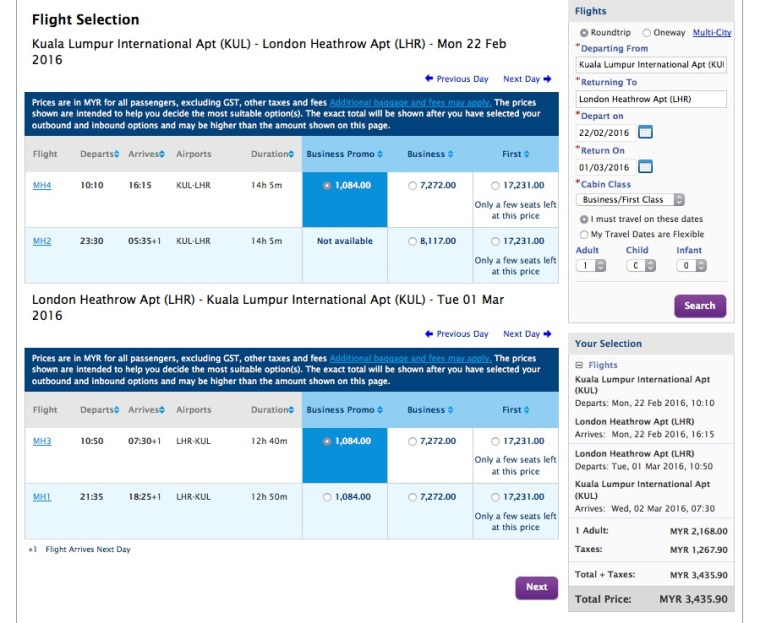
Nowadays, a lot of so called legacy carriers mimic the low cost carrier model. Many of them do it quite well, others not so well. Malaysia Airlines seems to bounce between the two. It recently offered business class seats to London at the ridiculously low return fare of RM3,400. However, just like LCCs the rate excluded GST (6%), taxes and fees and added a caveat that additional baggage and fees may apply. I didn’t check but I suspect this would have bought the figure to the same level as competitors.
MAB needs to focus on delivering on the promises it is making not slashing prices
This is a dangerous game because if Malaysia Airlines cannot compete on price with the Middle East carriers, it won’t be able to compete with LCCs like Air Asia. According to the Economist newspaper reporting on a KPMG study, “a legacy airline operating an Airbus A320 between London and Rome spends US$12,000 more on each round-trip than a low-cost airline.” Whilst the amounts may be different, the additional perceptage is no doubt the same in SE Asia.
Malaysia Airlines should focus more on improving its product than trying to discount its way through low seasons. Instead of trying to match the LCCs with their basic services and expensive add ons, Malaysia Airlines should seek to improve its relationships with its customers and offer a premium service rather than discounts, especially to its passengers at the front of the aircraft.
And it needs to start communicating with the public. Successful brands today are built on accessibility, transparency, collaboration, retention, personalisation and integrity. And consumers not companies determine the success of brands. Corporate driven press releases are not as effective as positive comments shared across social media. Malaysia Airlines needs to get its head around this.
And it must do it now because Air Asia, once the poster boy of LCCs is struggling to stay relevant and is looking to innovate. If it looks to Europe or Australia for inspiration, it will see the likes of Easy Jet and Virgin Australia morphing into legacy carriers. According to the Economist, this may leave legacy airlines “in a perilous state, regardless of their location and size.”
And before anyone says Malaysia Airlines is a private entity and doesn’t need to explain anything to anyone. Just remember that this is the 21st century not the 20th century. Consumers are smarter and acquire knowledge not from brands but from those who use them. And besides, Malaysians have invested billions in the carrier and they have a right to know what is happening and why deadlines are not being met.
If Malaysia Airlines is serious about its brand, someone needs to take charge of the communications and take charge now because I for one, don’t want to see this once great airline continue to make these elementary mistakes. Otherwise the only thing serious about the rebrand will be its inneffectiveness.
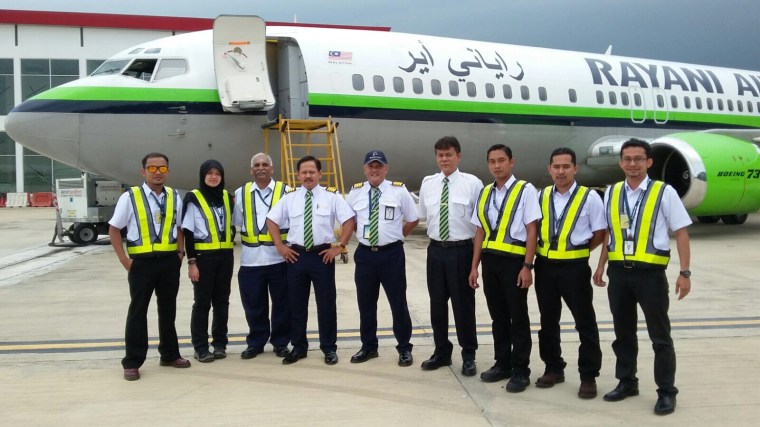
A new airline has been launched in Malaysia and to succeed it will need to be on top of its game. Called Rayani Air it’s based out of Langkawi and it started operations on 20th December 2015. According to the new managing director Jaafar Zamhari, Rayani Air is not a budget carrier but it flies into the budget terminal at Kuala Lumpur International Airport (KLIA) and the homepage of the Rayani Air website says it is a low cost carrier.
LCC or full service carrier?
Most intriguing of all, the carrier is being touted as a Syariah compliant airline, the first in Asia although others are classed as Syariah friendly none has used it as a key differentiator. Now I’m no expert on syariah compliance but I was under the impression that Syariah compliance is related to the financial services industry and funds that must be structured in accordance with Syariah law.
But that doesn’t mean the concept of a syariah compliant airline should be laughed at. The UK has a Muslim population of over 5% and London is pushing Dubai and Kuala Lumpur hard in an attempt to become the Islamic banking capital of the world. The country already has more syariah-compliant banks than any other country outside of the Muslim world and syariah-compliant finance funded the construction of the Shard and the London Gateway as well as much of the Olympic Village.
But creating and building a Syariah compliant airline brand is going to be a different challenge. To start with, what are the Syariah rules that Syariah compliant carriers must comply with? Who is responsible for developing those rules (the airline calls them ‘relevant authorities’ but doesn’t name them) and are they accepted universally? And will they make flyers switch brands? Who will enforce the Syariah guidelines? How will they enforce them? And what happens if they are breached? Is the carrier grounded? Or just the specific aircraft?
Remember Halal authentication differs around the world. Actually Halal certification differs in every country – in France there are 30 certification authorities. If the same happens with syariah compliant carriers, you could conceivably leave one country on a syariah compliant airline and arrive at your destination on a non syariah compliant airline. Litigation anyone?
CEO says full fledged airline, website says LCC. First rule of branding, know what you are.
Rayani Air claims it has 2 Boeing 737s that are 22 years old and ex Malaysia Airlines stock so you know they’ve been worked hard. 355 employees including 8 pilots and 50 crew. However interestingly, not all the flight crew are Muslim which surely makes Syariah compliance tough? Rayani intends to increase the size of its fleet in 2016 and start charter flights for Umrah and the Haj.
So it’s starting with an old fleet and limited routes and it intends to grow with routes that are traditionally flown once in a lifetime (Haj) and maybe a few times (Umrah). But the opportunities for growth for these religious flights are difficult because Saudi Arabia limits the number of arrivals from each country. Currently, Malaysia is only allowed 22,320 pilgrims to Mecca and travelling with the pilgrims fund is strongly recommended to avoid horrors such as trip cancellations and paying as much as 3.5 times more.
The reality is that with restrictions on the number of pigrims allowed to fly to Saudi, it will be tough for Rayani to break into the pilgrimage markets where relationships have been forged over many years.
Rayani currently has an English language only website which may make it difficult to attract passengers from the rural destinations it is intending to fly to. The site has very limited information and a reasonably easy to use booking engine. Social media icons at the bottom of the page link back to the top of the page, not the social media pages where most potential customers will look for real life experiences before trying the carrier.
As yet, there isn’t a Google company page but there is a wikipedia page that says the airline is a full service carrier and the tagline is ‘Let’s Fly’. The company was started by two non Muslims from Malaysia and then there is the name. Rayani Air. Is it a subsidiary of Ryan Air? Or is it suggesting it could be?
I get the impression that Rayani Air intends to grow organically and that it will address communications on the fly. It might want to review that approach. It’ll need to work hard to get passengers and even harder to keep the passengers it gets in the early days. One way of doing this is to have an exceptional frequent flyer programme but I don’t see a reference to one on the website. What it doesn’t want to do is presume cheap tickets will fill planes. It’s not enough.
Getting this new aviation brand off the ground and using Syariah compliance as a differentiator is going to be a challenge but it can be done. They need a robust brand strategy that understands its customers and knows what resonates with them. Messages must quickly be determined and clearly communicated in a synchronised manner. Experiences must be sensational, better than anything else on offer at the moment and the ongoing relationship development will need to be exemplary.
The early signs suggest Rayani Air needs to up its branding game.
In my previous post I promised to report on the experience of flying Malaysia Airlines this December to see if there were any improvements in the experience following the earlier announcement that the new brand would be launched this month. These were my 40th and 41st flights on Malaysia Airlines this year so I had a decent benchmark.
The good news is that whilst 2 flights are not proof of overall improvements it can be seen as a sign of progress. I’m pleased to report the experience was a lot better than it has been for a while. The aircraft wasn’t new but it wasn’t as tatty as the one’s I’ve flown recently. The cabin crew were very professional and conveyed a confidence I haven’t seen for a while in Malaysia Airlines crew.
My return flight was delayed and I was informed of the delay via a text at least three hours before my departure time which meant I was able to continue working before leaving for the airport.
About two hours before departure, I received a call from a customer service representative who apologised for the delay. I asked him the reason for the delay and he put it down to the weather which, if you’ve been in Malaysia over the last month you will know has been rough.
I asked if I could be switched to an alternative flight and he was able to check for me and I presume, if there had been a flight available he would have transferred me to that flight. All signs of a potentially seamless brand experience.
One minor criticism, whilst waiting for my departure from KLIA I spotted an aircraft on the tarmac sporting livery from the 1980s that is celebrating an event from 2012. I really think it’s time to change the livery because it communicates laziness and a lack of urgency amongst other negatives.
This livery is celebrating an event in 2012. It’s time to apply the current livery.
The tie up between Malaysia Airlines (MAB) and Emirates is an interesting one. On the one hand, there must be money to be made from these routes otherwise Emirates wouldn’t touch them and the cost to Emirates will be minimal because they are flying all these sectors anyway.
MAB will still be able to show it offers flights on the CDG – KL route but in reality it will be an Emirates flight that goes via DXB. As a result, MAB will lose a substantial source of foreign currency and the carriers brand as well as the Malaysia brand will be diluted.
At least Malaysia Airlines passengers can use this on flights to Europe
It’ll also make it harder to sell Malaysia as a location for FDI to European companies because there are limited direct flights (to busy CEOs a 2 hour stopover in DXB each way is an expensive irritant) to the country.
On the other, it makes sense because Malaysia Airlines is now associated with the current poster boy of the aviation business (Sorry SIA) which should benefit the carrier. Although I wonder how this will work once Emirates gets a look at the weak offering MAB is, especially up the front of the bird.
It looks increasingly like Mueller wants to make Malaysia Airlines a small, regional quasi low cost carrier. That’s a tough ask in a market where loyalty is hard to come by. Whichever way you look at it, the brand is being diluted and that’s a costly shame for the carrier and the country.
I suspect there are KPIs involved that focus only on the bottom line and not on building a global brand that flies the flag for Malaysia and helps sell the country as a business and tourist destination. That’s a pity.
We’re into December 2015 and this is an auspicious month. But it is not just auspicious because of the holidays, it will be remembered as the month Malaysia Airlines launched its new brand.
You only need to look at recent images of the Malaysia airlines CEO Christoph Mueller to see how stressful it is cutting 7,000 jobs from a bloated workforce, reducing the number of suppliers from 20,000, (yes 20,000) to an industry average of around 2,500, renegotiating sweetheart deals such as the one with the caterer and changing the focus of the carrier from a global one to a regional one.
The strain is evident on the face of Malaysia Airlines CEO Christoph Mueller
But there is plenty of good news for Mr Mueller and the industry. Global passenger traffic is up 6% this year and long term, Airbus predicts the Asia Pacific region will lead the world in air traffic by 2034 with 41% of all passengers.
Meanwhile, aviation fuel, which accounts for anything from 40% to 55% of an airline’s operating cost is down more than 40% year on year. And as this saving doesn’t appear to have been passed onto passengers, Malaysia Airlines could make a profit earlier than the predicted 2018.
So with huge reductions in the cost of operations, improved efficiencies and a new brand, things are looking up for MAB. But the road to the new brand has been uneven. Reuters announced in late May 2015 that a new name, livery and rebrand would be unveiled in June 2015. This didn’t happen.
The company did change its name from Malaysia Airline System Bhd to Malaysia Airlines Bhd and this was reported by some quarters as a rebrand but it’s not. It’s actually the company’s fifth name change and besides, the company continues to be known as Malaysia Airlines.
Most recently, the CEO of Malaysia Airlines stated, “The entire brand needs a ‘refresh’ and will be like a start up with a new culture, values and ideas.” That’s more like it.
He also admitted that the airline had “fallen behind in the past three years and the rebrand would be much more than a new name and coat of paint”. He said the focus would be on ‘making the customer experience change’. OK, now we’re getting somewhere. All the talk of logos, image and refreshes was beginning to concern me.
Let’s hope the new cabin upgrades include domestic business class
According to Mueller, from December 2015 the airline, “will begin installing new cabin seating and improving inflight entertainment, customer service and on time performance. New technology, lounge concepts and catering would be introduced and the uniforms may change.”
Now we’re cooking with gas and I’m excited because this is more like branding and these changes are long overdue. Some of the planes I’ve flown recently, from the B737-800 to the A380 have looked tired and the business class lounge at KLIA is more like a cafeteria.
He’s banking on the new product improvements to renew customer confidence and trust in the brand. But while these upgrades are important, it will take more than a new lounge, new seating and new equipment to revive the brand. After all, these changes will only bring the brand back up to speed with the rest of the industry.
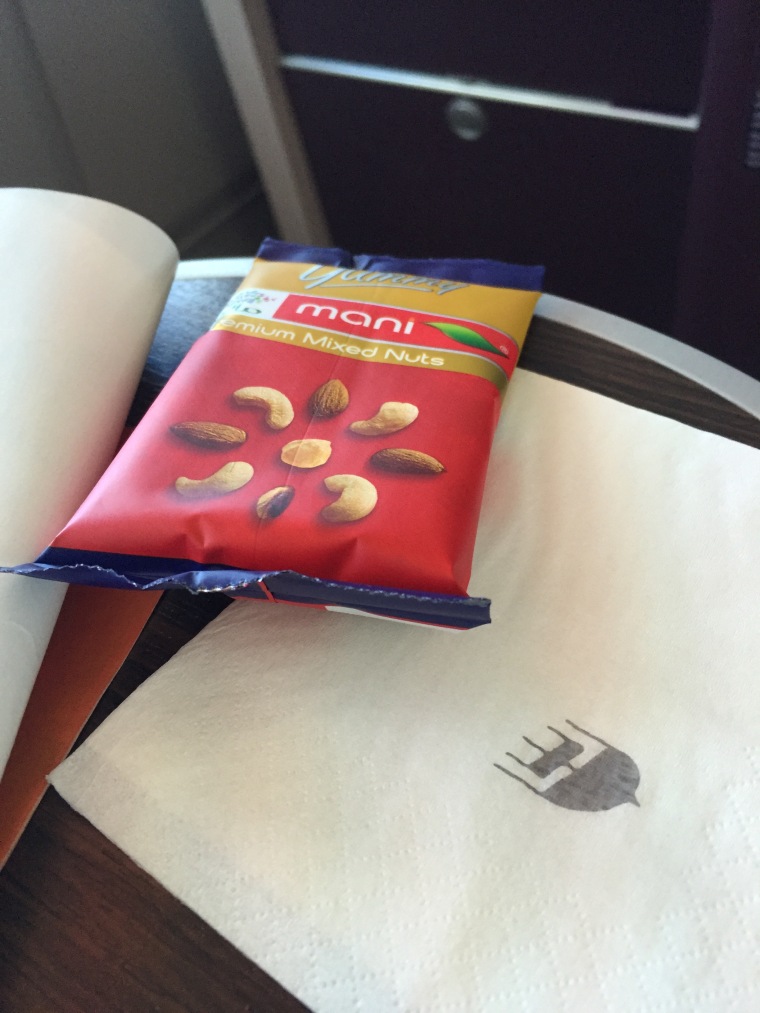
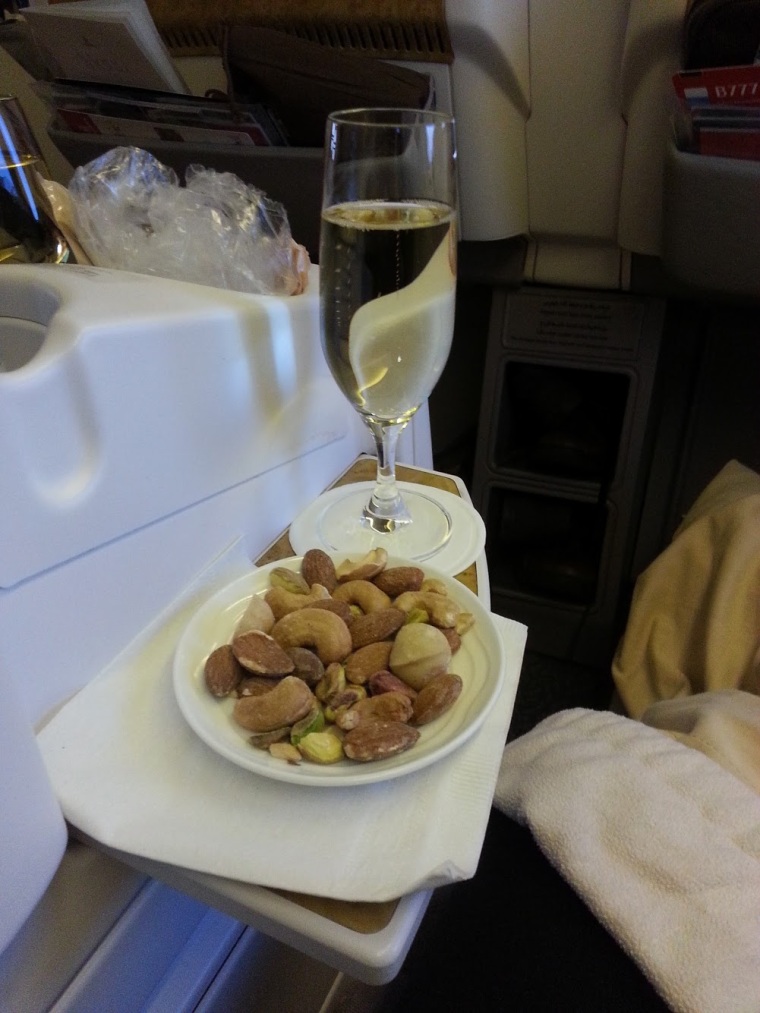
The current snack offering to Malaysia Airlines business class passengers on the A380
Branding success in the aviation business comes with a number of small successes at key touch points in the customer journey. And these successes are built on delivering value on the customer’s terms.
Nowadays that journey begins not with an advertisement but with the customer discovering the brand, most often online or, in the case of the lucrative but undervalued existing customer during the relationship that the airline builds with the customer once they have finished their journey.
Emirates A380 business class. It’s all about the experience
At every step of the way, those experiences involve interactions with personnel that know how to represent the brand and deliver that value.
Having been a customer of Malaysia Airlines for over 21 years, and having flown nearly 100 times on the carrier since MH370 I can say, with some authority that the majority of staff don’t understand branding and the role each of them has in the success of the brand.
It’s not their fault because years of mismanagement have inculcated the ‘tidak apa’ (Don’t care) culture across the organisation. It’s not that the airline or its people are bad, it’s just that it has been driven into the ground in an attempt to milk it for every penny. And this has created a sense of every man for himself.
The mismanagement has created an organizational culture that lacks the required values. All of its processes, attitudes and systems have evolved to do the bare minimum required to get by. Recently, in an attempt to try and stem the hemorrhaging with the layoffs and supplier renegotiations, morale has hit rock bottom and the company is hanging even further over the precipice.
So will the rebrand make a difference? We’ll have to wait and see. My concern is that it is going to be advertising and promotion driven. A ‘big idea’ will be created and pushed out across the world in a massive advertising blitz that will make a big splash before being lost in all the noise.
We’ve seen this approach before and it doesn’t work. In an era when delivering value to customers has become the norm, Malaysia Airlines’ seems to be struggling to come to terms with the new branding order.
Numerous personal experiences, countless anecdotes and negative reviews, comments and discussions on and offline talk about the airline not caring or negative interactions with staff.
In an era when customers not companies define brands, and they define those brands based on the economic, experiential and emotional value those brands deliver to them, the rebranding of Malaysia Airlines will be successful only if the firm gets to know its customers and staff are primed to deliver consistent, knowledgeable, exceptional, personalised engagement with each of the very diverse audiences.
It maybe that Mr Mueller doesn’t want to go this route. That the investment will be too much and his ‘start up’ will be a glorified low cost carrier masquerading as a national carrier. The ramifications of such a move on the Malaysia Nation brand will be substantial and only negative. Let’s hope that’s not the plan.
I prefer to remain positive. Today is December 1st 2015. The country and the world is watching and waiting for the new brand. I hope they get it right. My next flight on Malaysia Airlines is on December 8th. I’ll let you know if anything has changed.
Flying into Kuching this morning on Malaysia Airlines the haze was so bad the pilot aborted the landing and went around again. The same thing happened last week. The haze isn’t MAS MAB fault but it has a significant impact on its brand.
Last week, the pilot came on the PA and explained the problem, reassuring everyone with his confidence and authority. This time the flight deck was silent. So we the passengers are sitting there wondering why the landing was aborted.
Without any information and aware of the carriers recent issues, we start asking ourselves, “Is there a problem with the aircraft?” or “Perhaps the airport is closed?” In that case, “Do we have enough fuel to go elsewhere?” “Are the pilot and co-pilot ill or even conscious?” An intimidating situation such as this one can have a negative effect on the brand. Yet at the same time, it can be part of the rebranding process.
It’s the little things that make or break a brand. Especially one that is already broken. A simple 30 second explanation was all that was needed to calm everyone down and earn a little bit of respect. Communication is a key part of branding. Successful brands have an emotional connection with consumers.
MAB has a credibility problem and that credibility problem needs to be fixed. One of the problems is the lack of an emotional connection. How can consumers connect with a brand that doesn’t communicate? If there is no connection the rebrand will fail. It certainly won’t be fixed with pressing the flesh, a new name, new livery, new advertising and a new logo.
It’ll be fixed by creating an emotional connection with customers and delivering economic, experiential and emotional value to those consumers.
According to marketing magazine, the new Malaysia Airlines brand was launched with what they call ‘a new branding campaign’. Now personally I don’t think you can have a branding campaign. In my opinion that’s an oxymoron but let’s not go there for now.
Marketing magazine reported that a new hashtag #todayishere is the new tagline. A hashtag is the new tagline? Is that from MAB or is that an assumption? And besides, what does ‘todayishere’ mean? Does it mean we can simply forget about the past? And what about tomorrow? How does todayishere reassure me that it is safe for me to fly or put my kids on Malaysia Airlines?
And how is todayishere going to improve the experience of interacting with Malaysia Airlines? Does anyone know? How is anyone going to build a brand narrative around todayishere? Perhaps the agency Prophet from Hong Kong can share with us the next stage of their rebrand strategy because I want to know if there is anything else to come?
Are the crew going to be trained to represent this ‘new brand?’ What improvements have been made to the key touchpoints of the brand? How will a first time user be engaged at the booking engine? Has the broken booking engine been fixed? If not, why bother with a new hashtag/tagline/rebrand launch? Why not wait till that key component of the experience is at least working properly?
Although I don’t consider ‘todayishere’ to be a tagline, it is borderline criminal to believe you can rebrand any organisation with a tagline. Just ask the Malaysian government. Almost 2 years ago to the day, they tried to launch the Malaysia nation brand with a tagline.
But you can’t retrofit a brand around a tagline. Branding is about delivering value, at every touchpoint and at everytime and on the customers terms. It’s actually very easy, provided you start from the right place, the organisation because the organisation is the brand. Not a tagline, not a hashtag, not an ad campaign, not a campaign, not a new logo. Please, someone pass the message to the Malaysia Airlines board.
I was under the impression that September 1st 2015 was the planned date for the launch of the Malaysia Airlines System (MAS) rebrand. As far as I can see, all that has happened is the name has been changed to Malaysia Airlines Berhad (MAB).
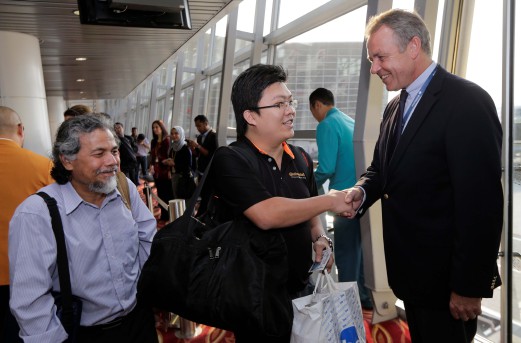
To launch the new company, MAB CEO Christoph Mueller led a team of senior managers around Kuala Lumpur international airport (KLIA) greeting passengers, handing out teddy bears and giving away a pair of business class tickets to Melbourne. This is a nice if old fashioned way of introducing a new product and the internet means these cute if short lived PR tactics can be leveraged online and potentially taken up by users across the ecosystem.
Malaysia Airlines CEO greeting passengers on the first day of the new company Pic credit: NSTP/Aizuddin Saad
Unfortunately I couldn’t find any reference to the airport visit on the Malaysia Airlines Facebook page. Not even a reference to the free tickets to Melbourne. Perhaps I missed it or the airline missed an opportunity to get some valuable positive earned media.
In conjunction with the launch of the new company, the CEO stated “We are very excited to welcome today, the start of our new company. We have been working hard for the past months to ensure a smooth and successful transition and we would like to thank our customers and airline partners for their continued support during this period.”
Interestingly, he added, “the new company was looking forward to enhancing its customer in-flight experiences and give them more reason to visit Malaysia.”
Although his comment suggests he’s more interested in new recreational customers than existing ones and visitors to Malaysia rather than citizens of Malayisa, it’s a reassuring place to start because the experiences (at all touchpoints and not just in-flight) are key to building a successful brand and not advertising, PR, cute PR gimmicks and corporate driven messages pushed out across all media.
Indeed, this is one of the reasons why MAS failed. The company thought it could spend more than a RM1 billion (US$400 million) in the years leading up to 2014 and pass that off as brand building whilst cutting costs that impacted every stage of the experience.
When a crisis hit, the brand was unable to deliver on promises it had made. In addition to gross mismanagement, failures at every touchpoint, lack of appreciation of the importance of existing customers and an inability to engage stakeholders, constituents and customers all contributed to the destruction of the once mighty brand.
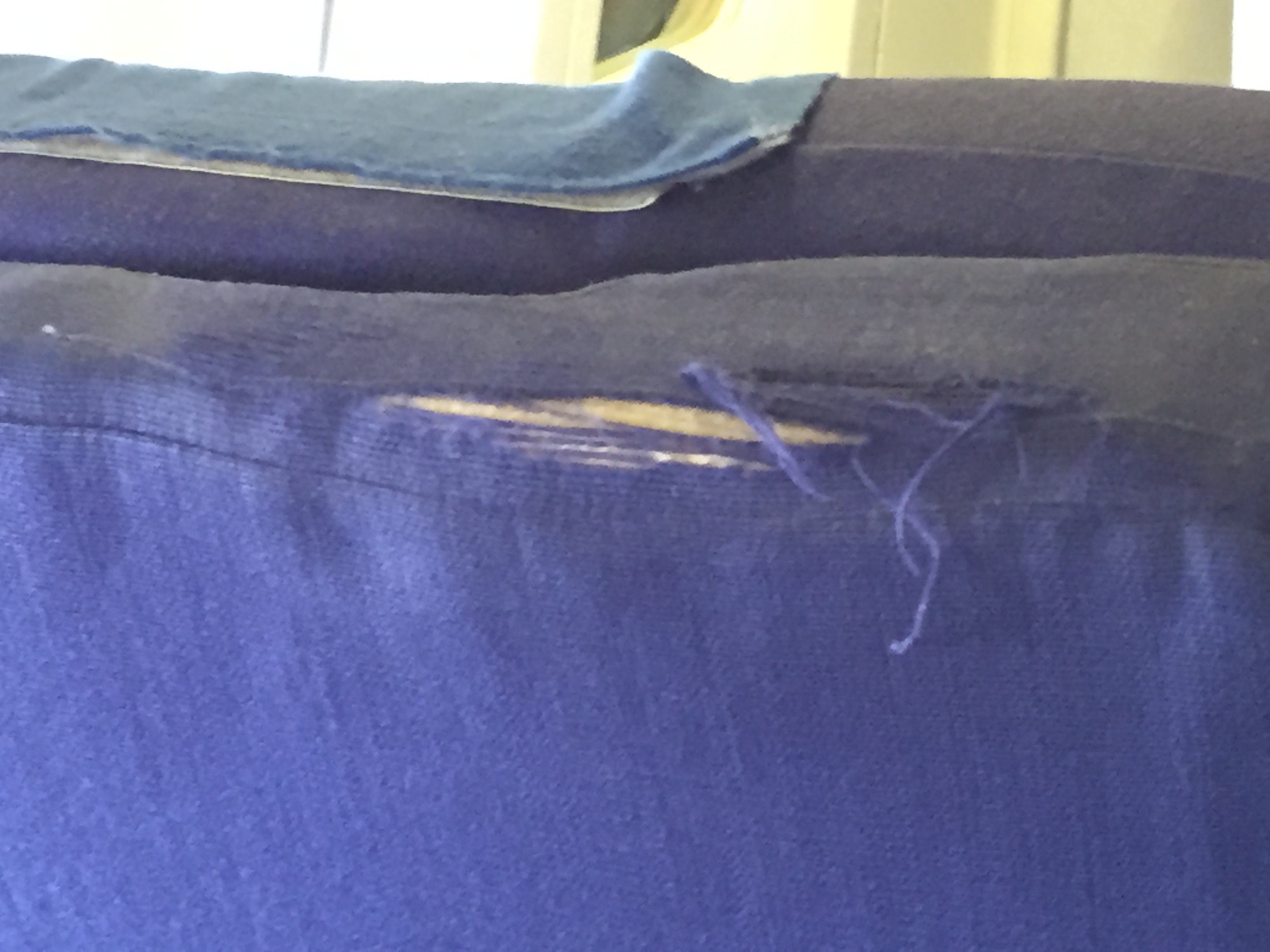
So Mueller’s comment about improving the customer experience is good to hear. But I have to say I’m a little skeptical and here’s why. Last week I flew business class to Kuching on MAS and I was shocked at how old the aircraft was. Seats in business class were falling apart as the image below shows. Normally MAS uses new 737s on this sector so I can only hope the new aircraft have been taken out of service for the application of a new MAB livery.
A week before the launch of the new Malaysia Airlines, domestic business class is ready for the upgrade!
The week before the trip above, I flew business class again to Kuching and 10 minutes out from Kuching the familiar alert sound of an incoming text message rang across the cabin. Then another and another. I figured someone in business class had turned on their phone whilst we were on our final approach.
I looked at the already seated stewardess who looked away in embarrassment. At least another 2 messages came in before we landed. When the stewardess got up to close the curtain I asked her if she was going to say anything. She replied yes and then went and hid in the galley.
A quick search online about the use of phones in flight throws up plenty of references. This is a quote from a Directorate General Civil Aviation (DGCA) report dated 2010 that refers specifically to the final approach: “Safety information internationally exchanged reveals specific cases where use of mobile telephones by passengers inside the aircraft cabin has caused erratic performance of aircraft airborne equipment leading to serious safety hazards during the flight. Typical instances include automatic disengagement of the autopilot at an altitude of 400 feet above ground level during an auto pilot assisted approach.”
Boeing the manufacturer of the aircraft I was travelling on has in the past written to all operators to warn of “the adverse effects of electromagnetic emissions on control, navigation and communications systems. Boeing is concerned that portable electronic devices carried by passengers on aircraft do not meet the stringent electromagnetic emission standards imposed on the certified airborne equipment used on its aircraft.”
As the passengers left the cabin the stewardess didn’t say anything. I was disappointed and explained to her as far as I was concerned, she was the boss of that cabin and if someone broke the law she should do something about it. She just looked at me blankly.
The last throw of the dice for the national carrier of Malaysia, a country that desperately needs some good news
So what’s this got to do with branding? Well first of all, the MAS brand is toxic at the moment and especially when it comes to matters of safety. And a new name or identity or logo or advertising campaign won’t change that.
What will change that are examples and experiences, especially those related to safety. And most of those experiences will involve the ground staff or cabin crew. So any rebranding should have started with a brand audit to identify that the MAS crew was in desperate need of training to get them up to speed with dealing with difficult customers.
If the stewardess had been retrained to represent the new brand, she would have had the skill and confidence to take charge of that cabin and seized the opportunity to show to half a dozen leading VIPs, businessmen and me that this was a new era for the brand. That it had a zero tolerance to matters of safety and breaking international law, that the crew is competent, knowledgeable and confident and the safety of the passengers, crew and reputation of the airline is paramount.
Meanwhile on September 3rd 2015, The Malay Mail carried a story about a Malaysia Airlines jet making an unscheduled stop in India because the lavatories on the plane weren’t working. Now I know that this sort of malfunction can happen to any airline anytime but the new national carrier of Malaysia isn’t any airline, not at the moment anyway. These maintenance issues, common and accepted generally will be seen as a reflection of the carriers lack of a maintenance culture and the inevitable question will be, “If they can’t fix the lavatories, what else is broken?”
The Malaysia Airlines Facebook page is bursting with negative comments from frustrated customers made to wait over 2 hours in queues at KLIA, wait days for the return of lost luggage or unprofessional customer service staff. When I checked in recently, I was told by a duty manager that 40% of staff scheduled to be on duty that morning didn’t show up for work.
Even today, four days after the launch of the new firm complaints are coming in about service at the business class lounge at the carriers home airport KLIA.
Has anything been done to improve the Malaysia Airlines experience?
The chances of a company surviving a disaster are small, the chances of surviving two are practically impossible. Little wonder then that Malaysia Airlines passenger numbers are down over a million in the first six months of this year.
The restructuring of the company was a necessity. This rebrand is the last throw of the dice for the national carrier of Malaysia, a country that desperately needs some good news.
As a branding professional and a loyal customer of Malaysia Airlines for over 20 years, my expectations of the rebrand go way beyond the name, the logo, the identity and promises made by the CEO that staff are not trained to deliver on.
I don’t know what has happened to the rebrand but my expectations are an end-to-end rebrand that will see Malaysia’s national carrier back where it belongs, at the top of it’s game. I genuinely hope the people tasked with rebranding the carrier, know what they are doing. Because if they don’t, Malaysia Airlines will fail.
2 days after sending out termination letters to 6,000 staff, MAS is advertising for new staffThere’s a saying in our company that if a client’s employees are happy then that happiness will show in the way those employees interact with prospects and customers, thereby improving their experiences and the reputation of the brand.
When working on an Internal brand audit we’ll take a long hard look at the hiring and firing process and often make small but effective changes to the process. This is particularly so when looking at how firms fire people because unhappy staff often have a grudge to bear when they are let go and in a social media world this can be damaging.
Malaysia Airlines is already a damaged brand which is why it has embarked on a restructuring exercise that includes more than 6,000 job cuts. A lot of effort is being put into helping those staff reintegrate themselves back into the economy but this is not simply about getting them another job.
Keeping all those ex staff after they have left MAS will require very skillful communications and an integrated effort by all departments concerned. The news that 2 days after 6,000 staff were sent their termination letters, the MAS website is still recruiting cabin crew and suggesting there are other vacancies is a huge mistake on the part of those responsible for the brand.
There is no room for error in the restructuring of Malaysia’s finest, most high profile global brand.





 brandconsultantasia.com