SIX tips from Fusionbrand on how to avoid the same fate as Tourism Malaysia


Yes it looks like an irresponsible adult allowed a petulant child with a grudge against the creative fraternity loose on a very old software programme and yes, it should never have made it past the idea stage. It’s the creative equivalent of a train crash featuring trains carrying toxic chemicals or nuclear weapons. But does it matter? In the short term, perhaps. Long term, maybe. But it never have happened.

I’m talking of course about the Tourism Malaysia VMY2020 logo (see pic) launched at the end of January 2018 by Datuk Seri Nazri Aziz, the Malaysia Minister of Tourism and derided by much of Malaysia, graphic designers worldwide and respected media organisations such as the Daily Telegraph, the BBC and the South China Morning Post.

How to make sure you don’t end up with one of these

Despite the negative reaction of, well everyone, I’m going to stick my neck out and say that the reality is the new logo (if it survives and I don’t think it will) won’t have an effect on visitors contemplating whether or not they should visit Malaysia in 2020 (and the years before and after 2020).

In fact after being featured on social media and a host of international news channels and publications, it may have provided Malaysia with yet more free publicity.

Admittedly not the kind of publicity Malaysia really wants but it’ll take more than negative publicity about a crap logo to attract or stop foreigners from visiting the country.

Nearly every business/school/institution and many individuals have a logo. We see logos on business cards, buildings, billboards, buses, lamposts, food packets, print ads, TV ads and just about everywhere else you can stick one.

And they sell computers, clothes, cars, cosmetics, finances, food, schools, fashion and fags, alcohol, appliances, airlines and holidays, and just about anything else in between.

There are good logos and bad logos, some change on a regular basis, think Google, others stay pretty much the same for years, think Apple or Nike. We’re told logos must be unique yet instantly recognisable.

They must have colour because certain colours convey certain meanings yet they must be instantly recognisable and have the same impact in black and white.

We’re told that each element of the logo has meaning. A logo designed with sharp, straight lines communicate a strong, trustworthy brand.

Curved lines on the other hand communicate a caring and supportive product or service. The rationale for combining curved and straight lines is an ambitious company.

And we’re told that everyone should have a logo because they represent the brand and make you stand out from the crowd. But crowds behave differently today and are influenced in different ways.

The illustrative style that we recognise as logos today is nearly 150 years old and harks back to a time when Western civilisations moved out of the fields and into the factories. Most of those factories are now here in Asia where we’re living our lives a little differently today than we were back then.

The main role of the logo, traditionally anyway, has been to create awareness about a business or in this instance, a destination (and not the country) and help to build a positive image about the business/destination.

Logos evoloved to become a symbolic reflection of what the busines/destination wanted to communicate to audiences. And when logos changed, it was meant to be part of an overall strategic shift in direction for the brand and would be one of many elements of that new brand strategy that had to be communicated in a joined up, integrated manner.

But over the last 20 years, businesses have got lazy or perhaps greedy. Too many businesses have changed logos in isolation, without incorporating the change into a new strategy.

They’ve updated the brand identity and called it a rebrand without making any improvements to the organisation. And then they’ve watched, surprised when nothing changes.

The London 2012 logo dodged a bullet

Sometimes when a logo changed slightly and the reaction was negative, the brand got away with it. Remember the London Olympics logo? Other times, such as the GAP logo change in 2010, the consumer response was deafening and GAP had to backtrack quickly. But overall, because these changes were ad hoc or tactical, they made little difference to the business delivery.

Another classic example is oil behemouth BP. Back in 2000 the firm decided they wanted a new logo that communicated ‘green growth’. Despite spending over US$200 million it was considered a massive failure because the opinion of most people was that there was nothing green about the business of oil. No matter what the company tried to make us believe.

Our new logo tells you we’re not in a dirty business so you must listen

And then in 2010, the largest offshore oil spill the history of the oil business put paid to the concept of the green growth oil company communicated via its logo. For many, that’s when logos lost their relevance.

With the proliferation of countries competing for the same visitors, too many destinations play safe and compete with the same look and feel, making it difficult for potential visitors to differentiate them.

Add to this mix the powerful impact of social media on the travel industry and visitors now use the Internet for research purposes and get most of the information that influences their decision making from content generated by people like them and not logos.

The rise of the ‘me too’ destination logo dilutes the importance of the logo in the visitor’s decision making process

The focus has shifted away from the identity of the destination to the experiences of other like minded people in that country. Against this backdrop, it’s hardly surprising then that the importance of a logo will not be what it was.

According to the World Travel & Tourism Council (WTTC), global tourism generated $7.6 trillion for the global GDP. More than 105 million international visitors arrived in South East Asia in 2015 and that figure is growing at an average of 8% every year.

Many of those visitors will visit Malaysia not because of the logo but because Kuala Lumpur International Airport is an increasingly important hub for low cost carriers servicing destinations such as Vietnam, Cambodia, Thailand, Myanmar and more. And any trip to SE Asia will include visits to other countries in the region.

So in terms of the impact the logo will have on visitors to Malaysia, it will be negligible. However, it will help shape perceptions of Malaysia as a country and much of the debate across social media was how embarrassing the logo is for Malaysia.

So in terms of the reputation of Malaysia, there will be a perception impact and that will probably add to the negativity about the country. If most of the content consumers read about Malaysia is negative, then perceptions will become negative. And those perceptions can only be influenced and changed with a brand strategy that includes all stakeholders and not with tactical activities such as a new logo, advertising or events.

For Malaysia, what’s done is done. What can other countries, states, regions, cities or towns do to ensure their efforts aren’t ridiculed in the same way?

Here are 6 lessons that can be learned from this fiasco. They should be applied to any destination branding initiative.

1) Set up a nation branding task force.
Every country or state/city/place should have one. Malaysia used to have one and in 2008 the task force commissioned Fusionbrand to develop the Malaysia nation brand but the plans were canned when a new administration took over and a new department was set up under the new Prime Minister’s Office. This department embarked on a badly researched project about 5 years later that revolved around a tagline and a logo and not a strategy and as a result, lasted little more than a month.

2) Nation branding is strategic not tactical.
Nothing related to the nation brand can be done in isolation. To avoid similar failures, anything related to the nation/state/region/city brand must go through the nation branding task force. And that includes important ministries such as the Tourism ministry. Even state tourism boards and other stakeholders must share with the nation branding task force.

3) Test identity concepts before launch.
No man is an island. But sadly in Malaysia, if a senior person proposes something it is rarely challenged internally, even by marketing professionals hired supposedly for their knowledge. Anything creative should always be tested internally and with multiple consumer segments and the task force. I know it’s time consuming and expensive but which is worse, a delay in the launch or becoming the laughing stock of the world?

4) Have a plan for your identity launch.
Don’t expect to wing it. And be prepared for serious back lash from consumers because most of us hate change. Not many new logos were well received initially. But many of them are now very familiar, think Pepsi, Citi, Accenture, Qantas. After a certain amount of fumbling, the Minister stated, “I have launched it. Nazri Aziz never backtracks. This is what will be used for the world, only one logo, no other logo.” Would a clearly defined, sensible rationale have been a better way to announce the new logo? Absolutely.

5) Social media is your friend not your enemy.
I get the impression, perhaps wrongly that Tourism Malaysia was completely unprepared for the reaction to the logo. Especially on social media. Social Media CAN effect change so learn to work with it. But remember it is not a soapbox. Simple consumer research at the logo development stage on Facebook and Twitter would have saved Tourism Malaysia and the country, a lot of embarrassment.

6) Logos / taglines etc should not be confused with branding.
Malaysia has had a tough time over the last few years with the country struggling to stay relevant in an increasingly competitive environment. It’s hard to find current arrivals figures but the general consensus of opinion is that visitors from wealthy countries or high spending tourists are not visiting as they used to. A lot of this is because there is confusion over what constitutes branding and the Malaysia tourism brand has little differentiation. Brand identities / taglines / positioning statements / advertising campaigns and other marketing tactics are not branding. They may create awareness but that rarely convert to arrivals.

As I’ve stated already, I don’t think this farce will have much of a positive or negative impact on arrivals. But it’s impact on Malaysia’s brand? That worries me but that’s a discussion for another day.

Fusionbrand is Malaysia’s premier strategic brand consultancy. For more information on how we can help you get your branding right the first time, please call +60379542075.

Tesco’s bold TV commercial features Muslims celebrating Christmas


Hot on the heels of the Marks and Spencer and John Lewis Christmas ads comes the Tesco one.

And it’s winding up a few people in the UK. But despite the controvery, it’s not getting the viewing numbers. In a week it’s only had 132,000 views while the M&S ad has generated more than 4 million over the same period and the John Lewis ad has been viewed 1 million times in 2 days.

Tesco has said that everyone is welcome at this time of year which is fair enough. Ignoring the religious argument (and for that matter the vegan one), it has some nice touches that most of us have experienced at some stage of our Christmas’s past. The oblivious teenage son at the beginning resonated with me!

The gay couple, the stressed mother, the backseat chef, the delirious kids, the muslim family, the, wait what did you say? Back to the religious element, a Muslim family celebrating Christmas? Yep, and those of other faiths get into the spirit (but I’m sure not the spirits) as well. And from what I can tell, it doesn’t dilute their faiths.

So will we see this ad on TV in Malaysia? It would be interesting but somehow, an ad featuring Muslims in the UK appearing to enjoy Christmas, I doubt it.

Tourism Malaysia and Malaysia Airports sign an MOU – in London


At the World Travel Market in London recently, Tourism Malaysia & Malaysia Airports met and signed an MOU to promote domestic tourism.

A fund will be created (not sure where the money will come from but I have a hunch it’ll be the tax payer) to support marketing campaigns by airlines and travel industry players in 2018.

Anyone know why they had to go to London to sign the MOU? And for that matter, how will an airport promote tourism? And how this project will link with other initiatives?

UNIFI you are better than this


One of the key tenets involved in creating a brand is to demonstrate a high level of competency and authority in your industry. And with that competency and authority comes trust. And trust is key to the success of any brand.

Poorly written content dilutes the potential for trust. If that trust is diluted, a prospect may decide not to buy and in the social economy, create negative consumer content.

Once negative content is created and shared and commented on and shared further, your reputation is not defined by what you do but by what your customers say you do.

And once that happens, your customers not you are defining your brand.

According to research the preferred online language in Malaysia for consumers is English. Whilst there are different levels of English in the country, if a brand communicates in English it must make an effort to communicate properly.

Well written content communicates professionalism, knowledge, experience, credibility and confidence and generates respect.

While poorly written content with the wrong grammar, communicates a lack of professionalism, hints at laziness and shows a careless approach. In such a situation, the reader would be forgiven for thinking that if the brand is careless about itself, is it really going to look after me?

Plainly obvious mistakes detract the reader from what you are trying to say and negatively impact your credibility. The reader may understand you but that doesn’t mean they trust you. If they don’t trust you, they are unlikely to buy from you.

I recently interacted with Unifi, the broadband supplier of Telekom Malaysia the national telco and the largest broadband services provider in Malaysia.

Now the first interaction I had with the brand on this particular issue was through their website where I encountered this poorly written message.

UNIFI, you are better than this

I didn’t bother filling in the requested information because I immediately thought I’d be wasting my time. My immediate thought was negative, that the organisation lacked professionalism and simply didn’t have the processes and systems in place to prevent such a hugely embarrassing situation.

And remember this is not an SME. This is a Government Linked Company with a market cap of RM25 billion (US$6 billion).

My immediate thought was that if they don’t care how they are perceived, it’s unlikely they will care about an insignificant customer like me. I thought therefore that it’s not going to be able to do what it said it could do.

Now the irony is that I thought this might be a great opportunity for a blog rant about how amateurish is Telekom Malaysia. So I emailed their customer service (in English) thinking I wouldn’t get a reply.

I got a reply within 24 hours and the writer answered my question. The answer did mean I had to write another email and again this was responded to with an informative answer and within 24 hours.

Us consumers are a fussy, knowledgeable lot these days. It is easy to find out how much a brand is making from us and how big are the fat cat salaries of the top people in every company we give our hard earned money to. We’ve been let down far too often by brands that over promise and under deliver.

We’re tired of being taken for a ride. We’re also spoilt for choice so if you don’t make us happy, we’ll take our business elsewhere. Because it’s the little things that make or break brands today. Every touch point needs to be perfect. Make it perfect and we’ll trust you with our money. That’s all.

Newspapers, fridges, grapes and 7 series BMWs


Like the rest of the planet, Malaysian consumers are spending more time online and this has seen a dramatic fall in the circulation of newspapers.

The New Straits Times, the oldest newspaper in Malaysia and once the pride of the industry has been through at least two ‘rebrands’ in the last 10 years but this has failed to stop circulation plummet to 55,000 copies a day in 2015.

Recent reports have put the circulation as low as 35,000 copies a day towards the end of 2016. It’s hard to find current figures which suggests things are not going well.

Back in January 2017 we encountered what may be a global first when we opened a copy of the New Straits Times, and with the exception of a 1/8th of a page ad, didn’t see any significant paid for advertising!

Meanwhile the Star newspaper isn’t fairing quite so badly with a circulation around the 250,000 mark. In the 22nd April 2017 edition there were a number of full page ads and even a double page spread.

These ads were selling everything from grapes to fridges to laptops and detergents and not forgetting the out of place table in the Tesco ad.

Selling grapes, laptops, fridges and a table on a Saturday.

I presume these hypermarkets and discount stores are using these low end, low value products to lure housewives to stores in the hope they will buy higher margin goods once there.

Nothing wrong with that and they’ve been a feature of The Star on Saturday for many years. But if that’s the case, and the readership of The Star on a Saturday largely consists of housewives getting ready to do the weekly shop, why is there an ad for the BMW 7 series in the middle of all these ‘cheap as chips’ ads?

Is this the new housewives choice in Malaysia? Recession, what recession?

The BMW 7 series starts at RM600,000 (US$136,000) while the top of the line model is a few pennies under RM800,000 (US$182,000). Not really the housewife segment. Either the hypermarkets are in the wrong place or BMW is. What do you think?

How to reduce the number of smokers in Malaysia


In an ongoing attempt to reduce the growing use of cigarettes in Malaysia, the price of a typical pack of 20 is now more than RM21 (US$5). Still way below the US$15 in the USA or US$10 in Singapore but way up from about RM3.20 in 1996.

In a survey carried out by the Ministry of Health (Malaysia) in 1996, there were 2.4 million smokers in Malaysia. Despite such price hikes, tens of millions of dollars spent on advertising and numerours articles about the dangers of smoking, there are reported to now be nearly 5 million smokers in the country, about double the number in 1996.

Globally, according to WHO, tobacco deaths cost the world US$1 trillion while revenues from tobacco taxes generate US$269 billion (2013 – 2014).

According to WHO, smoking kills six million people annually, more than HIV/AIDS, accidents, homicides, and suicides combined.

No data is available on what smoking costs Malaysia but we do know it costs the Canadian government around RM10.5 billion in direct health care and another RM38 billion in lost productivity.

Canada is a good benchmark for Malaysia because in 2011 approximately 5.8 million Canadians smoked, about the same as Malaysia.

Locally revenue from taxes on cigarettes totaled around RM9 billion in 2015. However, one of the biggest problems in Malaysia is the black market in cigarettes.

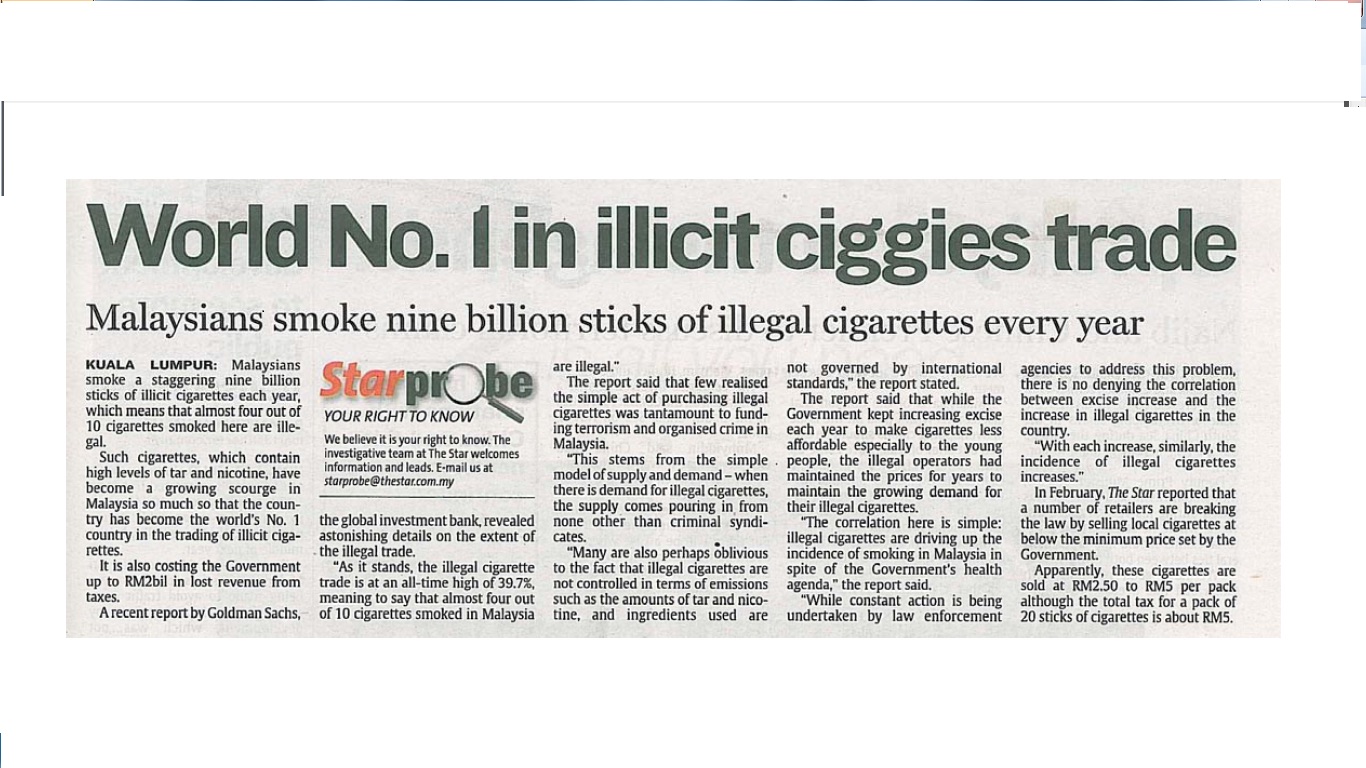
According to the Confederation of Malaysian Tobacco Manufacturers (CMTM) 57% of cigarettes sold in Malaysia are bought on the black market which according to the Star newspaper makes Malaysia number one in the world when it comes to trading illicit cigarettes. This costs the treasury at least RM2 billion a year.

According to the Star, Malaysia is the centre of illegal cigarette sales

The recent price hike is the latest in a series of initiatives that are supposed to stem the rising number of smokers in the country as well as increase revenue for the country.

In addition to the rapid rise in the price of cigarettes, a number of Health Ministry driven initiatives about the dangers of smoking have also been tried.

The first of these initiatives was an anti smoking campaign launched in 1991, in conjunction with the National Healthy Life Style Campaign. This extensive campaign that ran for over 10 years raised the level of awareness of the hazards of smoking among the general public, both smokers and non-smokers. But the numbers continued to rise.

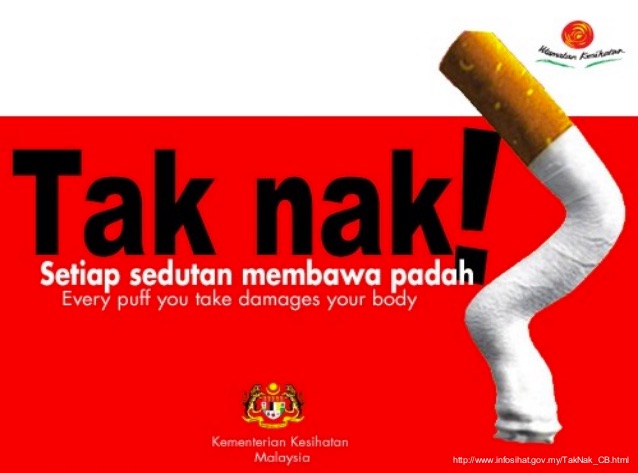
Then came the “Tak Nak” campaign in 2003, consisting of TV Commercials, Radio, print and Outdoor (including school notice boards).

Malaysia’s Tak Nak campaign

Costing almost RM18 million (US$5 million) for the first year, and rumoured to cost in total RM100 million for the 5 year campaign, it was widely lambasted in the media.

This is because although the campaign raised the awareness of the effects of smoking, once again it did little to reduce the number of smokers.

Even the then Health Minister, Datuk Dr Chua Soi Lek said in 2005 that there was no indication that the number of smokers had gone down since the campaign began.

Despite the ineffectiveness of this campaign, in August 2009, The Malaysia Ministry of Health launched the next (and most harrowing) installment (see video – viewer discretion advised) of its anti-smoking “Tak Nak” campaign via TVCs. The TVC’s feature gruesome images of mouth cancer and lost limbs due to gangrene caused by smoking.

This campaign followed the legislation, earlier that year that all cigarette packets sold in Malaysia must carry graphic images related to smoking. These included images of the results of neck cancer and a dead foetus.

Throughout the years, the Ministry of Health has tried its best to reduce smoking in Malaysia and the fact that it wants to do something should be applauded.

But it’s not having the desired effect. I can’t help but think the efforts seem to be independent tactical campaigns based on the fact that there is a budget, rather than elements of a strategic approach to a clearly defined goal. And these campaigns rarely have the frequency required to make an impact.

We see this a lot in the private sector. A budget for advertising is approved and an advertising agency is appointed and the board sees the ads and the billboards and thinks that’s job done.

But unless the goal is to put out ads it isn’t job done. And if the ads don’t resonate with the target markets, and research shows anti smoking ads don’t resonate with target markets, then the job is far from done.

Evidence from previous campaigns in Malaysia and other countries suggests that campaigns featuring shocking images and graphic descriptions of the consequences of smoking using Television commercials, print ads and outdoor ads are ineffective.

Malaysia spent RM100 million over 5 years on such a campaign that saw an increase in the number of smokers in Malaysia. To put it bluntly and despite best intentions, that’s a fail.

In the UK, after extensive research of more than 8,500 smokers over a ten-year period, the Institute for Social and Economic research found that the warnings on cigarette packets that smoking kills or maims are ineffective in reducing the number of smokers.

Likewise, chilling commercials or emotionally disturbing programs are also ineffective. In fact, the study also discovered that when a close family member become ill from the effects of smoking, the smoker takes no notice!

According to the study, smokers only reduce the number of cigarettes or sometimes quit when their own personal health is at stake.

But even failing health may not persuade a smoker to reduce or even stop smoking because smoking is linked to a lack of psychological wellbeing and often failing health results in psychological decline.

So how can a country like Malaysia reduce the number of smokers and why should it involve a brand consultant?

The problem with using an advertising agency to solve a complicated issue such as this is that if all you have is a hammer, everything looks like a nail.

Advertising, no matter how creative isn’t going to reduce smoking. What is required is a data driven approach to the issue. Specific and comprehensive qualitative research with relevant targeted questions related to each clearly defined micro segment must be developed to deliver actionable data.

These segments will be ex smokers, existing smokers, those who have smoked all their lives and tried hundreds of times to stop.

Celebrities, doctors, educators, retailers (especially retailers) coffee shop owners, customs officers, even smugglers and the police and other enforcement officers as well as others will need to be interviewed.

The data from this research will form the foundations of the blueprint to reduce the numbers of smokers in the country. It will be a long term initiative. Solutions may include communications campaigns but they won’t be based around one size fits all commercials or messages.

Hard, actionable data is required to develop a branding strategy to reduce smoking in Malaysia

Instead they will be developed to resonate with each specific segement. And they will require consistent implementation over a long period of time and the commitment of the authorities.

They will require collaborative efforts that look to improve the psychological wellbeing and confidence of smokers. Environmental changes must be made to ensure it is more difficult for smokers to find an amicable environment.

Existing smokers will be targetted individually through interviews with doctors, rather than one-size-fits all shock and awe campaigns. It’ll also require a triage like approach that ignores the 35 year veteran smokers and instead targets their children and their grand children.

Talking of which, there must be a specific emphasis on education at kampung (village) level and ongoing, dynamic, preventative programmes for schools.

Laws banning the sale of cigarettes to minors must be strictly enforced. Other solutions will include more investments in and better enforcement by customs and enforcement officers rewarded for contraband seizures. Rewards (and protection) for whistleblowers should also be offered.

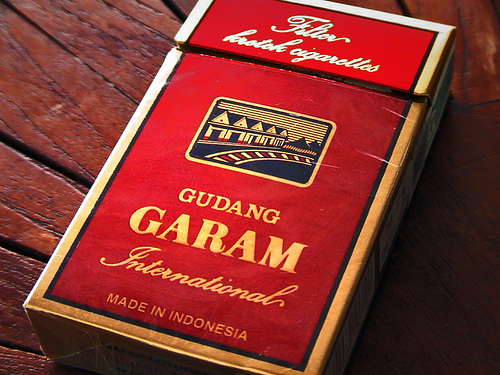
They will also require the buy in of all stakeholders. On a recent visit to a Police station following a traffic accident, I was interviewed by a Policeman in his office while he chain smoked his way through half a box of Gudang Garam.

Malaysian civil servants must set a good example

Outside his office was a no smoking sign. Civil Servants must not be allowed to flout laws that forbid smoking in Government buildings.

There is no easy way to reduce the number of smokers in Malaysia. It’s going to take a long term investment in time, effort and money.

Wasting money on increasing prices will only see more contraband sold. Creative driven campaigns that have not worked in the past will not work in the future.

But the rewards are considerable. Not only in a reduction of the amount spent on smoking related healthcare, but also in a healthier, happier nation.

Advertising agencies haven’t solved the problem. It’s time to give the responsibility to a brand consultant. I have one in mind!

How to save the Proton brand


So finally it’s official, China’s Geely Automobile Holdings has withdrawn its bid to buy a controlling stake in Malaysian carmaker Proton. No reason has been forthcoming, but Geely’s Chairman Li Shufu told Bloomberg in early March that, “They keep changing, today it’s this, tomorrow it’s that. They haven’t decided what they want.”

There are rumours however that Proton or rather parent company DRB-Hicom wasn’t comfortable with the deal despite the automaker’s desperate situation. We’ll probably never know but what is known is that only Groupe PSA, owner of Peugeot, Citroën and recently, Opel and Vauxhaul is left in the frame.

For now, Groupe PSA is still interested in Proton

My gut feeling is PSA will drop out which means Proton will have to go it alone or pull the plug. I don’t think that’s a viable proposition because of the social and political implications of putting 10,000 direct employees out of a job.

Proton is in big trouble. Its market share has dropped from over 80% to 12% in little more than 20 years. It’s plants were operating at 30% capacity at the end of 2016.

Service centres have a reputation for over promising and under delivering and despite the firms best efforts, many consider the cars to be inferior to the competition and over priced.

The previous CEO, Abdul Harith promised to “reform and rebrand.” And initially anyway, he appeared to be on the right track as he carried out a comprehensive audit of service centre operations and customer service at after-sales operations.

During his time there were some minor cosmetic changes made to the logo and some fairly predictable new communications campaigns and then before he could complete his work, he was replaced in 2016 with Datuk Ahmad Fuaad.

The new CEO of Proton Ahmad Fuaad is up against it

Abdul Harith didn’t have a chance to address the negative perceptions surrounding the national car maker. And to be fair that was always going to be a tough ask because Proton doesn’t have the lean manufacturing skills of the Japanese competition, or for that matter their heritage.

So what’s next for Proton and can it survive? It will have a better chance of surviving if it gets into bed with a global partner such as PSA but that is no guarantee of survival. And with Geely out of the picture, Proton is desperate and PSA will be well aware of that during any negotiations.

And let’s be honest, the main reason for any acquisition is not to save Proton but for the foreign partner to gain access to the lucrative Asean markets and their low trade tarrifs.

If a foreign partner does come in, there’s a very good chance the Proton brand would be phased out because right now it’s a weak brand with a poor perception in its domestic market, let alone any international market, even a regional one.

The other option will be to go it alone. If it is to do so, it’s going to require an even more brutal turnaround that the Malaysia Airlines project. That will mean laying off workers, cancelling supplier agreements and rebuilding the brand from the ground up, probably with tax payers money. Or rather with more tax payers money.

So if Proton does go it alone, how can it salvage the brand and avoid another kick in the teeth for the ailing Malaysia nation brand?

Here are 5 things Proton must do to save its brand

1) Proton has had more leadership changes than you can shake a stick at but if they can’t find a partner, they may have no choice but to get a new CEO. The next CEO must understand that customers not companies define brands and integrate the concerns, perceptions and needs of target markets into your strategy.
2) Proton and the unions need to wake up to reality and appreciate that market conditions are such that unless you layoff staff and renegotiate supplier agreements, the brand is doomed.
3) The organization is the brand. Dealerships may not be Proton owned but they are the first touchpoint every prospect and customer has with the brand. Every negative interaction, every unfulfilled promise, every delayed delivery or extended service time defines the Proton brand and not what you say in your advertising. From the get go, there must be a zero compromise on quality of customer service, investments in staff training and better internal and external communications based on stakeholder requirements for value and not what you want to tell them. The company is failing miserably in many customer facing activities and needs to carry out a comprehensive review and overhaul of current practices and service providers in these critical areas.
4) Current middle management systems don’t seem to be working. Fix them.
5) Stop wasting money on ego advertising built around a big idea. In the social economy, when consumers not companies define brands and those consumers are spoilt for choice and rarely believe what advertisers tell them, the one size fits all ‘clearly defined’ brand positioning campaign is a futile exercise that does nothing more than waste valuable funds.

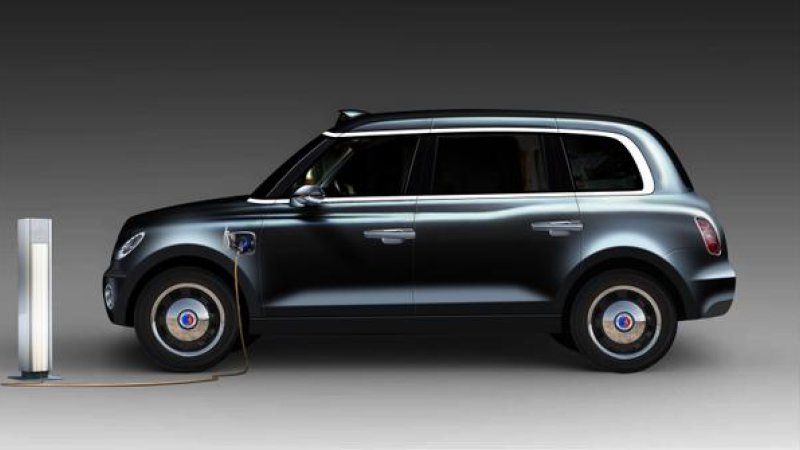
London taxi company, a missed acquisition opportunity for Proton

This may be hard for many to stomach, but Proton needs to forget about being a fully fledged automotive brand. It will never have the clout to do this. Instead, it needs to find the automotive blue ocean and take ownership of it.

Personally I think this is the taxi and/or MPV space because Asian families are large and they spend a lot of time in their cars. Furthermore airports are often not well served by public transport. A large, electric, prestigious, efficient, clean well built MPV and taxi can rescue the Proton brand. It may not be glamorous but it’ll work.

Moreover, shared platform vehicles reduce engineering and other costs. I have a hunch this may have been why Geely wanted to buy Proton.

Because four years ago Geely bought Manganese Bronze, the maker of the iconic London black cabs (a missed opportunity incidentally for Proton). The Proton plant in Malaysia would be a perfect place to build electric taxis and MPVs.

Proton is at a critical stage of it’s life. It can be saved but it’ll take guts and a few risks to make it happen. I for one hope it happens.

Why Mercedes Benz is a global brand


This interview with Mark Raine, Vice President Sales and Marketing Passenger Cars offers some excellent insights into what makes a global brand and should be compulsory reading for anyone in the automotive industry in Malaysia. Actually it should be compulsory for anyone in any industry.

Everything MB says they are doing – the borderline obsessive attention to detail, using research to determine delivery gaps, barriers or dealer issues, avoiding discounts, the focus on the experience and the innovative financing which incidentally opens up new revenue areas are what constitutes branding in the automotive sector, based of course on a solid product.

And that last part is important because if your product isn’t fit for purpose, don’t waste money on branding, waste it on advertising large discounts. That way you’ll make some sales before you go out of business. And talking of advertising, notice how there isn’t one mention of advertising?

MB Malaysia and its dealers aren’t perfect (and MB would probably be the first to admit that) and the way their dealers interact with prospects and existing customers can be significantly improved but they do a lot of things right and that’s what makes them a growing brand in a depressed industry and market.

This robust, immersive organisational appproach to branding that has at its core a meticulous attention to detail at every stage of the product journey is time consuming and laborious and far from glamorous. But this is what makes branding different to advertising and any creative driven approach to branding.

An advertising or creative driven approach to branding is much more exciting but it doesn’t build brands. And if your advertising is panned like the 2017 Chinese New Year ad above, it doesn’t matter because your brand has so much equity that the advertising become irrelevant.

And this focus on organisational branding over creative branding is how you become a global automotive brand.

In fact it’s how you become a global brand in any segment.

Is Malaysia Airlines outperforming the industry? Well yes, and no.


This morning I was feeling sorry for Malaysia Airlines CEO Peter Bellew, see my earlier post. He’s in the papers again today and understandably bullish whilst reporting load figures for last year.

“We had 90% load factor in December 2016 and we are whacking Singapore Airlines (82.9%, Garuda (77.4%) and Cathay Pacific (85%). We are doing pretty good,” Bellew told the Business Times Malaysia as he did backflips around the office.

OK I made that last bit up but he’s obviously pleased as punch. So I thought I’d have a quick look at the industry to see how the carriers’ performance stacked up.

Malaysia Airlines is outperforming the industry but fares are low

According to the International Air Transport Association (IATA) Air Passenger Market Analysis report, revenue per passenger kilometer (RPK) increased 6.3% in 2016, way above the 10 year average of 5.5%.

International passenger traffic rose 6.7% in 2016 compared to 2015. This in turn took the average load factor to a record full-year average high of 80.5%.

In Asia Pacific demand was even better with carriers seeing demand increase 8.3% over 2015, which was the second-fastest increase in the world. Average load factors are at 78.6%.

The good news for the industry has continued into January 2017 as the RPK rate rose 9.6% year on year and load factors above 80%. This should help Malaysia Airlines should continue on the path to profitability.

So Malaysia Airlines is carrying more passengers than competitors but we don’t know by how much they are undercutting those competitors because we don’t have their RPK figure.

Malaysia Airlines did report that average fares dropped 3% in 2016, despite a 5% increase in passengers in the last quarter. This would suggest then that those improved figures are coming at a cost. The key once those passengers have flown with Malaysia Airlines is whether or not they will fly again, once fares have increased.

It’s common knowledge that Malaysia Airlines has slashed it’s fares to grow market share. The problem is the brand and offering is a shadow of it’s former self so those flying the airline are getting little more than a LCC product.

Service may have improved but once fares go up, that may not be enough to hold off the competition.

Perhaps that’s when the Malaysia Airlines brand retention strategy will kick in. Probably built around the frequent flyer programme. I don’t see much happening in that area at the moment but I’m sure it’s only a matter of time.

Malaysia Airlines to consider not serving alcohol?


The National Union of Flight Attendants (Nufam) represents all cabin crew at Malaysia Airlines. As we all know they’ve had a tough few years as the carrier let go of more than 6,000 staff. So they need to get their teeth into a worthy cause.

Recently the Muslim MP Ghapur Salleh who is the MP for Kalabakan constituency in Sabah, suggested Malaysia Airlines start charging for alcoholic beverages on all flights. I’m not sure where he got the inspiration for this suggestion but surprisingly Nufam took umbrage and said its not right for him as a Muslim to encourage Malaysia Airlines to charge for selling alcohol.

Try to stay with me.

Nufam’s justification for this statement was that it is a highly sensitive matter for Muslim workers who make up the majority of cabin crew at the airline. According to Nufam, many of the Muslim crew previously objected to the serving of alcohol on flights and that the matter was even raised with the government.

The guilty party

Nufam went on to say that MAB is a fully fledged airline and can’t charge for drinks. Nufam said the real discussion should be about discouraging or even excluding the drinks list from in flight menus because the alcoholic drinks were listed alongside halal food.

Seriously? Is Nufam suggesting that having a list of alcoholic beverages next to halal food will make the food non halal?

Large financial sacrifices have been made by the tax payer to bale out Malaysia Airlines. Thousands of people have lost their jobs and families have been torn apart as a result of job losses.

Despite a lack of funds and resources, employees are working desperately hard, often with old equipment to turn Malaysia Airlines around and the people who represent the cabin crew are focussing on taking a list of alcoholic drinks off a menu because the food listed on that menu is halal?

But that’s not the end of it. This article reports that Nufam suggested Malaysia Airlines start charging for water, even though it has already said that being a full fledged airline, it can’t charge for products the way LCCs do.

One can only assume the lunatics have taken over the asylum! I genuinely feel sorry for Peter Bellew!