Branding is relational, not transactional. It's about retention, not acquisition. I work with companies and governments to identify and develop the strategies required to build the relationships that ensure ongoing branding success.
I call it data driven branding & it should not be confused with creative driven branding.
I'm also a rugby nut & devoted family man, probably in that order, but don't tell my wife!
Memac Ogilvy Dubai and FP7/DXB Dubai, two top tier advertising agencies in the Middle East have come up with a novel idea to sell expensive sugary water.
They’ve taken a group of strangers, sat them around a dinner table in a dark room and got them to describe themselves to each other and then asked them to guess what they look like and the type of character they are.
The video has been viewed more than 8 million times on Youtube and has got over 11,000 Likes in a week.
When the lights come on and the characters are revealed, the results are predictable. And then each participant is invited to reach under the table and take out a box.
As the camera zooms into the box it is opened and we see a (drum roll) box of limited edition Coke cans without the brand name but instead the caption “Labels are for cans, not for people” printed on the can.
Throughout Ramadhan, Coca Cola bottles and cans with this caption and not the brand name will be distributed at events across the Middle East.
It’s neat and is part of Coca Cola’s global ‘Let’s take an extra second’ campaign that encourages people to stop and get to know each other. Coke has seen a rise in sales, certainly in the US but I have a sneaking suspicion that the long term outlook for sugary water isn’t bullish. Nice touch though, what do you think?
Sir, I enjoyed reading your article and appreciate your passion, frustration and patriotism.
But I think in essence what you are suggesting is a suppression of the truth or as you call it the not so nice stories and a focus on a sort of ‘we’re the same as you so come here’ one size fits all approach to marketing Malaysia. Well, firstly in the social economy, you cannot suppress the truth but most important of all, communications do not build successful destinations.
As someone who builds destination brands for a living, but who also visited Malaysia as a tourist in 1987 before moving to live here in 1994 Malaysia’s branding problems are structural and will not be solved with communications. The main problems with Malaysia’s tourism industry are
1) Not enough investment in tourism products
2) Limited or misplaced invstment to get Malaysians on brand
3) Ineffective marketing due to use of outdated tactics
4) Misunderstanding of what is required to build a country brand
5) Weak enforcement on errant players and of course the infamous KL taxi drivers
6) A focus on volume not value.
When starting a journey, it is important to know where you are on the map otherwise you will keep going in the wrong direction. From what I can see, Malaysia’s tourism industry doesn’t have a map, is in a different place to where it thinks it is and doesn’t seem to know the destination but it is leaving anyway.
LAST week, I received a call from an old friend in England. He’s thinking of going for a faraway vacation with his family and there are a few countries on his list of potential destinations.
The print industry is changing rapidly. Publications are increasingly niche or evolving around new industries such as airbnb. The hospitality company with the largest inventory of beds but doesn’t own a single hotel launched Pineapple last year. It doesn’t aim to market the brand but instead inspire people to travel and of course hopefully use the company.
not selling airbnb but travel
Another new ‘investment and Lifestyle journal’ from Singapore called Cache was created not by a publishing house as a way to generate revenue but by a conglomerate with multiple interests in the luxury and related sectors.
Cache Singapore aims to grow the parent company’s database of contacts.
Although advertising revenue will help to fund the project, the main aim is to generate contacts for much more lucrative deals. These and other new publications have a different take on the publishing industry.
They are not so much worried about readership, rate cards and revenue, but more interested in reinforcing their brand values, enhancing their reputation, generating organic leads, building strategic relationships and adapting the online media platform model of being content sharers not creators.
So when I came across this interesting post called “100 brilliant print adverts” on the influential creativebloq site, I was intrigued because I thought it would be fascinating to see if the ads had a place in the new world order of publishing. Sadly, for me anyway they didn’t. Well certainly not the first 13 or so ads because after the VW ad I got bored.
Sure there was some creative genius in there as well as some comedy gold but there was also a lot of nonsense that just made me think I’d seen it all before. Traditionally, a good print ad must do six things
1) Be memorable and easy to recall
2) Connect with its audience
3) deliver useful information quickly
4) Make absorbtion of information simple
5) Don’t confuse the viewer or force them to have to do any hard work
6) Have an simple call to action
Is this a good ad?
And historically a good print ad should include these elements
1) A strong headline
2) A unique or provocative image
3) No more than 3 paragraphs of well written copy
4) A logo and/or contact information
Is this a brilliant ad?
Advertising companies are ignoring these rules in an attempt to get our attention. But it is very hard to be creative after 150 years of advertising. And even if the creativity, the sexuality, the humour or the horror of an ad gets our attention, it doesn’t mean we’re going to interact with the brand.
Furthermore, consumers don’t engage with new brands the way they used to and besides, we are now carpet bombed by so many messages every minute of every day that most of us simply block out the noise.
Add the proliferation and fragmentation of media, the sheer number of ads, the ridiculous claims made in ads and the changing nature of how we absorb information and news means we don’t really need ads anymore.
Moreover, the concept of the ad that has to be conceptualised, created, approved, produced and distributed means it can take 6 – 12 months before a campaign sees the light of day and in that time, an idea can become obsolete.
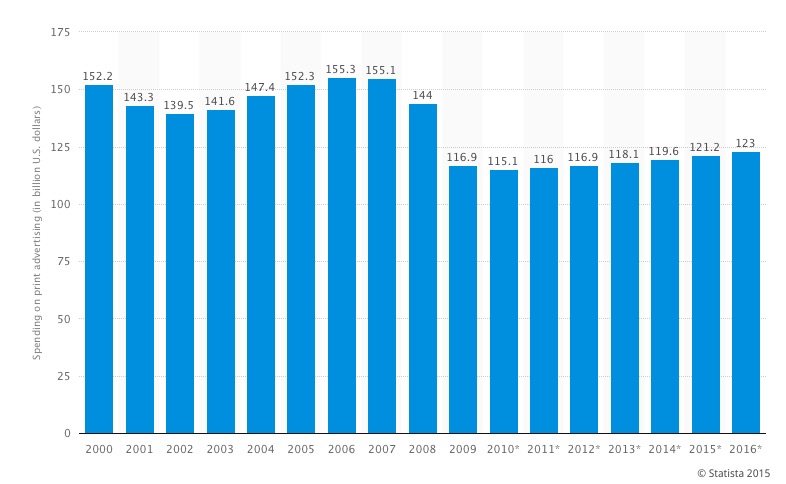
However, according to the graph from statista below, worldwide spend on print advertising has dropped from a high in 2000 of US$152.2 billion to US$119.6 billion in 2014. The same report suggests spend on print advertising will grow to US$123 billion in 2016. Admittedly that growth is maginally positive but I can’t help but think that turning up the noise isn’t going to change the fact that we’re not really paying attention to advertising anymore. I can’t help but think that in the new publishing world, we’re not interested in ads, we’re interested in what others like us have to say.
And in this environment, firms would be better off saving the money they spend on advertising and use the money saved to generate content about their business, build relationships with their customers and encourage those customers to share that content. The debate rages about whether print advertising is dying or already dead.
Personally I don’t think it’s dead but it is wounded and unless it reinvents itself, it may soon be irrelevant.
I recently wrote an article on the state of advertising which you can read here. The post went viral and I have been criticised a lot, especially on Linkedin and you can read the comments here.
I still don’t think advertising is effective. Here are 5 more reasons why advertising doesn’t work
1) I’m not looking to replace advertising. Advertising needs to get its s*** together because it is losing credibility. Moreover, much of it is ignored by consumers who spend their lives multi screening and simply tune out when they see ads.
2) Far too many companies advertise for the wrong reasons, often simply because of their ego. They get a kick out of seeing their brand on a billboard or their friends telling them they saw their brand on a billboard.
Or they advertise because everyone else is advertising but for most of them their advertising never makes an impact. I’m not talking about Unilever, Nestle and the other 8 companies that own 80% of the world’s brands because they have the kind of deep pockets most firms can only dream of. I’m talking about the rest of the companies that make up most economies.
3) My personal belief is that because so many advertising campaigns are too short and don’t run for long enough, the vast majority of advertising is a complete waste of money and that money would be better spent on brand building rather than advertising.
4) Technology has changed the way we live our lives yet we’re still doing things (in terms of advertising) the way we always did. Airlines continue to sell themselves with pretty girls and big smiles and white teeth and with a pretty child holding a teddy bear (OK no child with teddy bear in this example but you get the point).
Exotic destinations use white sandy beaches, purple seas and clear blue skies, banks use ridiculously handsome couples and children and cars use all of the above. It’s boring, unbelievable and doesn’t match the experiences of others who have been there.
And we can read about their experiences online or from our friends. And those experiences, not advertising influence our decisions.
5) Firms would be better off focussing on core branding competencies – a) strategic (inspire & aspire) – trust, credibility & communities, leadership & segmentation. b) Communications – building the narrative collaboratively and social engagement through multiple platforms. c) Execution – on brand organisation able to deliver on promises, data collection and use, monitoring &messaging and d) connection, engagement and collaboration with relevant communities and influencers.
How we do that depends on the organisation, the industry, the customers and budgets and other constraints. Advertising is bandied around as a silver bullet. Want to increase awareness? Advertise. Want to change perceptions? Advertise. Want to increase sales? Advertise. Want to increase share of wallet? Advertise. Got a crisis? Advertise. But there is no silver bullet.
Building a brand takes a strategic approach to multiple actions and requires commitment and buyin from everyone. Advertising is a tactic and for most brands – there are some exceptions, such as a new movie launch, or an exhibition or property launch – it simply doesn’t work and money spent on advertising would be better spent on building a brand.
2 days after sending out termination letters to 6,000 staff, MAS is advertising for new staffThere’s a saying in our company that if a client’s employees are happy then that happiness will show in the way those employees interact with prospects and customers, thereby improving their experiences and the reputation of the brand.
When working on an Internal brand audit we’ll take a long hard look at the hiring and firing process and often make small but effective changes to the process. This is particularly so when looking at how firms fire people because unhappy staff often have a grudge to bear when they are let go and in a social media world this can be damaging.
Malaysia Airlines is already a damaged brand which is why it has embarked on a restructuring exercise that includes more than 6,000 job cuts. A lot of effort is being put into helping those staff reintegrate themselves back into the economy but this is not simply about getting them another job.
Keeping all those ex staff after they have left MAS will require very skillful communications and an integrated effort by all departments concerned. The news that 2 days after 6,000 staff were sent their termination letters, the MAS website is still recruiting cabin crew and suggesting there are other vacancies is a huge mistake on the part of those responsible for the brand.
There is no room for error in the restructuring of Malaysia’s finest, most high profile global brand.
The new Malaysia Airlines CEO Christoph Mueller has begun the process of rebranding MAS by stating Monday that the carrier is ‘technically bankrupt’ and that a brutal restructuring exercise is the only way forward. He went on to say that the rot had set in years before the mystery of flight MH370 and the tragic one-in-a-billion shooting down of MH17.
Christoph Mueller leading the MAS rebrand
Of course this is nothing new but by stating what we all know and confidently but empathetically, he has shown us that he is serious and perhaps most important of all, he is prepared to do what no previous CEO has been prepared (or was allowed) to do, namely to do what it takes to rebuild the damaged brand.
He has begun by announcing three high level areas – pillars that will over the next 3 years put Malaysia Airlines back where it belongs, at the top of the Asian aviation business.
Phase one requires massive job cuts to the bloated workforce, new contracts for staff, the renegotiation of supplier contracts (as well as cutting the number of suppliers by 90%), the axing of some international routes and reducing the flight frequency on others, reviewing the 777-200ER fleet and selling off 2 Airbus A380s. MAS thought the A380 could help turn the carrier around and at one stage put in an order for 60 of the mighty jets.
But the huge, fuel guzzling A380 has had mixed reviews from airlines and pilots and rumour has it there has been little interest in the 2 aircraft MAS is looking to sell. I’d be surprised though if they sell off the 777s unless they intend to replace them with more modern, fuel-efficient alternatives.
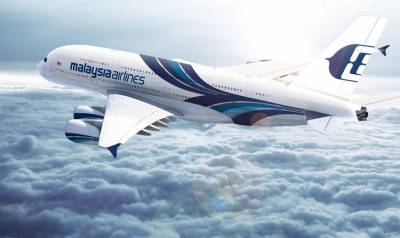
MAS wants to sell 2 A380s, reducing the fleet to 4 despite once ordering 60
Phase two will focus on transforming the carrier and apparently more than 40 areas for improvement have already been identified and the third phase will look at sustaining the new position of the airline.
So although the name hasn’t yet changed, the new Malaysia Airlines Brand is up and running.
Before you can go anywhere with a brand, you need three things. The first is a solid product offering. If you don’t have that, it doesn’t matter how much you spend on selling, marketing or advertising, the brand will not grow. We’ve seen that over the last 5 years as MAS spent more than RM1 billion trying to resuscitate the brand with advertising campaign after advertising campaign without addressing the brand’s structural issues.
Instead of trying to WOW customers with their product, former MAS CEOs cut costs, sold assets and ignored the passenger experience. The very heart and soul of what makes Malaysia unique – its people and the way they are – was ignored and instead cosmetic, shallow clichéd taglines were created and tacked together in a series of immediately forgettable tactical campaigns that did little for the brand.
The second thing you need when building a brand is a CEO who is prepared to look where others prefer not to look, who understands what needs to be done and is prepared to do what it takes and make the tough decisions, even if that means taking apart the existing brand and rebuilding it, brick by painful brick.
And the third key component is people who understand that the organization is the brand and that brand is part of a community. And this community, made up of people within and without the organisation will make or break the new brand. The new team will have to embrace and engage the community and understand that it is the community not the staff who make the MAS brand.
The new culture of MAS must be connected not aloof
This team will need to create an environment where people work toward a common, clearly defined organizational goal and not a personal one. Arrogance, ignorance or the ‘tidak apa’ culture will have no place in the new environment. Instead a humble, collaborative, connected and engaged culture based around delivering value, not on the company terms but on the customer terms will be the order of the day.
You’ll notice that I haven’t mentioned anything about the new livery, logo, brand architecture, uniforms, positioning, celebrities, the brand story and so on. That’s because they are irrelevant if the three points above are not addressed first.
Rebuilding the MAS brand was never going to be easy but the early signs are good, long may it continue.
I came across what I think is a new blog called Cross Channel Talk recently that has an interesting post on “Selling Nationalism”. The post discusses the concept of promoting the national identity to drive up visitor numbers. It’s an interesting read that suggests the proliferation of global franchises such as McDonalds and Coca Cola has homogenized diverse cultures.
Whilst I personally believe that’s a stretch, the post does explore the way tourism campaigns have become a fairly predictable mashup of generalized images, ideas and stories.
The post looks at ads from Australia circa 1984 to the present day with a focus on Australia and Thailand. It takes a long hard look at how these countries have tried to be innovative in the way they market themselves.
The post rips into Tourism Authority Thailand’s recent attempt to drive visitors to the country, calling it ‘7 minutes of awkwardness’ with a ‘cringe factor of +15’.
This isn’t the first attempt by Tourism Authority Thailand (TAT) to create a buzz around the country by using what TAT themselves call ‘unbranded advertisements’. You can read more about their previous attempt ‘I hate Thailand’ here.
When discussing the Australian campaign, the Cross Channel Talk blog quotes opposition tourism spokesperson Martin Ferguson as saying;
“We’ve been told it was a huge success and generated all these hits on a website but the latest tourism figures show the numbers are down.”
If the metric for success is hits on a video then the ‘I hate Thailand’ campaign might be considered a success as it has generated almost 3 million views in about 8 months. Released in November 2014, it may have been too late to have an impact on the 2014 arrivals that were 11% down on the previous year. However, TAT is cautiously optimistic about 2015 arrivals although the early signs are that any growth will come from the region and not the more lucrative long haul European markets.
And besides, any increase in arrivals will not just be a result of a new campaign, espcially a creepy one!
Advertising continues to lose its credibility with consumers and brands and as a result has to resort to doing whatever it can to grab our attention. There is an advertising agency with an office on the Federal Highway in Malaysia that has the tagline, “Truth well told” but the truth is the truth is rarely explored in advertising today.
There was a time when ads made sense. When ads gave us some information about a product that made us want to learn more or even test or buy the product. Back in the day, we used to see an ad and scramble for a pen and paper to write the brand name down in the hope that when we went shopping we would be able to find the brand on a shelf or in a showroom.
Nowadays, ads seem to be created for awards panels or to impress us with their creativity, the cleverness of the photography, the humour, the beauty of the models, their entertainment value.
This latest ad from Coco De Mer (I think they are a lingerie brand but they might be a brothel, advertising agency, soft porn company or high class call girl agency) was rated ad of the day by respected advertising publication adweek.
Walter Campbell, the creator of the ad is quoted as saying, “The erotic doesn’t get the same overt attention as everything else on the cultural menu, so we created a film to surprise, excite and most importantly, encourage people to delve that little bit deeper into their fantasies—to reignite that connection.”
Sorry, but that’s not what advertising is about. Advertising should be credible, it should be useful to me, it should encourage me to learn about a product or service, show how it is relevant to me and how it can be useful to me and if it features people like me – testimonials are even better – I might buy into it.
According to this report, 84% of Millennials don’t trust traditional advertising and it is probably ads like the one above that have contributed to this lack of trust. This lack of trust is causing a crisis in advertising because trust is key.
Until advertising accepts this and gets back to basics, the crisis in advertising will continue and that trust will be lost, perhaps for ever.
My book “Stop advertising and start branding” will be out soon. To register for an early copy, please contact me here or on Twitter @brandconsultant
The May 2015 edition of Going Places, Malaysia Airlines in flight magazine features an introduction from Mr Christoph Mueller, the airline’s new CEO. In the short message Mr Mueller talks about the “overwhelming hospitality” he has received since arriving in Malaysia two months earlier. He explains that he would like all Malaysia Airlines’ passengers to experience the same overwhelming hospitality on board MAS flights.
MAS is not a bad airline
He goes on to talk about the “formidable culture” of Malaysia and expresses hope that MAS will leave visitors with a “wonderful experience from the heart of Asia”. He tells us he is ‘excited’ for Malaysia Airlines despite the difficult and challenging task he and his staff face in turning the carrier around and making it profitable again.
He explains that the turnaround begins with people like ‘me’ (the reader) who he calls guests. The airline will be listening carefully to the feedback from guests. Mr Mueller goes on to say that the “the key is to design products and services to create a guest experience that you will find truly valuable.” I’m not sure what the key refers to to but I presume it is to rebuilding the airline.
‘Truly valuable products and services’
Mr Mueller is certainly right that the turnaround of MAS begins with the airline’s guests and in particular the frequent flyers who have supported the airline over the last 20 years. No doubt retention of guests will be at the heart of the rebranding brief sent out a few weeks ago and the RFPs for which are due at the end of this week. But he needs to steer away from a ‘one-size-fits-all’ approach to his guests because they all have very different needs and requirements for value.
As for ‘designing products and services’ that guests will find ‘truly valuable’, Mr Mueller is making the right noises although I would have liked to have seen a more specific set of ideas delivered confidently and dynamically in his first public communication to the country and those many supporters of Malaysia Airlines. For instance, an overview of what he has in mind would have given people something to start talking about and sharing on social media, generating a wave of interest, enthusiasm, anticipation and positivity. And what exactly does ‘truly valuable’ mean?
MAS is not a bad product and it’s certainly not broken. Far from it, the product and services are OK. But the trouble is, to be competitive in today’s aviation business, or for that matter any other business being OK simply isn’t enough. To be successful in the aviation business, you need to be exceptional.
On a business trip to London earlier this month, I met up with a group of Malaysians who were all long-term MAS passengers, all with Silver or Gold Enrich (The MAS frequent flyer programme) cards. But this time they had flown in on Emirates and were raving about the quality of the business class experience, the outstanding service from the crew of 13 different nationalities and their professionalism, the efficiency of the airline, the seamless integration between the business class lounge in Dubai and the A380.
But what surprised me most of all was how they waxed lyrical about the communication between the crew and the passengers. Each crew member seemed to know each passenger’s name and used it in every communication, no matter how trivial. And the crew seemed genuinely interested in each passenger. Not in an irritating, intrusive way but in a professional client/customer way.
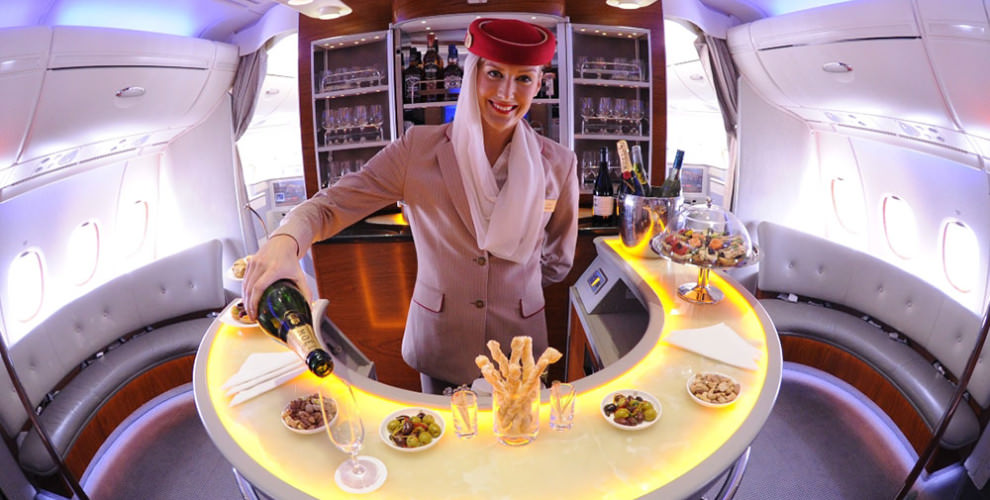
Emirates, the benchmark for MAS
The meal service was akin to something normally reserved for a 5 star restaurant and was designed around the individual passengers needs on that flight. Meals were served individually, by hand and not from a trolley. Two of the travellers sat next to each other. Both were asked if they would like to sleep first and have their meal later or eat first and then sleep. They felt the crew were doing everything possible to make their trip truly memorable.
The service wasn’t rushed and they all thought the announcements over the PA were delivered in a confident, calming and professional way. And when the Captain (not the chief steward) announced clearly and confidently that seat belts needed to be put on while the aircraft experienced some ‘choppy’ weather, they all felt instantly at ease. MAS does many of the things Emirates does (I believe having flown Emirates, MAS and Etihad business class to the UK in the last 5 months that Emirates is the benchmark) and many of the things it doesn’t do can be done.
The question is, will MAS be able to do them exceptionally? Will Mr Mueller be able to find enough good middle managers with the skills and commitment to motivate MAS staff to deliver an outstanding experience time and time again? Will branding investments focus on getting the organisation ‘on brand’ before launching very expensive and imminently forgettable advertising campaigns that over promise and force the airline to under deliver?
Making experiences outstanding will be key to winning back lost customers and attracting new business and not glossy advertising campaigns, a new logo or new uniforms. We all want Mr Mueller to turn the airline around and with the support of the government giving him the authority to let go of 6,000 staff and low oil prices driving down the price of aviation fuel his chances are good. But judging by where MAS is at the moment and the ability of competitors to keep raising the bar, Mr Mueller is really up against it.
Today marks the beginning of a new (and possibly the last) chapter in the life of the national airline of Malaysia. A new CEO Christoph Mueller officially starts work today, 1st May 2015. Many in the aviation business revere Mueller, primarily because he is credited with turning around the Irish carrier Aer Lingus in a stagnant, competitive European market.
MAS is selling it’s A380s & rebranding
But his achievements at Aer Lingus will pale into insignificance when he starts peeling back the complicated cultural corporate layers at Malaysia Airlines (MAS).
What was once one of the most respected, envied and profitable carriers in the world has become a mere shadow of its former self. MAS is under fire from domestic and regional LCCs and if it stops flying to Amsterdam, Frankfurt and Paris will only be left with a couple of potentially lucrative long haul destinations servicing the kangaroo route from Heathrow to Australia. And these will come under further pressure with the return of British Airways flights to Kuala Lumpur from Heathrow at the end of May 2015.
MAS is hugely inefficient. It’s annual revenue per employee is down to about RM850 compared with RM1,675 at Cathay Pacific and RM2,250 at Singapore Airlines. MAS has 183 employees per aircraft compared with 138 at Singapore Airlines, 125 at Cathay pacific and 31 at Ryanair. Little wonder then that it has racked up debts in the region of US$2 billion since 2010.
Mr Mueller will no doubt focus on improving that revenue per employee and reducing the number of employees per aircraft. At least 6,000 staff are being offered redundancy and the airline has already announced it is selling all 6 of its Airbus A380s and four Boeing 777-200ER super ranger jets. The good news is that he has the support of the government and fuel prices have plummeted but that’s not enough.
He’ll also need to focus on rescuing the MAS brand and its reputation. And that won’t be easy because despite cutting costs and offering attractive incentives to agents in key markets such as Australia, the carrier is struggling to get bums on seats. And after the tragedies of 2014, years of poor management, low staff morale, and little focus on anything other than advertising, the MAS brand is in free fall.
Carpet bombing consumers with weak advertising will not rebrand MAS
Which is why the airline issued a rebranding request for proposals (RFP) a couple of weeks ago. Unfortunately the signs aren’t good that the people responsible for the brand understand what constitutes a brand and what is required to rescue the brand and its reputation.
We weren’t invited to submit a bid so I can’t comment on the contents of the RFP but I understand those invited were only given about two weeks to submit a bid as the deadline for submissions is 8th May 2015 with the rebranding supposed to be launched in July 2015.
Those are insane deadlines which is why cynics in the industry are suggesting the advertising agency tasked with carrying out the rebranding has already been chosen but there is no hard data to back up this claim. Rest assured though that the industry is watching developments carefully and if a certain agency gets the bulk of the work, there will be plenty more accusations ‘flying’ around.
Rumours aside, my worry is that those tasked with managing the rebrand will focus on a new name, new livery, new uniforms, new logos, new signboards and mass advertising creative campaigns but place very little attention on the key areas that need to be addressed, such as the ability to deliver economic, experiential and emotional value to all segments, at every touchpoint, at all times and on customer terms.
The first stage in the rebranding of MAS will require a cultural change that may have to come not just from the airline but the country itself. To rescue the brand MAS must move away from a centralized, top heavy organization staffed by employees trained to do as management says and not challenge questionable decisions.
The firm must move away from an ingrained belief that business is a one off transactional, price driven initiative and that every customer is purely a source of money, irrespective of their relationship with the brand, their influence and their loyalty.
In a social media world, where consumers not companies or advertising agencies define brands, changing the name, logo and livery of the airline and announcing the ‘rebrand’ with a global, one size fits all corporate driven communications campaign will actually have a negative impact on the brand and possibly do more damage than the twin tragedies of 2014, the years of mismanagement and the sweetheart supplier deals have done to date.
Instead the first stage of the rebranding must focus on creating a collaborative, personalised, relationship based, retention driven organization that understands customers and their needs.
Failure to focus on the internal branding first and getting it right will make any other investments an expensive exercise in naive futility. Which will see the end, sadly of a once iconic brand.










 brandconsultantasia.com